

 SHARE:
A TYEE SPECIAL REPORT
Catherine Rigg, a resident of Tlell on Haida Gwaii, has read most of the 1,700 public comments on the federal government’s web site devoted to reviewing the 32-year-old moratorium on offshore oil and gas exploration in British Columbia. She’s gone to meetings and researched the issues, and she feels confident most islanders are against lifting the ban. A petition signed by 850 island residents backs up that assumption.
So why do so many outsiders, she wonders, assume people in her northwest region of the province are all for getting on with offshore drilling?
Jack Miller, who lives in nearby Port Clements, sees it quite differently. He looks toward Alaska’s Cook Inlet , 1,000 miles north of Hecate Strait, for his answers. A retired scaler, Miller says he’s been surprised to discover how tightly controlled the oil and gas drilling industry is on environmental issues.
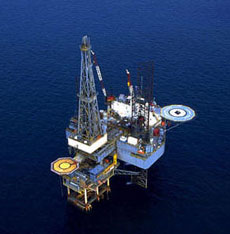
Cook Inlet, a booming site for oil and gas exploration and crisscrossed by oil pipes, is one of the most highly urbanized and industrialized areas in the state, with Anchorage, a city of 240,000, at its head. According to Miller’s research, Alaskans consider Cook Inlet the most productive waters in the state, thanks to their thriving recreational and commercial salmon industry, which provides more salmon revenues than all of B.C. The inlet boasts herring-roe and bottom fish resources along with razor and steamer clam beaches, as well as a healthy population of Beluga whales.
“I feel like a traitor to the environmental movement,” Miller says, adding that he was in support of the original moratorium and still considers himself an environmentalist.
Report due out any day
The highly divided debate does not break neatly along geographic lines. Last spring a public review process, also known as the Priddle Panel, traveled to communities in B.C. to find out whether people support lifting the moratorium or not. Critics cried potential bias, given that the panel’s chair, Roland Priddle, former chair of the National Energy Board, has been inducted into the Canadian Petroleum Hall of Fame. The panel’s report was due at the end of October and should be out any day.
Among the thousands of citizens' comments that bulge the Priddle files, here are two that speak to the polarizing power of the issue:
J. Abercrombie of Duncan: “I support the immediate lifting of the moratorium on oil and gas. We should get on with this forthwith in order to provide jobs and economic activity for our coastal communities which need help now.”
K. Alexander of Tlell: “I feel the islands have the most to lose and the least to gain from lifting the moratorium. In the long run, I suspect our relatively unspoiled wilderness will turn out to be our greatest economic asset.”
Currents of opinion
The mayor of Port Clements, Dale Lore, says the direction you sway literally may be pushed by ocean currents. He points to a map of the currents of Hecate Strait prepared by a fisheries oceanographer for a University of Northern British Columbia report.
For three days a year the currents go past the Skeena River and right into the harbour of Prince Rupert, a city whose mayor wants to see the moratorium lifted. On one day a year the currents get to the head of the Kitimat canal and on no days a year will the current from the Hecate Strait ever get to Port Hardy, another town that supports oil and gas.
“Every day of the year, it hits the east coast of these islands,” Lore says.
Not only is he concerned about how potential oil spills will affect the commercial and food fisheries on Haida Gwaii, Lore is against lifting the moratorium because he worries the industry will do seismic testing before any baseline studies of the marine life have been done.
“In which case you may have lost things without even knowing what you had,” he says.
Seismic testing concerns
Seismic testing shoots high-pressure air at the seabed to locate oil and gas deposits. According to David Suzuki Foundation’s Ian Bruce, a geological engineer who once worked in seismic exploration, the extreme pressure of these underwater blasts is also known to damage marine life.
“Significant uncertainty exists with respect to damage and effects of high intensity noise produced from seismic testing. What we do know is that the impacts have the potential to be severe and even fatal to marine mammals,” Bruce told the Priddle Panel in May 2004.
Miller scoffs at the dire warnings of anti-oil environmentalists. Although he doesn’t speak of the seismic impacts, he does point out the massive improvements in technology in the industry since the 1980s and the dreaded Exxon Valdez.
“All the research I’ve done shows that whatever oil has spilled into the ocean, there has been no residual long lasting damage. The surprising thing I found is there is a 6,000 strong herd of sea otters in midst of the oil patch.”
Miller says there is no longer a threat from blow-outs on the rigs or in the pipelines, thanks to preventers now installed on well heads and in-line shut off valves that weren’t required until the 1980s.
Where will money flow?
Miller says he hasn’t even thought about the dividends paid out to citizens of Alaska — which reached a high in 2000 of nearly $2,000 per person — but he has looked into the economic benefits of oil and gas in Norway, which supports substantial social services and a permanent fund with its revenues.
Whether the industry will bring economic benefit to the nearby coastal communities in B.C. is another of Lore’s concerns.
In Newfoundland, he says, the province gets 10 per cent of the royalties from oil and gas while the federal government takes the other 90 per cent. Companies, of course, walk away with the profits.
This has proven unsatisfactory to Newfoundland premier, Danny Williams, who walked out of the first ministers’ meeting last week due to Prime Minister Paul Martin breaking his alleged promise to give Newfoundland 100 per cent of their oil and gas royalties.
Lore doesn’t hold out much hope for a revenue-sharing agreement on this coast.
Offshore really inshore?
In fact, jurisdiction over the resource is another point of divergence for people, especially First Nations. Offshore resources are typically federal jurisdiction, but some argue that Hecate Strait is inshore, and therefore belonging to the province. At least four First Nations claim rights and title over marine resources in the area and the Haida have their own moratorium in place.
“If someone could show me a reasonable benefit for this community, I think my constituents would put my feet to the fire and say take another look at it,” says Lore.
Estimating the amount of jobs oil and gas may bring to the north coast is a difficult task and Rigg says she hasn’t seen any supporters come up with numbers.
No one can deny oil and gas is a capital- rather than labour-intensive industry, but a recent Canadian Centre for Policy Alternatives report quotes Chevron, who, in 1985, estimated employment for a three-year West Coast exploration program peaking at 202 employees, with a maximum of 81 local hires, but a more likely total of 27, since locals often do not possess the requisite skills.
Platforms can be built elsewhere
The construction phase is the most labour-intensive with the $5.2 billion Hibernia project creating 5,000 jobs for a five-year period. Newfoundland insisted on a design that would create the most jobs, but the industry is now relying on floating platforms, which can be built in international shipyards.
Prince Rupert Mayor Herb Pond is confident that oil and gas would be an economic benefit to the region. As a mayor of a small community, Pond says he seeks a balance between family, employing jobs, environment, peaceful neighbourhoods and health care.
“If we get that far down the road, it will be up to communities to ensure they are preparing their young people and training people in the right skills.”
He sees oil and gas as one of five clusters of economic activity the north coast is set to take advantage of including transportation, forestry, seafood processing and tourism.
“Nobody wants to see an unregulated oil and gas industry of the coast,” he says.
Values divide
For Pond, questions about the sustainability of the industry can’t be answered with the moratorium in place.
“What is it the federal government thinks is lacking in British Columbians that the west coast of B.C. would be the only blanket federal moratorium on offshore oil and gas exploration in the entire nation?”
Rigg suggests people’s divergent responses to the moratorium come down to value judgments. Many people have done the same homework as Miller and Pond, but have decided that allowing oil and gas exploration and drilling in Hecate Strait isn’t safe at all.
“Many people left the islands. Those remaining are here because of quality of life, not necessarily career opportunities. Are people willing to put that at risk?”
Rigg says we are at a crossroads when it comes to the use of fossil fuels. “Should society be going on a path that requires a massive investment in a non-renewable resource? That is a value-based decision.”
New Democrat Member of Parliament for the Skeena-Bulkley Valley riding, Nathan Cullen, thinks the debate is too narrowly focused.
“Really the question is, what kind of economy do you want and what kind of energy?,” he says.
Ran against drilling
Throughout his campaign last June he challenged people to give him a strong business case for lifting the oil and gas moratorim and he is still waiting to hear one. He says while in Ottawa petroleum companies have come to him interested in developing wind power in his riding, but not one has talked to him about oil and gas.
“It is perplexing because industry doesn’t actually want in,” he says.
After knocking on a lot of doors Cullen didn’t get the sense his riding supported lifting the moratorium, and it was talking to people face to face that made him firm up his opinions.
“It was extremely clear in First Nation communities, although in a few communities there was some difference between the leaders and the people. But I never talked to a FN person in the community that was in favour of lifting the moratorium.”
Cullen, who won almost every poll in Prince Rupert in the June election, says, regardless of what community leaders say, he got the sense people were worried about the potential impact on the ocean.
“If people in Prince Rupert really wanted oil and gas, I find it hard to believe I would have done that well.”
Municipalities pressed for lifting ban
So who does support lifting the moratorium? At the recent Union of British Columbia Municipalities annual general meeting, a resolution in support of lifting the moratorium was passed with a two-thirds majority.
Both Cullen and Lore were there and they agree the vote was orchestrated.
“It was not a chance thing that the last vote before the premier’s speech was on oil and gas and that [the vote] went that way,” says Cullen.
Lore is even more cynical. “Normally the UBCM lobbies the government to do things they don’t want to do, we don’t normally lobby to do things they want so badly they can taste,” he says.
Credibility at stake
Miller cautions groups who are crying wolf about the impacts of oil and gas, because he thinks over-blown arguments weaken environmentalists’ claims.
“It’s not an easy subject, you have to balance out where we are now and where we’ve been. The only way you can keep industry under your thumb is with a strong environmental movement.”
First Nations governments on the coast do not support the current process, as there has been no meaningful engagement of their communities and their title concerns. On the islands, the Council of the Haida Nation asked the Haida not to participate in the Priddle Panel, so the government couldn’t try to pass the process off as consultation.
“In some ways it is an irresolvable issue,” says Rigg, who goes back to the original question — should the moratorium on oil and gas be lifted?
No matter where they live, two people can do the research and look at all the studies and come up with very different conclusions, she says.
Heather Ramsay lives in Queen Charlotte City and reports regularly for The Tyee.
![[Tyee]](/design-article.thetyee.ca/ui/img/yellowblob.png)










Tyee Commenting Guidelines
Comments that violate guidelines risk being deleted, and violations may result in a temporary or permanent user ban. Maintain the spirit of good conversation to stay in the discussion.
*Please note The Tyee is not a forum for spreading misinformation about COVID-19, denying its existence or minimizing its risk to public health.
Do:
Do not: