- Ms Kaye is a Tyee Builder. You can be, too.
- Mary Carlisle is a Tyee Builder. You can be, too.
- Prem Gill is a Tyee Builder. You can be, too.
- Nancy Flight is a Tyee Builder. You can be, too.
- Justin Everett is a Tyee Builder. You can be, too.
- John Westover is a Tyee Builder. You can be, too.
- Nora Etches is a Tyee Builder. You can be, too.
- Edward Henderson is a Tyee Builder. You can be, too.
- Bharadwaj Chandramouli is a Tyee Builder. You can be, too.
- Dean Chatterson is a Tyee Builder. You can be, too.
- Marius Scurtescu is a Tyee Builder. You can be, too.
- Robert Parkes is a Tyee Builder. You can be, too.
- James Murton is a Tyee Builder. You can be, too.
- Susan Doyle is a Tyee Builder. You can be, too.
- Vincent Strgar is a Tyee Builder. You can be, too.
- Helen Spiegelman is a Tyee Builder. You can be, too.
- Subir Guin is a Tyee Builder. You can be, too.
- Kimball Finigan is a Tyee Builder. You can be, too.
- Joanne Manley is a Tyee Builder. You can be, too.
- David Leach is a Tyee Builder. You can be, too.
'But Where Are You Really From?'
Some Canadians get asked that all the time. Here's how that feels, in their own words.
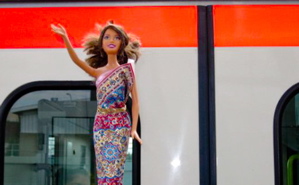
Immune from interrogation. Photo: Rita Raniga
[This is a collection of excerpts from the series 'But Where Are You Really From?' published by Schema Magazine, the excellent Vancouver-based online publication that defines itself as "a blend of pop-culture and identity, from the perspective of being 1.5-, 2nd-generation and beyond."]
DANCING TO THE BEAT OF MY OWN DRUM
By Tahira Ebrahim
It happened in class. It happened in cabs. It even happened at convenience stores. "It" is what I call the dance. The most round about conversation one could have, the one that started with the most ambiguous and for some, contentious question that could be asked -- "but where are you really from?"
For me, as for others, the question is not as simple as it seems. Yes we may be able to identify on a map a physical geographical location, an address that implies "I was here." But what does that mean? What value does that hold? For those of us who are of mixed heritage and identity, it may or may not be about location. This isn't real estate we're talking about; location isn't necessarily everything. So why "the dance?" The but where are you really from? question is not so much a question, as it is a banter back and forth, where the "interrogator" tries to guide me to a tempo that they're familiar with, while I simultaneously try to side step their predictable moves and move to the beat of my own drum.
For me, the question is primarily posed by South Asians who try to pinpoint me as Indian, Pakistani, or Bengali (I've even heard Persian) as if to validate this sense of familiarity that I may convey. Dim the lights people, it's time to dance.
"Sooo you are Indian?"
"Me? Oh no, I'm Canadian."
"No, but you were born elsewhere? Maybe Pakistan?"
"Um...nope just Edmonton."
"But your parents, they are Indian?"
"Oh, no my parents are from Africa."
"Oh yes, Africa! Oh. . . Africa? But you are not. . . Oh no your grandparents must be from India, you look more Indian."
Note that the above conversation is certainly a much more condensed form of a conversation that can take nearly fifteen minutes, trying to explain why despite my brown skin tone, I identify as a Kenyan rather than an Indian.
Just as with everything else, this story has a history. Over four generations ago, my family emigrated from India to Kenya to start a business. By the 1970s, soon after independence, the rise of Idi Amin in Uganda forced masses of South Asians out of East Africa. Many decided to settle in Canada, which is where I was born. Try and casually slip that into a conversation while waiting to receive your change at the cash register. [Read the rest here.]
Kim: Marriage issues. Photo: Harjeet
A PIECE OF ME
By Joy Kim
My father and I have an interesting relationship. Because we are both busy people, we often talk while driving in the car. We usually talk about things going on currently, but recently, my father has brought up a new topic: marriage.
"Joy, I think you should marry a Korean boy."
"Why, appa?" I had only dated one Korean boy.
"Because we are Korean."
For me, my identity was never just Korean. I am a 2.5 generation Korean Canadian-American. My father is a first-generation Korean. He was born and raised in Korea. My mother is 1.5 gen. She was born in Korea, but raised in South America and the United States. When my parents were married, they started working in the ministry in Korea for a few months before deciding to move to California. They lived in California for about five years, where they gave birth to both of my older sisters. The four of them obtained U.S. citizenship and when the opportunity knocked, my family moved to Alberta, where I was eventually born. My father became the pastor of a Korean church in Alberta, and shortly after, their American citizenship became my citizenship, and my Canadian citizenship became a part of their identity. We had three titles under our belt: Korean, Canadian, and American.
But, how was I going to deny what my dad said? Yes, I am Korean. "But appa, I'm not just Korean and I don't think that I can marry a Korean boy from Korea. Plus, I know next to no Koreans who are from here. Our mentalities are different."
We are Korean, but my family is Westernized. We eat rice everyday, go to a Korean-speaking church, and growing up my best friends were Korean international students. But on Thanksgiving we eat turkey. My sisters and I feel more comfortable with English. In fact, I'm an English lit major. Silly me though, I forgot it was the same case for my parents. My father mentioned how the pool for 1.5 or 2nd generation Koreans is very small and 2.5 gens like myself are quite rare. Many of us are among the first generations out of Korea and we are still trying to find the meaning of who we are and where we really come from. After a while he replied again, "You're right but we are Korean. We share the deep roots of culture and language. And when you and your sisters are married with children, we can all gather and talk."
By talk he didn't really mean verbal language comprehension. Culture encompasses so much more. [Read the rest here.]
Brandt: Grew up in airports.
WHERE THE REAL CANADIANS ARE FROM
By Ansel Brandt
I always take great pleasure in telling people that I am from Manitoba -- an answer that usually seems unexpected, despite being completely banal. I often add, "Where all the real Canadians are from," as if I were an American from the Midwest attempting to cash in on some folksy ideal of the heartland promulgated by the likes of Garrison Keillor.
Fortunately, we have no such mythology in this country about a singular Canadian identity, but have always embraced a plurality of experiences. Constantly seeking to define ourselves through the diversity of our culture and heritage seems to be the quintessential Canadian pastime.
Although my father is a second-generation Canadian, both of my parents come from families of immigrants many times over. The Mennonite side of my family has been kicked out of more countries in Eastern and Western Europe than I have space to list, and my mother's family emigrated from Southern China to Taiwan a number of generations ago, and from who knows where before that. I spent a great deal of my childhood visiting relatives in faraway places.
I remember long and frequent car trips, trains, planes, and Christmases spent in airports, waiting for connecting flights in Vancouver or Hong Kong. All that traveling left me with a strong distaste for air travel and long distance driving. Many of my summers, especially during elementary school, were spent in Taipei, which is where my mother is from. The skyscrapers, the smog, but mostly the drenching humidity were a stark contrast to dry heat and clean air of the Prairies where the tallest building for miles was usually a grain elevator. My uncles and aunts would take me around their bustling neighborhoods to the crowded markets, or to buy pot stickers and fried meat buns from busy street vendors. I still firmly believe that the best food you can find anywhere is usually the food sold on the street.
When not summering in Taiwan, I would often find myself in Mennonite country in Southern Manitoba. Faspa, an afternoon luncheon of homemade buns, jams and cold cuts was mandatory anytime we stopped by to visit a relative. The best foods, like vereneki, kielke noodles, and rhubarb platz were usually reserved for communal meals; and rollkuchen (deep-fried dough twists) and watermelons were a must for church picnics. [Read the rest here.]
Takeuchi: Awkward dinner conversation. Photo: Peter Taylor
MY POINT OF REFERENCE
By Craig Takeuchi
The directions to the dinner party in downtown Kobe include an underground stroll through a pedestrian tunnel and an elevator ride to the 34th floor of a business highrise. Since some of the best meals I've had in Japan were in unlikely locations hidden from passersby -- an unmarked restaurant in an apartment suite, an Okinawan buffet in an obscure corner several floors above a department store -- I'm hoping that the route is an indication of the dinner's calibre.
The Japanese guests, whom I had already met at my friend's afternoon wedding reception, are already seated on tatami mats at a low table in the dusky, intimate room when I enter wearing a yukata (summer kimono) I'd just purchased on the way at Comme Ça Du Mode (a Gap-like Japanese chain). The group utters a choral expression of amazement, "Hehhhhhhhhh".
Amidst the laughter, the first plates of food arrive.
"Dozo," I say, offering kinpira (braised burdock root) to my fellow guests.
"Wow, you seem almost nihonjin (Japanese)!" a fellow to my left observes. As plates circulate around the table, slowly, the conversation swerves toward a dreaded subject.
"Where is your girlfriend?" a gregarious girl asks.
I shrug and say I don't have one.
"Well, Chiyoko is single," a guy offers, presenting her as if she were a dish.
The table bursts into laughter. Chiyoko covers her mouth as she giggles nervously. Caught off guard, I smile back shyly. But perhaps my hesitation is too perceptible, or there may have been unwitting resignation in my expression. A faint look of puzzlement washes over Chiyoko's face. An uneasy lull settles upon the conversation. It's not the first time I've stumbled into such an awkward situation; several Japanese hosts have tried to play matchmaker for me. Alas, I've become no more adept at handling the predicament.
How do I leave an issue politely unspoken without resorting to lies? Explaining that I'm gay to Japanese friends has always required education and discussion that it's not a mental illness, a choice, or a result of faulty parenting.
Often, it seemed to be an uphill battle that I wasn't well equipped for. The lack of understanding has always made me feel uncomfortable, and removed from fully feeling a part of things. I busy myself passing the arriving plates of food and the guests occupy themselves with murmuring the sing-song "Itadakimasu" (an expression of gratitude before eating).
There's a saying that Chinese food pleases the stomach but Japanese food pleases the eye. On visits to Tokyo, I loved perusing the food floors of Japanese department stores -- just looking, not buying. There was so much to take in: artfully displayed wagashi (Japanese sweets), orderly bento boxes stuffed with gorgeously arranged seafood and rice, neatly stacked rows of tempura, all presented so carefully, so thoughtfully. On subsequent trips to Japan, I've spent most of my time just window-shopping, devouring every detail and curiosity -- from oden (hot pot) in convenience stores to the clamour of pachinko parlours. Just looking and not touching is emblematic of my overall experience of Japan.
Although it's my family's country of origin (four generations ago), there's an invisible barrier I doubt I could ever penetrate.
When opportunities for teaching English in Japan had arisen in the past, my enthusiasm for living there had always been tempered by anxieties. I was reluctant to relinquish what gains I'd made by shedding the residual Japanese etiquette I grew up with that had impeded me in Canadian society: learning to speak up, becoming more assertive, taking initiative. Not to mention coming out of the closet. I feared that moving there would feel regressive.
If I had to, I'm sure I would learn to adapt. A lesbian family friend had done so. She had to evade her students' questions. "Why are you single, Miss Nishi?", "Why don't you have a husband, Miss Nishi?"
"You just have to put up with it," she advised me.
I could -- for a limited amount of time. But I'd miss the social freedoms I enjoy in Canada. Japan may be where my lineage comes from, but it's where I end up going that will be far more important to who I really am. [Read the rest here.]
Woo: A well simmered identity.
A HYPHENATED MESS
By Billie-Ann Woo
I watched the liquid in the pot slowly come to a simmer. I leaned in and took in a long lingering smell of my dinner. "Not quite there. . . " I thought to myself as I opened my cupboard and surveyed the apothecary in front of me.
The selection of spices brought a smile to my face -- the Spanish smoked paprika was tucked in behind the ground lemongrass, which shared a corner with the Greek oregano -- not to be confused with the Italian mix that I frequently used. Life, like food, cannot be pinpointed to one source. Although something may be Italian or Chinese in origin, inevitably you will find surprising roots. The dish I was making that night was the pulled pork (for tacos) for a Single Gals Valentine's Dinner. It was indeed succulent -- the pork was tender and swimming in a rich, fatty sauce that complemented the toppings sublimely. On the surface, it was a Mexican inspired dish, but the ingredients that went into the slow cooker were purely Asian. The pork sat in a cooking marinade of chicken broth, soy sauce, oyster sauce, ginger, green onions, sugar, and chili oil; ingredients of my childhood and staples in my pantry. These bottles, however, also mingle next to balsamic vinegar, grape seed oil, and fish sauce Signs of a gourmet cook? Sure, but I like to think of it as the results of living globally and being open-minded.
I remember a trip to Paris when I was asked the but where are you really from question, a gentleman inquired of my background and I politely responded, "Canada." Clearly this did not answer his question because without hesitation, he inquired again. I sighed and responded, "Hong Kong. . . China." It is not as though I'm ashamed of coming from Hong Kong (quite the opposite really! Ha-ha, defensive much?) but since when is "Canada" not a sufficient answer? Our wonderful, multicultural, multifaceted country perhaps holds no true 'ethnic identity,' and why should I feel pressured to narrow myself further? [Read the rest here.]
Bang: Amused at the confused.
THE IDENTITY DEBATE
By Andrea Bang
Every day people are bombarded with images of what a Canadian person looks like and it usually looks less like Sandra Oh (or the Asian girl on Degrassi: the Next Generation) and more like the token Canadian guy on NBC's "30 Rock". Even when I think of Canadians in the media, I think of entertainers like Michael J. Fox, Pamela Anderson, Celine Dion, Rachel McAdams, and Hayden Christensen. Yes, people who look nothing like me. If instructed to circle the object that doesn't belong to the group, I'd be circled, removed and then probably placed in a group with Jet Li and Yuna Kim. Once someone thought my Vancouver roots were so unbelievable that, to them, I must've been half Caucasian.
He waved his hand and said my face looked Asian. The fact that I don't fit the stereotypical mold was best brought into light when I encountered a European last year in Prague. We exchanged the typical "where are you from" and when I said Canada, he waved his hand over his face and said my face looked Asian. This action may sound offensive but the look of genuine confusion on his face was priceless and I knew his comment wasn't made out of ignorance but pure curiosity. The guy knew nothing about Canada and was basically referencing the media as his Canadian encyclopedia. I'm almost 99.9 per cent sure he had no idea who Sandra Oh was.
Next time someone asks me where I'm from, I'm going to say "my mother's womb".
No one can debate that. [Read the rest here.]
Tomorrow: A sports bar server tires of playing games with patrons who wonder if she's a real Canadian. ![]()


35
Login or register to post comments
poetician
1 year ago
BANKS OF THE ATHABASKA
i come from an immigrant community
wherein i was taught not to get too close
to my home and native land
because it was not
the home and native land of my parents
this is what I was thinking about as I sat by the fire
at double eff twenty five wapiti campground in jasper
i was watching children my daughter among them
run and play with sticks in hand and carrying logs too
shouting whoops of challenge and building tee-pees
all these young canadians enacting a story
same old story said a passing man
Fiat lux
1 year ago
I've lived 17 years in
I've lived 17 years in Hungary, 3 years in Austria, 7 years in England and had 3 citizenships. My wife lived in 5, and had 2 citizenships by 13.
Even after 62 years with the English language, I still have an accent, which brings up the usual question:
Where are you from ?
From Big Lake.
I mean where is your home.
In Big Lake.
I mean where were you born ?
In Hungary.
Oh, you're a Hungarian Canadian.
No ! I'm a Canadian who was born in Hungary.
This usually throws the questioner for a loop, as in our multinational, or whatever the correct expression happens to be, society, we're supposed to shed bitter tears with "homesickness" and go "home" every year.
The last time I was "home" in 1944, when we were being taken for military training to Germany in locked up cattlecars. Never went back, even for a visit and, horror of all horrors, never taught the language to our kids, never joined any ethnic club..
There are 6 families living on our dead end, country road with 4 different ethnic birth origins. We're the best of friends, cooperate with each other the best we can, trade labour and equiopment, help, have some great get togethers and are very happy.
Which brings up the sordid fact, long known to independent students of history: Wars are not fought by nations, as the propaganda claims, but between rulers, governments, "wealth creators", and the worst criminals of them all, the biggest killers in history, religious prophets and priesthoods.
Ed Deak.
alive
1 year ago
a matter of adjusting
Lets be clear, insensitivity is a common trait.
Many such personal questions are only asked to "be polite" to find something to talk about with a person you hardly know.
The experience from my arrival in this country is that people seem to have a desire to classify you, to establish if you are "one of us".
If you happen to be caucasian you may then be invited to join in whatever the inquisitor happens to think is of mutual benefit.
The fact that his idea of compatability does not match yours never occurs to him.
Most "newcomers" learn to stear clear of well-meaning people who think that their turf is the world, and have no concept of what is happening twenty miles away from where they were born.
Jeffrey J.
1 year ago
Celebrate Diversity, Revive Democracy
Each of these writers is heartfelt, thoughtful and insightful. How wonderful it would be if they were in charge of Canada instead of the reckless elites who have taken over our province and country.
These reflections confirm what most of us experience every day: real people are mostly generous, thoughtful and with few of the angry policies we see in our governments and business.
This is why real democracies are so successful and benefit the majority of citizens. Canada used to be such a place, but that is virtually gone.
Like many people over 50, I look to Canada's diverse youth and hope that they will be able to offer hope in turning Canada's fortunes around. We have SO much to give each other. But the task of keeping this youthful attitude alive is not to be underestimated.
Great series.
Ramona777
1 year ago
My Question Is ....
What is a Canadian?
Implicit in the question of "Where are you really from?" is the subtle notion that certain races embody certain traits. Not only do Caucasians carry that idea, but so do non-whites.
Fiat lux
1 year ago
Get rid of the professors,
Get rid of the professors, basically the Priesthood of the Money God, who teach the criminal neoclassical market economic theory of "global competitiveness", and we'll be a long way on the road to world peace.
Then, of course, we also have to take a good look at the priesthoods who are urging more and more children for the holy war to set up a religious world rule, now well on its way.
The freedom of religion is not supposed to be the freedom of the mass murder of the "infidel".
Ed Deak.
the real ODB
1 year ago
well put, Ed Deak
This hyphenated citizen thing has always pissed me off. You're Canadian or you're not. Maintaining your "historical" languages and cultures is great. I'm all for it. Keeps the place interesting. However, the official languages and culture (ie: laws, rules, regulations, etc.) of Canada must always take precedence. If you don't like or want them, then there is a process by which you can try to change them. It's called "democracy". If your attempt at change fails, it's because the "majority" of Canadians prefer the status quo. But keep trying. It's called "exercising your democratic rights". Which unfortunately most Canadians seem to have forgotten how to do. This is when you start to loose these rights. Rights that peoples all over the world pay an enormous cost to maintain or attain. If you don't think it can happen here just look at the governments in Ottawa and BC. It's already well under way.
bay3rules
1 year ago
is it possible?
is it possible that the question is just a conversation-starter? sorry to use the hyphen.
but if conversation is not welcome, i am sure that the 'womb,' response will put an end to it all.
my goodness, can we all just relax a bit
dr evil
1 year ago
nationalities
worked on a tramp freighter in the late sixties crewed by 17 nationalities at one time...we all got along just fine.
Worked on another ship with two distinct nationalities ..Canadians and Norwegians...two cliques formed..tensions..occasional scrap..nowhere near the solidarity of the multinational crew.
freebear
1 year ago
'But Where Are You Really From
My dad's seed; my mom's egg, and my mother's womb!
toquer
1 year ago
A very human thing
Nothing insipid here, just a social nicety/conversation starter that's as old as language itself...perhaps as old as the ability to point 'over there'. It seems degrees more polite than the not-uncommon experience of the white guy overseas: you'll often find yourself stared at, pointed at, and gaped at. In such situations, a friendly "Where are you from?" would be downright comforting: it invites conversation, and expresses a sort of communicative solidarity. Bona fide racists, I'd imagine, don't ask.
And honestly Ed Deak, shoehorning the phrase "Priesthood of the Money God" into the comments on this story? Does the context always have to be sacrificed to the agenda? Might as well just paste bits of Revelation into the comments box...Preaching is preaching: God or Theory, it's the same tedious crap. You're treading close to despicable historic company with your 'get rid of the professors' bit as well: Mr. Lenin's dictum to "Shoot more professors" accords with your perspective a little too closely, no?
Noggy
1 year ago
What I was taught, was wrong.
There are many roads leading to a well lived life.
Post-Boomer
1 year ago
A matter of adjusting response
It's true the question is asked to provide tribal clues for common ground. But to suggest insensitivity is the root would therefore mean that a father recommending his second generation Canadian daughter marry a Korean to allow for continued cultural synergy in her own tribe, is equally insensitive.
I'm first generation Canadian, but because my parents are white, I don't get asked much about my hyphenated background. White or not, I ask folks (as a talking point) where they're from and whether they've moved around a lot or spent their whole life where they were born -- I'm nosy and completely colour-blind on that one.
Cultural heritage is fascinating to me. I completely accept when someone tells me they're from Winnipeg and I'll still ask how many generations Canadian because we're all immigrants in any case.
I find most Canadians (no matter their backgrounds) ask these questions usually to avoid inadvertent impoliteness and from a genuine desire to start up a conversation and find common ground.
And yes, I've been a visible minority, pointed at by kids and hearing whispered "Gaijin", having them falling off their bikes as they rubberneck. I've dealt with the assumptions that I'm a slutty, easy western woman with no morals because I'm white. So, I'm not suggesting it's all rainbows and unicorns out there for any visible minority in any society or culture. But Canadians of all origins try to be as genuine as possible in embracing cultural diversity -- as genuine as any of us can be with our neurological limitations on what we can define as "kin".
Ramona777
1 year ago
No Post-Boomer, Canadians Of All Origins DO NOT Embrace Diversit
Have you ever lived in a small prairie town settled predominantly by one nationality?
While "diversity" may be accepted outwardly, what's said in private (and eventually the racism is exposed) are two very different things.
For all of the feel good stories and assumptions about Canadians being peace-loving, charitable sorts, it isn't true.
There's been lots of vitriol spouted in my local daily about the Tamils, most of it written by people with Anglo-Saxon surnames.
AR
1 year ago
the chilling effect
I've heard this so many times from hyphenated friends that okay, I get it, and so I carefully avoid any conversational gambits that might somehow provoke a totally uncivil response like "the womb". In the class (I teach at university level) I am so often sorry that I can't ask the shy mainland Chinese students about their take on socialism, or the Kenyans about whether they think voting is a waste of time... And out in society, I keep it completely phatic - "where did you get your bag?" No doubt the there is a silent constituency out there that wonders why white people aren't interested in other cultures.... it's because we get our heads bit off if we make a misstep.
Fiat lux
1 year ago
Toquer....... Ideologies and
Toquer....... Ideologies and economic theories are faith based pseudo religions that have been the cause of the vast majority of wars and colonizations, claiming to "spread the faith", in reality to enslave and kill the victims to steal their lands and properties in the names of race, religion and nationality.
The Crusaders went on a 400 year rampage to "free the Holy Land", in reality to conquer estates for the second sons of European nobility. The Muslim Turks attacked, and held much of Europe in permanent wars for hundreds of years in the name of Holy Jihad. The nazis did it for "racial purity", but their real reason, as all of the others, was the conquest for Lebensraum, or "room to live".
The present market economic theory, that enslaves the world, is the biggest crime wave in history. It took some 70 years for the death camps of Stalin, Hitler and Mao to kill about 120 million, but the market economy is killing the same number in 4-5 years.
This criminal economic theory, as were the nazis racial theories, Stalin's dialectics, the religious enslavement of women and other religions, the genetic modification of seeds and foods and all the chemicals in our lives, causing cancer, diabetes, autism etc epidemics that existed only as rarities even 50-60 years ago, are all taught in our universities as sciences.
I'm not suggesting the shooting of anybody, as I have seen too many innocent hurt and killed in the name of races, nationalities, ideologies and religions, but can't see why these criminal theories should be taught in the world's universities without anybody daring to question their effects?
When we were taken to Germany for training in 1944, we were examined by SS doctors for our "racial acceptance". One of their tests was the examination of the hairs on the top of our wrists, for possible Jewish blood . That too was a "science"
Modern economics are working on about the same mental and intellectual level, allowing a few stockmarket gamblers to decide the future and survival of billions of people.
I wouldn't have any problem seeing the present denizens of the Fraser Inst. and the professors of many of our economics departments lining up at foodbank lines , joining, or replacing the millions their teachings have sent there and the tens of millions killed by hunger every year, because of the colour of their skins and the places they happen to be born in.
In other words because of their nationalities.
I'll never forget what the ambassador to Taiwan of one of the impoverished African countries wrote on one of the World Bank economic forums some years ago: "We were always poor, but at least we always had something. Now we have nothing left...."
And this ties the whole mess together. The yearly 30 million who die of starvation and easily preventable illnesses are not dying in North America, or Europe, which ties the question of nationalities very much to what some have always called "sciences".
Ed Deak.
frank2
1 year ago
THe "where are you from
THe "where are you from question" is natural in a country where mosat folks are immigrants or first generation, if not to Canada, certainly to where ever they are living now. (Around a fifth of us move between censuses -- if the long form is to be believed.) What better inoffensive conversation starter? Here in BC, the answer is very often, "Saskatchewan." That answer incites fewer second takes than "Alberta." More seriously, folks who feel the best answer is "Canada" but bridle at the frequent followup "but where are you really from?" have an easy antidote. Just slip in a remark about when/where your parents/grandparents came from. This can sometimes elicit interesting connections - or an effort avoid pursuit of the issue. (Exam question: I was born in Saskatchewan,attended high school in BC, worked whole career outside Canada, now retired in BC, father born in UK, Mother born in Canada (some of her antecedents arrived on the Mayflower and some said to be First Nations). Where am I "really" from? Discuss.)
Chris_
1 year ago
Reply to: Toquer....... Ideologies and
Excellent and thoughtful post. History matters and hey, it can teach if one truly wants to understand.
Great post thank you Ed
Chris_
1 year ago
Prejudging others..............
I can certainly understand why the "But where are you from question?" is an affront to new Canadians and/or non-Caucasians born in Canada. The question could implies that your are different and one fears that upon answering the question they will be prejudged or stereotyped.
Most if not all people prejudge others. For whatever reason it seems to be a human trait. The conscious person is aware of this propensity and actively strives to be open minded.
The question actually could be an innocent one so don't be a hypocrite and prejudge the questioner.
Fiat lux
1 year ago
The question can indeed be
The question can indeed be innocent and in search of genuine interest and knowledge, but it depends, like many other questions in our lives, on how and what purpose it is asked ?
What I find most offensive is: "What is your home ?" After 55 years of continuous home residence here in BC. That's when I start playing games with the questioner.
Are we supposed to be enslaved for life by the location of our birthplaces ?
Of course the attitude of many immigrants is no better. We had a lady here a while ago, who was saying that all her parents could talk about how wonderful Denmark was. We know another woman who says: "If I couldn't go home to Switzerland every year, I would die !".
Then we have the ethnic, "mobile voting forces" here in BC, ordered by their leaders to take over local conventions of any and all parties.
We never wanted to leave our birthland, but I was sentenced to death by the Hungarian nazis for "high treason" and saved by the end of the war and then by the Hungarian communists to Siberia also or "high treason" but they didn't catch me.In other words, by pimp governments licking foreign boots. .
Nobody ever bothered me, for whatever I may have said in this, my chosen home country, here in Canada, although give the Harperites time and they may just do what the other gangs have missed, unless we play the three little monkeys and accept whatever the ruling classes throw at us.
Like hell !
Ed Deak.
macsasquatch
1 year ago
This question works in various ways
I was travelling one time in a car with three ladies. We all had worked together a few years. We were watching for deer and making small talk.
One of the ladies had a name that was East Indian. I had known her a while and I knew she was from somewhere in Canada. I had gone to high school in rural S west Ontario, and had come away with a kind of flat, nasal accent. Sometimes her speaking made me think that she might be from that same area.
So I asked her: 'Where are you from?'
She quickly answered: 'I am from here, in Canada. I was born and raised here in Canada.'
She was quite forceful in saying so.
The conversation stopped cold, while evryone mulled over my insensitivity in assuming that someone with darker skin than mine was a foreigner.
It took me a moment to realize my error, and I asked: 'I know - but , I mean, where in Canada?'
I have always had the feeling that I did not clarify myself successfully.
doggone
1 year ago
I too have asked that question
This spring on a train in Romania to an asian looking fellow who had just told me he was Australian.
But I rarely make this kind of gaffe in Canada.
After all I (as far as I know) have Scottish (50%), French (10%?), Austrian/German (10%) and Irish (10%) heritage That leaves about 20% unknown. But apparently I'm the model of a "Real Canadian"
When I look for a pet dog I avoid "pure Bred". In my experience these animals are awful and getting worse the more "pure" they are bred.
The obvious predjudice in homogeneous cultures (I have worked in a few) makes me glad I grew up with school classes with First Nations, Orientals and a mix of Europeans. We had no "Black" folks back then but they are welcome too.
Me Da' used to say
"When everybody is a shade of dull grey things will be better!"
garordinaire
1 year ago
Same dance, different song
We get the same dance when we speak French or speak English with a French accent. Just as in the stories above, people often ask where we come from.. Sometimes, I insist with a straight-face and fausse innocence, "Vancouver." But my wife is more willing to say she is from Québec.
It doesn't bother me. People are just being curious and friendly. However, although it is rare, there are the odd ones who ask if we speak "real French." That is outrageous.
Fiat lux
1 year ago
Canada has a lot of
Canada has a lot of immigrants and people talking with accents, or broken English, are very common, but not in some other countries, even in the former big time colonizers.
I've spent 7 years in and around Cambridge in England, where there were a large number of foreign students even in the early 50s, yet, some of the attitudes against people who didn't speak with the correct accents have not only been ridiculous, but insulting.
The most common practice was when people heard a foreign accent, they started shouting. Apparently, they thought that people who haven't been born in England all had hearing problems. Never forget the occasion when I went into a fancy store in the middle of the city and asked one of the clerks for something and he shouted into my ear: "Me no have!"
On another occasion, I received an additional charge on the insurance of my motorcycle. I had no accidents, no tickets, no justification for the increase, so I went to my agent, asking what it was all about ?
"Oh- he said - it is because you're a foreigner".
The government was kind enough to give me a British citizenship for my services to the country, by then, so I said: "What do you mean, I have exactly the same citizenship as you !"
"Yes, but you weren't born in this country !"
I love private vehicle insurance companies in any country, in any part of the world. They sure know how to find reasons for screwing people, including because they may speak with an accent.
Of course, Canada and BC haven't always been that open minded. It isn't very long ago, when Orientals weren't permitted to buy properties in certain parts of greater Vancouver, including in the British Properties and some races weren't permitted to play golf on the courses.
I was in a bookstore once, on Hastings, in the earl;y 70s, looking over the selection. There was bus stop in front of the store with an Indian woman in her traditional dress waiting for a bus. The woman clerk was talking to another woman and she said: "They're allowing their women into Canada now, because the guys have been going after white women and we can't have that!"
Ed Deak.
RickW
1 year ago
More Canadian Than Thou?
I am the product of at least 6 different ethnicities (one of my grandfathers not wanting to divulge his origins leading to this uncertainty), all of whom were born here in Canada - so that must make me "more Canuckian" than many....... :~)
rantnic
1 year ago
YOUR ARE NOT WHO YOU ARE
When you meet someone in this country, your accent, your cast of skin, your features, all combine to create an impression. It is an impression that is swept aside when the "one" most important question is asked. WHAT DO YOU DO? Thus you become defined by your potential in the market place. The Canadian/Italian Doctor should be no more important than his Italian/Canadian father who enjoys good wine. good food, has a great sense of humor and can build a stone wall that is truly a work of art. We must only judge people on who they are not their ethnicity and most of all not on their "station in life". You only have to look at the premier of our province to realize that the "job" you hold does not make you a good person. First we are people, the rest is not all that relevant. Our lives should revolve around our families, our friends and a society that helps to make life good for all. Not just those with "good" or "important" jobs or those with wealth and position.
marlonbrando
1 year ago
Canadian
I was born in Vancouver and have no idea who my birth parents are, so am I not a native Canadian?
Nope.
I don't have the same 'rights' as reserve natives, so I guess I am not a native Canadian.
Amelia Bellamy-Royds
1 year ago
Conversation starter or inquisition?
I find both these stories and the comments intriguing.
I have also faced the "Where are you from?" / "Where are your parents from?" / "Where are your grandparents from?" series of questions -- not because of the way I look but because of the way I sound.
Somehow, growing up I picked up a way of twisting my words that creates an accent all my own. As a child, I learned that the best way to end this conversation was to answer that my grandmother was from Australia. This wasn't a real explanation, of course. Not only did I not "sound Australian", neither did my grandmother; she had her accent schooled out of her as a teenager in England.
However, never having really faced any other discrimination or cultural disconnect, the "where are you from?" question was always only annoying, not offensive, to me. And it is only in reading these comments that I realize how frequently "where are you from?" is one of the first questions I am asked when meeting someone new. Usually, the answer "Ottawa" starts a conversation about the questioner's experience with Ottawa or about the differences between Ottawa and Vancouver.
Unless someone follows "where are you from?" with "where are your parents from?" or "where are you *really* from?", I wouldn't even stop to consider that they were trying to classify me by ethnic origin. However, I recognize that someone who faces those questions more frequently might become sensitive about them, and try to steer them off before they are even asked -- as in the case of MacSasquatch's co-worker.
Is "where are you from?" an acceptable conversation-starter in our ethnically diverse but politically sensitive country? It should be. But "where are you *really* from?" is another matter. A conversation can only get started if you listen to what the other person says and respond to it. And if someone answers "East Van" when you were expecting an answer more like "East Timor", work with that. If your instinct is to keep pushing, to try to classify this person, to figure them out, ask yourself why you care, and why you think that knowing the birthplace of their ancestors will help you know the person in front of you.
And if you're on the other side of the "where are you from?" question, try not to judge the person asking it based on your experience with people who have asked the question before -- that is, after all, just another form of prejudice.
Amelia Bellamy-Royds
1 year ago
"What do you do?"
As rantnic points out, this is another common "conversation-starter" that can be used to classify and categorize people, and therefore to discriminate against them.
I personally try to use the question "so what do you do to keep yourself busy?" or "so how do you fill your time?" or something similarly vague. If someone answers by telling me what they do to earn a paycheque, that tells me something about them. If they answer by telling me about their kids, hobbies, or volunteer work, that tells me even more.
Again, the trick with any true conversation starter is to keep the question open-ended, to find out what the person you are talking to wants to talk about.
Batiushka
1 year ago
Everyone in the Americas is an immigrant
Everyone in this country is an immigrant, even the first nations, they all came probably from Siberia (Russia).
And, yes, Canadians do have culture, as the majority came from Britain this is the cultural connection of Canadians. Also, beside French, Slavs and Germans had a huge influence in the Canadian culture....
Post-Boomer
1 year ago
To answer Ramona 777
No, I have never lived in a small prairie town and I am sorry you have such vitriolic local press and covert racism.
I wholeheartedly agree that, as I said, it's not all rainbows and unicorns, but I'd prefer to live in a society that at least admonishes its citizens to suppress the hard-wired human behavior to define self and other in adversarial terms.
The neurological underpinnings of racism are shared by all humans on the planet. That does not absolve anyone, but we become the myths that we create (or allow).
So sure we can look at this series and the various personal examples, such as yours, and go "Yup. We're racist. Guess our cultural diversity talk is all lies."
But I, for one, am not interested in giving up on the myth of cultural diversity and tolerance merely because we have not yet become infallible in its application.
This series is a case in point -- opening up a discussion about whether all instances of "where are you from?" are racially motivated allows Canadians an opportunity to explicitly continue to try to live cultural diversity.
Are you familiar with the implicit association tests from Harvard? All people, often to their horror, are implicitly racist -- shockingly not just anglo-saxons ;-).
However, researchers found that people can override implicit racism through extreme cognitive effort and practice.
Perhaps your local press needs to be copied on this series - -they need explicit examples so they might be shamed for their implicit acceptance that newcomers with nothing but the clothes on their back are somehow inferior to their own forefathers who also often arrived with nothing but the clothes on their backs.
North of Hope
1 year ago
"Where are your parents from?"
This almost sounds as though It's in Cape Breton. The question they ask is, "Where are your parents from?"
Almost no insult is suggested.
dorothy
1 year ago
Funny that nobody
even thinks of doing what I usually do: answer with the obvious question, 'why do you ask?' That certainly ups the intensity of the conversation if it was a conversation starter. If it was meant to downput/intimidate/keep distance or all of the above, then you also have your answer,. You will usually be met with silence.
I often get faced with the question, as my looks, accent and unconventional self-presentation admittedly can give people a puzzle to either ignore or solve. I usually don't buy into the 'from' idea, for that is in fact not the relevant query. What people want to know is what's your tribe, so that's what I tell them: I'm a Dane. I sometimes add that I'm a Dane who has made Canada my home, and that can start off a whole other conversation.
You can usually see that epople have picked up their guts to pose the question, so if you enjoy people and conversing with them as I do, put them at ease. Don't make it into a difficult labyrinth. Most people genuinely want to learn more about others, so be a good sport.
Denmark, incidentally has a completely different approach to immigrants. They assume everyone wants to become Danish as quickly as possible. How could they not? The country has as many immigrants or more per capita of the total as does Canada, but you wouldn't know it. People with Hungarian, French and Arab names bicker with equal alacrity about politics in the best Danish style... I think we just need to get less serious about these things. Incidentally, some skinheads on this continent are now into dissing the Vikings, because they have just found out that these people were not 'properly racist'. Go figure.
mhikl
1 year ago
Thinking how we say things:
I used to ask identifiable new Canadians where they were from for conversational reasons. I worked three years in Malaysia so if a connection could be made, then the conversation might be more interesting.
However, back home when I might mention my life in Malaysia, my birthplace would be questioned. Strangely, I didn’t like this. It was as though there might be two kinds of valued Canadians, here born and others. But living overseas, though not as an immigrant, I too, found it comforting and inviting – a different sensing from the same question spoken on home turf.
I don’t ask people about their histories anymore but if it comes up naturally, great. I’m a people person and history, culture and experience make us interesting.
On Ed Deak’s point on religion. So true. When religion entered a conversation, my dad would mention that religion was like political affiliation, a private matter. Few, especially a person of religion, care to hear another enunciate on a differing religious or atheistic view. Faith founded belief is formed from lessons based upon immutable dogma and, therefore, by its very nature has an element of division and superiority.
On freebear’s “seed, egg and womb” bon mot: Humour can go a long way in making a point, subtly.
Finally, it may seem fair to be colour-blind with comments and questions but again, shouldn’t sensitivity be a measured guest to each situation? A question can be interpreted as an assault, but mentioning that you’ve had a travellers life, quietly opens the door to the same conversation.
aalborg
1 year ago
When I am asked where I am
When I am asked where I am from I proudly say Denmark and add that I wish my Father had not made the stupid decision to move to this country. My brother has an incredible life there and if my Dad could have forseen the future I would be in a better place.
I am currently researching where I can move to in the retirement years and getting the hell out of this crazy making country. The Caribbean is looking good to me at this point. If I do move and am asked where I am from, I am going to say Denmark and hopefully put the memories of Canada, as it is now, out of my mind. Unless things radically change for the better I am out of here. The Dominican Republic looks good!!