Life

Cloth Diapers: The Big Change

I held my nose and tried to be happy with the natural nappy.

By Yolanda Brooks, 19 Mar 2008, TheTyee.ca

Baby

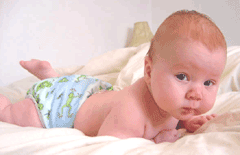
Baby in cloth diaper. Source: Environment Canada.

Could the child-free idealist who had never changed a diaper in her life transform herself into a real earth mother and help ease the burden on B.C.'s landfills?

Or would I be pleading for a Huggie in no time?

I had always been appalled by those disposable diaper stats: around 90 per cent end up in landfill and four million diapers are discarded in Canada every day. Plastics in the diapers may take up to 500 years to decompose, by some reports.

More math: A newborn can go can through a dozen diapers a day and the average infant soils up to 7,000 before being successfully potty trained. Some opponents of disposable diapers fret about ground water contamination and virus outbreaks from hepatitis B and polio vaccines passing from baby to diaper to landfill.

All very interesting, and abstract, until your own first baby is about to enter the world. As my due date approached I began to dread the smelly drudgery of the cloth diaper regime.

The more I looked into it, the more I realized I'd entered some alternative eco-universe with its own issues, choices and terminology.

The workload

The re-usable option may save money in the long-term, but you have to stump-up for a set of diapers in advance and that's not cheap. You can buy old-style terry diapers, or all in ones with plastic cover, or pre-folded ones with separate plastic pants, or if you want to be truly virtuous, organic diapers that cost up to $38 a pop. EEEK!

I was told that even before the baby arrived I'd have to put the diapers through the washing machine three times. I couldn't use the usual detergent or conditioner as they have residues that reduce absorbency. I'd have to buy a couple of buckets with lids to store the dirty diapers until I'd have enough for a load. And I'd have to buy baking soda in bulk for odour neutralizing.

And what about people who argue that cloth nappies are not the green alternative they first appear? All that cotton growing and washing and drying uses up extra energy and water, right? If you add a diaper service you can throw in gas consumption too. In 2005, the U.K. government's environmental agency produced an infamous survey that suggested there was very little difference in the environmental impact of cloth or disposable diapers.

I gave that some thought, but when I looked at the figures, cloth diapers still have the edge in terms of green credentials. According to the survey, a cloth-diapered baby produces 559kg of CO2 equivalent compared to 626kg for disposable wearing babies.

And for me, the argument that all the washing and drying makes cloth a waste of time is a bit lame. No one is suggesting I dress my baby in disposable clothes to cut down on washing costs and as far as I know environmentalists haven't started wearing disposable knickers to reduce their carbon footprint.

A brief honeymoon

So, I decided to take an honest shot at the cloth diaper lifestyle. And here's my report.

When my baby was a few days old and he did his tiddly poos, I really wondered what the fuss was about. My idealistic haze lasted for about two weeks. As he grew so did his poos. And when he blasted through three diapers and three sets of clothes with his mustard-coloured baby gumbo just as I was about to leave the house, I began to see the merits of the disposable option.

Disposable Diaper Facts

Landfill

The Lower Mainland disposes of around 30,000 tonnes of personal hygiene products a year, according to Nanaimo-based WasteNot. On southern Vancouver Island that figure is between 8 to 10,000 tonnes a year and growing.

Michelle Bigg of Nanaimo-based WasteNot says aging boomers are a worry. "Incontinence pants for adults are four times the size of infant products and twice the weight when soiled."

Bigg is helping to bring diaper recycling technology to Vancouver Island. The Knowaste Diaper Processor II, now used in Toronto, sanitizes and separates the components to create air filters, roof shingles, fertilizer and more.

Diaper choice

I tried out four different brands: The Bummis plain cotton diaper is basically a rectangle which you fold and sells for $2.25 each.

Mother-ease organic diapers cost the same as about eight Bummi cloths.

Kushies, with cutesy designs on the front, cost $54.99 for a 5-pack.

.

A brand called Bamboozle, made from bamboo grown in Turkey for a Scottish company, are imported into Canada by Bummis. They are super soft and extra absorbent, but that also means they take twice as long to dry and just feel damper to the touch than all the other diapers. On the plus side, they have a good re-sale value. I used plastic covers and a throw-away liner with all brands.

Whole Foods also sells the gDiaper, a hybrid of the cloth and disposable. It has no plastic, degrades in three months in the landfill and is said to be flushable. It's not cheap. For around $30 you get just 10 flushable gDiaper refills and 2 covers.

-- Y.B.

I do however have my limits and I'm short on righteousness at three in the morning. From the time my boy started waking up just once a night, I started using disposables for nighttime.

I've yet to find a cloth diaper that can last more than three hours without getting soaked through. I got sick of getting wet when I fed him at night. I'd then have to change all his clothes and there was just more screaming and general upset and I got even less sleep.

With the disposable, we both spend the minimal time awake; the diaper keeps him dry until morning. He now sleeps through the night and absolutely nothing would persuade me to do a nighttime change with cloth. That's seven disposables a week but it's still better than four or five a day. Disposable are also used for holidays, and long hiking trips.

Peasant woman syndrome

The first time I used disposable I thought they'd be so fantastic that I would weep when I had to go back to cloth, but a year on, I'm still committed to using cloth diapers. K is still using the same cloth diapers he did a year ago and I'm only on my third pack of disposables so it has been a real money saver. I don't really bother with the special detergent anymore. When I was sleep deprived, I'd often forget to use it anyway, and I didn't notice any difference in diaper performance.

For a while I even thought I would have to buy specially designed "real nappy" pants to accommodate the extra junk in the trunk but that turned out not to be a real issue. However, in the early days the cloth diapers made it look as if K had a baboon's bottom.

I did try line drying a few times in the summer but it was a hassle too far and I was beginning to feel like an Albanian peasant woman. Trying to match up sunny days with the wash cycle was a nuisance and it took a whole day for the damn things to dry. Not something I shall be repeating this July. For a month I used vinegar instead of conditioner but now I stick those plastic spiky balls in the dryer and that does the job.

Most importantly, the changing regime gets easier and less messy as the diet changes from milk to solids. If the last eight months were anything like the first four months, I'm not sure how long my resolve would have lasted. I used to do diaper washes three times a week. Now it's down to once a week. And do I ever look forward to that joyous day in 2009 when I can put the cloth diapers away for good!

Related Tyee stories:

 [Tyee]

10  Comments:

Login or register to post comments

  • woody

    3 years ago

    KA KA mommy.

    Yolanda isn't it called KA KA, not poos.

  • Stump

    3 years ago

    using both

    We used a service that delivered clean diapers, and took away the dirty ones (cloth). Loved it and it felt like it was worth the $$$.

    Used disposables when out and about.

    Loved my kid since day one, but I sure don't miss the diaper days.

  • werdnagreb

    3 years ago

    GDiapers

    We've been using GDiapers on our little guy. They've been great. They are basically biodegradable liners held in place by a cloth wrapper.

    http://www.gdiapers.com/

    We thought about using cloth, but we have shared laundry in our building, so thought that wouldn't be nice to our neighbors. And besides, we'd be spending an extra $15/week in laundry (give or take).

    They wind up being a bit more expensive than regular disposables, but are so much better.

  • HappyFeet

    3 years ago

    It's really not a big deal

    As the mother of a 5 month old, I can say I went through a similar decision making process. I had spreadsheets for comparison and scoured different places for information on the pros and cons of cloth vs. disposable. I really wanted to be thorough. I laugh at myself now and have since learned to relax way more.

    I decided to try the cloth. I invested in the adjust to fit type diapers and a few covers. I do a couple extra loads of laundry and find it doesn't really impact my life very much. Instead of emptying a diaper pail into the trash, I empty it into the washer.

    Initially I was doing it to be more environmentally aware, but I like it now because I am not buying a constant supply of diapers. I'm reusing what is already there. If having a kid has shown me anything, it has shown me how much crap you can collect or that you "need". If it means one less trip to the store and one less thing off my list, I'm happy.

    I do use the disposables for longer outings and travel because it is easier and I don't have to take as much stuff out with me. But the majority of the time the little guy rolls in cloth.

    My one complaint about cloth is that they are more bulky so my baby can't move around in them as well, but he'll catch up soon enough.

  • Canis Latrans

    3 years ago

    Beer and Diapers...

    Years ago, I used to work for the pre-privatization Ministry of Highways as an equipment operator. Every spring, on our stretch of main road between Midway, BC and Osyoyoos, we used to have to do a spring "ditch" clean-up along the sides of the highway- gathering copious quantities of predictable debris items .

    Anyway, mile for mile, year after year, the most common source of roadside garbage tossed out of vehicle windows was-, yup, beer cans/bottles and disposable diapers.

    "Now don't that about say it all," was my annual reaction. It is still likely the
    single most defining statement on the state of the male-female relationship, as well as our relationship with the natural environment. :-)

    The Mrs tells me that her technique for cleaning diapers, pre-throwaway diapers, when we were raising our wee bairns, was to clean the worst off in the toilet by flushing it and holding on tight. (Not always successfully.)

    Me? What? That was woman's work. I was drinking beer.

  • woody

    3 years ago

    Disposable diapers and Air Plane usage

    Disposable diapers and Air Plane usage are like the weather, everyone bitches about it, but no one wants to do anything about it.

  • James09

    3 years ago

    Go diaper free

    To us it was cloth or bust. Our environmental values prevailed and we knew we had to do cloth. Plus, we have a washing machine in our home so we really had no excuse.
    The first 2 months were tough. They don't really make newborn cloth diapers and the local cloth diaper store told us to use disposables until she grew a little. Luckily we had a few used ones from a kid swap and managed to buy a few more from Discount Diapers on W 10th ave to suffice.
    The biggest triumph was going to diaper free at 8 weeks. We used the book Diaper Free by Ingrid Bauer and the discussion forum on Mothering.com for reference.
    We went from using 12-20 diapers per day to about 2-4 per day. Diaper laundry was now once a week, not every 2 days.
    It took a week for us and our daughter to get in sync and then it became part of the routine. She'd let us know with sounds or movement that she had to go and we would take her to the toilet.
    I recommend diaper free to anyone, especially if you are using cloth.
    We've had challenging months where she's rebelled but all in all it's worth it.
    And, rather than teaching her to go in her diaper for 3 years and then trying to teach her to use the bathroom it is more like a continuum where going to the bathroom is a part of life since before she can crawl.

  • ME2

    3 years ago

    GREAT IDEA

    James, I'm long past the age where toilet training is relevant in my life, but your story of success with your daughter, beginning at age 2 months, is an accounting of a truly revolutionary event/idea.

    If this is practical for everyone with a baby, and if numbers of people begin to do so, just think of the mountain of disposables suddenly not going to the dump, and for users of cloth the thousands of gallons of water not used, and the electricity not required to heat that water.

    I hope you and others like you will spread the word.

  • KD

    3 years ago

    Diapers

    The easiest way to transform cloth diapers into a semblance of disposables is by using disposable diaper liners inside the cloth diaper. If pooped, just take the liner and plop it into the toilet along with its contents. If only wet, throw it into the diaper pail and launder along with the diapers. The liners last through a number of washings, and help to keep the wetness of the diaper off the baby's bottom. They're available in drug stores and other regular stores that sell baby goods and diapers. A great trick to keep your cloth-diaper resolve going!

  • laucuv

    3 years ago

    UK life cycle assessment update

    Thank you for the article on cloth diapers. It's interesting to see the green revolution hit the next generation as well! In response to your mention of the Environment Agency's LCA from 2005, the Women's Environmental Network in London encourages the usage of real nappies in the UK and London from an environmental and waste reduction perspective. They believe the research for the 2005 EA's LCA to be seriously flawed and anticipate an updated version to be out soon. For more up-to-date information and some helpful hints check their website www.wen.org.uk/nappies

    • The discussion for this story is closed. No more comments can be added.