

 SHARE:
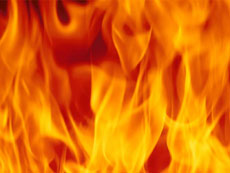
We were setting fires in a dry gulch in the hills at the edge of town, with crumpled sagebrush and bits of tumbleweed and no paper for kindling, and we had to start our own fire with a single match the way they did in the Cub Scout troop that met Thursday nights in the basement of St. Paul’s Anglican church on Battle Street. There were five or six of us and we had a box of wooden matches and it was summer and it hadn’t rained for weeks and we were ten years old and some of us were eleven years old. When you popped your head up from the gulch you could see the city of Kamloops in the north and in the south the semi-desert rolling away toward a single big house in the distance, where the mysterious huge family of the Arduinis lived out beyond the known limit of the world.
In western movies and comic books, hapless victims (prospectors, sheep herders and their families, gold miners) were often said to have been “dry-gulched” when attacked by villains in hiding. There was also a way cowboys in movies had of cupping their hands in order to shield the flames of wooden matches they used to light cigarillos and fuses attached to sticks of dynamite or kegs of gunpowder. The brown hills around Kamloops were covered in short, tough grass and sagebrush and tiny cactuses and an occasional pine tree, and everywhere there were big lopsided mounds of sand teeming with black ants, and when you ran up into the hills in running shoes you tried to keep clear of the anthills and the cactuses, and sometimes you remembered to watch out for rattlesnakes, which appeared frequently in the same movies and comic books, in the same kind of bad-guy country that we were making our fires in.
Heat and silence
We each had a fire going down in the gulch and we had to climb up to gather more twigs and sagebrush, which meant exposing ourselves to view, briefly, on the little plateau where the bare root of a pine tree forked down to the creek bed at the bottom, and when the fires were all burning equally in the clean air of the afternoon, the flames a pale yellow and blue and the smoke a faint smudge that trailed quickly into air, a tiny blue worm of flame reached out and seemed not to touch but perhaps to kiss the root of the pine tree; it wriggled for an instant in the air and then, in a heartbeat, lashed out and whipped up along the root and into the grass, and within seconds the ground above us had begun to crackle and burn. We clambered up the bank and the fire was in the sagebrush and moving through the grass; now we were in plain view of the world and there was smoke and flame everywhere before us. We began kicking sand into the flames, and some of us ran into the fire and some of us ran around it and we began kicking at anthills and then digging into the anthills with our hands and arms and flinging big sifting handfuls of ants and sand and clods of dirt onto the flaming grass and sagebush, and we were breathing hard and no one said anything as we ran from anthill to anthill kicking and scooping; we were utterly concentrated and grim, and we knew what to do: we put out the fire.
In the end we were covered in sand and ash and ants were crawling through our clothes and there were cactus spines in our running shoes and in our jeans. What would we say to our mothers? In the distance we could see people coming toward us from the big house: Arduini kids, older than us, approaching over the brown hills. What would we say to them, now that we had seen fire and held it back? We looked at each other and waited. After that day, we never spoke of it again.
Memory of fire
Now rain falls in autumn, raindrops drum on the plexiglass skylight and a steady thrubbing fills the apartment; the windows are mottled with raindrops (they glisten); city lights glow in the distance. In the fireplace blue flames gutter (what is that sound?) from a titanium burner fashioned to resemble a log; the flames are pale yellow at the base and they flutter and dance and do not go anywhere; faux embers glow from within the titanium log; a fire screen stands before it all: here is the intimacy of the not-wood fire, which remains a real fire nevertheless, with real flames. Is it true that what we need is something that glows and radiates heat, not for warming the body—invisible non-glowing heat does that well enough—but to gain a shared, a public sense of warmth: we contemplate the flame together.
I light a candle for a friend who has died. As the match burns down to my fingers, the aroma of burning wood fills up the moment, and then the moment is overtaken by other fires, archaic memories of fire, cooking fires on Saltspring Island, campfires by rivers and lakes, the fireplace at my friend’s house when he lived in Victoria: all of fire is returned to this moment of a single match burning, even fire in the Kamloops hills, never to be mentioned again.
Stephen Osborne is founding editor of Geist magazine. This article is from the current issue.
![[Tyee]](/design-article.thetyee.ca/ui/img/yellowblob.png)








Tyee Commenting Guidelines
Comments that violate guidelines risk being deleted, and violations may result in a temporary or permanent user ban. Maintain the spirit of good conversation to stay in the discussion.
*Please note The Tyee is not a forum for spreading misinformation about COVID-19, denying its existence or minimizing its risk to public health.
Do:
Do not: