So You Want to Buy a Prius

Great car, but run the numbers. There may be more cost efficient ways to cut pollution.

By Clark Williams-Derry, 25 Jan 2005, Northwest Environment Watch

priussm

Northwest Environment Watch

A friend of mine, a green architect, is in a quandary. Which car should he buy to replace an automobile that was totalled?


He's narrowed his choices to four -- a super-efficient Toyota Prius, a VW or Subaru station wagon, or a 1992 Honda Accord -- and is weighing factors including price, reliability, safety, utility, and environmental performance.

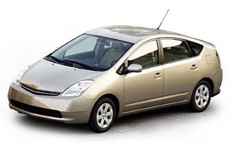
I can't claim any special expertise on the subject, but I can say this much (and I'm preparing to duck when people start throwing blunt objects at me): for most city dwellers, buying a new Prius is a fairly expensive way of reducing your environmental impacts.


Here's what I mean. A new Prius starts at about $20,295 (all dollar figures are US). To keep comparisons simple, I Iooked at similar Toyotas--they're likely to have similar safety, performance and reliability to the Prius. The closest match--a new Toyota Corolla, which has similar interior room to a Prius--starts at $6,600 less. (A Toyota Echo, a little smaller than the Prius and with better mileage than the Corolla, starts at about $10,000 less than the hybrid.)

Of course, a Prius' operating costs are lower than the Corolla's: both have solid reputations for reliability, but the Prius sips gasoline. Over the course of 10 years, the Prius might save as much as $2,100 in gasoline costs alone, depending on how much you drive it and how expensive you think gas is going to be. (I've assumed that gas will cost $1.80/gallon in real terms, a future discount rate of 6 percent, and that the car will be driven 12,000 miles a year.) In the United States, buying a Prius may also make you eligible for a federal tax credit, though that benefit is being phased out. But excluding any tax credit, the Prius is about $4,500 more expensive than a comparable Corolla, after factoring in its lower fuel costs.

But saving gasoline also has the side benefit of preventing global warming emissions -- roughly 15 tons of CO2 over a decade, plus lots of particulates and smog-forming compounds. Those benefits aren't included in the market price of the vehicles -- but if they were, they'd make the Prius an even better buy.

Or, maybe not.

Economics of CO2

In reality, the cost of offsetting a ton of CO2 emissions isn't all that high. The L.A. Times reports on a company that's selling what it calls a TerraPass: "essentially, a pricey bumper sticker that identifies the driver as a volunteer in the fight against global warming." When you buy a TerraPass, the parent company buys up CO2 credits in the newly established Chicago Climate Exchange, whose member corporations have committed to reducing greenhouse emissions. The rub: a TerraPass that offsets 10 metric tons of CO2 emissions costs just $79.95. If the program really works as advertised (a big if, obviously) $120 would be more than enough to offset the increase in emissions from buying a Corolla vs. a Prius. If you were willing to commit just one-tenth of the cost difference between the Prius and the Corolla, you could make your driving climate neutral for 10 full years. For one-fifth the savings vs. a Prius, you could offset both your emissions, plus a neighbor's. And so on.

Closer to home, Bonneville Environmental Foundation's Green Tags program lets you buy credits to support new wind and solar power projects. More renewable power means less coal and natural gas burned in power plants -- and consequently less particulates, smog-forming chemicals, mercury, and the like. Buying enough green tags to cover the 10-year difference in CO2 emissions between the Prius and the Corolla costs about $420.

Or if you're into tree planting, Reuters reported that, according to a new Pew Charitable trust study, large forest-based carbon sequestration projects could remove CO2 from the atmosphere for somewhere between $25 and $75 per ton. And the list of cost-effective carbon-sequestering projects (including contributing to organizations working for legislative and policy changes) goes on and on.

Love in the abstract

Now, before you start getting all mad that I'm not being fair to the Prius, I do want to point out two other things to consider. First, driving a Prius--which qualifies as a "super ultra low emissions vehicle" under California rules--prevents pollution where you live. For CO2, that's irrelevant. But for other pollutants, it might matter: driving a Prius is a sure fire way of reducing your contribution to local air pollution. The other options -- Green Tags and the like -- still prevent pollution, but possibly not in your neighborhood.


Second, in the abstract I still love the Prius, and wish it (and its hybrid successors) well. I want gas-sipping hybrids to be so successful that they completely transform the automotive marketplace. They're already starting to -- and by buying a hybrid, you're helping speed that transformation along. But that doesn't mean that there aren't other, more cost-effective ways of achieving the benefits that the Prius brings.

Of course, your mileage may vary. The Subaru Outback's a gas guzzler in comparison with the Corolla, which makes the potential cost savings of choosing a Prius a little higher. Nevertheless it seems like a sound environmental choice would be to buy a safe, inexpensive car, and contribute some or all of your long-term savings to a program that's working to reduce CO2 emissions (either directly, or through changes in policy).

Bonus table

Just because it seemed like it might be helpful, I'll include a handy guide to gasoline costs and CO2 emissions from your car. Notice the diminishing returns: trading an SUV that gets 15 mpg to a midsized car that gets 30 mpg is twice as beneficial as switching from 30 mpg car to a hybrid that gets 60 mpg.

Estimated tons of CO2 emissions, and present cost of gasoline, for a car driven 12,000 miles per year for 10 years (guesstimating that gas will cost $1.80 per gallon in constant dollars):

Actual MPGTons CO2 Cost of Gasoline
15 88 $12,304
2066 $9,228
2553 $7,382
3044$6,152
3538 $5,273
4033 $4,614
4529$4,101
5026 $3,691
5524 $3,356
6022 $3,076
6520$2,839


This article originally appeared on the Cascadia Scorecard Weblog produced by Northwest Environment Watch,  where Clark Williams-Derry is Research Director.

 [Tyee]

31  Comments:

Login or register to post comments

  • Ron Yamauchi (not verified)

    7 years ago

    We looked at all these options too and went with the VW Jetta Wagon TDI, a diesel. In four years the warrenty runs out and you can put bio-diesel into it.

  • Terry Lavender (not verified)

    7 years ago

    An even more effective way to minimize damage to the environment is to cycle, walk or take public transit. Even a totally electric car would still require asphalt to drive on and asphalt to park on.

  • poiuy (not verified)

    7 years ago

    Word is that after certain period of use the whole battery will need replacement at cost of perhaps 4,ooo dollars.

  • John Pass (not verified)

    7 years ago

    These vehicles were exactly the ones I had under consideration last summer. I went with the Corolla. You'd have to drive the Prius 400,000 km further to equal in gas cost savings the initial price difference. And that excludes inflation and the strong possibility that even better hybrids are just around the corner. Prius might be great now for taxi companies and the like. It doesn't quite make sense yet for the typical driver.

  • james (not verified)

    7 years ago

    The US$1.80/Gallon (about C$0.59/L) is an unrealistically low gas price, at least for us in Canada. The further assumption that gas prices will stay constant in the future after inflation is an unrealistic assumption. Most experts seem to believe that unless things change significantly, we can expect gas prices to continue to outpace inflation for the foreseeable future. This significantly throws off most of the calculations shown. The thing this whole article misses, and the reason the Prius is successful, is exept for a few nerds, nobody buys a car based strictly on a cost-benefit analysis. One of the main reasons they buy it for the image it presents and a Prius (rightly so) presents an environmentally responsible image.

  • Steve (not verified)

    7 years ago

    I made similar cost comparisons in 2003, when I needed to purchase my first car (at age 32) for work. I used to cycle everywhere, so I resented needing to actually buy a vehicle. The Cooperative Auto Network wouldn't take me because I hadn't had my drivers' license long enough to qualify for their insurance (as a radical cyclist, I didn't see the need to get a drivers' license until I actually needed to drive ...). I wound up buying the 2003 Corolla -- I couldn't afford the premium for the image, awesome look and better CO2 performance of the Prius this time. I'm very happy with the Corolla, but maybe "next time" I can go for the Prius ...

  • hybrid diesel (not verified)

    7 years ago

    I read an article recently that argued that, from an economic perspective, hybrid diesel engines had greater potential to remove more tons of CO2 from the atmosphere than other technologies because it was potentially more affordable, and that diesel could cycle at a lower rate. The article argued that this would likely be true for the next 30 - 50 years. (Sorry about the lack of citation -- I don't have it in front of me now)

  • sdgreen (not verified)

    7 years ago

    The notion that hybrid vehicles will solve the so-called harmful gases that go into the atmosphere, I think is unrealistic. None of the current hybrid vehicles offer satisfactory long range driving comforts that are required in North America. Futher, the smaller cars, such as the SMART, are completely impractical for anything else than sight seeing or point a to b travel without any cargo. Electrically powered vehicles sound great, except, batteries wear out and need replacing at a huge cost. Public transport is completely in adequate in its present form and is really just for point a to b travel. If power plants for vehicles can be made using nuclear power then that could solve the issue, but so far that also seems to be just a dream. North Americans do like to travel independently and use motor vehicles to travel long distances. I do not think this will change.

  • Marko (not verified)

    7 years ago

    Apparently one of the key selling points for hybrids in the U.S. is that many states and cities allow hybrid cars to use HOV lanes with a solo occupant. There has been considerable pressure on congress to extend this nation-wide. (car-pool lanes are funded through federal fuel taxes) In some areas there are complaints that slower moving hybrids as adding to congestion in the HOV's.

  • Ron is green (not verified)

    7 years ago

    Terry, I do walk/run/cycle for my daily commute and to get groceries. We do drive our kids to school and after-school stuff. I also play hockey and have a band. I don't know how many times you've taken drums on the bus. Once is plenty, believe me.

  • Kurt (not verified)

    7 years ago

    I've been following the consumer reports on the Prius-type vehicles, in the hopes I can get one when my cheap and dependable beater finally packs it in. Rural commuters do not have the option of transit. It's kind of like my sister-in-law in London, who markets wind turbines, said: Wind power is not at all competitive with other, dirtier forms of power generation as far as cost goes, but corporations are buying them because of the environmental credits they receive -- and that's a benefit to the air we breathe. Leaving aside the argument that the turbines are visual pollution...

  • Pepa (not verified)

    7 years ago

    1) Toyota Corolla is lot smaller car than Prius. To compare Prius to Corolla is just plain lack of knowledge. 2) Due to my 140 miles a day commute, Prius is saving me right now $1,700 a year, as compared to my previous vehicle, Toyota Camry. 3) The tax deduction was extended - and it is $2,000 4) Your logic on removing CO2 is just plain faulty - I don't see _any_ reason not worthy of removing _any_ polution. Maybe people WOULD use the extra funds to remove polution - but they will not. End of argument. And finally - similarly equiped Corolla (you may like to check the standard equipment on Prius!) runs close to $17,000. The difference after Tax Credit - around $2,000. Where you got yours $10,000 is beyond me.

  • Marko (not verified)

    7 years ago

    In addition to the info about fuel emissions, I'd want to know what are the environmental impacts of the manufacturing process and what is left over after the car has ended its useful life? What components can be made from recycled materials and, in turn, be recycled?

  • Torben (not verified)

    7 years ago

    Pepa is right. This article raises good food for thought, but the logic is flawed and the analysis incomplete. The assumptions are all in favour of the given viewpoint. The author even disclaims the article by noting that he(?) is not an expert in the field. This is an opinion piece, nothing more.

  • Fi (not verified)

    7 years ago

    I myself like recycled cars. This summer I bought a 1986 Toyota Tercel- for $1200 (with lots of new parts). It rocks. The perfect dog beach/ dog hike car (my main reason for buying it), and I still cycle and walk a lot. It costs me about $25 to fill the tank and if I seem to be going through gas to quickly I don't "let" myself drive it for a couple of days. Mind you, it needs to be air-cared next month, so we'll see...

  • John Nalleweg (not verified)

    7 years ago

    Frankly, the way to kill pollution and save the planet is to jack up the price of gas. When prices rise to European levels, people buy smaller, more fuel efficient cars all round. And the cost of fuel emphasises the miles driven, so the long range daily commuter, who pollutes more, is pressed to get efficient. The person who only uses the car for recreation, and puts on low mileage, can still justify an SUV, but certainly not for commuting. Let's just tax the shit out of gas, and watch the market adjust. Don't believe me? Think back to the 70's and the OPEC oil shock. Demand for fuel efficient vehicles soared. Manufacturers actually advertised the great mileage their cars were getting. Market forces can be very powerful. Yes, it was a bit grim in terms of car design, but I still regret when the price of gas gradually became negligible, and the "more cylinders", "more power" hype started up again. If you want a revenue neutral solution give the increased taxes back to the consumer as a flat rate rebate on their insurance costs. Every car gets back $5oo a year (or so, depending on the amount of the tax) towards their insurance costs. If you drive a fuel efficient car, you win. If you drive a pig you lose. Just watch the market move.

  • Stephen (from England) (not verified)

    7 years ago

    I see the sense of the arguement, and of those commenting, but in addition to the other costs mentioned (road building / local pollution etc.) you need to account for the cost of congestion, noise and accidents on the local community. Once these are taken into account, the only economic option is a Green Fuel Bus. Perhaps the best focus should be on using the car less by pooling / home working etc.

  • relayer (not verified)

    7 years ago

    Fi, if it fails Aircare, sell it to me! My 84 Civic (40mpg) is on the way out...i love toyotas, and never buy new cars..let some rich person absorb the sticker shock :)

  • biodiesel (not verified)

    7 years ago

    I see CanStats ran a Canadianized version of this. They not only converted it to Canadian dollars, but seem to have used Canadian prices (ie. gas is way more expensive in Canada, not due to the exchange rate...higher gas taxes I assume) To Hybrid, or Not to Hybrid http://canstats.org/readdetail.asp?id=731

  • Shakinglikemilk (not verified)

    7 years ago

    I wish the author had commented on the Smart car.

  • Brian White (not verified)

    7 years ago

    Cars are to young ladys as a peacocks tail is to a peahen. They like the flashy one and to hell with the environmental or economic consiquences.
    So, to get a better world, you got to educate the young ladys. Get them to forget the damn car. Look at the man! Girls, a guy With a car, you just cannot thrust, where is he goingto, who is he going to? He also has to pay for it (a car is like a mistress). Imagine how many extra times you could go out with him if he didnt have the expense? He could buy you dinner, wine, a band of gold. You could be taxied everywhere you wanted to go! Wow. You can have your hearts desire. All u gotta do first is get him to sell the car.
    Yup, educate the females and the world will run smoother. PS I do not drive.

  • Anonymous

    7 years ago

    in the last 30 years since the last big oil crisis in the states nobody has doe anything to get the automobile off petrolem, there are other fuels that can run a car. The oil companies want you to use every drop of oil in the ground so most of this technolegy has bee supressed because
    of that. oil use to be almost free for oil companies to take out of the ground now it is costing more to get at whats left. fossel fuel gives alot of punch in the internal combution engine but it doesn't burn as clean as alcohol.
    if i have to do without 5 or 10 hourse power then so be it, many reports say alcohol gives more power others say less it is possable to convert a engine to use alcohol fuels it may need more copper fittings rather than rubber hose and plastic wich costs more. if we could get even 20% of the cars on the road esp older cars on alcohol fuels that would help a little to free up petrolem for ashphalt and shingles on your roof.
    henry ford infact prefered alcohol fuel but the evil oil industry used propgada to make people want gasoline and gas was dirt cheap in comparison
    alcohol is still exspensive if u buy it in 500mls bottles at the drug store and in bulk still would still be more because production of alcohol isn't as big and methods of refining haven't been mass produced in quantities as oil. i had a old lawn mower i ran on alcohol i'd buy at the drug store and it ran fine it just smelled like i was having a fondu and sometimes would put a bit of gas in the tank with it so it could start easyer cold.
    hybrids are a good short term solution but if the oil companies have their way everything would be a gas guzziling beast.

  • Let's look for real solutions (not verified)

    7 years ago

    The adoption of biofuels would be a humanitarian and environmental disaster, Feeding Cars, Not People by George Monbiot in The Guardian, 12/11/04:


    Please do some research on emmissions reports on biofuel vehicles. They aren't effective in reducing greenhouse gas emmissions.

  • Here's the link: (not verified)

    7 years ago

  • Comeon! (not verified)

    7 years ago

    Brian White, get your head out of your butt. Not all women think that way, and your characterization is idiotic.

  • No, no, no ... (not verified)

    7 years ago

    ... Brian White, leave your head in your butt. It is the perfect place for it.

  • John Malcolm (not verified)

    7 years ago

    Terry Lavender makes a good point about walking, cycling and transit being a better response toward a cleaner environment. He might have added good train service between farflung communities. The point missed when focusing on air emissions and greenhouse gases is the additional destruction of the built urban environment to accommodate cars, be they Priuses or SUVs. The sheer expanse of tarmac, the lots, the ugly strip malls and big-box stores, the wretched plastic signs and other devices aimed at grabbing the attention of speeding motorists, not to mention the dehumanizing sprawl of communities, where walking around is considered an oddity or worse a felony — it all seems so obviously repellent. Why aren't we resisting the siren calls of Toyota and the rest of the self-serving auto giants and demanding more street cars, LRT, bike lanes, better and more buses — all at a cost considerably lower than paying Detroit for its obscene profits, while benefiting the entire community.
    These kinds of things have already been done in countries like Gerrmany, Holland, France, Switzerland, Scandinavia, countries which are leaving North America behind in terms of high quality of life . . .

  • John Malcolm (not verified)

    7 years ago

    Post Script:
    Correction, that's Germany. And Scandinavia isn't a country, but you know what I mean.

  • lokijy (not verified)

    7 years ago

    With the cost of battery rejuevenating after the inital period being perhaps $4,000.00 or more,you may be stuck with a rapidly depreciating car,as all second and three hand car buyers know you are just creating a used ,preowned, car for me.And the prospect of a disposal fee for the toxic battery disposal doesn't warm my heart.

  • Wayan (not verified)

    7 years ago

    The 1992 Accord would be the best option out of those listed in the article. The fossil fuels consumed in extracting and processing the materials that go into a car dwarf whatever gas you will consume over ten years -- especially the gas and coal involved in mining and smelting iron ore, or electrolyzing bauxite (alumninum ore) (don't kid yourself, a small and ever-decreasing proportion of electricity is generated from renewable sources).

  • Irene (not verified)

    7 years ago

    CAR SHARE ANYONE? I am looking for a way to get alternatively fueled cars into a car share program in Vancouver. Cooperative Auto Net (CAN) currently has three hybrids but their priority is getting more people to share cars, so they too want the cheaper option. I want to directly demonstrate a viable non-fossil fuel dependent system for urbanites (yes, I know, lofty ideals given the dependence of electricity on fossil fuels). So anyone in? write to CAN to ask about this.

    • No best comments selected by an editor for this story yet. To see all comments, click the All Comments tab, above.
    • The discussion for this story is closed. No more comments can be added.