


On May 14, my wife and I spent an afternoon in the House of Commons. We were there for Question Period, but arrived early. Perched in the Members' seats on the west side of the House, we faced the Opposition; if we peeked over the railing, we could see the front-bench Conservatives just below us.
Admitted around 1:45, we looked down on an almost-empty chamber. Perhaps a dozen Liberals, Blocquistes, and New Democrats were scattered among the seats, and about the same number of Conservatives. An earphone was wired into each onlooker’s seat; with it, the speakers below were usually inaudible. (You can read what they said that day in Hansard).
Speaking to a bill on aboriginal rights, Liberal Kirsty Duncan gave a well-organized argument in a flat tone of voice. She criticized the NDP’s position on the bill, leading Libby Davies, almost alone at the south end of the opposition benches, to brush her off. Neither of them seemed really interested.
The Acting Speaker, Denise Savoie, ended the debate and moved the House to Statements by Members, when MPs could say anything they felt like. Conservative Rod Bruinogge praised the thousands of demonstrators (most of them Catholic schoolchildren) rallying outside in the annual March for Life. Other MPs mentioned the end of the Sri Lankan civil war, the 40th anniversary of Manitoba’s first NDP government, and the success of the Brantford Golden Eagles in winning the Sutherland Cup as Ontario Junior B Champions.
Finally, at 2:15, Question Period arrived. MPs had been filing into their seats, sometimes crossing the floor to shake hands and chat amiably with their adversaries. The public seats were now full as well. Many onlookers were students; all had gone through two brisk security scans -- one on entering Parliament, the second before entering the chamber itself.
Having seen so many operatic clips from Question Period, I didn’t find the heckling and shouting very unpleasant. Instead, I noticed how many MPs ignored the goings-on, except when they were obliged to applaud or leap to their feet to support a colleague. They looked like first-year college students deeply bored by the current class activity.
Slaves of their Blackberries
Diane Ablonczy, almost directly below, was reading a photocopy of a National Post article titled "Cry Me a River, Mr. Mulroney." Ujjal Dosanjh was immersed in some thick report. Almost everyone had a Blackberry that required constant attention. Ruby Dhalla was absent, as were Prime Minister Harper and Opposition leader Michael Ignatieff.
The questions included the Maritimes’ lobster industry, employment insurance, Burma, Sri Lanka, Cuba, and pension plans. Tony Clement responded to EI questions with repeated warnings about Liberal plans to raise payroll taxes, and brought up the "coalition" as a clear and present danger.
Stockwell Day stopped chewing gum long enough to criticize the absent Ignatieff’s supposed ignorance about Cuban-Canadian relations.
Gary Goodyear, the Minister of State for science and technology who prefers not to discuss his personal views on evolution, criticized the Bloc Quebecois for voting against nanotechnology funding.
The period fizzled out in an exchange of insults between the government and the Bloc over whether BQ leader Gilles Duceppe had accused someone of lying. Bob Rae, in the Liberal front bench, observed that the English translation of Duceppe’s remarks had been inaccurate.
The conventional view is that Question Period shocks innocent schoolchildren who observe their government in boorish action. The schoolchildren that day seemed to take the uproar pretty calmly.
Schoolyard bullies
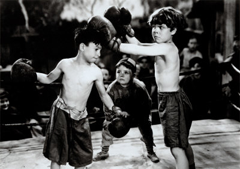
Question Period looked like what urban black kids call "doing the dozens," swapping ritual insults to maintain status in the group. Canadian kids of whatever colour would understand what was going on in the chamber: the same ragging and bullying they experience in the schoolyard.
I saw the MPs’ behaviour not as mere discourtesy to one another, but as a studied insult to the onlookers. Question Period is a kind of vicious parody of democracy, a show deliberately put on for the audience. What discouraged me was that all four parties were colluding in the show. Whether it was Libby Davies and Kirsty Duncan sniping at one another, or Tony Clement mumbling about payroll taxes, it was all meaningless -- and the MPs knew it.
It was meaningless for Jack Layton to ask about what the government would do about the unjust trial of Aung San Suu Kyi. It was equally meaningless for Peter Kent to say, "We have called for her immediate release, along with all political prisoners in Burma." Obviously the government could do nothing, and it was absurd for it to pretend otherwise.
Worse yet, the MPs clearly didn’t care if their audience knew it was being insulted. We observers had to behave properly or be yanked out of our seats. The MPs, our employees, could behave as badly as they pleased, and the Speaker would only sputter about "order."
Scripting the questions
A day or two later, I talked with a government employee (understandably anonymous). He told me how the worst part of his job had been to write his minister’s questions and answers for Question Period. What would the Opposition be likely to ask? And what should the answer be?
Every minister demands the same, building up a menu of scripted responses. If you ever hear a minister say, "Mr. Speaker, I’ll get back to the honourable member about that," it’s because someone came up with an unexpected question.
Three hundred and six Members of Parliament are involved in this charade, and I wonder why. If just one party leader simply said, "Mr. Speaker, this is a grotesque sham and an insult to the people who put us here," and refused to take part, we might actually begin to crawl back toward democratic debate. Until that happens, the show will go on.
Related Tyee stories:
- Harper's Plan to Make You Fear Minority Governments
He gummed up Parliament for a reason. - The MP from East Van Sums Up
Reviewed: No Laughing Matter: Adventure, Activism & Politics by Margaret Mitchell. - Is Canada becoming less democratic?
![[Tyee]](/design-article.thetyee.ca/ui/img/yellowblob.png)
Read more: Politics





Tyee Commenting Guidelines
Comments that violate guidelines risk being deleted, and violations may result in a temporary or permanent user ban. Maintain the spirit of good conversation to stay in the discussion.
*Please note The Tyee is not a forum for spreading misinformation about COVID-19, denying its existence or minimizing its risk to public health.
Do:
Do not: