Opinion

How to 'Fix' Big Ridings

Give rural voters more service, not more MLAs.

By Rafe Mair, 24 Mar 2008, TheTyee.ca

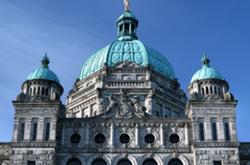
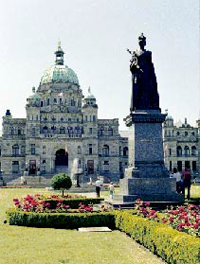
Legislature Buildings

Why should some voters have more clout?

We must, in examining the controversial new electoral map, understand that MLAs perform two functions. First, they do what they're told and support their party no matter what they think or what their constituents think. When MLAs talk of voting with their conscience, it's less persuasive than "your cheque is in the mail."

Their second job is to help their constituents deal with the government. Why can't Bloggs have a liquor license? Why hasn't the single parent with a bunch of kids got his/her welfare cheque? May we in the One-Eyed South American Butterfly Club please have some money? This is not an unimportant duty because people do have real problems dealing with the government and its Crown agencies and corporations.

The new constituency map has been fraudulently argued not just at the political level but also by the media. It is solemnly intoned that large, sparsely populated ridings are too large to be allotted seats on the same basis as urban ridings. Never mind that new rural ridings will elect MLAs with half the votes of urban ridings. These constituencies, we're told, are just too big to be serviced under the democratic principle of one person, one vote with all votes equal no matter where they're cast.

Serious about servicing citizens?

Overlooking for a moment the argument about representation in the House, let's deal with "servicing" the riding. No one, least of all I who represented what was then a very large riding, would deny that bringing service to far-flung constituencies is tough. I agree that this must be taken into account.

The answer to this problem is simple.

Virtually all constituency work is done by the staff in the constituency office. The MLA must show his face from time to time, but he or she doesn't do the work. During my time -- when the Kamloops constituency went to Blue River to the north, halfway to Merritt to the south, Monte Creek to the east, Logan Lake to the southwest and Savona to the west -- there was no way I could spend the time in these areas that I would have liked. I was in cabinet the entire time and was away a great deal. My constituency secretary and my executive assistant did the work and did it well. I agree that's a problem, but it's one with a very simple solution: simply create more constituency offices in large ridings so people only need to travel relatively short distances to their MLA's office and his or her secretary, who deals with matters between voters and the government and is in frequent contact with the MLA.

This won't give all people in all rural ridings the access one has in, say, North Vancouver, but people in remote areas know that living away from smog, cars and drive-by shootings gives them a better and safer lifestyle.

Too much clout

There is no decent argument that says rural ridings need more political clout per voter than urban ridings do. Why should my vote be worth only half of that in Northern B.C.? The law allows a 25 per cent variation, and to my mind that's way too high.

Yes, special allowances must be made for special areas but giving them extra political clout is not one of them. (I use "political clout" in the sense that they need fewer votes to elect their favourite legislative toady than more populated areas do.) Extra MLAs is not the answer. Better access to services is the answer. By all means, large rural communities should have that, and the small extra cost would be worth it.

A simple and effective idea. No wonder the politicians ignore it.

Related Tyee stories:

 [Tyee]

9  Comments:

  • reality_check

    24-03-2008

    More staff maybe and maybe better technology

    I am not too sure why consituants need to physically meet MLA's. I have not. I have written to my MLA though! However, maybe I am missing something. In case I am,... this is what I am advocating.

    I think then we should give an allowance to people who live in rural areas for having/using a computer, internet connection, and a camera, so that they would not have to drive somewhere to get an answer that would take 5 minutes. This would mean providing long-distance wifi (if no wired line is available), make possible a small tax deduction on a computer and camera. I suspect also this would mean helping consituents with technological issues (training). MLA's office (located in the most populous region perhaps) should have all the technological tools and staff to handle these services. Just like companies are understanding that sending a employee to attend a conference in Fiji for 3 days does not make sense, governments should get with the program. Or, much simpler, consitutents should use ... a phone and staff an effective way to handle calls (answering machines or more staff, whatever makes sense). Now, if people still feel the need to meet one on one, then I supposed we would need more offices or smaller ridings.

  • bleedingheart

    24-03-2008

    Large Ridings

    Why not give members representing large not heavily populated ridings a vote in the House worth less than other MLAs. If representation is the only reason why we have those low population ridings the people shouldn't mind if their MLA has fewer votes than the other MLAs. For example an MLA representing the median size riding is worth 10 votes, all other MLAs get votes proportionate to the relative size of their riding.

    Or have non-voting associate MLAs to represent large ridings (in addition to a voting MLA). These MLAs can speak in debates, ask questions, sit on committees, be in cabinet, everything but vote.

  • Orion Carrier

    24-03-2008

    Fabulous Idea

    I think this is a fabulous solution to a conundrum that has bothered me for a long time.

    I guess even after rural BC'ers got such extra service (and I think they should), that they would still feel outvoted by their urban counterparts on virtually every issue, but that kinda happens to minorities in a constitutional democracy... they do get outvoted--unless they effectively educate their majority colleagues on their issues and swing their vote.

  • Des

    24-03-2008

    rep by pop

    Rafe, your own experience looking at things from the governnment side gives your opinion trump value.

    But the problem is not just B.C.'s alone - the rep by pop conundrum is endemic to every province in Canada, and to every democracy in the world. But even if we could get every person to cast a vote in the selection of an area's representative, there is no guarantee that 'majority' rule is automatically the 'correct' choice.

    And as life gets more complicated, the eligible voter seems to get more and more disinterested in actually participating in the political process, except for continuously bitching about how unfair it all is, especially towards him/her.

    Perhaps we will eventually get the government we deserve, as the old saying goes, unless the operation of government is taken back by the people from all the 'influential' consultants and experts who mold the policies they want enacted.

  • Skywalker

    24-03-2008

    Hold on a minute>

    I think Rafe has advanced this idea before. There is a problem with it. Now I know that you can't give a vote to rocks and trees but the problem is that with rural MLA's getting less influence (voting power) much of rural BC gets to be exploited for urban interests. The sell off of our rivers is no exception. How many in Vancouver have ever been north of Cache Creek and witness the exploitation of resources to feed an urban voter who has all the voting power.

    Pollute a watershed, who cares in the urban south. Who even knows about it. Sell off a river, what does it matter as long as I can turn my air conditioning on when I want to. Sell off natural gas to the U.S.? What does it matter as long as the provincial coffers can pave more roads or build more transit down south.

    One gets rather tired of the ecological footprint of Vancouver expanding being the the only thing ever seen in the hinterland.
    With this bunch of sell off artists and the wimpy opposition you could have a whole platoon of political flacks in every large riding and it still wouldn't make any difference.

  • David Huntley

    24-03-2008

    I agree with Rafe. How we got into this mess.

    I agree completely with Rafe. The two functions of an MLA are quite separate. Providing each MLA in a geographically large riding with money for more constituency offices and staff would do everything needed; as well, it would probably be cheaper than having more MLAs. Communication is now much more convenient and cheaper than it was in the past, and for most issues a face to face meeting is not needed.
    The relevant numbers are extraordinary. The new riding of “Stikine’ will have a population of only 42.6% of the average, while the riding of Comox Valley will have a population of 122.9% of the average. The ratio is of these numbers is 2.88. That means that 1 voter in Stikine will have the same voting power as 2.88 voters in Comox Valley. The people in Comox Valley, as well as those in Vernon-Monashee, Fort Langley-Aldergrove, Langley, Richmond Centre and New Westminster, all of whose ridings have populations more then 20% above the provincial average, should be up in arms.
    So how did we arrive at this mess? We have to blame our representative in the legislature. When the Electoral Boundaries Commission produced its preliminary report last August, it recommended a redistribution that reflected the changed population distribution in the province since the last Commission. The “North”, basically the northern half of the province including Prince George, has a population of 256,000 (2006 census); if one were to make all ridings have the same population the “North” would have 5 ridings. It currently has 8 ridings. The Commission’s recommendation reduced this to 7 ridings, leaving the “North” still over represented. There were howls of protest over the reduction. The government introduced Bill 39 authorizing the Commission not to reduced the number of ridings, and the Commission took note. There was sufficient opposition to Bill 39 that it was not passed by the legislature. So the Commission made amendments to its preliminary report on the basis of the existing legislation. This is what the legislature should have approved. It did not. The Commission, having been conscious of Bill 39, prepared an Appendix P to its amendments saying what it would have submitted had Bill 39 been passed. This is what the legislature approved. Some mess. The legislature would not pass Bill 39, yet approved what would have been the result of Bill 39. Both parties in the legislature are to blame. When one reads the debates one finds no thought given to alternative ideas like the one proposed by Rafe Mair which makes eminent sense.
    (Alert readers will note that I made no mention of the reduction in the number of ridings to the Cariboo-Thompson and Columbia-Kootenay regions that were in the Preliminary Report; I did not include this in order to keep it simple.)

  • Skywalker

    24-03-2008

    Sure David Huntley but...

    ...it still would not change where power is vested and where the powerless feel the brunt of it. It takes more than just the carving up of the finite numbers of MLA's. On some issues the residents should be able to veto the government but guess what? Municipalities can now be overruled by Victoria on land development decisions within the municipal jurisdiction. As I said more political flacks won't solve the problem.

    The mentality at the center of the political system must change. The mentality of the inner sanctum of every political party must change.

  • Moonbug

    25-03-2008

    Majority Rule...

    There is more at stake here than simple parity of access to an MLA's services, that is what this "solution" fails to take into account. You also have to consider that large rural areas have competing needs, and very tough and far flung problems.

    Consider the proposed "Northlands" constituency. It would have stretched ALL THE WAY ACROSS British Columbia. I can tell you many of the problems facing Atlin are nowhere the same as those facing Fort St. John. How is a single MLA supposed to vote to represent vastly different areas of the province?

    Then you also have to consider all the resource development that goes on in large rural ridings. Just keeping up with what projects are going on is a nightmare.

    It would be the equivalent of an MLA in an urban riding having 30 different major infrastructure projects in the ten square blocks they represent, and how could they hope to evaluate them, and speak intelligently of them in the Legislature when their constituents passed on their concerns?

    I am sick and tired of urban dwellers whining about voter parity. As Skywalker noted, we here in the rural north are the ones driving the urban economy. We deserve enough clout to actually have our concerns about our resources heard in the legislature.

    Is it really reasonable to begrudge us our 8 constituencies? It isn't as though we are even being given enough clout to decide our own destiny. As it is our concerns are consistently ignored, and the government feels emboldened enough by our disspossession to spend nearly a billion on a useless convention center while our rural infrastructure falls apart.

    Try driving the roads up north; then think about the fancy pants new sea to sky highway. Even though our roads are often the only thing connecting some poor bloke in Cedervale or Gingolx to medical care in Terrace, they are in a horrific state of disrepair.

    Still, the government would rather spend billions upgrading a highway primarily used by tight-pants urbanites going skiing than to upkeep our lifeline.

    Somehow I don't think us here in the north having a little bit of say in the Legislature is going to hurt the denizens of Yaletown.

  • herbie

    26-03-2008

    Agree

    I have to agree with Moonbug regarding the priorities we seem to get up here! We're touting Prince Rupert as a new port, but there's a TWO lane highway that connects it inland. Too much traffic at times to pass, or too much rain or snow to see safely, too much truck traffic already, too many crews (all who have used uo their budget by the first snowfall of the 2nd week of the month) to maintain one road.
    An as for Rafe's idea, we're talking massive differences in staffing. We're served by an office in another town that's only manned a couple hours a week as is.
    Add that on top of MLAs who sit like ghosts in the Legislature, unseen, unheard other than the odd bump of a chair.
    I challenge anyone to drive from the Lower Mainland to PG and then PR this summer and see the road conditions at their best, then tell me how the highway to Whistler is justified.

  • The discussion for this story is closed. No more comments can be added.