Fewer Schools, More Politicians
Sorry kids, Shirley Bond and BC Libs protect their own futures.
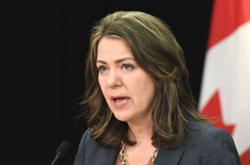
Education Minister Bond: Save her a seat!
More than 130 of British Columbia's public schools have been closed since 2001 when Gordon Campbell and his BC Liberals won election to government. Thousands of students have been forced to transfer from their shuttered schools to different facilities, and several thousand teaching positions have been lost.
Demographic change is the reason. Student enrolment is falling, and the Campbell Liberals believe that it is uneconomic to fund half-empty classrooms.
The Electoral Boundaries Commission recently recommended that three legislative seats representing the North and the Kootenays be eliminated, and five new ridings added to the Lower Mainland and the Okanagan.
Again, demographic change is the reason. While both the North and the Kootenays have declining populations, the latter two regions are experiencing dramatic growth.
But in sharp contrast to their active support for school closures, Gordon Campbell's BC Liberals refuse to accept the Commission's proposal that regions losing population should lose legislative representation. No seats will be lost, the premier declared, promising a bill to that effect during the upcoming fall sitting.
The reason for this hypocrisy? British Columbians need look no further than Shirley Bond, the minister of education and MLA for Prince George-Mount Robson, and the BC Liberal most likely to lose her seat through redistribution.
Ever so sanguine as schools were abandoned, students dislocated and teachers dismissed, Gordon Campbell and his BC Liberals will not allow demographic change to cause one of their own to lose her job.
BC's shifting population
British Columbia's population has grown every year since we joined Confederation. We finally reached the one million mark in 1946, and growth accelerated in the post-Second World War period. It took just 22 years to add a second million (in 1968), 18 years for the third million (in 1986), and then a mere 13 years to record our fourth million (in 1999).
Our population today is estimated at 4.3 million.
But some segments of British Columbians have seen -- and are seeing, for it is an ongoing process -- considerable fluctuations. And two of those segments, the school-age population and the rural population, have experienced significant declines in recent years.
Fewer school children
B.C.'s public school population peaked in 1997-98, when enrolment totaled nearly 639,000. Since then, the numbers have fallen steadily: last year the student count was under 588,000, and is projected for the current year at 570,000. (See page 2 here).
That's a loss of almost 70,000 public-school students in just a decade.
British Columbia is not unique in this regard. "Canada's elementary and secondary school enrolments fell by 1.2 per cent between the 1997-98 and 2003-04 school years," a report by the Canadian Council on Learning stated, "and further declines are anticipated over the next few years as the school-aged population shrinks."
Six years ago, Gordon Campbell's newly-elected BC Liberal government responded to the decline in enrolments by introducing a new funding formula. Not long thereafter, B.C. school districts began closing less-than full facilities and laying off teachers, librarians and other education professionals.
According to data compiled by the Ministry of Education, there were 1,780 public schools in 2000-01. The comparable number last year was 1,655, a decline of 125. (The total number of schools closed was 132; this difference is explained by the opening of new facilities.) (See page 29 of the Education Ministry report referenced above.)
Moreover, there were 36,650 teachers working in the public school system in 2000-01; the comparable number was 33,865 last year. That's a loss of 2,785 teaching jobs in six years. (See page 44 of the Education Ministry report.)
Pulling the hearts out of 'Heartlands'
Many of the abandoned schools were located in rural British Columbia, especially the North and the Kootenays. This caused considerable anxiety in affected communities, many of which also experienced other public sector cutbacks courtesy of the Campbell Liberals, notably the desertion of 24 rural courthouses, boarding-up of more than a dozen regional and district forest service offices, and elimination of government programs.
Worried by rising voter discontent, BC Liberal MLAs coined a phrase -- "the Heartlands" -- to describe the alleged importance of the province's rural areas. But they did little else other than to claim that painful financial decisions were made necessary by the province's changing demographics.
Typical of BC Liberal indifference was Shirley Bond. "My school district, school district 57, faces many, many challenges...," she told the legislature on February 13, 2003. "The largest fiscal challenge facing us is declining enrolment." She added: "Trustees are faced with empty classrooms, high heating bills and very tough choices."
But Bond took no action as local trustees closed seven Prince George district schools in 2002, vacated another seven in 2003, and shuttered one more in 2006.
Indeed, before the elimination of the last school, Bond seemed almost giddy about alternative uses for shuttered schools. "Because of declining enrolment, we actually closed 14 schools in my school district," she cheerfully observed in the house on March 28, 2006. "One of the schools has turned into an absolutely fantastic placed called the South Fort George community services kind of centre."
Rural population drain
The reason that the North and the Kootenays suffered more than other regions from school closures is the on-going decline in B.C.'s rural population. BC Stats recently reported that whereas the 1991 census found that 80 per cent of British Columbians were living in urban areas, the latest (2006) count put that figure at 85.4 per cent.
In other words, over the last 15 years, the proportion of B.C.'s population living in a rural setting has fallen from 20 per cent to 14.6 per cent. According to BC Stats, our province is now the most urbanized in Canada.
In both the North and the Kootenays, but especially in the former, the decline is not just in percentage terms, it is in real numbers. Two decades ago, when Bill Vander Zalm's government carved up B.C. into eight new Development Regions, the combined population of the four northern-most regions (Cariboo, Northcoast, Nechako and Northeast) was 320,000. The province's total population at the time was three million, meaning that the North was home to 10.7 per cent of all British Columbians.
The population of the four Development Regions peaked a decade ago, in 1997, at 356,000, but it then went into decline. Last year, B.C. Stats calculated that the four regions held 331,000 people, or just 7.7 per cent of the province's total population of 4.3 million.
Prince George, by far the largest urban centre in northern B.C., also had a real decline in population over the last decade. The 1996 census put the city's population at 75,150, but the 2001 tally dropped that number to 72,406, and the 2006 count found just 70,981.
That's a loss of more than 4,000 residents in the last decade.
The population in the Kootenay Development Region peaked in 1997 at almost 153,000. Last year it was down to under 149,000. As a proportion of B.C.'s total population, the Kootenays over the last decade have dropped from 3.9 per cent to 3.4 per cent.
Independent commission's proposal
Confronting data which showed a growing provincial population, but declining numbers of people living in the northern and southeast regions, the independent Electoral Boundaries Commission chaired by Judge Bruce Cohen issued a controversial initial report.
The commissioners proposed that the legislative assembly be enlarged by two seats for a new total of 81. This would be accomplished by abolishing two seats in the North and one in the Kootenays, and adding four new ridings in the populous Lower Mainland and another in the fast-growing Okanagan.
One of the northern seats to be sacrificed was in Prince George. The city currently has three, but that number would fall to two if the commission's report was enacted by the legislative assembly.
Minister Bond cries foul
The politically weakest of Prince George's three BC Liberal MLAs, Shirley Bond won re-election in 2005 with just 41.6 per cent of the vote in Prince George-Mount Robson. By comparison, John Rustad garnered 51.7 per cent in Prince George-Omineca, and Pat Bell obtained 49.9 per cent in Prince George North.
And so, seemingly indifferent as schools were closed, students transferred to different schools, teaching and librarian positions eliminated, courthouses scrapped, forest-service offices vacated and public-sector employees laid off, she finally was roused to action when threatened by the disappearance of her own job.
On August 17 Bond told the Prince George Citizen that she was "enormously disappointed" by the commission's suggested alterations. Shortly afterward, when the Cohen commission returned to Prince George on Sept. 5, she appeared in person to express her displeasure with their work. Northern MLAs have "a daunting task [to represent constituents] given the size of our ridings," she complained. "But never once in my years in office has a constituent approached me to say Northern B.C. is over represented."
Premier Campbell to the rescue
Fortunately for Bond, Premier Campbell -- who, it must be remembered, campaigned in the 1996 general election with a promise to reduce the legislature to just 60 members -- announced that he was overriding the independent commission. The BC Liberal government will introduce legislation this fall, he said, to expand the house by eight seats to 87.
No sitting MLA will lose his or her seat through redistribution. Bond's job is safe.
Unconcerned by school closures, the abandonment of courthouses, forest services offices and other public facilities, and the attendant loss of thousands of public-sector jobs, Campbell and his BC Liberals finally leapt into action when one of their own was at risk.
'Tough choices' for whom
Public officials have a responsibility to spend the public's monies in the most efficient, prudent and responsible manner possible. It is manifestly obvious, therefore, given the decline in B.C.'s student population over recent years, that the closure of a sizeable number of public schools was the best public policy decision for the province as a whole. As difficult as it was for students, parents, teachers and others, it simply had to be done.
Public officials also have an ethical and constitutional duty to ensure that our electoral system is fair. Given the decline of B.C.'s rural, northern and southeastern populations -- in real terms and as a proportion of the whole -- it is evident that the number of legislative representatives from the North and the Kootenays must be reduced, and fast-growing regions given greater representation.
In the former case, the Campbell government accepted the necessity of school closures. Perhaps that was because the difficult decision-making (in Shirley Bond's words, the "very tough choices") was offloaded onto B.C.'s school trustees. Perhaps it was because the pain of school closures was not personally felt by government MLAs. Or, maybe it was just the right thing to do.
In the latter case, Gordon Campbell rejected an impartial recommendation to eliminate three seats in the North and the Kootenays. There is only one possible explanation: the premier is unwilling to allow a BC Liberal MLA -- most likely Shirley Bond, but possibly Pat Bell or John Rustad -- to lose his or her seat (that is, their job) because of redistribution.
"I feel your pain," was a line used by former U.S. president Bill Clinton when he wanted to empathize with voters who had suffered economic or other hardship.
Gordon Campbell and his BC Liberals have a different philosophy. They simply refuse to allow one of their own to suffer the pain of dislocation and job loss so many other British Columbians -- students, parents, teachers and other public-sector workers -- have endured in recent years as a result of government policies.
Related Tyee stories:
- BC's Move to 'Big Box' Schools
Parents worry closing small schools hurts kids. - Hard Feelings in the Hurtland
Lillooet went solidly Liberal in 2001. Devastating cuts have residents crying betrayal. - Can BC's North Be Saved?
Northern towns grapple with a shifting economy, government cutbacks, and doubts about whether the rural way of life is worth saving.


68
Login or register to post comments
Grumpy
4 years ago
Gordon Campbell, the destroyer of BC
It's funny that Campbell demands fiscally responsibility from everyone, yet he forced the $2.4 billion RAV on the GVRD, instead of much cheaper (about $1.6 billion cheaper) LRT operating on Arbutus. Oh yes the premier lives 1 block away from the Arbutus Corridor.
reality_check
4 years ago
Let's see if our so-called democratic system
works! This well researched article seems to lead to one and only one conclusion and the government has not been able to provide any counter arguments. As in other case, this so-called democratic government will not listen to common sense or fairness, which leads me to believe --one more time-- that we do not have a democracy in BC. Of course, if you believe the propaganda, we do. All is for the best in the best of all possible worlds! Everyone is working hard trying to buy that 2nd SUV, driving their kids to 1,000 of after-school activities, and/or watching idiotic show or sport on TV or movie. Maybe not so much here, but,... oh,... darn,... I still have to find that perfect gift for XMas! Will it be a new high definition screen (to correct my myopia) or a MEGApixel camera to post 800X600 picture on the internet! Gotta run! Ahhhh! Run! There is an idea!
reality_check
4 years ago
Grumpy: I agree with you ...
Do you think we live in an oligarchy? Is there anything one can do? Writing ad nauseam suits the global capitalists. We vent and don't act! Is there anything one can do? Maybe we need another Citizen Assembly? Fat chance! Right?
Frank
4 years ago
Will
Another great column Will
Russ Searle
4 years ago
Fewer Schools more poiticians
Will McMartin’s thesis that the higher the population in an area, the more it deserves greater representation in the Legislature is a good one—as long as the people in the regions with lower population are not treated as second class citizens. By that I mean the number of, and quality of, services must be equal for all. For example, every student in B.C. should have the same opportunity to receive a good education, no matter where in B.C. they reside. Likewise, every British Columbian has the right to quality medical care.
This is not happening due to per-capita funding; school operational financing for smaller districts is not the same as it is for larger districts, medical services are woefully inadequate in rural areas, and the highways infrastructure is a joke outside of the larger municipal areas.
Speaking of school districts, Will McMartin wrote, “Six years ago, Gordon Campbell's newly-elected BC Liberal government responded to the decline in enrolments by introducing a new funding formula.” This sentence implies that the Liberals have introduced a new funding process, which is incorrect. What they’ve been doing is tinkering with the one they inherited, which has been around for fifteen years. I’ve been studying school district financing in B.C. since 1998 and the only change the Liberals made six years ago was to change one of the eighteen supplementary formulas in the Funding Allocation System so that it favoured mid-size districts, mainly at the expense of smaller districts. The Funding Allocation System is grossly unfair to smaller and more rural districts because it is based upon per-capita funding, rather than the provision of equal services to all students. And that’s the nub of my disquiet to representation by population.
Representation by population is a beguiling idea, as long as all of us are treated equally. But the moment politicians begin pandering for votes by providing superior services and infrastructure to more populated regions at the expense of the citizens in the less populated regions, then it’s not a good idea. No one should be treated by the B.C. government as a second class citizen.
Russ Searle
Pender Island, B.C.
mcdull
4 years ago
Once again an Article which
Once again an Article which forgets the over 100000 people who moved to Vancouver Island in the last 8 years. 13 MLA's for almost 1/2 the population of the lower mainland is ignored. Definitely time for a Province Of Vancouver Island. Nothing for us as usual.
Skywalker
4 years ago
Well done Russ Searle!
In particular your third paragraph is right on. Campbell has written off the regions where most of the provinces resources come from because all he now needs is the seats from the lower mainland and the Okanagan. He can then rule with impunity. A rigid representation by population formula is undemocratic in a province where the population is concentrated in one or two areas particularly when the power lies with a group only interested in power and their friends in high places.
Russ Searle
4 years ago
Province of B.C.
Province of Vancouver Island! Works for me.
Russ searle
robin
4 years ago
mcmartin's juggling
mcmartin's juggling statistics and mixing metaphors again. sounds like he's on the bctf payroll.
Frank
4 years ago
Vancouver Island
I don't understand why it hasn't already happened. It just makes sense.
Frank
4 years ago
The BCTF runs everything
Exactly, anyone who uses real numbers to back up an argument must be pro-teacher. If only we lived in a world where numbers didn't matter!
happy
4 years ago
Hillside secondary school in
Hillside secondary school in West Vancouver was closed and demolished in 1996 due to declining enrollment. I don't recall hearing any of the outrage thats so prevalant here then. Could it be because of the location? Or the Government in charge at the time? Or both
Frank
4 years ago
West Van school
Did you mention it? Were you happy or unhappy about it?
Our collective outrage has been pretty busy over the years trying to keep up with all the school closures. If you think we missed you, (and your hurt seems sincere) we offer our collective outrage now. Do with it what you will.
Skywalker
4 years ago
Hillside?
Maybe it is because the students who would have gone to Hillside had another option that did not require 30 to 45 minutes on a bus in all kinds of weather conditions. Maybe the building was so old it had to be demolished.
Skywalker
4 years ago
How about a province of Beyond Hope, B.C.
That might actually work. Northerners could get rich selling gas and electricity and other resources to those rapacious sods in the priviledged South.
Frank
4 years ago
Beyond Hope
Why not indeed. Are there any arguments against splitting BC in 3?
mcdull
4 years ago
Nope no arguments against
Nope no arguments against but many for. AS we give more and more control to BIG business the outer Province loses its voice over what is done by these Ideologs from the Area Known as How to Hurt the Heartland for fun abd Profit.
happy
4 years ago
Skywalker
"Maybe the building was so old it had to be demolished."
I already stated it was due to declining enrollment. The building was current, it was knocked down for the land value
Frank
4 years ago
And..
And so you're against schools being demolished when the reason given is declining enrollment? And not just when its an NDP gov't doing it?
Because when a school in a remote community is demolished because there's a 15% (or whatever) decline in kids and the remaining kids have to be bussed to another town its obviously worse than when it happens in the Lower Mainland and the next school is a mile away.
SharingIsGood
4 years ago
beyond Hope, and education funding
Just about everyone that I know who lives out here, in the "Heartland" feels that we have been considered by this government to be beyond Hope ever since Campbell took over.
Russ Searle said:
And he is correct.
Funding has changed in education since Campbell ascended to his throne. The formula for counting and applying funding for special needs students has changed. Special needs students who are considered "high incidence (learning disabled, mild and moderate mentally handicapped, and those demonstrating moderate behavioural challenges)" were all counted when the liberals first got in. They took the number and found the average per student population.
That average is now what the districts have to distribute to their population base. It does not matter that some schools and some districts have a disproportionately high number of special needs students with parents with few resources. Though a disproportionately lower number of special needs students may attend (say)West Van than a depressed and low rent district that has been attracting people who cannot afford to live in Vancouver (say) Nicola-Similkameen, both districts receive the same per student funding. Personally, I am witnessing a huge increase in special needs students in our rural high school, but we get no extra funding. I know of an elementary teacher who has nearly thirty students in his/her classroom. It is a split class (Grade 5-6). 10 students in that class have been identified as requiring an individual program of instruction. I know of 4 high school teachers who have 9 or more special needs students in their classrooms. How can a teacher possibly individually adapt and modify curriculum for that many students? It is a recipe for failure.
happy
4 years ago
Thats not my point
All I'm pointing out is school closings are inevitable NO MATTER WHERE YOU LIVE if the student population can't support it. What about the other side. How many new schools have opened in the last 10 years or so. I know the lone high school in my little town has had a major expansion just completed last year. And a brand new elementary school opened. I'm not a cruel heartless bastard who takes delight in seeing kids on buses, the queston is, at what point does it become required to make the hard decision that the needs of the many outway the needs of the few. Is there a formula?
Frank
4 years ago
Politicians-1 Kids-0
No there isn't. We rely on politicos to use their common sense when deciding whether to close a school in Wells, West Van or some other town.
I hate to see schools get closed even in West Van because kids do tend to identify with "their" school and it is a central part of their community. However, it would be a perfect world if schools could all remain open and I know we don't live in one.
But, as Will points out above, when politicians don't mind closing schools in remote areas and forcing kids on long bus rides, even though the budget shows we could certainly afford to keep those schools open, and then the same politicians are averse to losing political jobs in the same communities then it shows that politicians care more about their own butts than they do about kids.
NoLeftNutter
4 years ago
Will's folly
Just another McMartin Liberal slam….even his own statistics showing declining enrolment, hence the need for fewer schools and a rising population, hence the need for more politicians (as much as I tend to dislike them).
Will is past the point of being able to prove the conclusions he draws before he begins his articles and writes the headlines……I’m surprised there’s no reference to the amount of the GDP that either of his two subjects consume.
By the way, didn’t Steveston Secondary School in Richmond close down at the end of the last school year?
happy
4 years ago
Politicians don't close
Politicians don't close schools. School Boards do,but if the voters aren't happy about that then it would be the politician who takes the fall - voted out. But I agree, if the moneys there in the budget don't close the school. But give me an example of where that took place. It seems to me a last resort (school closing) when programs at the fuller schools are starting to be threatened due to the higher expenses of keeping the underutilized facilities operating
But absolutley, its far from a perfect world. I accept that and work with it
Latarnik
4 years ago
School closings
Schools (public) are closing because there is less children.
Don't you know that schools are only for a pleasure of a lazy teachers, who could not be fired even if they fail in keeping minimum standards.
Compare their results to private schools and figure out why they are becaming more and more popular.
Be it 2 teachers for one student and they will still complain about "ratio"
Skywalker
4 years ago
Happy!
How far away was the next school option? You did not answer that. There may be some reasons for closing a school but sometimes it is lack of adequate funding so read Russ Searle's post. He got it bang on.
As for Latarnik, if your post is an example of what the private school produces, well you get my point. I hope.
When private schools are no longer able to pick-and chose their students form a particular socio-economic class in society, or a religious grouping then maybe you will have something to compare. As for your obsession with teachers, you have obviously never been in a classroom.
Frank
4 years ago
Example
There was a big discussion on here a while back about the closing of the school in or around Wells. The kids were going to have to be spending 2 hours more per day on the bus.
Again, I don't expect every school to remain open in the face of declining enrollment but the province can certainly afford to keep small rural schools open when the alternative is very long bus rides.
spedteacher
4 years ago
shame, shame Ms. Bond!
In the above article, Ms. Bond is quote as saying "Because of declining enrolment, we actually closed 14 schools in my school district," she cheerfully observed in the house on March 28, 2006. "One of the schools has turned into an absolutely fantastic placed called the South Fort George community services kind of centre."
Yes Shirley, but one of those schools is being demolished now as I type due to water damage. There are white boards, tables, chairs, library shelves, etc. that are going to waste which the other schools here in town could have used. The municipality could have used the building for a community centre but, from what I understand, the price was too high. What a waste!!
I agree with the unfairness of the Liberals' funding formula. The northern and rural districts have higher heating, transportation, etc. costs than those in the Lower Mainland yet we are all funded on the same principle. Fair? I think not. Campbell and his cronies seem to forget that this province extends north of Hope.
Crawford
4 years ago
We've seen it before
As a North Van school trustee, 1980-82, I saw the same issues: declining enrolments, school closures, and a government that expected school boards to do its dirty work.
It didn't occur to anyone (least of all Bill Bennett's Socreds) that when children are scarce, they have the value of scarcity and deserve extra support.
So we shut down good schools and made uncomfortable excuses for "excessive" support of low-enrolment schools like Seycove...which, a few years later, was crowded with portable classrooms to handle the overflow.
But the demographic projections were available in the 1980s, and we knew (or should have known) that future enrolments would rise. Another generation would arrive to fill the empty school buildings, and it would be cheaper to hang on to those schools than to build news ones or overcrowd old ones.
As it was in the 1980s, it will be again in a decade or so.
Van Isle
4 years ago
The Province of Vancouver Island
A number of years ago I was so pissed-off with these bone-headed-liberal-bandits in Victoria that I wrote to the Prime Minister of the day and asked how can Vancouver Island become a province. In that letter I gave population/square kilometer comparisons to other provinces and I did get a reply; does anybody know of any group whose active in this area?
Saysme
4 years ago
Represent people, not space
Is it too provocative to say that governments should represent people, not space? A person is just as important in the city as in a rural area, and they should have exactly the same representation.
And as for services being worse in rural areas, isn't that to be expected? Does anyone really go and live in a rural area expecting the same amenities as you find in the city? Should we have an MRI machine every 20 miles across the province?
Cities have always had more amenities since cities began over 10,000 years ago. And they always will. In rural areas you generally get cleaner air and cleaner water (always have, always will). Those are the trade-offs. It's not an unfair conspiracy: it just makes sense.
None of this, of course, is to defend the BC so-called Liberals...
Umslopogaas
4 years ago
Kootenay
Time for the Republic of Kootenay.
Frank
4 years ago
Saysme
Why? Will McMartin is just pointing out that the "formula" the Liberals apply to schools isn't the one they apply to electoral boundaries.
SharingIsGood
4 years ago
children, the aged, sick people, disadvantaged
Yes, it makes sense that museums, art galleries, large hospitals and large hospital equipment be located in big centres, saysme.
It doesn't make sense for the government to say we want healthy schools and we want to promote health in our children then bus those children for hours a day.
It doesn't make sense to move court cases to places far removed from people needing the support of civil actions to stop bullisome neighbours. It is bad enough that civil actions in Canada often get dropped because the insurance companies and lawyers make it too onerous for victims - even in the city.
It doesn't make sense to remove the resources (like extra wheel chairs, ultra-sound machines etc.)that many small communities worked and saved to purchase for their local hospitals - because the government decided those people no longer require hospitals. Those people in those small communities donated those resources to a local hospital because the hospital had always been there to serve the community. They weren't donated to a regional health centre hours up the road! Now, the hospitals are gone, the resources are gone, and the sick and the aged in the small communities (while for years doing without many of the ammenities of the city), must now travel long distances for procedures and residences that were handled just fine locally in the past.
Of course, the Education Minister is correct: Bill 33 is working. It is working to speed the privatization of education! And, P-3s are working to privatize health care! I suspect that if this government truly has its way, it won't be long before private for profit clinics will open in the newly-closed hospitals that doctors and HMOs will be able to purchase for a song.
There is more, the list includes downsizing victim services and proven treatment programs for sex offenders and other violent offenders, etc. and privatizing the delivery of what few services are left for helping people get better.
The majority of capital that makes its way into provincial revenue is tha result of rural activities. Close the hydro-electric plants, mines (including oil & gas), forests, lumber mills, ranches and farms, and this province is a bust. No wonder people are leaving the rural lands. They are no longer allowed to use the wealth generated by their own work, their own tax dollars, to take care of themselves.
cw
4 years ago
A few points
The article makes a number of good points, though some are soft-pedaled to the point they might easily be missed, and some simply are missed. He speaks of "teaching and librarian positions eliminated," which is true, but also support positions equaling those in number - custodians, teaching assistants, library assistants, secretaries, bus drivers, and on. Those eliminated positions, and the community jobs supported by their increase in the flow of returned dollars, fed the decline in rural population as, much like generations ago as farmers migrated to towns for work.
Also mentioned, "courthouses scrapped, forest-service offices vacated and public-sector employees laid off," in concert with the others, are symptomatic of a coordinated attack on rural life in BC virtually herding rural populace into urban areas, as though they were the cause of any woes the government might see or imagine. Small communities in BC represented 71% of BC's economy at the start of the current government's reign. Their offence being that rural people in much of the province were less likely to vote in favour of this government.
Talk about self-fulling prophecy. One can only hope it bites them in the butt.
Skywalker
4 years ago
To Saysme
"Cities have always had more amenities since cities began over 10,000 years ago. And they always will. In rural areas you generally get cleaner air and cleaner water (always have, always will). Those are the trade-offs. It's not an unfair conspiracy: it just makes sense."
Saysme
Now ask yourself where does all the wealth of the province come form? Certainly not from the cities. There are no mines anywhere in the lower mainland, no forests, nothing to dam for electricity, yet any town in the rest of the province with a major industry has pays more for school taxes than they actually get back into that community. Then the government changes the funding formula to benefit larger centers and the squeeze is on those folks in education in the famous Heartland.
Why is that? That is where the Liberal votes are. Where is the fairness in that?
Oh yes we have all those benefits of clean air, water beautiful scenery so why, people from the cities ask, do we need amenities like health care services or educational opportunities? Why not have kids on a bus for an hour everyday? Why not drive farther for your medical treatment? Why not send your kids to a university 100 miles away because that is your only choice? Why not get screwed by a government obsessed with the Olympics and Gateway and sell-offs of resources, gold-plated pensions, 54% raises for the boss, while the rural part of BC gets a few measly crumbs to offset a lack of services and a few closed schools? What a crock!
alive
4 years ago
anything but British
The Province of Vancouver Island.
Hmmm.
It would please me to live in a province not encumbered with the word: "British"
monty
4 years ago
Republic of Kootenay
Sounds wonderful. Is it run by a dictator, too?
reality_check
4 years ago
Latarnik: the dice are loaded.
While you are right at implying that private school education produce students who score better on many standardized tests (which may or may not offer a true indication of one's abilty, but that's a nother story), research show unequivocally that when (in general) parents are both university educated (and probably more intelligent, although not necessarily so), model positive behaviour, students eat better, watch better TV programs, and have access to better books, parents support teachers, and can afford to give private lessons,... these students will do better at school! To boot, the dynamics of the classroom will be vastly better, whereby problems affecting one's education are removed (generally). In other words, the dice are loaded for everyone! The students' success has little to do with the teachers and programmes. The same thing can be --generally--said about these same students' success who have access to vast networks, not to speak of the advantage of working for dad. If you cannot admit that this research is right, refure all of these points one by one. And, BTW, students from lower socio-economic groups should be getting much more money and resources, judging by the room full of brand new computers in the most affluent neighbourhoods whose parents can afford and are psychologically ready to help financially (raise money) in a neighbourhood where there is money. Again, the dice are loaded!
Rick in PG
4 years ago
Prince George Ridings
Ironically, Shirley Bond is the Northern Liberal most likely to lose her seat in the next election. Of the 3 Prince George ridings, hers is the one where the NDP does best historically. In fact, were it not for the anomoly created by Paul Nettleton's utterly misguided independent candidacy in the last election, Ms. Bond might not be a member today. As I recall, Ms. Bond's margin over the NDP candidate was roughly equal to the number of votes garnered by Mr. Nettleton.
kootcoot
4 years ago
The Axis Against Evil!
Umslopogaas proposed -
I like it, maybe we could ally up with the Republic of VanIsle and the Republic of EastVan to form the axis named above.
And monty - we'll just leave the Dick and his Tater Head to the Peoples Reich of WestVan.
Saysme
4 years ago
Skywalker wrote "...ask
Skywalker wrote
"...ask yourself where does all the wealth of the province come form? Certainly not from the cities. There are no mines anywhere in the lower mainland, no forests, nothing to dam for electricity"
These things are not wealth, but rather inputs. Lots of inputs come from the cities, e.g. 80% of the labour and probably over 80% of commodities that go into goods and services we all buy.
You won't hear me defending Gateway, the Olympics or other corporate welfare boondoggles.
But when it comes to having a university in every small town, are you kidding? And do you really expect rural residents shouldn't drive further than city residents for medical treatment? Is there any province, or indeed any country on the planet where this happens, or is even possible?
Saysme
4 years ago
To Sharingisgood
You won't hear me defending privatization, which is essentially both stupid and venal.
And yes, if the people in a community have saved up to buy hospital or school equipment, then yes it should not be moved elsewhere.
But frankly I doubt your assertion that the majority of provincial revenues are from mines, logging, ranches, farms and other rural activity. Please show us the numbers if you want us to beleive that. And not the industry's numbers, which are frankly BS.
I suspect the vast majority of revenues is from personal income taxes, 80+% of which is from city dwellers. The corporations that strip BC's natural resources pay very little in royalties and taxes.
kootcoot
4 years ago
The Wealth Comes from the Hurtland!
I'm sorry saysme, but you seem to have the mistaken perception that a bunch of David Emerson types shuffling paper on Montgomery Street are actually producing something.......no wood, no minerals, no oil, no hydro etc. = no wealth !
Now, how the proceeds of the "real" goods and real wealth are apportioned - that is the question that is being answered today with:
kootcoot
4 years ago
Going away to University
The University option is becoming less accessible to all but the children of the elite all over North America for a few decades now (since the crowning of King Ronnie Raygun).
However, if affordable I think it is better for kids to go even farther than 100 miles for university, then it is easier for them to notice they aren't in High School anymore and it is easier to be receptive to new ways to look at the world.
So closer or more easily accessible higher education is desirable for cost saving and definitely desirable as part of "continuing" education which is more important in today's world of evolving technology than ever before.
Skywalker
4 years ago
One more time.
kootcoot makes the point very well and to Saysme, I never suggested a university in every small community. The point is that the cities rely on the resources in the rural regions otherwise they would not exist. So if the rural folks start demanding a proper share of the educational funds so their kids have equal opportunity from K to 12, why is that such a difficult concept.
I know someone lives in Kitimat. they are on a 4 day school week because the liberals changed the funding formula. They have closed schools and still they are on a 4 day week. Alcan pays more school taxes than Kitimat ever gets back. Where does the extra go? To pay for the schools in the cities and other towns. Fair enough but when you can afford schools in one place for 5 days a week and in others for only 4 then something is terrible wrong with the funding.
It isn't the school trustees either. Time and time again it has been pointed out that it costs more to run a service in a smaller population. The Campbell folks just don't get it and they are content to suck up the resources of the Hurtland because they need to buy votes in the congested areas in the south.
G West
4 years ago
saysme
If you want an appreciation of the role that resource and commodity sales play in the BC economy I suggest you look for a moment at the levels of Provincial GDP during the international commodity downturn (often called the Asian flu) in the late 90s and compare it with the situation today where commodity prices and sales are healthy and growing.
BC has gone from being a have not to a 'have' province in well under a decade simply because of the wealth being mined harvested and shipped out of the interior...and for NO OTHER REASON.
Of course the neocons would suggest it was all the fault of the government of the time and a good deal of the blame has to rest on the downloading of program costs from the federal government that occurred contemporaneously with the collapse of commodity sales. However, the point is absolutely undisputable that the Lower Mainland is completely dependent upon the interior for its economic health, always has been, always will be. In fact, if one were to flood the Fraser Valley for 6 weeks, pull the plugs on a few hydro dams and Vancouver would starve in the dark.
And why do you think business interests on Howe Street were so anxious for Campbell to negotiate treaty deals with First Nations tribes? Altruism? (NOT)
Name
4 years ago
School closures not the only solution
The idea that closing schools due to declining enrolment is the only sensible policy reflects an over-simplistic grasp of what's involved.
1) Shifting demographics: as others have noted, school-age populations go up and down in cycles but the overall population trend is up. We'll likely need many of those buildings sooner than later, and can expect to pay far more than we saved. Shortsighted!
2) Schools' community role. Closing schools will only hasten the demise of small rural communities and discourage new families who might otherwise move in and help spur economic revival. Are we really better off having all British Columbians living in one megacity encompassing the Lr Mainland and southern VI? Won't we just have to put any savings into other economic incentive programs to keep those communities alive? BC Liberal policies that gutted rural infrastructure may have been penny wise, pound foolish.
3) Education needs: even school closures made sense to the bean counters (which is very questionable) the trend to bigger "factory" schools that enhance cost efficiency has educational and social consequences - studies consistently show kids do better in smaller classes & smaller schools. Productivity and success will be more important than ever if our future rests on a smaller generation taking over.
4) Closing schools is by no means the only way to address declining enrolment. It's the crudest of blunt tools, with the most harmful consequences. Vancouver is now considering a host of other options to mitigate the cost implications of its own enrolment dips and shifts.
5) It is also wrongly presumed that BC's public school closures since 2002 were simply caused by demographic shifts. Declining enrolment over the past decade was just part of it. In fact, more new private schools were being opened while we were closing those public schools.
Arguably, public school closures & cutbacks related more to the BC Liberals' broader austerity program introduced in 2002, which froze public education budgets after the Province approved sizeable teacher salary increases and dumped other new cost pressures on districts from 2003-05. Accompanying this was a "simplified" funding formula that promoted consolidation, and new incentives to open private schools. These policies all reflected an unspoken and never-debated assumption that we could no longer afford existing education models, which is quite a different thing from closing empty schools. One need only look at other public school cutbacks that occured in parallel from 2003-06 -- e.g. deep cuts to special ed and ESL programs despite INCREASING enrolment among those student populations -- to see that this was less about declining demographics than about a declining commitment to maintaining existing public educational models.
Russ Searle
4 years ago
School Funding
Name blames the current government for all school funding ills plaguing small districts but this is not accurate.
Changing demographics did play a part in school closures, but it had, and has, a much smaller role than the current government would like people to realize. As I said before, smaller districts’ operating grants have not been increased as much as those for larger districts.
For example, Vancouver is slated to lose 990 students this year, yet its operating grant is calculated to increase by 3%. Contrast this with the twenty smallest districts in the province which are projected to lose 961 students and who will see an average operating grant increase of 1.2% (and six of the smallest districts will receive a 0% increase).
This type of disparity has been happening year after year since 1992 and it’s not difficult to imagine why smaller districts are having such a difficult time. It should also be noted that the percentage differences have almost nothing to do with the special-needs supplement since it is the only supplement where a district receives money on the basis of need as determined by provincial criteria. This is not to say that there is enough money allotted for this supplement or that the criteria aren’t too stringent, but the money allotted for this supplement is allocated fairly around the province.
Is it any wonder smaller districts are going to the four day week, or closing schools, or doing whatever they can to save courses and services for students in rural areas?
Russ Searle
SharingIsGood
4 years ago
Russ Searle says: It should
Russ Searle says:
It should also be noted that the percentage differences have almost nothing to do with the special-needs supplement since it is the only supplement where a district receives money on the basis of need as determined by provincial criteria. This is not to say that there is enough money allotted for this supplement or that the criteria aren’t too stringent, but the money allotted for this supplement is allocated fairly around the province.
Name
4 years ago
School funding
Russ, to be clear, I'm not blaming govt for everything & demographics are of course part of the issue. My point, as you also note, is a) that there's more to the problem of school closures than just pure enrolment trends and b) that there are better ways to respond to declining enrolment than simply closing schools.
I and many others would agree 100% that the current public education funding formula has been a disaster and needs an urgent review. It seems to be especially unfair to small & rural districts, but larger districts like Vancouver with unusually high proportions of high-needs students have also really struggled, with ever deeper program cuts every year. Funding for special ed/learning supports, especially for unlabelled and "high incidence" groups, is especially problematic.
I wonder, though, where you got figures for the current school year, since those are based on the Sept 30 headcount and I doubt most of the districts have finished their tallying, far less figured out how much they'll actually be getting. In previous years, the school year has been winding down and Vancouver has still been awaiting a final funding figure -- a bizarre approach that makes it impossible to plan and spend effectively and that makes a mockery of the Liberals' commitment to make school funding more predictable.
SharingIsGood
4 years ago
saysme
To get current information that you requested, I went to the BC Stats site; and, much to my dismay, one has to pay to receive an electronic copy of the financial report that we have already paid our government to compile. Such nonsense!
The question you asked related to economic output in the province. In short, it relates to our exports.
Though grocery clerks, teachers and lawyers etc. receive an income, they do not of themselves generate capital. They are tertiary (service-oriented) industries. These types of jobs are what most Vancouverites do. They keep Vancouverites busy servicing one another and pushing paper back and forth, but they do not create the capital that they use. The people in the cities of the Lower Mainland could disappear, and it would make little difference to the vast majority of that the people that one finds in the "Heartland".
Capital comes mostly from primary and to some degree secondary industries. It comes from loggers, miners, fishers, lumber and pulp mill workers, the railroads, the Trans-Canadian truckers, ranchers, farmers, and the people that make raw materials useable by others. If local hydro-electric energy is relatively abundant, it makes sense to process wood near its point of origin so that neither waste material nor energy need be shipped and value of the local hydro-electrity is thus added to the wood. People in the cities produce few resources, and they are often far removed from the source of energy that they consume.
People in the Heartland could exist quite comfortably without Vancouver. The vast majority of the buyers of their products are from outside of the province, the country for that matter.
People in Vancouver would soon go broke if the resources of the Interior stopped moving out of the country. Vancouverites live off of the taxes and royalties collected from the export commodities and products produced in rural BC. The original capital collected for the wages of Vancouverites comes generally off of the backs of the primary (and to some extent - secondary) resource industry workers. If those industries were to fully collapse, Vancouver would be toast. There would be practially nothing for Vancouver: the primary industries extract the original capital which creates the so-called spin-off capital.
Frank
4 years ago
BC Stats
I've noticed this too. Apparently we can no longer be trusted to look up the stats about our province. No worries, Carole Taylor will let us know all the stats we need to know.
North of Hope
4 years ago
Schools in Prince george
We have had many schools closed in Prince George under the BC Liberals. The properties were sold for the most part and the school district got the money. The school district then had to use the money to expand College heights Secondary School (CHSS) because the Ministry of Education would not give the district funding to expand CHSS even though the district has been requesting funding for almost 20 years to expand the school as it is too small for its population. The MLA for the CHSS area, John Rustad (LIberal) congratulated the school district for being so resourceful, while not helping one bit to get provincial money to fund this needed expansion. On the other hand, the district received funding to build a new secondary school to replace another secondary school Dutchess Park Secondary School (DPSS.) Most of the students who attend DPSS are from outside its catchment area and there is another secondary school (PGSS) a few blocks away. The rational for building DPSS is that it has some special programs such as French Immersion. It will cost the province maybe $20 million to build DPSS when it is not needed but the Ministry will not fund the needed expansion of CHSS when it is needed. Why is DPSS being rebuilt? Mainly because some connected people want it rebuilt. It would be much more sensible to expand the present secondary schools in PG and demolish DPSS as it is not needed. And busing is not an issue.
In keeping with the plan to have schools a healthier place to be, it would be better fund the installation of cafeterias in the remaining schools so students could get a healthy lunch rather than going to a fast food outlet and getting a pizza or fat ladened hamburger and fries.
This is what happens in Prince George, home of the Minister of Education.
Russ Searle
4 years ago
Special Needs Funding and Accuracy of Figures
SharingIsGood (I wish people would use their real names) states that the Special-Needs supplement money is a percentage of school districts’ student population, and that districts are paid this percentage. This is incorrect, the funding of high incidence students does not come as a percentage of the student population, but rather as funding for each high incidence student as recognized by the criteria mandated by the Ministry of Education. The only time an average is used is for adult students (see tables 3A and 3B in the Operating Grants Manual for this school year).
Name and SharingIsGood also state that they wonder where I got my figures and I can point them to the Ministry of Education website under For Education Professionals-Funding Allocation System. There are two times a year when the Ministry publishes school district funding information: March when they publish the Operating Grants Manual and November when they publish Final Operating Grants. The former is based upon enrolment projections made by the school districts for the upcoming year, and the latter is based upon the final enrolment figures as of September 30.
The numbers I have used for this year are from the projections, but the results of my analysis will not change, year over year, very much when the final enrolment figures are tallied. The smaller districts are still getting short-changed regarding funding of their operating grants whether one uses the projected or the actual enrolments.
Russ Searle
G West
4 years ago
Russ Searle
I thought your name rang a bell. It was your material that David Cubberly used when he was questioning Ms Bond's estimates last spring wasn't it?
As I recall Ms Bond made much of the fact that the ministry provides supplementary or additional grants to cushion the impact of declining enrollment on small districts.
As I recall the conversation, your theory is that there has not been a commensurate increase in one of the two main sources of provincial funding for non-urban schools since '01/'02.
Ms Bond claimed this deficit was going to be offset by extra grants.
Do you still feel her claim is not supported by the facts or have things changed?
It is interesting to have a trustee who would take the time to address these questions, thanks.
reality_check
4 years ago
saysme: 3rd and 4th sectors are needed
You are saying that primary and secondary industries are important. Ok! I agree! You are also stating that tertiary industries are not important. (The tertiary sector of industry involves the provision of services to businesses as well as final consumers. Services may involve the transport, distribution and sale of goods from producer to a consumer as may happen in wholesaling and retailing, or may involve the provision of a service, such as in pest control or entertainment. Goods may be transformed in the process of providing a service, as happens in the restaurant industry or in equipment repair. However, the focus is on people interacting with people and serving the customer rather than transforming physical goods.) Methink that is highly important, in that it enables primary and sec. industries to achieve economies of scale, for instance. Teachers are part of is called the quaternary sector of an economy. Scientists, engineers, programmers,... are also part of this industry. They do not make widgets. They create the people to make better widgets or different widgets, if you want. Countries that are not rich in resources rely heavily on theese last 2 sectors of the economy to find new products or better products for consumers. Canada needs BADLY a quaternary sector (especially BC). Vancouver has a little of that. I am sure there are other places outside of Vancouver where research is being conducted, but more is needed. Granted, this could take place in rural locations, but economies of scale of research infrastructure is better in one location as that is expensive. BTW, expensive hospital equipment, schools,... in rural areas compensates largely the rural areas' contributions to the economy, for instance, but the Liberals might be short-changing the rural regions now. Maybe more is needed. Maybe less. Finding a formula that we all agree might be difficult though. :)
Russ Searle
4 years ago
Trustees talking about funding
G West mentioned that I am a school trustee. This is incorrect as I was defeated last election, due in large part to the need in our district (the Gulf Islands) to go to the four-day week. Doing this saved about 5% of our teaching staff who would otherwise have been let go. Ironically, the person who succeeded me as school trustee voted for the four-day week this year.
Regarding Minister Bond’s claim that the supplementary funding cushions districts with declining enrolments, she is correct. However what she doesn’t say is that no matter how the numbers are juggled, smaller and mid-size districts, and those outside of the Lower Mainland and the Okanagan, don’t receive increases to their operating grants equal to larger districts.
For example, Saanich school district on Vancouver Island (a mid-size district) will lose about 250 students this year, and its operating grant will increase by 0%, whereas Maple Ridge is projected to lose about 298 students but its operating grant will increase by 2.7%. That’s the problem, and the one and only time I spoke with the Minister, she began the conversation by saying that she wasn’t going to talk about the Funding Allocation System.
The Ministry of Education also makes it difficult for anyone to analyze their numbers by publishing them in a random order. What they do is publish them by district number, but district number has absolutely nothing to do with district size, or anything else that I can see. This is why very few trustees understand the Funding Allocation System, and why the Ministry can spin the numbers any way they want—it’s difficult to examine what they publish, and most trustees don’t have the time or the inclination to do this.
Russ Searle
G West
4 years ago
So
Since the increases in supplementary funding to smaller districts do not keep up with the lost revenue from declining enrollment, Russ, the simple fact of the matter is that Ms Bond and those who say non-urban districts are treated equitably are incorrect.
Attenuated over a period of years the situation becomes more and more dire and alternatives like the 4-day week become necessary expedients to balance the budget.
Are you aware of any other measures of results, which compare educational outcomes in such districts when set against results in urban districts? It would seem to me that parents might be more concerned if they knew that their children were receiving education of lower quality as a result of this ministry policy.
Perhaps you could play another more important role now that you're not a trustee any longer. The ministry could use some rationalization of its record keeping and reporting transparency. Often times the difficulty, for both citizens and professionals, in such situations, stems from the fact that the evidence needed to understand these situations is not readily available. In Ms Bond’s case, she doesn’t appear to even understand the way her own ministry operates.
SharingIsGood
4 years ago
I looked up the grants, Russ Searle
Here is the link that took me to the table Russ Searle told me to visit:
http://www.bced.gov.bc.ca/k12funding/funding/05-06/estimates/
That table highlights levels 1, 2, & 3 funding.
The following link discusses the 2002 change to the funding formula that the Liberal government made regarding the greatest number of special needs students:
http://www.bced.gov.bc.ca/specialed/ppandg/services_9.htm
From that page in the Special Ed. Manual:
"D.9 Funding Special Education Services - Update:
The current funding system, introduced on March 1, 2002, moved into the student base allocation a significant portion of those resources that, in the past, formed part of the special education supplement. This includes funds that were previously identified as part of the special education “core” allocation: funds for learning assistance, special health services, identification assessment/planning and hospital/homebound services and supplementary funds for students who are identified as having severe learning disabilities, mild intellectual disabilities, students requiring moderate behaviour supports and students who are gifted."
[Please, notice the portion I bolded above, they snuck that in on you, Mr. Trustee.]
"Supplementary funding continues to be provided to school boards in addressing the aspects of special education for students who meet criteria as Level 1, 2 or 3 unique needs.
Level 1 – includes students with multiple needs who are Dependent Handicapped or DeafBlind
Level 2 – includes students with Moderate/Profound Intellectual Disabilities, with Physical Disabilities or Chronic Health Impairments, with Visual Impairments, with Autism Spectrum Disorder, or students who are Deaf or Hard of Hearing
Level 3 – includes students requiring Intensive Behaviour Interventions or students with Serious Mental Illness
Though the funding system changed, the obligations placed on school boards to address the special needs of students did not."
Students with Mild Intellectual Disabilities (MIL), those with Severe Learning Disabilities (SLD), and those identified with Moderate Behaviour Disorders (MBD) make up the greatest number of Special Needs students in our schools. These students no longer receive individual funding, they are block funded. These are the high incidence students whose numbers have been growing, Russ Searle.
MIL = IQ 2 Std. Dev. below norm of 55-70
SLD = exhibit 2 std. dev. (30 IQ pts or more) between ability and performance in two areas on Standardized Tests.
MBD = students drinking and on drugs, being promiscuous, staying out all night, 14 yr-olds dating adults, crack dealer parents, etc. but with only one "approved" outside agency providing services.
Russ Searle
4 years ago
Does Shirley Bond understand school funding?
Regarding the educational outcomes for students in rural areas, the government’s own Task force on Rural Education (2003) noted that “Despite the many benefits of rural education shared with the task force, there remains a gap in performance between rural and urban students.” (Enhancing Learning p. 6). So the government is well aware of the problem. How well this was communicated to parents in smaller and more rural districts is another issue. The Task force made nineteen recommendations and I don’t believe any of them have been implemented. Neither the Ministry nor the government wants to hear about these problems.
The Ministry is sending superintendents of achievement to all districts to make sure they’re doing what the ministry wants, but they don’t have a mandate to talk about funding matters. Somehow this is supposed to aid districts which are having difficulty.
I would enjoy helping the Ministry rationalize its funding and make it more transparent, however I suspect I’m PNG at the Ministry as I have been outspoken in my criticism of the Funding Allocation System. I have already written one report on education funding and am in the throes of writing the second. I agree that it is probable that the Minister of Education doesn’t understand the FAS.
Russ Searle
SharingIsGood
4 years ago
erratum and additional info.
"MIL = IQ 2 Std. Dev. below norm of 55-70"
should read:
MIL = IQ 2 Std. Dev. below norm or between 55-70 pts for most standardized tests in use in BC schools. Note that for most standardized IQ tests, 100 is average.
Here is a link for laypeople that provides a reasonably good understanding of what IQ means:
http://www.geocities.com/rnseitz/Definition_of_IQ.html
SharingIsGood
4 years ago
FASD
"I agree that it is probable that the Minister of Education doesn’t understand the FAS. Russ Searle"
Interesting that she doesn't understand FASD, the the official MOE Provincial Outreach Program for FASD contract went to the Prince George school district. http://www.fasdoutreach.ca/index.php
http://www.fasdoutreach.ca/about-us/outreach-staff/outreach-staff
Russ Searle
4 years ago
High incidence funding
I stand corrected regarding funding for high incidence students being put into basic enrolment based funding. I’d forgotten that little gem.
Russ Searle
G West
4 years ago
Just keep on keeping on Russ
Don't give up and above all don't shut up.
And thanks to you and all the others who've posted important information from your own experiences and knowledge.
Every little bit helps.
SharingIsGood
4 years ago
Thanks for the acknowledgment, Russ
You know, there was a time I used my real name, but that was when I had political aspirations in BC. I do stand behind the words of my pen name just as strongly as I would my real name. I support only good governance; the party does not matter. I consider the present government to be very much against the vast majority of the needs of working and disadvantaged British Columbians. I consider the present government to be mean-spirited and deceitful.
The work I do is funded by the provincial government. I don't trust this government. I need to be able to say the things that need to be said without the possibility of it directly impacting my programs.
Also, I don't consider the freezing of funding for high incidence to be a "little gem". I think that the current government may have seen the figures coming from elementary schools, hospitals, doctors, home visit nurses and Min for Children and Family Development. They knew they were going to be cutting funding for services to children and they knew that the percentage of those needing care would rise. What else could they have expected when they lowered minimum wage, increased the hours and venues alcohol could be served, increased gambling (a tax on the poor), etc.
happy
4 years ago
Sorry Skywalker!
For not answering your question sooner. I spend most of my time in the Real World and just drop into this Alternative (media) Universe during slow periods at work. To answer your question, it wasn't far from Hillside to other high schools, as I said above I was commenting more about how all communities are seeing school closings due to declining enrollment, not just the outlands. Your point is well taken that it effects smaller communities differently, I don't dispute that. There are pros and cons in both big city / small town. If you live in a small town, like I do, this would be a con. Not being stuck in a 18 hour traffic jam is a pro.
So where do we draw the line on whether schools are closed for financial reasons? Thats up to the people we elect and if the public feels the Government has gone too far then they will pay the price, correct? Or do you take the position so often stated here that the public is brainwashed by Big Media and can't think for themselves.
So, now that thats out of the way I'd like my question answered that hasn't been - How many schools have opened/renovated/expanded in the last 10 years ? Personally, I don't have a clue, anybody ?
Frank
4 years ago
Participatory democracy
I don't know if Skywalker takes that position but I do. Not because I've met everybody, but because the end result appears to point us in that direction.
Its a two way street however, those who think saying the above is elitist are also generally very attached to the idea of representatives. One reason is supposedly because the general population is too ignorant or too busy to make decisions.
Personally I'd be quite happy to to get rid of elected representatives altogether.
Participatory democracy would mean that people could actually vote against closing a school and know they still get to vote on other issues. Right now, if they vote based on a school closure, they don't get to vote on anything else that happened in the past four years.