Opinion

The Art of the Politics of Art

What gets funded?

By Rafe Mair, 2 Jul 2007, TheTyee.ca

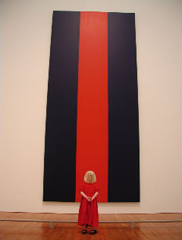
Voice of Fire

'Voice of Fire,' National Gallery

Two recent events have got me thinking about such things as "the arts" and "culture."

Earlier this past month we lost Daniel Izzard, the doyen of local painters and one of the top "impressionists" in the world. Daniel was a Londoner who brought his adopted home in British Columbia to canvasses hung all over the world, two in Buckingham Palace.

He was a most amazing man. In 1986 he was one of the oldest people to have a heart transplant and not only did he survive for over 21 years, into his 85th year, his magnificent paintings took on even more life than ever. Whatever the public dollar paid for that operation, Daniel paid it back a thousand times over.

Like many who have succeeded, the "conservative" Daniel didn't agree with artists being supported out of the public purse. Neither did Pablo Picasso, a lifetime communist, who said "Art is what sells." But this, as I learned, is not how most artists and their multitude of supporters see things.

Cultural evolution?

Last week I moderated a meeting held by the Greater Vancouver Regional District in their series called the Future of the Regional Sustainability Dialogues, this one entitled "Culture: People, Places, Values." These meetings feature five-minute presentations by several experts followed by an hour and a half of questions from the floor. This meeting was especially interesting because the issues were incapable of definition.

If you're talking about transit, development, highways and such, issues can be defined and, for the most part, everyone understands (if they don't agree with) what's being discussed. That's distinctly not so with culture and the "arts" by which it is identified.

Coming out of this discussion weren't answers so much as this question: "How much, if any, public money should be spent on the arts?" -- the answer to which depends on the answer to the basic question, "Who says what is and what is not art?"

There is a proverb that says, "Beauty is in the eye of the beholder"; another declares, "One man's meat is another man's poison." And therein lies the problem. What's art or culture to some is rubbish to others. How then is a decision reached?

Don't ask Mozart

Let's do a bit of make believe. Suppose someone in Mozart's time and milieu had been shown a performance by First Nations singers, drummers and dancers. And suppose the government of that place and time proposed funding this North American expression of "culture." It would, no doubt, be mocked. Yet few, if any, people today would question the cultural and artistic validity of this exercise. Suppose Michelangelo were asked to exhibit his famous "David" alongside Inuit carvings of whalebone. He would no doubt be horrified at this terrible lèse majesté, but who today would question the artistic/cultural validity and the beauty of whalebone carvings?

Some years ago, a painting called "Voice of Fire," simply three stripes painted on a piece of plywood, was bought by our National Gallery for a cool $1.8 million dollars. Canadians across the country hollered that this was absurd fakery and that we had been hoodwinked. A farmer in Manitoba painted three stripes on a piece of plywood three fourths the size of "Voices of Fire" and offered it to the National Gallery for $750,000. He was turned down.

To see the most brilliant display of questionable art one must visit the New Tate in London. It is a mass of exhibitions of toilets, knick-knacks, weird coloured bits and pieces of everything one can imagine. Yet, get this! The New Tate is the most visited of all London's galleries!

The question of "what is art" is irrelevant when there's no public money involved. The difficulty arises when the painter, poet, sculptor, writer and so on seeks public help, arguing that to deprive public support of artists like him is to strangle the expression of culture so critical to a society that cares about how it expresses itself.

Art of controversy

As with all things, the public assesses art on the basis of "except for that shit" whether that shit is "Voice of Fire," a urinal in the New Tate or a photo of a man urinating into another man's mouth as produced by the famous photographer Robert Mapplethorpe. Indeed, politicians demanded that the National Endowment for the Arts stop supporting Mapplethorpe because of the huge public outcry over his infamous photograph.

We keep coming back to this question: who's to say what is and what isn't crap? What standards do we apply?

Last year the Canada Council made 561 grants to arts organizations spending $33 million in the largest ever Canada Council handout, and it plans to increase funding for artistic projects. All provinces and most municipalities fund the arts, and, in what's mainly a defence posture, the CRTC, by using protection policies, likewise contributes to the arts.

After listening to the "stakeholders" (a horrible term) at the meeting I chaired, I came away feeling that the principal problem faced by "artists" is lack of funding not only for the "art" itself but for the means by which it's demonstrated to the public, be it a theatre, an auditorium or gallery.

'Stakeholders'

The inadequacy of current funding, I heard, is that it doesn't reach the budding artist. Many on the panel and, I judged, the majority of the "stakeholders," felt strongly that it's art at the local level, down to and including neighbourhoods, that need financial help. The big kids who have it made don't need help, but the local arts community does. I found this argument compelling but remain puzzled as to just what must be done and on what basis. Indeed this column is all about that puzzlement

At the local level, it's impossible for governments to spend money on some forms of art without for certain offending some voters.

So, what the devil do we do? We know that Canada is a land of many backgrounds and cultures and that the Canadian culture is constantly changing as it borrows a bit from this source, a bit from that. We also know that our national culture, and the many subsidiary cultures upon which it both rests and feeds off, is what identifies us both to the rest of the world and to ourselves.

Local tastes

If one concedes that governments must fund the arts -- and I do -- just how much and to whom is an unanswerable question, though, perhaps here's a tiny bit of an answer.

Perhaps support of cultural activity starts at home.

There is little we can do with national and provincial programs so let’s encourage our local councils to assess a small additional fee to developers to create a pot, administered by locals -- Vancouver charges developers 1 per cent. These funds might expand a library, help a local school band play a faraway concert or simply provide parks and other public lands with reminders, fashioned by locals, of historical events. I think it should be higher, with developers able to offset this by including a cultural enhancement, suitable to the council, that reflects the community in the structure.

Thus, dear friends, I provide nothing today except difficult questions which won't go away; issues which any society that cares must solve by one means or another -- God alone knows how -- if it wishes to make a cultural statement and thus identify itself to others.

Related Tyee stories:

 [Tyee]

18  Comments:

  • Cycling Commuter

    02-07-2007

    Artistic expression should be for everyone, not just the elite.

    Quote:
    Pablo Picasso wrote:

    "Art is what sells."

    Precisely.

    Lots of people like to whistle while they work or sing in the shower. But too many self-described artsy types latch-onto the whistling and singing part while showing little interest in the working and showering aspect. They don't like being described as lazy bums. So they call themselves struggling artists.

    Quote:
    Rafe Mair wrote:

    ...so let's encourage our local councils to assess a small additional fee to developers to create a pot, administered by locals.

    No, let's not. Of all the taxes, property taxes on principal residences and small businesses are among the most regressive. Housing in Vancouver is already unaffordable. The last thing we need is to make it even more unaffordable. A "small" property tax increase here and another "small" property tax increase there keeps adding up, like thousands of mosquitoes each sucking a small amount of blood. Property taxes are already increasing much faster than incomes. We need to reduce regressive property taxes, not increase them.

    Someone mentioned in a previous thetyee.ca thread that West Coast natives produced a lot more art than natives in other areas of Canada because West Coasters were more inclined to keep slaves to do their work for them, and thus they had more spare time on their hands to pursue their artistic interests. Here we go again, except this time it's taxpayers who are being enslaved by artsy elite types who want to spend all of their time doodling, whistling and singing, none of their time working and showering.

    True artistic expression is a joy that everyone should have time to participate in. Artistic expression shouldn't be for just a small elite who are supported by ever increasing taxes that leave struggling taxpayers with less and less time and money to pursue their own artistic interests after work and on weekends.

  • gaulois

    02-07-2007

    An issue of diffusion

    If "Art is what sells", the issue is then one of diffusion or what "diffusion" then gets public funding? Would this then be a matter of media public policies? (if "Art is what sells")

  • Jeffrey J.

    02-07-2007

    What about Corporate Welfare?

    I always enjoy Rafe's columns because we're treated to a consideration of issues that should be discussed far more often. Having said that, government funding of the arts is conceptually more logical than government funding for large mutinationals, which includes banks, arms manufactures and oil companies. Yet this is NEVER debated or discussed and is far more questionable and does far more damage. Talk about propping up unstastainable activities. Great article Rafe!

  • Grumpy

    02-07-2007

    Art scam alert

    One has to realize that the 'art' market is as crooked as one can get. The "Voice of Fire" scandal (and that what it was) was a con job of the highest proportions.

    To value art, one employs the method of provenance or what the previous price of the 'art' sold for.

    Artists, especially those who become the favorites of the elites of society, escape this and sell their 'art' directly to galleries and museums, bypassing provenance. The funding for the purchase of this art comes from endowments and government grants, for which those controlling the cash, it becomes 'free' money. Many cases the fees paid to the artist are kicked back to the elites for their services.

    Here you have it, it is not the love of art or the expertise of an artist but a high class con-job that drives much of the art market.

  • murdock

    02-07-2007

    suffer for your art...or be a populist

    I completely disagree that graphic art needs to be paid for at all!

    For the public purse to be used this way is a crime.

    Many of the (considered) greatest works of art of all time, starting with the cave paintings and including such things as mosaic paintings depicting battles between Alexander and Darius found in Pompey, the Sistine Chapel, The Last Supper, and arguably the Statue of Liberty.

    For lady liberty:

    Quote:
    The Statue was a joint effort between America and France and it was agreed upon that the American people were to build the pedestal, and the French people were responsible for the Statue and its assembly here in the United States. However, lack of funds was a problem on both sides of the Atlantic Ocean. In France, public fees, various forms of entertainment, and a lottery were among the methods used to raise funds. In the United States, benefit theatrical events, art exhibitions, auctions and prize fights assisted in providing needed funds. Meanwhile in France, Bartholdi required the assistance of an engineer to address structural issues associated with designing such as colossal copper sculpture. Alexandre Gustave Eiffel (designer of the Eiffel Tower) was commissioned to design the massive iron pylon and secondary skeletal framework which allows the Statue's copper skin to move independently yet stand upright. Back in America, fund raising for the pedestal was going particularly slowly, so Joseph Pulitzer (noted for the Pulitzer Prize) opened up the editorial pages of his newspaper, "The World" to support the fund raising effort. Pulitzer used his newspaper to criticize both the rich who had failed to finance the pedestal construction and the middle class who were content to rely upon the wealthy to provide the funds. Pulitzer's campaign of harsh criticism was successful in motivating the people of America to donate.

    Motivate us to donate, fine. Extort the $$$ from us in taxes and then throw it off the back of a truck in immense bags to failures like the creator of 'Voice of Fire' should be a crime punishable with being forced to watch all of "Gilligans' Island" in order, with all original commercials without any break!

  • alive

    02-07-2007

    Scam Artists

    There are many kinds of scams: some call themselves artists, others do the "I'm too sick to work" scam, and there are the ones who are prepared to live in the gutter begging for handouts.

    What they all have in common is a gimmick that allows them to refrain from working.

    Perhaps we should fund genuine artist, perhaps we should help anyone who has a fear of getting their hands dirty by working?

    How about the notion that we simply no longer need to have everyone employed?

    The advent of mass-production was supposed to make stuff with less manpower!

    We are indeed doing just that now, but the savings somehow disappear into corporate pockets and the average citizen now has to work harder than before, in order to get the "stuff" neded to have a decent life.

    What really should happen around now, is that having a job no longer is a necessity, but a choice!

    We are creating so much unwanted stuff these days, that our garbage contains more valuables than actual waste.

    There will always be incentives to work, such as where to live or the lure of travelling.

    A minimum "wage" for anyone who prefers to not work should allow them to live a modest life somewhere and perhaps then engage in creating art.

    The very idea that a person must make a living by a certain age, goes against nature!

    Let those who are ambitious strive for the beneifts of having a fancy car and so on, and let those who have other aims in life survive on that minimum wage.

    There will be less harm, less crime and most likely a new type of citizen who can modify out present mad rush to an early grave

  • dorothy

    02-07-2007

    Now, see here...

    I have to agree with the cyclist man. All the way back to the Inca and the Pharaos, art was stuff done by artisans and paid for by the extremely rich. This is the way to go. The deal is, that the extremely rich need soul-care, including fancy art to look at and ‘experience’, because they are driven people, or else they would not have become extremely rich. The thing that drives them is fear of death; no, not death, the insignificance one may have as dead, for most of them know very well they have not made a lot of real friends in this life, who will come in the 70,000’s to honor them in public after they are gone.

    So, there is this deal between the fab artists and the extremely rich. It actually has nothing whatever to do with people who live real, honest lives, and accept the cyclical nature of said lives with equanimity. We may have folk art of high quality, because we all have it in us to whistle a little, just like Afghans embroidering their grain sacks, and stone-age women amusing themselves with repeatedly pressing grains and seeds into the wet clay of their jars before firing, so as to create fancy patterns. But that art is not for business, it springs naturally from our joy of life, and the sense of beauty that is in all of us, except the driven.

    Now, the grab of ‘public money’, a misnomer, as there is no such thing, only yours and my money pooled, but that grab, is therefore theft. It goes into funding the vampiric relationship between the high-grade professional artists and the extremely rich, who suck them dry, and the rich can therefore bloody well pay for it. Leave our tax money alone, so we can afford our knitting supplies and our rattan bundles and have some fun out of life.

  • southdeltawalker

    02-07-2007

    what is culture?

    I have thought about "what is culture" off and on over the years. So far i have not come up with a definition or read a definition that makes sense to me.

    I am not alone..years ago a friend wrote to the then Minister of Culture here in
    B. C., Darlene Mazzari i believe and asked for a definition of culture. Her reply was that "no one had asked that question before".

    Yesterday being Canada Day i was again thinking "what is a Canadian" "what defines us"? Interesting enough i had freinds from England visitng last week, they said "whenever they are travelling they can pick out English people and avoid them". My immediate reply was "well i can't 'cause Canadians are so diverse..you never know".

    Is that what it is to be Canadian- accepting of diversity and this acceptance is now part of our "culture"?

    To get back to the question-"the politics of Art" or "what is art". All i know is I am happier being creative as opposed to constanlty consuming and being driven to buy and buy even more.

    As to the mainstream major artists-I accidently walked into a Robert Maplethorpe exhibition years ago in Seattle. The images were so shocking they remain with me still. Was that art? Was that culture? To many yes..but to me no.
    So there is the question. What is art to some is not to others. Can the Canada Council ever satisfy everyone with their purchases and funding? No. Should they stop? No.

    How do we understand history?
    We look at the art that was produced. Therein lies the importance of art. It helps explain ourselves and leaves a legacy.

    Anyways..back to my "cultural activity" today...making "perfect" strawberry ice cream from freshly picked strawberries.
    I believe the term for this is "artisanal"!

  • bob the cat

    02-07-2007

    Tal R

    Quote:
    I dont trust all the things we put in paintings. Hands feet eyes ears an especially not animals I mean maybe a squirrel but not with a head and never a full horse I have less conflicts with clothes and houses my favourite is a stupid uniform and a greedy selfish ugly beard. My starting point as a drawer was endless rows of houses I cant say I trust houses but to do them for hours is fantastic maybe somebody pass by an tell you that you are a beautiful person but houses are 30 years ago. Sometime I trust a few things lately I have put my confident in fruits and also corns before and after they have been eaten also the hairy leaves they arrive in. To smash a melon slowly is imminent you can do it alone or in a Hotel room .

    Tal R

    Tal R was born in Israel in 1967, but now lives and works in Copenhagen. He has held solo exhibitions in Chicago, Berlin, Copenhagen, Vienna, Tel Aviv, Dublin and Victoria Miro Gallery, London. His next show “Mor” will be with Jonathan Mess in October at Stadens Museum For Kunst in Copenhagen.

  • bob the cat

    02-07-2007

    Quote:If it is anything, art

    Quote:
    If it is anything, art is the expression of human feeling. You do not get to the essence of poetry in paraphrase, to the meaning of music by analysis, to the import of the visual arts through interpretation. (I recall going to a lecture recital given by Glenn Gould. A point arrived when, he said “The whole point of Bach…” and someone yelled from the audience, “Is to play him.” Gould turned immediately to the piano and began the recital.)

    Roy Oxlade, British Painter/Teacher in the introduction "Let Them See Rubbish" to Blunt Edge Magazine issue 6.

  • bob the cat

    02-07-2007

    School of Abject Expressionism

    Quote:
    No shape is without dignity, neither is any colour. Ask Picasso. Defining anything with black is good. As Pablo said: When in doubt, use black. We detest Cezanne’s mountains.
    Modern Art should never be considered as such because it generates a kind of false optimism in the world. Outsider Art is best, especially if it addresses the awkward subjects of religion and sex.
    Pictures produced by the criminally insane are especially interesting. It is a little known fact that Ronnie Kray painted at least one masterpiece, a work simultaneously reminiscent of Van Gogh and Soutine.
    Blood is too seldom applied to canvas. The legendary conservationist Peter Beard revolutionised photography by applying his own blood to his photographs: on goes the blood and, hey presto, it is no longer just another self-regarding snapshot but a work of overt narcissism.

    Marcus Reichert
    Blunt Edge 4
    Marcus Reichert his photographic work is represented by Michael Hoppen Contemporary.London. His filmworks are held in the Archive of the Museum of Modern Art, New York. Reichert:The Human Edifice by Mel Gooding, with 100 photographs by the artist in colour, is published by Artmedia Press, London. Visit www.MarcusReichert.com

  • frank2

    02-07-2007

    Public support for the arts

    We all benefit from governments (us) supporting a mix of:
    --performance spaces for music, drama
    --scholarships for artists (all fields)
    --festivals
    --spaces for display of art (art galleries/museums)
    --acquisition of key works in museums so their collections represent significant examples of major schools/movements/advances (Voice of Fire fits this category)
    --travelling exhibitions/performances

    Particularly importat beneficiaries of those who could not afford the full costs of gaining access on a full cost basis (whether to local institutions, or travelling to the world's capitals to see pictures or performances).

    Public art supported by developers as one condition of rezoning is also justified (reducing by a small amount the landownes capital gains -- although the art work may even increase the gain in some cases)

    While we all gain from public support of the arts, we all don't agree on the best choices. In the "good old days" all the decisions were made by the Pope, or Lorenzo Medici, or the Emperor. Our modern democratic method is to use appointed boards, often advised by committees of artists, plus a certain amount of lobbying. that's better than the alternative of depending on decisions by billionnaires plus artists charging what the market will bear (which may not be much for most of us).

    As another poster said, why don't we see the sort of personal outrage about public support of the arts exerted for public support of corporations (for example, the financial favoritism to energy industry which subsidises unwanted climate change, vast over-expenditure on the arms industry which reduces rather than enhances security, etc.).

  • G West

    02-07-2007

    Barnett Newman

    Understanding and appreciating Abstract Expressionist art (in Newman's case it's better called the ABSTRACT SUBLIME requires some effort. Newman was trying, in much of his large format work, to evoke what Henry Geldzahler called "...awesomely simple mysteries that evoke the primeval moment of creation."

    Using only the subtleties of a wide range of light values he abandons the security of traditional pictorial geometry to enter a realm typified by the power and energy, anonymity and inherent danger of the atomic age. Such pieces as 'Voice of Fire' must be experienced in person - not seen in reproduction or on the page.

    The acquisition of this painting was important and the National Gallery did well to acquire it. The work of Newman, Still, Rothko and Pollock are essential to understand what was going in the pictorial arts after the second world war.

    The evocation of the sublime is frequently controversial but I’d suggest most observers who actually have stood before this painting don't feel the investment was wasted.

    Thanks for those contributions btc.

  • Dan1

    03-07-2007

    Art

    As a young lad attending the Seattle Worlds Fair only 3 memories remain, the Space Needle and the art exhibit. Seeing a Rembrandt and some other old masters with their tremendous attention to detail and then viewing the Canadian “art” the highlight of which was a painting called red to blue or vise versa. Pure crap…. And many years later our National Art Gallery bought it as a National treasure

  • Percy

    03-07-2007

    Glorifying the Party Line

    Art, in Canada, is something that reflects the Party Line, extolling the Radiant Future. I once asked a friend who seemed adept at receiving local arts grants to run street theatre, what was the key to her success, and she replied: "It's a simple formula. You need a female in a non-traditional role, a gay or gay-friendly character, and a person of colour. Also, you can't portray a family, unless it also is 'non-traditional'. If you meet that formula, you get money. If you don't, no money." Arts funding in Canada is tied to political correctness, and therefore has little accessibility to ordinary people. Anyone see the travelling Emily Carr show? A marvellous collection of her works, utterly ruined by incomprehensible texts using words like hegemony/appropriation. I went with two friends, and between us we had 9 university degrees. We played a simple game of trying to render the text in simple English, but realized it was impossible because it just turned into gibberish.

  • biscotti

    03-07-2007

    The biggest subsidies come from artists

    It’s easy to pick on Barnet Newman and Mapplethorpe. But to focus outrage on them can divert attention from the vast amount of exciting and substantial work being produced in Canada, usually for little or no money at all.

    Most artists I know work very hard, often at various day jobs, to support their work, and producing work can be expensive in terms of materials, overhead and time. Canada Council grants and the artists’ fees paid out (in BC, by a minority of galleries) pale in comparison to the unpaid hours of work that subsidize much of the authentic culture in this country.

    Maybe people at conferences like the one Rafe moderated have trouble defining “culture” or “art” because we in Canada are flooded by so much industrially-produced schlock from the US – all to be consumed instead of participated in.

    As a result, very few people have any experience of meaningful, living culture. How many Canadians know the words to a Canadian song, other than “Farewell to Nova Scotia”, compared to the theme song for “Gilligan’s Island”?

    As Rafe said,

    Quote:

    Perhaps support of cultural activity starts at home.

    I would like to encourage Tyee readers, especially those opposed to any subsidies to the arts, to buy a piece of art made by a Canadian, buy a CD produced by a Canadian musician, go to a Canadian film, or attend a Canadian play. Then maybe we can have a constructive dialogue.

  • The discussion for this story is closed. No more comments can be added.