
Tyee’s Salmon Article Said to Spin ‘Fairy Tales’
Stolt Sea Farms manager writes in to rebut ‘Salmon sleuth’.



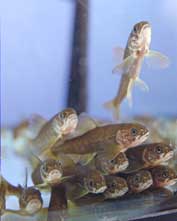
Alexandra Morton is to be credited for her dedication to protecting wild salmon on the B.C. Coast.
But it is unfortunate when her zealotry causes her to portray impressions, hunches, and beliefs as genuine and valid science—as in her article for The Tyee, “A Salmon Sleuth’s Disturbing Find,” in the November 21st edition.
Because she mentions Stolt Sea Farm, we are obliged to point out some key faults in her article:
1. The article describes activities related to the 36,962 fish escape that occurred in September 2000 and the ongoing concern about Atlantics colonizing B.C. rivers. This has not happened. Our Company spent more than $85,000 between September and December, 2000, for a team of specialists to examine 14 Mainland Inlet rivers; they found nine Atlantic salmon in freshwater in that survey—a very far cry from the 4,620 fish said to be “potentially on their way to colonizing the West Coast.”
2. Alex reports that the percentage of escaped Atlantics with wild food items in their stomachs, according to her “study”, after 21 days is 14 percent. This is consistent with the level openly reported by the joint federal-provincial Atlantic Salmon Watch program over the last ten years. Nothing new here.
3. Our company and the B.C. salmon aquaculture industry are very disappointed by any escape, and we have made a lot of progress to reducing escapes dramatically since 2000. For example, in each year from 2001-2003 we had less than 10 fish escape from our operations. This year we have had 2614 fish escape, the majority of which (2587) occurred in one unfortunate incident.
As for musings about “feral Atlantics clustering” outside salmon farms, her “impression” that some captured Atlantics were the result of other unreported escapes, the unique raccoons that would not eat Atlantic salmon, and her ill advised efforts to take bacterial swabs from long-dead fish, these are the only “fairy tales” we see in the article.
We believe that most British Columbians want to protect wild salmon stocks. Our company certainly does! We believe the best way to make progress on this important issue is to make sound decisions based on sound scientific data and observations—such as we see in work being conducted and funded by DFO and the provincial government, and by independent researchers and universities who allow the data to guide their work.
Yours truly,
Clare Backman
Environmental Manager
Stolt Sea Farms
Interested in wading into the farmed salmon / wild salmon debate? Participate in The Tyee’s salmon haiku duel and enter to win one of 40 fishy prizes!
What have we missed? What do you think? We want to know. Comment below. Keep in mind:
Do:
Do not: