Opinion

A Loaf of Bread, a Bottle of Wine... God Forbid You Sell Both in BC!

Feature great local foods and wine together in one shop? That's crazy talk, given this province's liquor licensing.

By Jake Skakun, 18 Aug 2011, TheTyee.ca

Tyee writer Jake Skakun

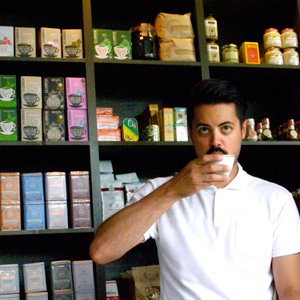
Jake Skakun at Vancouver's Marché Saint George, pondering his impossible dream. Photo: Eliot Escalona.

Related

The Marché Saint George is nestled in residential East Van between Main and Fraser Street, at East 28th Avenue. Adorned with antiques, it is the perfect neighbourhood cafe, artisanal mini-market, or hangout for a morning croissant. It even boasts minor celebrity, having just been featured in a Monocle video piece called Best Cafes. The place languidly suggests community in the most civilized way, making people say things like "This is so [insert European country here]." Marché Saint George will never be a beacon for the vapid Starbucks crowd, but it is independent and inspiring -- the kind of place where I like to spend my time.

After poring over the shelves of Marché Saint George and devouring a pain au chocolat one morning, old dreams were rekindling: aspirations I once had to open a slightly different kind of shop. Call me crazy for wanting this. But what if Vancouver, or Victoria or Lillooet or Nelson or any town in British Columbia, were home to a café where, in addition to all the edible goods, a few wooden crates and a small shelf stocked with bottles of wine would sit in one corner? Bottles from small family producers of a certain ethos, both local and imported. A little shrine to all delicious things local, strengthening the 100-mile economy and bringing pleasure to visitors from near and far. How crazy would that be?

Not crazy at all... if you happen live somewhere else. I came up with the idea during my first visit to Terroir in San Francisco, a place whose owners are less interested in selling mass volumes of wine than they are in offering the kind of wine they believe in. In the meantime, the owners have created a community of wine lovers who come from all over to buy bottles off the shelves or drink wine at the bar and chat. My dream would be some charming and soigné marriage of the two. In many ways, it would be the most civilized place I could imagine.

I sit down to start planning. But it's long before I get to sketching the blueprints when things begin to get complicated. Nutty, even.

Looking for a license

Every store that sells alcohol in B.C. needs a license from the Liquor Control and Licensing Branch (LCLB). Simple enough. While browsing the categories on their website, only one fits the bill for my dream shop: the Liquor (Licensee) Retail Store, or LRS. However, the bold and exclamation-marked announcement: "We are not accepting applications for new licensee retail stores at this time!" is an obvious obstacle.

With a little correspondence, I find that it is possible to purchase an existing license off a current licensee. The transfer of a license fee is $330 and the relocation cannot happen within one kilometre of an existing LRS or government store -- a seemingly strange anti-competition law. (Imagine if coffee shops were given that kind of comfort: we'd more often be forced to frequent lame baristas, solely relying on their location.) But fine. A current list of license holders costs $30 and you can obtain it by faxing in this form.

When I asked an employee at the LCLB what people do with this list of licensees, and how to find the ones for sale, she said: "Sorry, no idea on that. We don't usually ask why they want the information, as it is information that can be found on the face of the licence [which is displayed in the establishment]."

That's all the LCLB can help me with. Unless I want to canvas the local license holders to see who's willing to sell, I need to find an agent to locate a license for sale and help me negotiate a price. A business like Rising Tide Consultants will broker a deal for me, but a bit of correspondence with Bert from Rising Tide unveiled some frightening figures:

"An operating LRS is selling for about four or five times the net earnings of the store at the existing location. I doubt you would ever get a store for less than $500,000, even a non-operating store. The last non-operating store that sold in Vancouver went for about $700,000."

BC VERSUS WORLD'S BEST UNCORKED PLACES

Many British Columbians don't realize how wine is sold in other countries and their great cities. Some associate American retail with a refrigerated aisle of plonk at a 7-Eleven, or France with a roadside stand offering jugged excess wine. They denounce skeptics of B.C.'s system with negative snippets they experienced on a family vacation ten years ago. I've travelled quite well over the last few years and have lived as an active wine drinker in cities like Paris, Berlin and San Francisco. I've shopped for wine all along the western coast of the United States and in countries like Portugal, Spain, France, Italy, Switzerland, Germany, and Austria. Tiny, family-run boutiques exist. Shops specializing in the wines of one region or country are commonplace. Wondrous neighbourhood grocery stores offer expressive bottles from small grower-producers. A rack of expertly-selected vinous supplements in a cheese shop? Absolutely.

In B.C., ours is a system of regulation and enforcement. The original frontier city of Vancouver, whose center grew from a pub by John 'Gassy Jack' Deighton in Maple Leaf Square, looks now like it belongs to a nanny state and our government-run monopoly of alcohol wholesale and distribution (and mostly retail) is a taxation machine. Vodka, a tasteless spirit that no doctor today would recommend drinking daily for its health benefits, is treated in nearly the same manner as wine, a beverage that many doctors do. For wine drinkers and lovers in many other cities and countries around the world, the grass, I can tell you, is most definitely greener.

— J.S.

Chatting with other shop owners in the city reaffirmed that the going rate for a LRS starts in the cool $500,000s. Yup, half a million. For the license. That extinguishes any image of running a shop where wine plays a lesser element to the overall sales. That's a big debt to pay off when I'm only planning to move a few cases a day. I'm either going to have to sell a lot of espresso or scrap the whole "artisan, family producer" dogma and start case-cutting the Yellowtail. But, while we're already into it, let's pretend that the licensing costs aren't prohibitive and continue through the planning stages.

As an aside, it is perhaps important to point out that the LRS license is different than the six grandfathered wine shop licenses that were given out during Expo '86 (now called "Independent Wine Stores"), which receive a higher purchasing discount and are some of the best wine shops in the city, including Marquis, Liberty, Kits/Dundarave Wine Cellars, Everything Wine, and Broadway International Wine Shop. The higher discount makes it more conducive to being profitable without relying on mass sales. Should one of these licenses become available on the market, it would cost substantially more than an LRS, as the potential for earning is much greater.

Goods for sale: cigarettes and chips?

Say I've bought my license. Let's see what else I can sell in my store. Page 12 of the Licensee Retail Store Licence terms and conditions states that I may sell "B.C. lottery products, cigarettes, packaged snacks (i.e., chips and nuts) and liquor-related items." However, my store cannot "resemble a convenience store and... may not stock other items, such as milk and newspapers." I know that many LRSs sell soda, so I figured that I'd ask the LCLB if I would be able to sell coffee. Here is an excerpt from the letter I received in response:

"Liquor stores must be separated from and appear to be distinct from any other business. Liquor stores must focus on the sale of liquor and are only permitted to sell liquor and liquor related items (glasses, corkscrews, bottle openers, etc) -- in addition to these liquor related items, liquor stores are also permitted to sell only a limited selection of other products such as cigarettes, lottery tickets, and packaged snacks such as chips or nuts. The sale of coffee or espresso would not be permitted in a liquor store."

The letter goes on to say, "Within B.C. you would need to open two separate businesses. The first could be an artisanal neighbourhood cafe and market. The second could be a small boutique wine store -- possibly even next-door to the cafe/market. Both businesses would have to be stand alone and there could be no appearance that wine store and neighbourhood cafe/market are connected to or affiliated with one another."

So just to be clear: I can put cigarettes in the mouths of my patrons while they gamble, but I can't sell them a jug of milk. And definitely not a shot of espresso. Also, not only are two elements of my business (the artisanal neighbourhood cafe/market and the small boutique wine store) required to have separate entrances, but they can't even appear to be affiliated with one another.
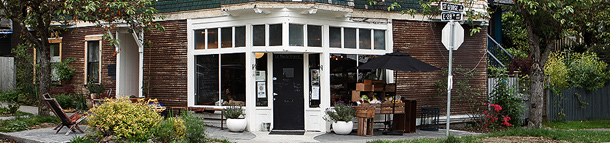
Marche St. George cafe in Vancouver

Marché Saint George on Vancouver's East 28th Street: Safeway isn't really a competitor.

Despite the absurdity of this scenario, the rationale is obvious. The government doesn't want grocery stores to sell booze. If the Jimmy Pattisons and the Safeways began stocking alcohol and moving high volumes of it (which they would), they would be able to use their buying power to put pressure on the government and lobby for reasonable, business-minded liquor laws. Safeway clearly wouldn't be happy with a lowly 16 per cent licensee discount on alcohol if they purchased tens of millions worth of alcohol annually.

A modest proposal

Say that I decided to proceed with a somewhat bastardized version of my dream, bought the $500,000 license and found two retail spaces for lease side-by-side (and the two spaces are branded completely differently, because they aren't allowed to look like they're affiliated). Now I run into a new problem -- profits. The wine that I buy from the government to stock my shelves gets a measly 16 per cent discount (this explains why most private LRS stores need to charge you more than the government liquor stores [BCLDB] do). No one on the planet would consider running a retail store with 16 per cent profit margins, so LRSs are forced to sell wine at a higher price than their competitor (and supplier), the BCLDB, does. If an LRS were shooting for a modest 30 per cent profit margin, they'd need to sell a $20 bottle for about $24 ($20 - $3.20 discount [16 per cent] = $16.80 [70 per cent cost] + $7.20 [30 per cent profit] = $24).

Pretending for a minute that my store had no lease and no operating costs (labour, security, etc.), I would need $1.66 million in sales (at 30 per cent profit) to regain the cost of the license ($500K). If I managed to do that in one year, that would require $32,000 a week in sales or $4,560 a day. In my outlined model, where wine would be a lesser element to the cafe and market, accounting for approximately $750-$1,000 in sales per day, I'm looking at somewhere around five years down the road until the license would be paid off. Throw in a lease, labour, and other operation costs, and it's closer to a decade.

This is why there is no such thing as boutique LRS wine shops in this province. There are no hole-in-the-wall neighbourhood shops and thoughtfully curated selections in local markets as there are in San Francisco, New York, Portland, Paris, Berlin, etc. Not only do the government's high wine markups (123 per cent) make it unappealing to purchase fine wines, but the licensing makes it nearly impossible to sell fine wine.

Ideally, there would be another boutique category of license created. It would allow the licensee to sell wine in conjunction with other goods -- a list of goods that wouldn't include cigarettes or lottery tickets. The volume could be controlled to prevent the creation of wine and grocery emporiums. You could even require that the boutique wine license may only purchase up to $500,000 of wine from the BCLDB annually.

More ridiculous laws created within a ridiculous and frustrating system -- but at least a step towards sense. Until then, my dream remains impractical, implausible and crushed. Crazy me.  [Tyee]

19  Comments:

Login or register to post comments

  • zalm

    27 weeks ago

    Frustrating, yes

    ...but illogical, no. The number of times that other licencesees of all sorts, from speakeasies to major nightclubs have attempted to do end-runs around liquor licencing laws to profit from increased alcohol sales and download the noise and social costs onto their neighbourhoods are legion.

    "Ideally, there would be another boutique category of license created. It would allow the licensee to sell wine in conjunction with other goods -- a list of goods that wouldn't include cigarettes or lottery tickets."

    For Jake, I would support that. But if Bruce "Loudmouth" Allen wanted to buy Jake's boutique and turn it into another money-spinning megastore, what right would the neighbourhood have to say "NO!" to noise, pollution, traffic, delivery vehicles at all hours, screeching tires, drunken louts urinating in any handy flowerbed, more binners, police and ambulance calls for fighting... all the wonderful quality of life so often associated with the Granville Entertainment District?

    When we first married, we lived a block from Jake's Marche when it was a tiny grocery store run by an Asian family. Quiet as all hell, and not too much business either.

    No, there's an ugly uncomfortable process associated with most liquor licencing events in the city, and heavy police enforcement to back it up, not because we don't want people drinking (because the goverment does, to the tune of nearly $900 million last year) but because those who are committed to providing a unique experience to customers must have more than simply their own profit in mind, because we all pay the costs.

    And sometimes we forget what we promised our community when our first goal was to offer "A little shrine to all delicious things local, strengthening the 100-mile economy and bringing pleasure to visitors from near and far."

  • mek

    27 weeks ago

    Unnecessary regulation

    Which Europe does without, somehow without descending into total debauchery. Perhaps we're all just too uncivilized, and need the BC government to dictate to us our drinking habits.

  • miguel

    26 weeks ago

    Why?

    Continental Europe didn't experience puritanism so much as England and N. America. Where wine and other beverages are consumed without so much abuse, people have grown up with a sense of restraint.

  • The Modern

    26 weeks ago

    Loved the article...

    We need more like it. I suspect the overwhelming majority of people in this province would agree that liquor regulations in this province are *long* overdue for a major overhaul.

    I agree: simple, small and reasonable changes to certain regulations could also make a big difference in terms of culture, liveability and Vancouver being an overall pleasurable and dynamic place.

    Brief anecdote:

    There is a coffee shop in my neighbourhood which serves beer. That is cool and everything as people are able to casually, perhaps spontaneously enjoy a beverage in a relaxed environment. Here is what is not cool: I have witnessed individuals (often from out of town) attempt to proceed about 15 steps to the front door in an attempt to sit on a sidewalk patio chair. I have often (cringingly) witnessed the barista run after the client ordering them to please return to within the perimeter of the inside area of the coffee shop as they cannot consume their beverage outside even though there are chairs and tables there (for milk, pop and coffee. I presume). They stand dumbfounded. These are the rules.

    It’s not just the province, the CoV’s fondness for ‘regulating’ and ‘by-law-ing’ everything has got to change. (*I will credit the city with seemingly headed in a positive direction…but still with much work to do).

    If anyone has travelled to Europe (and perhaps Montreal and a handful of other places on this continent) you will see the great part about them is the street activity and more or less unplanned public meetings and spaces. In my experience, these places are often characterized by what appear to be improvised sidewalk cafes; places very consistent with Jake’s dream.

    I would add that there may be occasional nice examples in some U.S. cities; their approach to alcohol is quite puritanical in my experience. The better model to follow would be the European one.

    My question is: why are there no politicians, aspiring leaders willing to (carefully) champion this? Irrespective of the obvious $answer$ - it would harvest lots of votes.

    I am interested in your comments…

  • Fii

    26 weeks ago

    What?! It's so cute and I've

    What?! It's so cute and I've never come across it... I live a few blocks away. Will have to check it out!

  • pianosaurus rex

    26 weeks ago

    Responsibility and restraint through experience

    Here on this continent what constitutes alcohol abuse is considered use. In Europe young people are introduced to recreational drugs such as this one in a responsible manner. This way they learn responsible use and conduct when using a drug with myriad side effects such as alcohol.

    Of course there are the exceptions to the rule like the systemic problem of alcohol abuse in Finland’s youth, and other anomalies.

    There will always be people who live with the concept “nothing succeeds like excess….”

    The problem here is that a lot of people who choose to consume recreational drugs of any sort have not experienced them responsibly or in view of the general public.

    Ignorance; there is no better way to injure yourself or others by choosing to experiment with something one knows nothing about.

    The paternalistic nature of the archaic, antiquated liquor laws in BC ensure the furtherance of addictions and their accompanying social problems.
    The government needs to realize and accept that people are going to use drugs. So give them all the information and let them make an informed decision.

    Responsible use is learned; without experience, restraint will never be learned.

  • Jeff Nield

    26 weeks ago

    What about Costco?

    Great article Jake.

    I doubt it's a sign of changing laws for the niche market, but I hear that the newly built Costco warehouse in the Comox Valley has a liquor store. From what I'm told it's blocked off from the rest of the mega-warehouse, but there is no mistaking that it's affiliated with Costco. Perhaps this could be used as a precedent.

    There is also a movement afoot to changes liquor laws to allow local small-scale booze producers to sell their products at farmers' markets, as they are able to in many jurisdictions south of the border.

    There also may be hope in the battle BC Brew Pubs waged to allow them to distribute their beers beyond their licensed facilities. I'm sure there are limitations on the amount they can distribute, and I believe it took a long time to make the change, but it did happen.

  • jcaputa

    26 weeks ago

    Drunk Driving anyone?

    Drunk driving is deadly, plain and simple. Increasing accessibility to liquor will only increase the amount of drunk driving that takes place. We should be restricting access to alcohol, not increasing it! After all, think of the children!

  • alive

    26 weeks ago

    more restrictions anyone?

    jcaputa
    right on! and let us demand that females wear garments that hide their figures, so we can avoid rape attempts!
    Oh. why not ban all traffic? it causes accidents!

  • Piker

    26 weeks ago

    You need a rural agency store

    Move out of the city and buy a rural agency store: the Halfmoon Bay Country Store on the Sunshine Coast is a good example of what you can do within the current rules.

    From the Liquor Stores website:

    The BC Liquor Distribution Branch's Rural Agency Store (RAS) Program is intended to increase consumer choice and customer service by providing the opportunity for small businesses in rural communities to sell spirits, beer, wine, cider, and coolers. RAS's are generally established in rural communities where it is not feasible for a government liquor store operation.

  • Fish-counter

    26 weeks ago

    Canada does have retro laws on alcohol

    The new move to .05 is a good example. Impounding vehicles and suspending drivers at this level of alcohol is totally unjustified.

    There are several Greater Vancouver RCMP on impaired driving charges at this very moment for example. Let's talk about that. Monty Robinson evaded the law by leaving the scene of a fatal accident taking a drink, then returning. The "last drink" clause is a well-kept secret. He killed a motorcyclist and has been charged with the obstruction of justice. It is hard to imagine a greater travesty.

    That said, North American youth is not the same as European youth. Just look at the Vancouver Stanley Cup riots for proof. Why have no charges been laid, three months after the riot? There is no point in having laws then letting criminals off the hook. If any of these folk are brought to the courts, the charges could well be dismissed because it took too long. I have a suspicion that among the rioters, there were the sons and daughters of many influential people who would be embarrassed if their kids were criminalised.

    Canadians push the boundaries. Retail grocers would very likely push the boundaries if they were allowed to sell alcohol, just to stay in business. In very small communities, it is perhaps a little different and the laws could be relaxed there, but on the whole, I prefer the old government liquor store approach.

    Canadians have a habit of doing everything to excess. When it comes to alcohol, we are not very sensible. Many young people are total idiots in fact. The idea that they would learn moderation from their parents is nonsense. Many of their parents are drunks and they do illegal drugs on a regular basis. A fair number of cops don't know how to behave either.

  • CurtisYYC

    26 weeks ago

    16% margin?

    "No one on the planet would consider running a retail store with 16 per cent profit margins …" That makes all of us local and independent Mac dealer crazy. Oh, and we compete with our biggest supplier. We can only DREAM of 16% margin> :-(

  • Kathryn

    26 weeks ago

    Siding General Store, Field, BC

    what I miss most about living in Montreal - a reasonable approach to the selling and consuming of wine

    there is a great little store in Field, BC called The Siding - I wonder what kind of license they have because they sell (really good) coffee and wine & beer, all in the same place

  • Fish-counter

    26 weeks ago

    Cops and alcohol; a true story

    A Toronto City cop told a story about policing the Carabana; he and four friends split a bottle of scotch in the basement parking lot, prior to the parade. They were all terrified of the West Indian crowd and swore an oath to rescue one another if anything "went wrong". The cop was 38, but he looked 58. He was the friend of a friend and he was absolutely terrified to go to work.

    My point is that the people who are supposed to enforce the law also break it in grand style. Like the Vancouver cops who were drinking in the station after their shift. One was caught driving over the limit a few years ago.

    Two Vancouver cops were charged with assaulting an East Indian newspaper delivery man recently one of them was drunk. I am scared of cops who are sober, never miind drunk.

    There is a historic relationship with alcohol in Canada, and changing it would require a major shift in social behaviour. What happens in Quebec or England is irrelevant.

    I have very little respect for the RCMP at this moment in time, but I would not want to make their jobs any more difficult than they already are. Making alcohol available in grocery stores in BC would make law enforcement considerably more difficult and it isn't worth it.

    Let's get a few charges laid re. the Stanley Cup riots, then talk about liberalising the alcohol laws.

  • Fish-counter

    26 weeks ago

    Cops and alcohol; a true story

    A Toronto City cop told a story about policing the Carabana; he and four friends split a bottle of scotch in the basement parking lot, prior to the parade. They were all terrified of the West Indian crowd and swore an oath to rescue one another if anything "went wrong". The cop was 38, but he looked 58. He was the friend of a friend and he was absolutely terrified to go to work.

    My point is that the people who are supposed to enforce the law also break it in grand style. Like the Vancouver cops who were drinking in the station after their shift. One was caught driving over the limit a few years ago.

    Two Vancouver cops were charged with assaulting an East Indian newspaper delivery man recently one of them was drunk. I am scared of cops who are sober, never miind drunk.

    There is a historic relationship with alcohol in Canada, and changing it would require a major shift in social behaviour. What happens in Quebec or England is irrelevant.

    I have very little respect for the RCMP at this moment in time, but I would not want to make their jobs any more difficult than they already are. Making alcohol available in grocery stores in BC would make law enforcement considerably more difficult and it isn't worth it.

    Let's get a few charges laid re. the Stanley Cup riots, then talk about liberalising the alcohol laws.

  • BCer

    26 weeks ago

    liquor laws

    Montreal and environs has it pitch perfect. No-one has to drive to a liquor store. You can get beer and wine at any corner store or supermarket. and if unexpected company drops in, you can phone the local store and have it delivered, rain or snow by a kid on a bicycle.
    Hardly the hell hole of speeders and drunks. There will never be enough police officers to get the drunks off the road anywhere in Canada, so take the car out of the equation and have local beer and wine outlets, at a much lesser distance than a kilometre apart.

  • Fish-counter

    26 weeks ago

    If BC residents had a good handle on liquor consumption...

    The RCMP would not have had to tell all the nearby liquor stores to close early on the day of the final game in the Stanley Cup Riotfest. If grocery stores had been selling liquor, they too would have had to close down early. That would not have been good for business, would it?

    I think the BC liquor laws are totally retarded. You can drink at 18 in Alberta, but you have to be 19 in BC. That is really retro. Kids have to learn how to deal with alcohol and an extra year as an illegal drinker does not help.

    On the other hand, the Stanley Cup Riots were fuelled by alcohol and other drugs. There were so many rioters that the cops are still reviewing the video footage, and have not got around to actually laying charges, even when they have confessed criminals in front of them.

    I think this a particularly inopportune time to discuss liberalising liquor sales. Maybe we need to review the whole issue of the province hiring its own police force first; one that can actually enforce the law like they do in Britain, instead of horsing around with Tasers and running down motorcyclists whilst they themselves are (allegedly) impaired.

    I bet dollars to doughnuts that the resignation of Barry Penner was directly related to this very issue. It must be hard to ride these issues out, knowing there is nothing one can do about it.

  • David C.

    26 weeks ago

  • Jake Skakun

    26 weeks ago

    Fine wine and flipping cars?

    Fish-counter: thank you for your comments. My article is about liberalizing the responsible sale of wine in our province. I can tell you that people rarely drink a bottle of fine wine and then head out into the streets to flip cars. I also don't subscribe to the nanny-state mentality of restricting the sale of booze because and assuming those people will act irresponsibly. There are plenty of avenues for destructive people to find access to alcohol - again, alcohol that I can guarantee rarely includes $20+ bottles of wine. I agree that there are strange social stigmas around the consumption of alcohol in our country, but I believe we can combat the irresponsible actions (e.g. binge-drinking) by encouraging healthy and responsible situations (e.g. having a couple of glasses of wine with dinner). Your distrust of various Canadian municipality's police force may be your experience, but it has little to do with the licensing of wine sales in BC.

    At 4:00pm on June 15th the police forced the closure of all liquor stores in the downtown core. This did little to qualm violence and destruction that evening, because, as we were all reminded in the paper every morning for the next several weeks, there was a riot which accounted for over $1,000,000 in property damage, and far more than that in international reputation. If more small businesses were allowed to sell wine, would the riot of have been worse? I'm pretty confident that it would not have.

    Thanks again for reading.

    • The discussion for this story is closed. No more comments can be added.