News

Embattled Silviculture Operator Charged with Fraud, Forgery

Owner of Khaira Enterprises denies allegations. Separate police investigation of a 2010 camp death continues.

By Tom Sandborn, 22 Nov 2011, TheTyee.ca

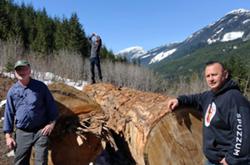
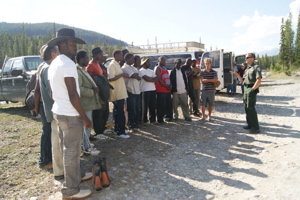
ForestCamp1

Khaira camp workers near Golden after ministry officials moved in, summer 2010. Photo: BC Federation of Labour.

Related

The owner of a scandal-plagued Surrey company, Khaira Enterprises, has been charged with four Criminal Code counts, involving forged documents and fraud.

In addition, police say a separate investigation of a mysterious death at a Khaira camp in 2010, which has added to the cloud of trouble and suspicion surrounding the company, is ongoing.

Khalid Bajwa, owner of Khaira Enterprises, was accused last year of poorly maintaining work camps in B.C. forests and defrauding its mainly immigrant work force, subjecting workers to rotten food and racist abuse, bouncing pay cheques and falsifying Employment Insurance forms.

During June and July 2010, the period identified in the recent charges, Khaira was doing brush clearing and other forestry related work for Louisiana Pacific and BC Timber Sales. According to court documents filed in Revelstoke on Nov. 2, Bajwa used documents he knew to be forged and thus defrauded the timber firm and the government timber sales agency of over $5,000 each. The allegations are as yet untested in court.

Owner will fight charges

The forgery charges carry a maximum penalty of up to 10 years imprisonment, and the fraud charges could come with a 14-year penalty in the case of a guilty verdict, said Neil Mackenzie, communications counsel for the BC Criminal Justice Branch.

Mackenzie said the fraud and forgery charges were related to each other, with the Crown alleging that Bajwa used forged S-100 certificates in securing work contracts from Louisiana Pacific and BC Timber Sales.

The S-100 certificate is proof that a worker has completed a course in fire suppression and safety. Typically, sources in the industry told The Tyee, any work crew that runs the risk of starting a fire in B.C. woods must be made up of workers who have successfully completed the S-100 training. The training, which a Ministry of Forests website says must entail two full days of classroom and field training, is typically offered by private individuals and organizations designated by the ministry.

Despite a ruling by an Employment Standards Branch Tribunal this year that Khaira owed its former workers nearly a quarter million dollars in unpaid wages, less than half that amount has been paid out to the workers, sparking demands from the labour movement and the workers' lawyers that the provincial government, for whom the Khaira work was ultimately done, should immediately pay the outstanding wages.

Khaira's Bajwa, who says he expects to be in court again on Jan. 4, denies any wrongdoing by him or his company, and said in a Nov. 8 phone interview that he was being treated unfairly by the government. He'd not yet had an opportunity to review the court documents filed in Revelstoke or to confer with his lawyer, who is out of the country, but did indicate he would plead not guilty and fight the charges.

Bajwa said the government was holding him and Khaira to a higher standard than other firms that did contract work for the Ministry of Forests.

"I'll fight these charges in court," Bajwa said. "I didn't do anything wrong."

Bajwa said that the Employment Standards Tribunal order stating he owed his workers nearly a quarter million dollars in unpaid wages was unfair. "I gave them motels or camps, food. Every company charges like that for food and lodging. No one else has to pay for travel time. Why is the government giving me trouble?"

Denying any wrongdoing in the matter of the S-100 certificates, Bajwa described a much more relaxed procedure for getting certified than is reflected on the Ministry of Forests website, which says two full days of class and practicum are required to qualify. Bajwa told The Tyee that the certificate only required three hours of online work to be acquired by his employees.

Camp death still under investigation

The Tyee has learned that the RCMP is still investigating the mysterious death of Santokh Kooner, which occurred at a Khaira camp near Revelstoke in June 2010. Last year, Kooner's family called for an investigation into the worker's death, and told the Vancouver Sun that Bajwa had not been helpful in explaining how the family patriarch died, citing a heart attack as the cause.

But that, said the Sun, contradicted the preliminary coroner's report, which said Kooner "was found dead after a night of heavy and rapid consumption of a large amount of ethanol."

Family members told the Sun that if Mr. Kooner's death was alcohol related, they had questions about why Khaira management failed to help him.

Mr. Bajwa did not comment on the Kooner death when he spoke with The Tyee, but staff sergeant Jacquie Olsen, spokeswoman for the Revelstoke RCMP detachment, told The Tyee on Nov. 4 that the investigation into Mr. Kooner's death was ongoing. She said the process had been slowed by difficulty in finding witnesses and in some cases, trouble providing translators for some of the workers, many of whom are recent immigrants from Africa. She said she had no idea when the case would be resolved.

Mark Coleman, who speaks for the interior region of the BC Coroner's Office, said his office was waiting for investigations by the RCMP and WorksafeBC to be completed before deciding whether to conduct its own investigation into Kooner's death.

"The laying of these fraud and forgery charges are good sign that the government is taking the Khaira matters seriously," BC Federation of Labour president Jim Sinclair told The Tyee on Nov. 8. "But expansion is needed. We should be seeing criminal charges laid when workers die because of employer decisions. Just look at the Langley mushroom farm workers case in 2008. With three deaths and two lives totally destroyed, we still haven't seen serious charges laid. The system is completely broken when this can happen."

Sinclair also repeated a call for the B.C. government to pay out the remaining half of what Khaira owes its workers.

"It is a good thing that the government is going after Khaira, but ultimately, these workers were doing work for the province. They shouldn't have to wait any longer to get paid for work they did last year under terrible conditions," he said.

Sarah Khan, co-counsel for many of the Khaira workers, agrees with Sinclair about the need for the government to pay her clients. She told The Tyee that the charges laid in Revelstoke were "a good thing, and we commend them for laying the charges." However, Khan said, more charges should be laid for the unpaid wages and allegedly falsified Employment Insurance forms, and her clients should receive their unpaid wages.

"The small fine imposed on Khaira is no real deterrent," she said. "It was small enough to be just a cost of doing business. We hope to see more serious charges laid and we’d like to see our clients paid for their work.

"Many of my clients lost their housing and were put onto the streets by the long delay in getting any of their back wages paid, and because of EI forms that we allege underreported work done, clients have been unable to qualify for the employment insurance payments they deserve," she added. "Just about every one of the reporting forms we have seen fails to accurately reflect the work our clients did."  [Tyee]

19  Comments:

Login or register to post comments

  • firefox007

    26 weeks ago

    Rip-Offs In The Woods?

    Like it or not, a certain ethnic minority has just taken over BC's tree-planting industry by viciously low-balling all their contracts, which has totally driven out all competition.

    They are notorious for bad forest practices. This disaster here should come as no surprise, I've worked for years with BC Forest Service, I know. The MOF is also to blame; for accepting these bids with their ridiculous low-bid must-win position.

    We know they cannot even break even with these bids, without bad practices inherent to their work. Their participation has meant a slow death for BC tree-planting & they must be driven out!

  • robtaylor

    26 weeks ago

    treeplanting

    No ethnic minority in silviculture has a monopoly on low balling contracts to get work. I have seen plenty of it and had to do it as well. Why? to keep guys working so you don't lose our crew. To stay in business. Of course, that only works in the short term which is why I am not doing it anymore. If it is a standard business practice however, it requires breaking various laws to keep the profit margin up-things like poor safety and not paying your crew.

    I wasn't surprised when this story first broke and even less surprised when it was the RCMP and employment standards, not BCTS or LP that blew the whistle. SIlviculture contracts all say the same thing, more or less and it adds up to "you must follow the law" as far as safety and employment standards go. This all could have been avoided if the terms of the contract were enforced. From what I have read, BCTS knew of the camp conditions and chose to do nothing about it. So ya, Khaira Enterprises was operating unethically and illegally but with the tacit consent of a govt ministry that chose to ignore laws or enforce them because it would be...uncomfortable and administratively cumbersome to do so. I have been told in the past, when administering a silviculture contract for BCTS and finding evidence of long work hours with no overtime pay, poor equipment, substandard camps, insufficient safety training that "we don't want to get involved in that". In the end what happened was that BCTS had to pay to have the area replanted 10 years later because the plantation did not take due to the poor work. It probably cost BCTS double what it should have in the end but that is hard to see because it is over 10 years and the root cause has gone down the memory hole. The remedy: enforce the written contract.

  • pwlg

    26 weeks ago

    firefox007

    You make some interesting points and in a not so direct way seem to implicate the government for setting the stage for poor labour practices, fraud and forgery.

  • wondering

    26 weeks ago

    It's about time

    It's about time this contractor was given careful scrutiny and the full 'arm of the law". I've worked in treeplanting decades ago, and my children followed suit to pay for their education and the obvious slide in costs and benefits to the worker is depressing. The industry is struggling to stay afloat in an intensely competitive, and now it seems, corrupt system. If the BC gov't doesn't take care of this bad scene 'toute suite', replanting those hectares of denuded slopes and ensuring trees for our future environmental and social health,will become nigh impossible as workers rightfully refuse to put up with shit conditions. The histories of the British oaks and the Lebanon cedars should be stark warning as to how important tree planting really is.

  • firefox007

    26 weeks ago

    Tree-Planting.

    It seems that all the posters have experience here. That makes for good comments & we all seem to agree tree-planting has gone way downhill in BC.

    The Ministry of Forests must change its rules; to avoid us being forced to accept only the lowest-bid contract; they do this even if they've had severe quality control with that contractor previously. Out in the field, the foresters like myself don't want that, but our employer sets those contracting rules.

    Another thing is the huge prevalence of NSR blocks; so the re-planting costs are huge. About half the blocks must be NSR. (Not Sufficienly Re-Stocked)

  • Tankenka

    26 weeks ago

    I was very recently wondering

    I was very recently wondering about the current situation with this story, and here, today, is an update. Wonderful! Thank you, Tyee!

    I have no experience with the industry, nor much knowledge, so I thank the posters for your insightful comments.

  • irth1st

    26 weeks ago

    Low bid policy

    I supervised planting contracts for the BC Timbers Sales program for seven years during the mid 90's to 2002. I specifically supervised Khaira Enterprises for consecutive years and I know the habits of this company. The events of 2010 exposing the workers conditions and treatments made me feel sick. I would have never known that officials are not doing regular enforcement checks of these contracts, which would have revealed the deplorable conditions sooner. The low bid policy is in fact the governments policy, this has hurt local contractors in our area as they could in no way compete with package price workers that are delivered to the bush under horrible conditions. I was responsible for checking all of their equipment used in the operation such as fire suppression equipment, first aid certification, camp conditions etc...It was a daily occurrence to have non-compliance, which was always reported in a formal report to MoF or BCTS officials. I will always remember the day this planting company showed up with fresh immigrants from the south of India who were still wearing sandals and flip flops in the fresh snow that had fallen. I asked the of those who could speak english how long they had been in Canada and where they were from? Many claimed they were from Bangladesh and just flew in for two months of tree planting. We had to send them home as they did not have proper clothing or equipment to ensure worker safety under the conditions found in the cut blocks. They also get paid a wage that is not officially recorded, at one time a few workers told me they were getting $2.00/hour. These people deserve better and I know that officials need to ensure there is proper enforcement when they do not meet contract requirements with continued non-compliance. Throw the book at this company if the allegations prove true.

  • hughstimson

    26 weeks ago

    are there no real laws to address these real crimes?

    Fraud and forgery charges don't begin to address Khaira's crimes.

    The government has had plenty of time to bring real charges that address the actual abuses perpetrated by the company against it's vulnerable and marginalized employees.

    We need to demonstrate that it's not okay to deprive employees of food, shelter and dignity. Accusations of forged fire prevention documents don't do much about that.

    I'm also disturbed by the accusations made by commenters here that the MoF may be culpable in these abuses by their refusal to acknowledge them in the course of inspections.

    When will we see real action on this ugly story? Are there really no laws or lawmakers that can take it on?

  • Christophe

    26 weeks ago

    Tree-planting; it is interesting how the forestry companies

    keep it at arms-length, isn't it?

    You would think they might take more of an interest in replacing their own inventory, but hell no! They farm it out to independent operators, then walk away from it.

    That is not good, but as a fisheries biologist, I can't help but marvel at the way they do actually replace their inventory. The fishing industry relies on community volunteers to do it for them. We even have to raise the money to do it ourselves, as if it were a vocation like being a monk, complete with the vow of poverty.

    Both industries exemplify the word 'scam'. Our fish stocks are in the toilet and the trees are one big monoculture, ripe for the next insect plague.

    Nice work BC! It is the stamp of the union-vs-management mentality for which we are so renowned.

  • paisley

    26 weeks ago

    Our government at work

    This sad story seems to drag on and every government agency involved especially individuals employed by our government whom will hardly be held accountable, should be mocked, fired for incompetence and charged criminally. Imagine here and now in BC we have new immigrants subjected to third world working conditions under the very nose of the ever so apt MOF or whatever acronym (of the day) flies on their banner.
    So now us BCer’s can not only be proud of subsidizing raw log exports because the permits, licensing and stumpage fees can’t cover the cost of operating the MOF anymore but now we are doing it on the backs of immigrant labour to boot. Good grief.
    Now that the Liberals have amalgamated several ministries to make a bigger cesspool I feel ever more confident that it will be harder to hide screw ups, corruption and creative bookkeeping.

  • paisley

    26 weeks ago

    Christophe

    I don’t how you equate “union-vs-management mentality” to this story? Hate to break the news but if it wasn’t for unions, we would still have child labour running pit ponies in this country. The problem here is simply corruption and has nothing to do with unions but it is plain to see the MSM propaganda is working on most.
    You being a fisheries biologist, I am surprised that you don’t seem to know that DOF does actually fund and operate hatcheries, Conuma River Hatchery being one. There was a time that the DOF funded a lot more salmon enhancement but due to cut backs that has now been left for concerned volunteers of which I will agree, needs far more government funding.
    Reforestation is not voluntary, it is a supposed contractual requirement of which is not being fulfilled and the worst culprit, you guessed it, permitted harvesting that MOF is suppose to re-stock(enter corrupt contractors). As far as this monoculture reforestation is concerned, pest infestation has always been a huge problem. Witness the White Pine nematode problem that has been causing havoc on the coast since the sixties. It’s just that the public hasn’t noticed or not a concern unless you can actually see the devastation from space.

  • Christophe

    26 weeks ago

    Paisley: it is easy to connect

    the slap-happy way tree-planting is done vs. the methodical way the trees are cut. Please not that I am not criticising tree-planters, but more the business structure that supports them.

    Thne forestry companies are highly unionised and highly mechanised. The tree-planters are hired by small operators, acting independently from the forestry companies, with few or no benefits.

    The forestry comapnies are usually multinational giants, owned by pension funds and they answer to no one. The tree-planters are on their own if the boss goes under.

    The whole industry sucks, big-time. If we really need the fibre, we ought to put at least as much effort into planning and executing the reforestation as we do into cutting the trees down.

    Why are we still allowing forest monoculture? That is one question that has no answer.

  • firefox007

    26 weeks ago

    Stumpage Pays For Seedlings.

    christophe;

    "Tree-planting; it is interesting how the forestry companies"

    "keep it at arms-length, isn't it?"

    "You would think they might take more of an interest in replacing their own inventory, but hell no!"

    What do you mean? They pay stumpage, which goes to the Province to pay for tree-planting, that's where the money comes from to grow the seedlings. Stumpage is tax.

    "Why are we still allowing forest monoculture?"

    Not true at all, whaddya mean? We in the MOF replant according to what species grows best in a given area; which could mean pine, spruce, D. fir, etc...All silviculture is site-specific...right...?

  • firefox007

    26 weeks ago

    Forestry Companies.

    "The forestry comapnies are usually multinational giants, owned by pension funds and they answer to no one."

    They answer to those who lease the Crown land to them, the Ministry Of Forests. They only log if their logging plan is approved by the Ministry.

  • x4estworker

    26 weeks ago

    Paisley and Christophe, where's your evidence?

    It never ceases to amaze me how those who claim to be so vitally concerned about our forests actually seem to know so little about them. I am referring to your reference to "monocultures". Just what monocultures would those be? Just another part of environmentalist mythology, I would guess.

    I have worked in the forests all over Vancouver Island, along the BC coast and throughout the BC interior. I have carried out studies for the Ministry of Forests on species diversity in plantations to determine the mix of species over thousands of hectares of cut blocks. Both in my observations over the province and from those studies, I can assure you that very few of those cut blocks contain "monocultures". If only one species of trees is planted, it is usually because other species have seeded in naturally or will seed in naturally.

    There is a very complex system in place that classifies ecologically every square inch of the province’s forests. It considers the old-growth species that were there, the soil, the climate and individual site factors to arrive at a recommendation of what species should be planted on a particular site. In my 20 years, I supervised many treeplanting projects and there were very few in which there was only one species planted on a cut block.

    There are areas of the BC interior where you will find almost pure lodgepole pine plantations. This occurs mostly in the Cariboo west of highway 97. It is in those types of cases, where there were monocultures of old-growth to start with, where you may find monoculture plantations. Otherwise, there is a good mix of species in just about every plantation you would walk through.

    As for the comments from those critical of the treeplanting industry, I agree 100%.

  • Christophe

    26 weeks ago

    Stumpage fees used to pay for stream restoration too, guys

    The forest companies pay stumpage fees then MoF hires tree planters. It is all arm's length and probably corrupt as hell. In other countries, the forest companies own the land and they take care of their own business.

    The compartmentalisation of our industry robs everyone of ownership. THAT is my problem. It is the whole frigging system, which sucks.

    As for forestry companies promoting bio-diversity, in the central coast, they were spot-spraying everything that wasn't fibre-producing. They hung posters in the post office in Ocean Falls and other population hot-spots but it was otherwise a well-kept secret.

    Do you remember Forest Renewal BC? I do because I applied for $1.8 million to do stream assessment in 1996, and I got it. The director of FRBC threatened to resign because over half of the total $400 million per year they went through was spent on internal process rather than work.

    Of the funds that did get spent on field work, 80% was spent on road deactivation and very little went towards actual stream restoration. Now they spend next to nothing on stream restoration.

    Next March 31, the current funding for Living Rivers BC expires, probably forcing the termination of a valuable program that employs about a dozen expert fisheries biologists.

    Again it is no one's fault, but the system is set up to fail and the only category of salmon streams in BC that is increasing in number is the category where "no fish were seen this year".

    Meanwhile we export raw logs and the BC OIL and Gas Commission is staffed entirely by ex-forestry industry workers who have not discovered a cubic metre of oil or gas in their entire lives. They are forestry hacks. It is the epitome of nepotism, not professionalism.

    So don't talk to me about how great our forestry industry is. Tell me instead why one of the last stands of mature Douglas-firs on southeast Vancouver Island was contracted to the Nanoose First Nation so they could log the headwaters of Nanoose Creek.

    This province is totally f**ed up and we all know it. The union-management system is doing a great job of looking after themselves an the province of BC looks like the Avatar movie.

    Apart from that, everything is just great.

  • igbymac

    26 weeks ago

    robtaylor, your insight

    has been my experience and understanding as well. With a quarter-million trees put into the ground myself, I can confirm anecdotally that "No ethnic minority in silviculture has a monopoly on low balling contracts to get work."

  • paisley

    26 weeks ago

    Your so right x4estworker

    “It never ceases to amaze me how those who claim to be so vitally concerned about our forests actually seem to know so little about them.” Yes, ditto on that.
    I am not sure if you know this but tree planting started decades before your 20 years at and solely as a band aid for clear cut logging. Things have hopefully changed but the fact remains that monoculture was tried, specifically with an attempt to make spruce the most common species on the west coast of the island which had nothing to do with biodiversity and everything to do with money.
    As it turned out planting spruce everywhere didn’t quite work out. The last laugh and giggles project I witnessed, to try and turn things around, was watching silviculture workers climbing step ladders in a test block and cutting the top leaders off the trees and burning the accumulated piles to see if that would slow down the nematodes that were attacking them. When that didn’t work(funny that) the next project was injecting the trees with hypodermic needles filled with pesticide(failure no#2). The thing is the nematodes have always been around but clear cut logging had not. Natural generating spruce growing up under an old growth canopy don’t have a nematode problem.
    This was a feeble attempt to correct a monoculture planting problem plain and simple, a myth it is not.
    Of course there would be no reason to have tree planting if selective logging on small woodlot licenses was the norm in this province where natural regeneration would do the job itself. We would have far more jobs. The MOF has made it their business to make sure woodlot licenses are rare and you can believe that the forest corporations are on board with that. Why? One might ask? You will never see a ministry make decisions that would make themselves unemployed. The MOF's structure requires industrial logging. Woodlot licenses could mean the beginning of the end of industrial logging.

  • Christophe

    26 weeks ago

    Thanks, Paisley

    Your comment about tree planting being a band-aid for clearcut logging reminds me of the fish hatchery problem.

    Hatcheries were conceived as a band-aid to dams and fish habitat destruction but they screw up the genetics of the fish. This has been proven repeatedly on many river systems.

    Artificial tree planting probably does the same for the forest ecosystem, but on a longer time scale.

    Foresters try to mimic nature, just as fisheries biologists do, and both are doomed to failure.

    The idea of harvesting one or two trees for seed stock is just plain lunacy when looked at from the genetic perspective.

    The idea of spraying the understorey in the central coast forests to promote the growth of fibre is equally nuts. Devil's club and Salmonberry do not compete with trees, they complement tree growth. Yet in 2001, the forestry companies sprayed everything that was not producing fibre in an attempt to maximise fibre production. I kid you not.

    I remember talking to a Dutch forester on the Queen of the North (before it sank). He laughed as he said that if he did in Holland what Canadian loggers do here, he would be thrown in jail. Clear cutting only makes sense if you accept that raping the land is OK. Otherwise, it destroys everything, setting the land back 10,000 years in time. It is OK if you like mass wastage and erosion.

    Merv Wilkinson of Wildwood proved that he could make more money by selective logging than by clear cutting. It just doesn't suit the big business model of the transnationals is all.

    • The discussion for this story is closed. No more comments can be added.