- Ms Kaye is a Tyee Builder. You can be, too.
- Mary Carlisle is a Tyee Builder. You can be, too.
- Prem Gill is a Tyee Builder. You can be, too.
- Nancy Flight is a Tyee Builder. You can be, too.
- Justin Everett is a Tyee Builder. You can be, too.
- John Westover is a Tyee Builder. You can be, too.
- Nora Etches is a Tyee Builder. You can be, too.
- Edward Henderson is a Tyee Builder. You can be, too.
- Bharadwaj Chandramouli is a Tyee Builder. You can be, too.
- Dean Chatterson is a Tyee Builder. You can be, too.
- Marius Scurtescu is a Tyee Builder. You can be, too.
- Robert Parkes is a Tyee Builder. You can be, too.
- James Murton is a Tyee Builder. You can be, too.
- Susan Doyle is a Tyee Builder. You can be, too.
- Vincent Strgar is a Tyee Builder. You can be, too.
- Helen Spiegelman is a Tyee Builder. You can be, too.
- Subir Guin is a Tyee Builder. You can be, too.
- Kimball Finigan is a Tyee Builder. You can be, too.
- Joanne Manley is a Tyee Builder. You can be, too.
- David Leach is a Tyee Builder. You can be, too.
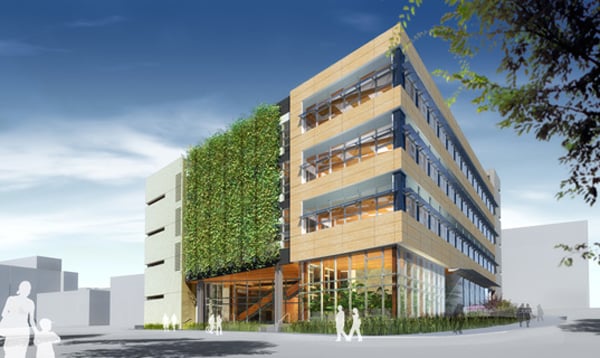
How to Design a Building that Restores the Earth
UBC's Centre for Interactive Research on Sustainability aims to set a new North American standard by actually benefitting the environment.
Due to open in June, CIRS is being touted as a 'regenerative' building.
Green Buildings That Pay Off
- Five Myths About Green Building
- Green Homes For Less
- How Do They Decide a Building Is 'Green'?
- Building Jobs By Tearing Down Houses the Green Way
- Step Inside the Real Home of the Future: Passivhaus
- In Snowy Whistler, a House with No Furnace
- Low-Energy Homes Mean Thousands of New Jobs
- How Green School Buildings Help Children Grow
- How to Design a Building that Restores the Earth
- A Smarter Way to Help You Pay for Greening Your Home
- Greening Homes Can Be Big Boost to Economy
- How Many 'Miles-per-Gallon' Does Your House Get?
- Building Green from the Ground Up
What if a building wasn't just sustainable, but actually benefitted the environment? It's a lofty goal, but the University of British Columbia is trying to achieve it with the construction of what they believe will be the greenest building in North America.
Right now, the Centre for Interactive Research on Sustainability (CIRS) is a two-story shell of a building: there are no doors, the stairs are rough, and rebar and plywood are the main decor instead of office furniture and potted plants. But by the time it's completed this June, CIRS will be more than just a stylish campus building: it will meet both the LEED Platinum and Living Building Challenge standards, and give back more than its taking in air, water and energy, upping the productivity and happiness of the people who inhabit it.
"The aspiration is for a regenerative building, essentially a building that can live within its footprint, what's available to it in terms of mass and energy flow on the site or within the site," says Alberto Cayuela, associate director of UBC's Sustainability Initiative, which is in charge of the CIRS project.
Not just a bunch of hot air
CIRS relies on a series of heating systems, including 16 geothermal rods, solar hot water and a heater exchange connected to the adjacent Earth and Ocean Sciences Building.
In a climate where the amount of heating in winter matches the cooling in summer, geothermal rods could successfully mine the earth's cooling and hot air to operate a building like CIRS.
But in a place like Vancouver, where the amount of heat required is three times the cooling, a geothermal system runs the risk of taking out too much heat and cooling the earth, causing a system decline over time. To avoid this, CIRS takes as much heat out of the ground as it does cool air, and relies on heat exchangers capturing wasted air from a nearby building to warm up the rest.
"(Earth and Ocean Science Building) consumes 1,600 megawatt hours a year of steam from the steam plant, and 990 goes through the roof, the fume hoods. So that building, by law, that's 10 air changes in hour in every fume hood, and that's 990 megawatt hours through the roof," says John Robinson, executive director of the Sustainability Initiative.
"We're taking all of that heat, bringing it into CIRS, we only need 300, we're giving 600 back to that building. So we're reducing their steam use by 600, which reduces natural gas burning by 860 at the steam plant -- that's 150 times a year. So the net affect of adding this building is to reduce natural gas burning at UBC."
John Robinson, Sustainability Initiative director: "The new sustainability agenda is about making people's lives better."
Robinson hopes building symbiosis models such as this will not only inspire future construction to rely on existing systems and improve them, but will inspire others to think of sustainability as being about more than just one building.
"Sustainability is not a building scale phenomenon, it's an actual neighbourhood or community scale," he says.
Water, water everywhere
Few places in the country get as much rain as Vancouver, so it seemed unnecessary to the Sustainability Initiative that all the water for CIRS had to be pumped in from the city reservoir when less than five per cent of the building's water had to be drinkable.
Instead, CIRS will act as a water treatment plant, collecting and storing rainwater, treating it to grey water standards, and using it for the building's non-potable water needs, like toilets, urinals, and irrigation.
"This location we get around 1,200-1,300 millimeteres of rain per year, and we have a catchment area of around 500-600 square metres, so there's a lot of water we can harvest during the year," says Cayuela.
"We have a 100 cubic metre system essentially that will be our main repository for rainwater harvesting, and we're going to treat water on demand."
The treatment process will be aerobic: pumping oxygen into the water to encourage bacteria to eat waste matter and turn it into carbon dioxide. It's a more energy intensive process than anaerobic treatment, which doesn't require oxygen but produces methane gas, making it a potentially more dangerous method of water treatment.
During slower periods of the year, such as the summer and Christmas break, CIRS will treat sewage water from other buildings, thereby reducing the amount of wastewater they produce. Excess water or storm run off will be treated and redirected into a well drilled into the aquifer, not only improving the quality of water returned to earth, but preventing the erosion of nearby cliffs.
"The runoff from every building on campus right now goes down through the soil, hits the clay layer, and goes off through the cliffs and erodes the cliffs," Robinson told The Tyee.
"Our water discharge will go down the well and recharge the aquifer. So it won't contribute to the cliff erosion."
UBC'S OTHER BRIGHT GREEN SPOTS
UBC's Point Grey campus features some of the most sustainable buildings to be constructed in North America in the last 15 years. Here's a run down of some of the most notable projects, and the environmental features that made them cutting edge at the time.
C.K. Choi Building for the Institute of Asian Research
Opened in 1996, UBC lauded it as "one of Canada's most environmentally sound building projects." Like the CIRS project, the C.K. Choi Building makes use of natural light from large windows, reducing 192,000 kilowatt-hours of energy per year, and even offers 100 per cent natural ventilation. Water is heated using waste heat from a preexisting steam line, gray water from urinals and the sinks is used for irrigation, and the toilets are compostable -- no water required at all. Constructed entirely of recycled or recyclable materials, including bricks and wooden beams from the University's Old Amouries, the building won the 1995 Progressive Architecture Award for Green Architecture, and the 1996 Earth Award from the Building Operators and Managers' Association of B.C.
Liu Institute for Global Studies
Completed in the late 1990s, the Liu Institute goes for a minimalist design in order to maximize the sustainability of the building. The building is narrower than most on campus in order to take advantage of natural lighting in every room, and features exposed timber and concrete walls, ceilings, and floors, as well as mechanical ducts and sprinklers in order to cut down on the amount of finishing products. Though LEED didn't exist at this point, non-toxic paints and adhesives were used, and everything from the carpets, to the concrete, to the office furniture was made either entirely or partly from recycled materials. Ventilation is also natural, but, notably, they opted for low-flush toilets instead of composting ones.
A more recent construction, the main building for the campus' electrical and computer science program opened in September 2005 and partially incorporated an existing building. Thirty five per cent more energy efficient than typical buildings of the day, it's outfitted with 70 per cent ceramic frit on the outside, reducing the heat from the sun and thereby cutting down on cooling needs. Photovoltaic panels in the lobby absorb the sun's energy to power the back up DC power system in case of blackouts and power DC experiments in the electrical engineering labs.
UBC's first LEED certified building, the Life Sciences Centre achieved gold when it opened in 2006 by emitting 1,000 less tonnes of green houses gases, using 28 per cent less energy, and 50 per cent less water than normal buildings. A monitoring system tracks the outdoor environment to adjust lighting and ventilation levels, saving 6.4 million kilwatt-hours of electricity per year, and building materials were chosen by their high recycled content, low toxicity, and local availability. It was only the fourth building in the province, the seventh in the country, to meet the LEED gold standard at the time.
-- K.H.
Inhabitants vs. occupants
"We think the new sustainability agenda is about making peoples lives better, not just environments' life better," says Robinson.
"We define an occupant as a passive recipient of building systems: you go in, you can maybe turn on your lights, you can maybe open your window, and that's it. Everything else, you don't know about, you can't control. Can we instead create a building where people are inhabitants, where they have a sense of place and engagement with their actual building and with the spaces where they work."
Robinson aims to do that by having each of the building's inhabitants sign a sustainability charter, committing themselves to achieving CIRS goal of benefitting the environment. But Robinson doesn't expect people to work towards a new level of sustainability out of the goodness of their own hearts. Instead, he's offering inhabitants five benefits: high air quality, access to daylight everywhere, individual control of your workstation's atmosphere, real time feedback on how the building is doing, and the ability to vote on the building's control systems.
Explanatory video made by UBC shows off CIRS ultra-green features.
With the exception of the 450 seat auditorium -- the largest lecture hall on campus and the only one lit by skylights -- Robinson and Cayuela like to boast that every horizontal surface in CIRS is covered in windows, not only allowing in natural light, but giving people control over the air quality by using windows that open manually.
"We're putting a sensor in each window -- the reason is we want to make sure we know at any given time who's using natural ventilation when conditions allow it," Cayuela told The Tyee.
"Or, for instance, to what degree our building inhabitants are responding to our requests, for instance if we're expecting a very warm weekend, and asking people to leave their windows open so that the building doesn't overheat, to what extent people are doing that."
'Net positive in structural carbon': Robinson
Control over personal environment extends beyond opening and closing windows and flicking a light switch, however. Each workstation at CIRS will feature a power and data station, offering updates on the building's energy and water consumption, as well as an air diffuser you can control.
CIRS will also feature removable partitions instead of drywall, and all the wiring will run through the raised floor system: a full 18 inches of space providing not only the ability to move workstation power systems, but also act as a natural air ventilation system. If you want to convert two small offices into one meeting room, it will take only a handyman, some tools, and a couple of hours to make the change.
In addition, most of the building is made of wood from B.C. and Oregon certified by the Forest Stewardship Council, with the floors and ceilings constructed out of two-by-fours made from pine beetle infested wood -- just as strong as reinforced concrete or steel, but better for noise attenuation and prorogation.
"The amount of wood we have in this building represents more carbon being sequestered, locked away, than all the carbon emitted by the construction process and the decommissioning process at the end," says Robinson.
"We're net positive in structural carbon, which you don't hear as much about, you hear a lot about operational carbon, energy use, but we think cities should really take seriously, especially in Canada, of any place on the planet, their responsibility as carbon sequestration engines."
Driving to work would miss the point
But being the most sustainable building in North America only counts for so much when many people drive their cars to get there. A study by the university's office of Campus and Community Planning found that in fall 2009, more trips were made to campus by transit than any other method: 58,000 in total. But cars were close behind, with 40,200 trips in the same time period -- a 13 per cent decrease in car use since 1997.
Robinson says part of the existence of CIRS will be to house the Sustainability Initiative, dedicated to reducing the University's carbon footprint through improvements to transit as well as buildings.
Solar panels and rainwater capture: CIRS complex is designed to extract and make use of what Vancouver's weather offers.
"We have very specific goals in all of those areas, a very active program of reducing transport by cars," he told The Tyee, adding that almost half of the campus' parking above ground parking spaces have been reclaimed in the last decade, and U-Pass membership has increased transit ridership by 43 per cent.
Don't expect to see housing projects based on the CIRS model anytime soon, however. Robinson believes the building will inspire other universities in the country to try similar models, especially after the report on the construction costs, estimated to be 15 per cent above the normal rate, is released later this year. But he doesn't see net positive houses being modeled after the UBC building.
However, Robinson is hopeful some elements of the building are already catching on outside of university campuses.
"You may have seen (news articles about) the cross laminated timber potential for actually building high rises out of wood; it's never been possible. Right now, six stories, I think, is the max," he says. "But the new technology, cross laminated timber, opens the door to significant construction and Canada should be leading the world in this stuff. We have a lot of wood." ![]()


10
Login or register to post comments
SharingIsGood
1 year ago
many thanks
Kudos to John Robinson and his colleagues for taking the initiative.
Thank you UBC for letting these people show us how to live and build.
Many warm thanks to Katie Hyslop and the Tyee for bringing this informative article forward.
Talon
1 year ago
Building Green
Thank you very much for this information about UBC and its Green Building initiative. It is good news when so little news is good. Stories like this need much wider dispersion so that it is seen on all the media, not just the most progressive like The Tyee. Tell your friends about it and write to UBC and say thank you for being a friend of the planet. Many thanks to Ms. Hyslop and The Tyee.
stevesatow
1 year ago
A Wolf in Sheep's clothing?
Oh, how I wish it were this simple...
Ms. Hyslop says it herself, 'Don't expect to see housing projects based on the CIRS model anytime, soon, however.'
Why?
Firstly; this project is 'estimated' to be 15% more expensive that conventional construction - a major barrier to the mainstream uptake of sustainable building practices.
Secondly, this appears at first glance to be a conventional building (vast amounts of concrete, steel and glass - all with massive embodied energy and resources - overlaid with some complex and/or expensive technology in the form of ground-source heat recovery, massive PV arrays and recaptured heat from neighbouring buildings (amongst other things).
What disappoints me about high-profile projects like this - particularly ones conducted by universities - is the missed opportunities. They have at their disposal an almost limitless pool of fervent young minds just over-flowing with new ideas that they could work with. But instead they build another fancy concrete and glass block.
Why? Probably because it conforms to the building code requirements?
KHyslop
1 year ago
stevesatow: mostly wood
stevesatow, the building is actually made mostly of wood. Professor Robinson didn't have a percentage value on how much of the building was wood, so I unfortunately can't give you specifics on that. But it is more wood than concrete.
ASKBiblitz.com
1 year ago
Sustainability - it is to laugh!
How on Earth can you take these building mo'feshnuls seriously in the wake of a decades-old leaky condo/co-op crisis that continues to devastate high- and low-rise and even brand new single-family construction throughout the Lower Mainland and B.C.?
The only thing sustainable about B.C. housing today is the rate of its failure due to basic fifth-rate standards and our Laurel and Hardy crew of architects, engineers and homebuilders!
Ask this guy to take us through the 'state-of-the-art' Olympic Athletes Village now calling itself Millennium Water. Get him to explain the nature of the class action by 62 buyers, who found all manner of defects in their units and who are now hoping to escape the transaction altogether.
... Do you understand how giving these guys carte blanche in an infomercial like the above damages the reputation of the Tyee and the EDITED FOR INSULT -- EDITOR ? Was it really worth it?
snert
1 year ago
Smoke & Mirrors
or should I say steam & hot air.
"To avoid this, CIRS takes as much heat out of the ground as it does cool air, and relies on heat exchangers capturing wasted air from a nearby building to warm up the rest."
So it can't really stand on it's own.
stevesatow
1 year ago
Falling at the first hurdle...
Katie, thank you for your response.
I would still be interested to know what percentage of concrete is being used?
Your article only spoke of the floors and ceiling being wood and since the BC Building Code doesn't currently allow for four or five story wooden structures without invoking some serious 'Alternative Solutions', the walls are unlike to be made of wood.
Snert also makes the valid point that the building is using energy from its neighbours - most likely generated by hydro or fossil fuels - which mean that it cannot attain full Living Building certification. Since the LBC mandates 'Net Zero' energy and water and no use of non-renewables.
I fully support any attempts to create buildings that sequester more CO2 than they create during construction or use, but I still maintain that, when you have the enormous resources of a University available, you can - and should - push the boundaries.
I don't believe that this project has come anywhere close to achieving that.
In terms of design, having vast areas of glass also increases the cost, embodied energy and will probably increase the cooling load on the building significantly, all for the sake of aesthetics and offering the occupants big picture windows.
Sustainability STARTS with the design so, in my opinion, this building fell at the first hurdle.
I also know that when truly sustainable materials and features are designed in to the building (rather than just being 'add-ons' which add on to the price) it is possible to be cost-competitive. This has been proved by several projects in recent years.
Regards, Steve.
(www.naturalbuildingsite.net)
zalm
1 year ago
I don't know about UBC
But the health care system has built a couple of buildings with significant LEED intent. One, the Mental Health building at Children's Hospital is an unmitigated disaster and a waste of energy and materials. Most of the problem was the fact that they had a very poor client that values fancy wall panelling over sound mechanical systems, but the building is quite unworkable right now, mostly overheated, and under-ventilated. It doesn't meet any standards except basic life-safety, and the $600,000 already poured into remediating some of the worst mistakes is only a small proportion of the work needed to get it working as intended. I feel for the patients who have no choice but to stay there for their treatment.
It was a textbook design and will work if installed and maintaned as intended, but there was no guidance given to the contractors by the design engineers, and the owner's representatives utterly failed to understand what was being built, so when change orders came up at meetings (and there wer ea lot of them) they were signed off with no knowledge of the effects.
Last but not least, over budget. The fatal flaw in any building. Proposed at $61 million, came in at $84 million, and I have remedial work for about $1.2 million already with more issues not yet addressed.
Sigh.
I'm not saying "don't do it", but there aren't many clients out there that can make a building like this come off when the designers and builders get bored or frustrated, and for sure, no government institution should be one of them.
HawkEyes
1 year ago
also not impressed
"Building that Restores the Earth",
"What if a building wasn't just sustainable, but actually benefitted the environment? It's a lofty goal...", or "give back more than it's taking in air, water and energy".
Yer kidding, right?
No building immediately equals a credit for Mother Earth.
...Are CFL's in the building?
From the first link in the story:
"CIRS
What does it take to create an environment for innovation?
To bring together really smart minds and involve them in really important problem solving? To develop not only leading edge thinking, but also leading edge thinkers? To make our world sustainable?"
Lofty.
“Forty percent of the energy used in America today is consumed in buildings. That’s more than the entire transportation system — cars, airplanes, trucks, etc. – put together. Buildings also consume 30 percent of our fresh water and 25 percent of all our wood products. So if you want to make a difference, buildings are the best place to start." ...you get the points, the award, and the budget. What's with the hype and attitude?
..."almost half of the campus' parking above ground parking spaces have been reclaimed in the last decade, and U-Pass membership has increased transit ridership by 43 per cent..."
Does UBC reclaim parking spaces that people are actually using and paying for?
Does the "13% decrease in car use since 1997..." (to fall of 2009) factor in a possibly lower number of cars because of the cash strapped economy?
How stable was the student population for this period, or was there a decline in those numbers as well?
Intelligence of U-Pass riders isn't mentioned.
As for the goodness that comes from using pine beetle wood, while not knowing "how much of the building was wood", "of the 1,692 teragrams of carbon harvested from forests in Oregon and Washington (U.S) from 1900 to 1992, only 23% is in long-term storage in forest products."
It is impossible for pine beetle kill harvests to be an exception, "selective logging, on the other hand, is prohibitively expensive...
"Excess water or storm run off will be treated and redirected into a well drilled into the aquifer" For a "recharge"? Couldn't this liberty be a source of contamination?
IMHO, the pompousness of the educated is one major cause of the very dilemma humanity faces. Perhaps this is best reflected here with the sensors, prescribed to monitor the "passive recipients", after asking them to sign a "sustainability charter"? You can't communicate the concept of opening a window well enough?
Many people are thinking about the problems Earth is facing, making their contribution, these are brilliant times, however really dumb you might imagine others to be.
fdgffdgf
1 year ago
WE ACCEPT PYAPAL or CREDIT CARD PAYMENT
======== http://www.clothes6.us/ ========= We are specialized in offering all kinds of top brand shoes, jeans, t-shirts, bikini, swimwear, jacket, jerseys, watches, purses, handbags, belts, wallets , sunglasses and hats etc. we are serious and professional jersey supplier,we can offer NFL,NHL,MLB,NBA jerser,the NFL jersey 18usd each,the NHL jersey 38USD each.MLB jersey 18usd each,NAB jersey 18usd each.we have many jerseys of other players, $30 nike shoes,air jordan shoes,nike shox shoes,gucci shoes $33 true religion jeans, ed hardy jeans,coogi jeans,affliction jeans, Laguna Beach Jeans $16 ed hardy T-shirts,Coogi T-shirts,Christian Audigier T-shirts,Gucci T-shirts,Polo T-shirts. $30 coach handbag,gucci handbag,prada handbag, $12sunglasses,$9 caps. accept paypal free shipping
======= http://www.clothes6.us/ =========