News

A Tyee Series

Shhhh! Nuclear Sell-off Underway

The Harper government's secretive moves to privatize the CANDU reactor maker that you own. First of two.

By Amelia Bellamy-Royds, 25 Nov 2009, TheTyee.ca

Candu

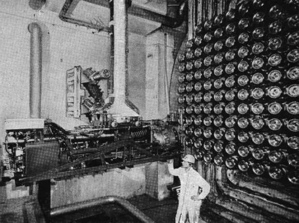
CANDU reactor vault, circa 1960s.

Related

A leaky nuclear reactor dragged a neglected Crown corporation into the public spotlight this spring. Press releases churned, news media swarmed, and officials were called up to Ottawa to face questions from a Parliamentary committee.

But all the attention on Atomic Energy of Canada's shutdown NRU reactor -- and the resulting global shortage of medical isotopes -- seems to have pushed aside any broad public debate over the federal government's plan to restructure and partially privatize the corporation.

The question of medical isotope supply, both in the short and long term, is important. As bills mount in hospitals for expensive alternate supplies and a panel of government-appointed experts gets ready to release their assessment of proposals for alternate supplies, the subject will remain a matter of concern for Canadians and their political representatives.

But isotopes are just a side-business for Atomic Energy of Canada Limited (AECL), the federal Crown corporation whose main focus remains the development, sale and maintenance of CANDU nuclear power reactors.

This past May, the federal government announced that it had accepted a proposal to restructure AECL and find private partners who can better "leverage" the company's assets internationally through a "strategic alliance."

What that means is not exactly clear. The government has hired consultants to come up with a detailed plan, and are talking with potential private partners. But one thing they do not seem interested in doing is consulting with the people that own the company -- you, me and the rest of the Canadian public.

That CANDU attitude

Atomic Energy of Canada Limited has been a 100-per-cent federal government-owned Crown corporation since its foundation in 1952, when it took control of research reactors and facilities that had been developed as part of a British-Canadian nuclear weapons program during World War II.

The new corporation was focused on adapting that technology to peaceful nuclear uses, and in 1954 it started work on a nuclear power demonstration plant in cooperation with Ontario Hydro and General Electric Canada. From the 1960s through the 1980s the design was refined and commercial power reactors were built in three Canadian provinces and around the world.

All the AECL reactors built to date use "natural" (unenriched) uranium as fuel and heavy water (with deuterium isotopes replacing ordinary hydrogen) as a moderator. Those features led to the name by which the unique design is known: the Canadian Deuterium Uranium, or CANDU, reactor.

(The corporation's latest reactor design marks a significant departure from history. It requires enriched uranium, something that can only be made in a few countries in the world, since the technology to make it can also make weapons-grade material and is therefore strictly controlled.)

Even as it transformed into a commercial business selling power reactors, AECL continued its research programs, both in reactor design and in other areas of nuclear science. Its income from sales was complemented by an annual budget from the federal treasury.

For nuclear physicist Jeremy Whitlock -- a former President of the Canadian Nuclear Society and a public educator about the Canadian industry through his Nuclear FAQ website -- that money alone is reason to care about AECL.

"Even if people's thoughts on that future are that it should be discontinued, you should at least get into the debate," he told The Tyee, "because there has been a significant investment and if you're talking about throwing it away for whatever reason, you have to balance that against the investment you've put into it, and are you getting value for your money."

The Minister of Natural Resources has recently pegged the total government investment in AECL at $8 billion over the nearly 60 years it has existed. When that figure is adjusted for inflation, it rises to more than $13 billion as of 2006, according to a study by the Canadian Energy Research Institute.

Government transfers to AECL shrunk in the 1990s, with no new prospects for reactors in Canada and management and maintenance problems with the reactors already running. But in recent years, AECL has received extra grants of hundreds of millions of dollars each year to address specific problems: updating aging research infrastructure, the now-cancelled project to create dedicated isotope production facilities, and the design of a "next generation" power reactor, the Advanced CANDU Reactor.

In the past five years, AECL has directly received more than $1 billion in government funding for both regular research operations and special projects. An additional half-billion-plus is being spent to deal with legacy wastes and decommissioned facilities from early research at Chalk River laboratories.

Even more concerning, federal funds are covering losses from AECL's commercial business. Over the past year, $300 million has been budgeted for the completion of over-budget contracts to refurbish nuclear reactors in New Brunswick and Ontario.

With all the extra money heading AECL's way, it was no surprise that the corporation received extra political attention. That culminated in the government's decision, announced in late November 2007, to conduct a "full review" of the structure of the organization. The move was described as part of the Conservatives' "commitment to good governance."

Open-ended review?

From the start, the review process received second billing -- literally. The official announcement was tacked-on to a press release announcing that Canada would be joining the Global Nuclear Energy Partnership, an initiative of the Bush administration in the United States aimed at developing next-generation nuclear technologies.

There may have been another reason for only taking up half a press release with the news: there wasn't much to say. The only thing that was being confirmed was that everything was on the table. "We're not ruling out anything," said then-Natural Resources Minister Gary Lunn in an interview with the Globe and Mail's Shawn McCarthy.

A week earlier, Lunn had told members of the House of Commons Natural Resources committee that "the government has no plans at this time. It has not made any decision with respect to privatizing AECL."

But the talk of privatization had been swirling for more than a year by then. In 2006 and 2007, the Globe and Mail, the Toronto Star and the Montreal Gazette all reported at various times about secret meetings or interest in the corporation from private companies.

Current Liberal Natural Resources critic Geoff Regan accuses the Conservatives of cooking up the entire review process to justify a predetermined desire for privatization.

"If they come into power having already decided what they want to do, and then they have a review to justify it, that isn't the same as doing a review with an open mind and letting your decision being based on evidence," said Regan.

Nonetheless, political and media interest in the review of AECL and its potential outcomes was quickly overwhelmed in late 2007 and early 2008 by the furor over the shutdown of its NRU reactor and the resulting global shortage of medical isotopes. Instead of parliamentary committee hearings on a potential major change to federal policy, opposition MPs were focused on the isotope shortage and the subsequent demotion of the President of the Canadian Nuclear Safety Commission.

It therefore seemed awfully symmetrical when the results of the review of AECL were announced this May, shortly after the NRU reactor was shut down again. Whether the timing was pure coincidence or whether it was -- as Regan alleges -- an attempt to make it seem like the government was doing something about the isotope shortage, the fact remains that once again the isotope crises had pushed aside discussion on the privatization proposal.

Open-ended recommendations

Of course, it is difficult to have meaningful debate about a proposal that is not well defined.

The conclusions and recommendations of the review, as expressed in a summary report (original documents aren't being released), leave plenty of room for political discretion.

When the report was released in May, Minister Lisa Raitt said in an official statement that "we have preparing for this for quite some time." But in order to decide what to do next, the government hired investment firm N.M. Rothschild and Sons (who specialize in bankruptcy restructuring) to come up with a detailed plan and "negotiating mandates." They presented a confidential report to Raitt this fall. In addition, consultant and former banker David Leith has been contracted to advise Raitt directly.

There are three main recommendations in the report that will presumably be adopted in the final plan.

First, the two sides of AECL -- research, including medical isotope production, and commercial development and support of CANDU reactors -- should be separated into distinct organizations. Second, the government should retain complete ownership of the research-branch of AECL, but should hire a a private company to operate it, following a model used by national laboratories in the United States and United Kingdom.

Third, the commercial CANDU reactor division "can be best served by a strategic alliance with one or more partners with global scale that can leverage the technology, skills and experience of AECL in Canada and internationally."

Whitlock, who has worked at AECL since 1994 but who spoke with The Tyee as an individual scientist, said he is "cautiously optimistic" about the plan to contract-out management of the research laboratories.

As for the reorganization of the company, he pointed out that it is nothing new. "When I was hired, I was actually hired by AECL CANDU, which was a separate company from AECL Research," he said. "A few years after I joined the two were amalgamated ... and now the pendulum has swung back to it's better to be split up, again. The difference is now they're talking about selling off, which kind of prevents the reversal in the future."

It is in that third recommendation that this vision of the future of AECL gets a little hazy.

'Strategic' sell off?

According to the report, "a strategic alliance with one or more partners could take many forms, including project specific joint ventures, mergers or the sale of an equity position in which the Government retains either a majority or minority ownership position."

AECL already engages in "project specific joint ventures" with its Team CANDU partners: SNC-Lavalin Nuclear and the Canadian subsidiaries of the nuclear divisions of Babcock & Wilcox, Hitachi, and General Electric (the last two of which have merged to form GE-Hitachi Nuclear).

The group was formed to support AECL's bid for new nuclear plants in Ontario, and has also worked together on other proposals. The companies all have a role in CANDU reactor development or operation -- for example, GE-Hitachi fabricates CANDU fuel rods.

But while "Team CANDU" members have a stake in AECL's success, the Conservatives want more from a new partner. They want someone to buy up shares in the company, providing capital for new projects, and also absorb the risk of cost overruns for those projects. They want "partners and expertise and capital infusion, making sure that the risk associated with new builds isn't too strenuous on the Canadian taxpayer," as Raitt put it to the House of Commons Natural Resources committee earlier this month.

Considering the current cost to taxpayers of the on-going refurbishment projects -- which are arguably less risky than building whole new reactors to a new design -- that seems a noble goal. But if all the government's consultants' reports have figured out a way to achieve it, it's a tightly kept secret.

Bringing it out of the backrooms

The secrecy, particularly the refusal to release the independent consulting reports -- to avoid revealing the government's hand in the midst of commercial negotiations -- provides an easy mark for opposition politicians eager to criticize the Conservatives' strategy. It's "offensive," say's New Democrat Natural Resources critic Nathan Cullen, "that they're just going to do this all behind closed doors."

It's been six months since the government announced the restructuring plan, points out the Liberals' Regan, and "we're still waiting to see ... what exactly they have in mind."

The wait has been hard on the company, too, with their best prospect for a new reactor contract on hold because the Ontario government was concerned about the corporations uncertain future -- and their higher-than-expected bid price.

Of course, the future of the Crown corporation has not exactly been a high priority for the opposition, either. Although the Natural Resources committee -- of which both are members -- recently held a series of meetings on the "state of the nuclear industry in Canada and abroad," including the future of AECL, the focus has primarily been on the medical isotope shortage and on a piece of legislation that would increase the minimum amount of liability insurance that nuclear reactors must carry.

The MPs will get a chance to weigh in on the proposal before anything is finalized. Although the legislation that created AECL has been mostly repealed and replaced over the years, the one requirement it does contain is that all shares in the company must be held by a cabinet minister in trust for Canada. Before the government sells shares in AECL to a private partner, they will have to pass new legislation through Parliament.

Regan and Cullen take opposite positions on nuclear energy. Regan calls it an important part of the energy mix in a carbon-neutral future; Cullen argues that it is an "insidious business" that would not survive without government subsidy. But neither is willing to explicitly say what would or would not be an acceptable proposal for the future of AECL.

Cullen may consider government funding of the nuclear industry as an irrational subsidy, but he also described the sale of AECL, for much less than the money invested, as another form of subsidy.

Regan insists that the Liberals are "open" to various possibilities, so long as they enhance and promote the industry in Canada.

The only thing either politician was definitive about in interviews with The Tyee, is that the government ought to let them and the public know what is being considered.

"If the government treated Parliament like what it is -- the voice of the elected people," said Cullen, "we could have a very good conversation about the options."

"Stop being secretive, stop ... doing this behind closed doors, and stop leaving so much uncertainty," said Regan. "Bring it forward, let's have a look at it, and let's discuss it."  [Tyee]

30  Comments:

Login or register to post comments

  • make_up_another...

    2 years ago

    Put It To The Test

    Fine, let private industry run the nukes, with zero tax payer assistance, and let's see how viable nuclear energy actually is. Let's once and for all see the 'efficiencies of the private sector' work its miracles.

    Hopefully there are no Chernobyls in the meantime... The invisible hand at the controls makes me rather nervous.

  • OilbertaRedTory

    2 years ago

    Harper's ISO-dope

    ... may lead him In Search Of - India:
    http://www.oci-aic.org/index.asp?pid=5&spid=view&linkid=58

    Is he thinking of outsourcing Raitt's 'sexy' medical files; flushing more taxpayer investments to follow the gun registry ?

  • jm

    2 years ago

    Shhhh!

    The nuclear sell-off started under the Liberal government. Do some research and take a look at some of the senior people who were appointed, running the company under the previous government.

    If you send an email to Jeremy Whitlock from his Canadian Nuclear website .... they all get sent to AECL, even though is site claims it is 'an unofficial and privately-maintained list..." He must work for AECL!

  • jwstewart

    2 years ago

    Regan's view is also pre-determined....

    Especially if he has the presumption that the industry should continue.

    "the Liberals are "open" to various possibilities, so long as they enhance and promote the industry in Canada."

    Why should it continue? Why should we continue to fund the industry when it will add to a waste legacy already at $500 Million per year?

    Why should we taxpayers fund an industry which is by definition regional? There's need for nuclear energy in BC, Manitoba or Quebec.

    If the liberals are so open, why are the un-open to abandoning nuclear?

  • RickW

    2 years ago

    Yes, the Liberals began the selloffs........

    .....because they are more "Red Tories" than they are Libs.

    And both parties are stocked full of hypocrites - the Libs because they are closet privatizationers, and the Cons because they are the ones who are adamantly against deficit spending but jumped on that bandwagon right quick.

  • cboo44

    2 years ago

    AECL

    AECL has been sucking tax dollars since day one. CANDU reactors were only marginally successful, in both sales and development. The "national" crown corporation has sunk money entirely into Ontario and New Brunswick, just WHAT is "national" about that bottomless financial pit?
    YES, we need ongoing research and development of nuclear power generation, mostly because it has far more potential for success than the airy, fairy enviros proposals of windmills and solar panels. Nuke generation IS proven and practical. But, flitting about the globe flogging reactors? How about letting private carpetbaggers do that?

  • paisley

    2 years ago

    If I'm not mistaken

    The last time there was a serious effort to sell reactor technology in the 60's, the customers(India, Pakistan, and a few others decided to take the technology and then reneged on paying for it leaving the Canadian taxpayers to pay the bill. We gave them the technology and lent them the money to pay for it and then our government forgave the loans. Are we going to help other countries build nuclear weapons, yikes?

  • Luck

    2 years ago

    Reactors 4 sale by Fed Gov

    Is everything 4 sale in Canada. Disgusting bunch of politicians at all levels of Gov in Canada. Come on baby boomers run for fed gov and rule all Canada.
    Get rid of these incompetent people who can't run a job creation program let alone an across canada government.

    Just callin it like it is. Comments.

  • seth

    2 years ago

    No Nukes Neocons

    AECL problem's stem from Harpo - 100% owned by Big Oil. Big Oil knows AECL could with mass produced nuclear power, put them out of business easily in ten years and have Harper on task using the time tested Neocon tactics to destroy government institutions. Read Thomas Franks - The Wrecking Crew for details. Harpo sure has. The technique used here is to target the Crown Corporation with budget cuts then when fuckups happen trot out the usual privatization government bad/inefficient hooey.

    One Neocon excuse will be the Maple reactor - works just fine. The problem is that with a tiny positive temperature coefficient (predicted as possible right from the earliest design), a meltdown is slightly more probable than two giant asteroids striking Ottawa on Christmas day two hours apart. For that reason the reactor has multiple redundant safety systems - more than a normal reactor. The NRC reactor - things break we try to fix them with no money. They break again - What's new. This crap is just politics.

    Another Neocon talking point will be the current overbudget delayed refurb idea. A nice theory that like the Canada line was harder to do in practice - like trying to replace bad capacitors on a computer motherboard instead of replacing the motherboard. Cheaper to put in a new reactor core but a still a hell of a lot cheaper than coal or renewables.

    The last 10 or so new Candu 6 builds all overseas were on time on budget.(pre Harpo and the Neocons). That gives AECL the modern record in nuclear construction for all worldwide nuclear manufacturers.

    The cost of power from those old Candu's is a lot less than the cost of generating power with coal or gas. People in Ontario see that enormous saving every time you pay your power bill – a reverse subsidy.

    Tens thousands of Ontario Quebec and New York Ohio and Michigan residents are alive now who would have been dead from coal fumes if it hadn't been for the Candu. Which family member or friend would you critics of Ontario's nuclear past put in a coffin to make your point. How about Alberta and Saskatchewan - the tens of thousand of them sick, dying and dead because they chose the cheap then, expensive now and always dirty coal option.

    You Greenies love to kill people - from millions in Iraq since Green leader Nader elected Bush to hundreds of millions of people sickened dead and dying worldwide since you managed to shut down nuclear 30 years ago and replace it with coal. Your support for utterly ineffective and extremely costly renewables and outright ignorance on nuclear will kill billions when you force us over the as little as TEN years down the road climate/peak oil precipice.

    A worldwide build of 10000 reactors would be paid for by and would end fossil fuel use. A $150 billion investment in mass produced AECL nukes paid for by and would end Canada's $100 billion annual fossil use creating an incredible market opportunity for our nuclear power industry.

  • jwstewart

    2 years ago

    What logic Seth!

    Wonderful logic, Peak oil and Acid rain are the fault of Greenies for failing to litter the planet with reactors.

    As for a WW build of 10,000 reactors, are you sure enough fuel exists? Exactly how much fuel is that, and where does it come from? Maybe we can get it enriched in the 3rd world for pennies on the dollar. Or maybe a centrifuge cascade in your backyard?

  • alive

    2 years ago

    It starts with YOU

    Not to contradict the sentiment, but we here in BC actually produced parts for the CANDU projects.
    It called for extremely close tolerances and just maybe we had the machinery and skilled people to do that?

    The best way to save the environment is to use less and stop wasting! But that seem too much to ask!

  • jm

    2 years ago

    EDITED FOR PERSONAL INSULTS If

    seth

    PERSONAL INSULTS ARE NOT ALLOWED ON TYEE THREADS, THANKS, MODERATOR

  • morechatter

    2 years ago

    Does that seem to much to ask?

    Useless and stop wasting???

    Money makes the world go round. Is that why the credit crunch hurt so much? All bite and no bark. But taking it to the limits that has got to hurt.

    Make-less and stop spending beyond your means.

    What do economist say is going to bring the world economy out of the recession?

    Its spending and massive credit and making useless nicknack's to sell and over priced homes for people to buy and renovate. As 15 thousand dollar shower heads are installed as little fixer uppers. Or flat-screen TVs that use 6 to 10 times the energy to operate and a must have in every home. But its going to take more than televisions that use less energy to make a real difference it is going to take a whole new programming of societies for a start.

  • Des

    2 years ago

    Seth

    may be exaggerating the details for effect's sake, but he is essentially correct in his basic assumptions. Nuclear is the only solution to the world's problems, all of which arise from mankind's quest for power. Solar and wind can be temporary stopgaps, replacing fossil fuel initially but giving way to nuclear ultimately.

    Unfortunately, he's absolutely right about using less and stopping waste - it is too much to ask. We are simian in nature, i.e., dirty slobs, and we like it that way too much to ever change.

  • z_man

    2 years ago

    AECL has to go

    As an engineer who has made a career addressing the shortcomings of the CANDU reactor I can attest to what an unreliable and overly complexpiece of sh*t it is and why AECL has to go.

    One might think that a Federal crown corporation might see its role as helping to foster the development of private interests in the Canadian nuclear industry. Not so. AECL uses its dominant position in the industry to ruthlessly suppress competition and actively poach talent from competing organizations. Rather than embrace a culture of continuous improvement of the design, they vigorously resist acknowledgement of design shortcomings for fear that this will open them up to warranty claims in the future. They have had to perform a lot of maintenance on warranty for their overseas customers that domestic utilities have had to pay for. They gouge their customers on price. While there is genuine integrity and a desire to please customers at the working level, they are constrained by the commercial side of the business, who see it as their role to ensure that the highest possible price is exacted for any "service" provided. I have been present at meetings where AECL engineering staff have suggested suppression of reports that cast doubt on the long term serviceability of certain materials and components, and subsequently accept a multi-million dollar contract from a customer to develop tooling to perform maintenance on the same component, knowing full well that they had no technical case for saying that the tool wouldn't damage the component if used. I have known them to threaten suppliers with loss of contracts if they bid on certain offshore projects.

    AECL's latest product, the Advanced CANDU Reactor, or ACR, is an abomination that has cost taxpayers upwards of $1B so far to design. Most of us think it will never work, and if it does, it will require at least as much ongoing technical support as the current generation. Even AECL's management is starting to realize that the ACR has been a mistake and are starting to push the "enhanced CANDU 6" as their primary offering. Better the devil we know. Better yet, a PWR.

    AECL has a culture of believing their own propaganda. It is a rotten organization selling a second-rate product, running up liabilities for the taxpayer at the rate of hundreds of millions of dollars a year and it gets in the way of other organizations that could do the job faster, better and cheaper.

    Get rid of it. The sooner the better. The talent will be snapped up and utilized more effectively than it is now. The rest can go and join the heavy water plants. The CANDU design will likely survive with a small share of the international market, but the point is, the market will decide.

  • OilbertaRedTory

    2 years ago

    Sourcing Energy Throughout the Home

    ... as fission fizzles out, the solutions for the 21st century are already here:

    http://www.netzeroenergyhome.ca/Files/files/NZEH_PR_June8%20p2.pdf

  • ME2

    2 years ago

    Seth

    Don't give up, Seth. The very last thing the neocons and the so-called Greenies want to see is trustable information replacing the ideological and emotional hype which is used to somehow justify the lack of transparency.

    It is interesting that the anti-nukers carefully ignore the clear thrust of the article, which is that decisions are being made for purely political reasons with the lack of transparency hiding those reasons.

  • seth

    2 years ago

    Usual anti nuke claptrap

    Nuclear waste and fuel issues are propaganda from Big Oil/Coal and astroturf organizations like Suzuki and Greenpeace.

    Nuclear waste will be reused as reprocessed fuel in Candu's,or as fuel in generation four nukes. With modern efficient generation 3.5 reactors able to use reprocessed and thorium fuels, a huge eighty year current supply of natural uranium, thorium fuel five times as abundant as uranium. and orders of magnitude more efficient fast breeder reactors like Sandia and Toshiba new designs there is sufficient nuclear fission fuel to last hundreds of years.

    India has already committed to 450 gigawatts and China to 120 of nukes. The US Senate GOP is holding out for a miniscule 100 gigawatts in the climate bill, but its a start.

    If you think I'm exaggerating something Des let me know what. I can back it up.

    We often hear from anti nuke types like Z-Man who claim to be engineers with all kinds of inside info they can never back up. Most of his complaints sound exactly like disgruntled employees in any large industrial organization.

    Some of his statements are outright ludicrous. There is no competition for AECL in Canada, its main competitors are Toshiba GE and Areva. The AECL ACR-1000 product has many advantages over the competition and there is a huge market opening up.

    The cost of nuclear power in Ontario is 3 cents a kwh less than coal or natural gas production. That includes all of Ontario's nuke costs including the 10 billion dollar Darlington fiasco which was 100% interest charges caused by the Ontario government delays

    But you know what - like a lot of things in Canada it might fuck up and we can carry on selling off our resources to the much smarter Americans.

    Some great selloff examples might be Gordo's purchase of $55B in run of the river power worth close to nothing, or our $2B utterly wasted by Harpo on CO2 sequestration. Better that than the "billion" in development on the ACR-1000 which potentially could give us a thousand times return or not - why take the risk. Arvo Arrow, Nortel, now AECL better to sell Oil, water, and wheat.

    We can just buy the American reactor product and hope maybe they'll be nice enough to buy some cars from us in return.

  • dave49

    2 years ago

    "What if they held a war and nobody came?"

    "What if they held a war and nobody came?" Ever see that bumper sticker?

    Regarding Canada's vaunted CANDU technology, as someone who worked in the industry, I would rephrase the above statement to, "what if you had this great technology, but nobody wanted to buy it?"

    This has been the dilemma for the sitting governments of Canada, regardless of political party: what to do with CANDU? Energy Probe in Toronto released the figure of $80 billion of cumulative investment since 1952. Based on numbers I saw from other sources, years ago, $80 Billion sounds right. And of course, as time marches on, the investment is even bigger. Do you want to be the party and the PM who killed CANDU? Diefenbaker will always be remembered for scrapping the Avro Arrow, that much-mythologized aircraft. But how much good money do you throw after bad money?

    I’ll post more on this series when I have time to really read it and respond. I admit that I am not familiar with the 'recent' sales to China. Several of the projects I worked on, Lepreau and Wolsung, are now undergoing the extremely expensive re-tubing to extend the reactor’s life.

  • dave49

    2 years ago

    "What if they held a war and nobody came?"

    "What if they held a war and nobody came?" Ever see that bumper sticker?
    Regarding Canada's vaunted CANDU technology, as someone who worked in the industry, I would rephrase the above statement to, "what if you had this great technology, but nobody wanted to buy it?"
    This has been the dilemma for the sitting governments of Canada, regardless of political party: what to do with CANDU? Energy Probe in Toronto released the figure of $80 billion of cumulative investment since 1952. Based on numbers I saw from other sources, years ago, $80 Billion sounds right. And of course, as time marches on, the investment is even bigger. Do you want to be the party and the PM who killed CANDU? Diefenbaker will always be remembered for scrapping the Avro Arrow, that much-mythologized aircraft. But how much good money do you throw after bad money?
    I’ll post more on this series when I have time to really read it and respond. I admit that I am not familiar with the 'recent' sales to China. Several of the projects I worked on, Lepreau and Wolsung, are now undergoing the extremely expensive re-tubing to extend the reactor’s life.

  • dave49

    2 years ago

    seth

    On nuclear fuel reprocessing: French experience shows that for every cubic meter of high-level waste you reprocess, you create 1,000 cubic meters of low to medium-level radioactive waste. What is the cost and feasibility of dealing with that? After all, people are lining up to have nuclear waste repositories built in their neighbourhoods, are they not?

    A few years back, I talked to a fellow who worked in planning at Ontario Hydro. He told me they used a levelized cost of $0.12 a KiloWatt-hour for nuclear-generated electricity for internal planning purposes. At the time, rates had been frozen at $0.046 in the wake of Ontario's electricity privatization debacle. Where do you get your figures of nuclear’s cost being lower than coal?

    You're way off the mark to tout the ACR (Advanced CANDU Reactor). They've yet to build one and gain real-world operating experience. This is no different from the Glenn Clark-era NDP's fast ferry project.
    1) get a bunch of eggheads and policy wonks in an airtight room. Suffering from anoxia, they convince themselves they can establish an industry selling fast ferries.
    2) license someone’s design and modify it.
    3) proclaim you have this great technology and industry and you are going to sell it to the world. This will create (union) jobs.
    4) staff a sales office to sell globally, even though you have no experience in building or operating one. Since you don’t know what you’re doing, you’re not offering financing for customers, either.
    5) build three ferries and face horrendous cost overruns and delays.
    6) finally operate the things and find out they are duds, expensive duds.
    7) taxpayer gets stuck with bill. As Gomer Pyle would say, “Surprise, surprise, surprise.”

    Don’t forget the Canadian Nuclear Liability Act, whereby the Government of Canada steps in after the small amount of insurance the private insurance industry offers runs out. This is a blatant subsidy. There is similar legislation in the USA and other countries.

  • z_man

    2 years ago

    wake up Seth

    So how does being critical of AECL make one anti-nuke? I'm not anti-nuclear at all, just opposed to bad policy and costly investment in an inferior product in the name of nationalism or "protecting the investment" as Jeremy Whitlock naively puts it. (Ask any accountant about making an investment decision based on sunk costs.) Why not by a US or French designed power reactor and let their taxpayers underwrite the risks? Ontario will be better served in the long run by cheap, reliable electricity to support its industrial base.

    It's pretty clear to me that you probably work for AECL, and as I said, you like many others there believe the company propaganda. I can back up every claim I have made and I actually wrote more, but I was only allowed 3000 words. I won't name names for obvious reasons, and because I want to continue to work in the industry for several more years. But I can assure you I've seen a lot of sleazy stuff and mediocre work. Unfortunately, our nuclear regulator, the CNSC, also lacks the engineering talent to key in on some of the truly critical issues.

    AECL does have competition in the engineering services and maintenance sector and there are many people elsewhere in the industry who can match any designers AECL has. Unfortunately, the competitors don't have access to the government purse the way AECL does. We're tired of seeing our taxes go to support AECL's wasteful decisions. Where's the accountability?

  • seth

    2 years ago

    Privatization Myth

    Dave and Zee with their Neocon ideology forget that the private sector is now largely run by teams of ole boy's club attorneys specializing in making quarterly returns look large and bonuses huge. Political connections, campaign donations, and unstated but very real promises of post political board of director and consulting contracts keeps unaudited government business flowing and the regulators away. The engineers and entrepreneurs that used to run businesses are now back in the shop and are treated as a sometimes necessary expense. If an investment payback is more than a year - forget it. Nortel, GM, Chrysler. Lehman Bros. Goldman Sachs the list is endless.

    The private sector can't compete with national governments when multibillion dollar investments are required in things like the space programs, Manhattan projects or the massive program required to save our asses from Big Oil and the climate crisis.

    Energy Probe numbers generally are biased in the extreme where everything is included even the cost of an imagined nuclear war. Their figures are nonsense.

    The fast ferries are a tiny burp compared to Pirate Power. $55 billion in signed contracts producing one and half old Candu's worth of baseload power, but so intermittent that is is practically worthless. Hundreds of sq miles of ruined forest and river, and could have been built by BC Hydro for half the cost instead of builds by companies of BCLiberal Party hacks in the legal business. The AECL experience building nukes in China would have produced 25 times the power of the Pirate operation for the same cost.

    There are numerous Zee's in every big company - BCHydro, GM, Ford, Bell Canada could trot out a hundred Zee's with the same story. I'm sure that AECL could improve in many ways but unfortunately Harper with only Big Oil's interest at heart is really on a mission to destroy not improve it. Engineers like Zee assuming he's not just another Neocon ideologue with that discredited George Bush/Milton Freidman/Harpo free market scam would be important part of a management with big goals and money to invest.

    AECL and the the rest of the world over the last 30 years suffered from the mindless political manipulations of the Greenie nitwits at organizations like Energy Probe who were so successful at replacing nuclear with Coal killing millions in the process. The current peak Oil/ Climate crisis is an unprecedented opportunity for nuclear power with 10000 new nuclear reactors required to save civilization and AECL despite its relatively minor problems is ideally positioned to take advantage.

    We can dump AECL and go back to chopping down trees for a living passing the opportunity on to France, China, India, or the US or we can take advantage of our investment and take a shot at building AECL into the biggest industry Canada has ever seen.

  • YCSTS

    2 years ago

    wake up Z_man

    What is clear to you, is what exists in your imagination. Do you even have a clue about energy issues? Are you even aware of Ontario's energy plan?

    There is certainly a lot of controversy about the ACANDU design, for & against. There are actual Nuclear Engineers who believe the ACANDU is a good, competitive GenIII design, that can be produced for $1,500 per kw, vs your alternative intermittent, unreliable wind that requires mostly NG as complementary power, at $12,000 per kw. And there is a whole lot more criticism about the latest Areva design - the EPR, which is not going so well in its 1st build in Finland. It is drastically over-engineered to appease anti-nuclear paid-by-coal pseudo-environmentalists.

    Ontario's new Energy subsidy program will cost a minimum of $80k per avg delivered kw for their Solar Power scam. You can buy the latest - most highest tech machine ever built - the Virginia Class Nuclear submarine - for $2B with a 50 MW nuclear reactor with 33 yrs refuel cycle. 5 yr build time - start to finish. That's $40k per kw, 1/2 the price for Ontario's Solar power program, and delivers reliable power 24/7 rain or shine.

    There are lot of people here, who think this Oil fueled paradise we have lived in for the past 100 yrs, with typical raw energy costs of ½ cent per kwh, will just continue into the future, by wishing and hoping, and not doing anything except investing in Wind at 13 cents per kwh for intermittent, unreliable power, or Solar at >40 cents per kwh. Fools, you have NO IDEA what is coming down the pipe. Latest, and most reliable news coming down the pipe is World Oil production Peaked at 74.7 MBD on July 8. And it’s going down fast, while non-OECD demand continues to rise, dramatically in spite of the recession. See:

    http://www.theoildrum.com/files/ccst20091119.png

    While both the EIA and IEA have been caught trying to falsify data to make the coming Oil Crash catastrophe less imminent, to avoid causing a panic speculative price explosion in Oil. We need to move, and we need to move fast on the only alternative to fossil fuels, that is Nuclear.

    And that means build all promising designs, with an all-out crash program, at least one commercial reactor of each type, prove out which is most cost effective, and which can be built with the fasted speed. This is Urgent – OR MILLIONS WILL DIE!

    Personally, I think Canada should develop the LIFTR, and we have a great Nuclear Engineer proponent, David Leblanc:

    http://www.youtube.com/watch?v=8F0tUDJ35So

  • jwstewart

    2 years ago

    "And that means build all

    "And that means build all promising designs, with an all-out crash program, at least one commercial reactor of each type, prove out which is most cost effective, and which can be built with the fasted speed. This is Urgent – OR MILLIONS WILL DIE!"

    Wow, a quasi-religious argument to shift from an oil-fueled paradise to a nuclear fueled paradise.

    Seth's and your argument that the prodigous and conspicuous consumption should continue is simple bunk.

    Reduction and Conservation and is the only solution. And the coming catastrophe will ensure it happens, since the choice is one we won't make ourselves.

  • YCSTS

    2 years ago

    Another Punish the Bad Western Consumer Greenie

    "...Wow, a quasi-religious argument to shift from an oil-fueled paradise to a nuclear fueled paradise..."

    Quasi-Religious?!? So that's how France swapped out Oil and Coal for Nuclear in 20 yrs, with a modest build, using a run-of-the-mill US design, modified it and standardized it. Electrify their transportation sector, build a few more Nuclear plants, maybe add some Nuclear CHP and some small Hyperion type reactors and JOB DONE! Duh.

    It is you who ain't just religious, you sound like a fire-and-brimstone, hell-and-damnation religious Nutjob. Punish those nasty over-consuming Western Middle Class - Make them Suffer - ".. ensure it happens.."

    Reduction and Conservation? By Far most of the new Energy Growth will be in Developing Nations. Many people have no schools, transportation infrastructure, refrigerators, food to eat. Now how are they going to manage to reduce? Get Real, dude.

  • RickW

    2 years ago

    YCSTS

    Quote:
    By Far most of the new Energy Growth will be in Developing Nations. Many people have no schools, transportation infrastructure, refrigerators, food to eat. Now how are they going to manage to reduce?

    Ya just shot yourself in the foot. The "many people" who don't have anything, will continue not to have anything with energy growth anyway. They are a non-factor.

  • YCSTS

    2 years ago

    RickW - you need to think before beaking off!

    Then how is there energy consumption growing rapidly?

    See The Oil Drum, Oil consumption in OECD countries (like Europe, USA, Canada) has now peaked. Rising sharply in China, India, Other Asia, Middle East, Latin America etc.

    http://anz.theoildrum.com/node/5990#more

  • dave49

    2 years ago

    Seth - your comments

    Anyone who knows me would laugh at your labeling me a neo-con. I think we need a variety of solutions, whereas Government and industry and the business community like to find singular solutions. If someone had offered a safe and reasonably-priced electric commuter car, I would have bought it years ago. No such car exists, although some are finally coming to market as we speak.

    As for CANDU, I think it is:
    >mythologized (no objectivity)
    >over-rated
    >expensive
    >overly-complicated
    >low temperature (not suitable for significant industrial process heat like cracking tar sands)

    Don't forget the years of Parliamentary Special Appropriations for nuclear waste disposal research to AECL in the 1980s to the tune of more than $200 million per year. AECL treated this money as INCOME in their books, leading to the bizarre fact that Statistics Canada considered AECL one of the top ten private R & D performers in Canada. They did not earn that money from sales of products, it was a gift from Canada, and their dishonest accounting treated it as income.

    I've yet to hear of any detailed plan for a waste storage facility coming out of this several biullion dollars worth of research. What gives???

    The other part of the CANDU equation that no one has addressed here is Eldorado Nuclear, who produces and stores heavy water. All through the 1980s, Eldorado got Parliamentary Special Appropriations on the order of $275 million per year just to store surplus heavy water that was produced for the expected boom on CANDU sales that never happened. There is more to nuclear energy in Canada than AECL.

  • RickW

    2 years ago

    YCSTS

    Quote:
    Then how is there energy consumption growing rapidly?

    First you say that the poor in the developing world contribute nothing to GHG emissions because they are poor and cannot make use of the energy extant.
    Then you say it is the poor who are benefitting from the massive increases in developing nations' energy sources. So what has happened to the local economies that has made the poor not so poor? Or are you advocating COMMUNISM, where the energy increases are GIVEN to the poor?

    Talk about "beaking off". You should climb out from under those stats you so love to wield, and look at what's happening on the ground. The poor in the developing nations are still poor -- and are growing poorer. They are in fact becoming LESS relevant (if you all ready think they are irrelevant to the emissions of GHG).

    And what makes you think that taking our proverbial eggs from the basket that is the oil industry, and placing them in the basket that is nuclear, will bring nirvanna to the world at large?

    No, "my friend", regardless of the solution to energy requirements and consumption, what is needed is diversification, not merely switching one millstone for another. In other words, all of the above, which you so seem to despise and that have been brought forward by other posters is what is really needed.

    • The discussion for this story is closed. No more comments can be added.