News

Put aside $3 Billion for the Kids

That's how much more BC needs to spend on vulnerable pre-schoolers, say researchers. They call it a bargain.

By Tom Sandborn, 20 Nov 2009, TheTyee.ca

Small children

Critical age for risks and rewards.

Related

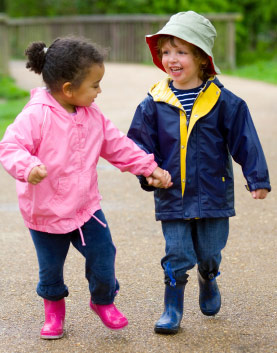
Nearly one out of three British Columbia children entering primary school struggles with serious issues that can limit his or her intellectual progress and health for the rest of their lives.

Results: early school drop out rates, teen pregnancies, criminal involvement, fewer kids attending university, lower levels of academic and economic success and greater vulnerability to illnesses such as heart disease, depression and diabetes later in life.

Those are the findings of researchers at the UBC based Human Early Learning Partnership (HELP). Their latest report puts a price tag on fixing the problem: $3 billion.

If that sounds like a lot of money (it is, for example, three quarters of all the oil and gas revenue the B.C. government took in last year), the report writers say the investments will generate wealth down the line, enlarging the provincial gross domestic product by 20 per cent over the next six decades.

The researchers say the money should be invested in extended parental leave for both mothers and fathers, accessible child care settings for most kids over 18 months, income supports for poor parents to reduce child poverty, family friendly employment policies and support for local coalitions that work to eliminate children's vulnerabilities.

Investing in the pre-school years makes sense, the researchers argue, because the first six years of life are crucial in a child's intellectual, social, physical and emotional development. Enriching a child's experience before kindergarten can pay off in enormous gains in health and functioning later, they say, citing both Canadian and international research.

Measuring 'the stock of human capital'

While the case for such spending is often argued in terms of compassionate concerns or human rights, the UBC researchers are prepared to make a business case for their favored policies.

"The stock of human capital in British Columbia is key to its long-term economic success. This means early child development is a critical issue for business leaders, because the years before age six set in motion factors that will determine the quality of the future labour force. Today, only 71 per cent of B.C. children arrive at kindergarten meeting all of the developmental benchmarks they need to thrive both now and into the future: 29 per cent are developmentally vulnerable," reads the introduction to the executive summary of their research.

Meanwhile, the BC Business Council, which funded the UBC research, is stopping short at calling for the investment the researchers say is necessary, while another key business group, the Vancouver Board of Trade, has decided to lobby the B.C. government to make investments in early childhood education programs a priority in its next budget.

'15 by 15'

The HELP research findings, and the policy proposals that flow from them, are based on more than a decade spent measuring the school readiness and learning vulnerabilities of kindergarten kids across the province in 480 neighborhoods. The measurement has been done since 2001 using the Early Development Instrument (EDI), a tool that allows kindergarten teachers to assess the vulnerabilities of their students on five key areas -- language, cognitive, social, emotional, and physical health.

The individual assessments then allow the researchers to compile population data that provide a detailed profile of child vulnerability on a neighborhood, school district and provincial basis.

The assessments, which have been done a minimum of three times now in every B.C. school district, reveal that nearly 30 per cent of B.C. kids enter the school system vulnerable on one or more of the five areas measured. Only five per cent of that measured vulnerability, HELP director Clyde Hertzman told The Tyee, is biologically based.

Herztman and his research colleagues are calling for a policy commitment to reduce child vulnerability across the province to 15 per cent by 2015. They are hoping "15 by 15" becomes something of a rallying cry -- their paper is titled "15 by 15, A Comprehensive Policy Framework for Early Human Capital Investment in B.C." And they set a final goal of a reduction to 10 per cent by 2020.

Currently the pre-school vulnerability rates found in B.C. neighborhoods range from 6.7 per cent in Revelstoke to more than 66 per cent in Vancouver's Strathcona, with Vancouver's overall vulnerability rate at 38 per cent and 93 per cent of B.C. neighborhoods showing child vulnerability at over 15 per cent. (Interactive maps that allow you to see just how your neighborhood rates in terms of child vulnerability are available on line at the HELP website.

While poverty increases children's vulnerability, as evidenced by the Strathcona numbers, school entry vulnerability is not restricted to poor kids. In fact, the largest numbers of children entering school with unacceptable levels of vulnerability live in middle class households. That's why the UBC researchers are calling for universal programs like extended parental leave and affordable child care for all, not just for measures targeting the most hard-hit families.

Business groups react

The "15 By 15" research and policy paper was authored by HELP researchers Paul Kershaw, Lynell Anderson, Bill Warburton, and Clyde Hertzman. The document was funded by the Business Council of B.C. as one of 29 research papers the business group has commissioned for its Opportunity 2020 project and released this August.

The council's vice president, Jock Finlayson, was quick to tell The Tyee in a recent phone call that his group has not endorsed the specific policy proposals in "15 by 15." In fact, he said in early November that none of the commissioned papers, including ones by his own staff, were being formally endorsed.

"We want the papers to spark discussion," Finlayson said. "The HELP paper is an excellent piece, and the human capital issues it covers are important for the province. The paper will certainly influence our thinking."

Sue Paish, CEO of Pharmasave Drugs and chair of the Vancouver Board of Trade told The Tyee on Nov. 16 that the board had decided only days earlier to identify early childhood education as a priority in its annual budget presentation to the B.C. government.

"The board of directors decided on Friday that we would be naming investment in early childhood education as a priority item for B.C.'s budget this year," Paish told The Tyee. "However, although I agree in principle with many of the findings of the '15 by 15' study (and I think every B.C. politician would as well), there are important practical questions. As communities and individuals we need a discussion of what our priorities are and how to fund them. Health care costs in the province are not sustainable, and they are pressuring every other area of public spending, including early childhood programs. Until the health care sustainability problem is solved, it is hard to see where the kind of dollars the '15 by 15' report calls for are going to come from."

Another prominent business figure is cautious about endorsing the level of government spending called for by the UBC team. Floyd Sully is the CEO and owner of a Richmond-based law enforcement company, Syscon Justice Systems Ltd. Sully, a former president of the BC Liberal party, who has recently opened a company-sponsored child care for his own employees, is a member of the federal Ministerial Advisory Committee for the Child Care Spaces Initiative. He told The Tyee that while he was glad to see people are concerned about children's development, he did not believe that government alone can provide solutions.

"We need to be more innovative," Sully said. "Parents should be able to decide what kids need and have access to some funding."

'An investment we have to make'

On the other hand, Janet Austin, CEO of Vancouver YWCA says that the province cannot afford not to make the investments called for by the HELP research. She has been organizing breakfast meetings for key business leaders to allow them to hear detailed reports from the UBC researchers.

"This is an investment we have to make," she said. "The HELP research is sound and evidence based, and it agrees with a wide body of international and local findings."

She said the business leaders who attend her breakfasts are "fascinated and open to the HELP arguments."

Adrienne Montani, who speaks for the child and youth rights advocacy group First Call, said a shift in political will is needed.

"We have to shift our priorities. Look at the money that has been spent on BC Place and the Olympics, not to mention tax breaks and subsidies for big companies that represent foregone revenue and the social costs created when we try to remediate the damage done to children by poverty and inadequate care later on in hospital, prison and social service expenses. Some of that money should go to attain the 15 by 15 policy reforms."

Montani added that she was not optimistic about the current B.C. government moving effectively on the policy changes the HELP researchers advocate. She said that has recently been quoted in the press saying the government was not in the business of building child care facilities.

"With this government," Montani said, "we're stuck. They seem ideologically driven away from the steps that need to be taken for kids."

Minister Polak: Economic climate not right

B.C.'s minister of children and family development, Mary Polak, was not available for an interview, but she did respond by email to some Tyee questions.

"While the economic climate does not allow us to consider the kind of investment the report suggests today, we have consistently demonstrated a commitment to early learning -- and we will continue to do so in the future," the minister wrote.

Polak noted that the province has provided HELP with $20 million in funding since 2003, and that meetings are planned between ministry staff and HELP researchers, including Paul Kershaw, the lead author of the "15 by 15" paper.

Polak cited provincial expenditures of more than a billion dollars that address early childhood vulnerabilities, including $23 million for early childhood development initiatives this year, including support for ECD planning tables across BC; $600 million for special needs programs including Infant Development and nearly $300 million for child care programs, including subsidies. She said the ministry appreciates HELP's research, which "supports our shared goal of reducing early vulnerabilities, which requires a broad community and nation-wide response."  [Tyee]

62  Comments:

Login or register to post comments

  • Polakite

    2 years ago

    Along comes Mary...

    with DA truth.

    You tell 'em Mary to find the money.

    My suggestion: Money that would have been spent on the Olympics in future budgets out to be transferred to EIBI for autistics. Also let's face it - nobody wants tax increases and nobody wants to make serious cuts.

    Perhaps if the BC NDP was competent, they'd have a real plan and an alternative budget to the BCLib budget.

  • alive

    2 years ago

    not motherhood and applepie

    Are we mature enough to question why society spends billions trying desperately to keep babies alive, even when it is certain they will never have a regular life?
    29 per cent are developmentally vulnerable it says, how many of those were determined ahead of times at being great challenges?
    Human beings are artificially allowed to degenerate and it can only get worse; does that make sense?
    The world is over populated so, adopt a kid from a poor situation and let nature take its course if your pregnancy falls in to that 29 percent group.

  • Polakite

    2 years ago

    alive

    I find it deplorable what you just wrote.

    Do you love abortion?

    Do you believe not all human life is equal?

    Do you want to euthanize - as in kill - people w/ special needs?

    Please clarify.

  • Chris Keam

    2 years ago

    billions?

    "Are we mature enough to question why society spends billions trying desperately to keep babies alive, even when it is certain they will never have a regular life?"

    How much money are we talking about? No doubt you have a concrete figure to back up your contention?

  • KWD

    2 years ago

    alive

    If we believe the numbers thrown out in this article, only 5 percent of the 30 percent that are vulnerable have a bioloical basis behind their vulnerability. Although I agree that not only are we are doing everything possible to make sure those numbers increase, we are also failing to come to terms with the fact that the world’s burgeoning population is demanding more resources than can be supplied.

    But, the issue here isn’t population control, it’s the reduction of child vulnerability.

    It should be common knowledge that those societies that have put a primary focus on caring for their children by tackling things like child abuse, adequate health care and houseing, and making the pre-school years the real “learning” years, are the societies found in the “developed” world. And the ones that have an opportunity to make the world a better place.

    The present government is doing everything possible to change that. If they’re allowed to continue, it’s only a matter of time before we find ourselves rubbing shoulders with third world countries.

  • Fii

    2 years ago

    Chill out Polakite, don't

    Chill out Polakite, don't turn this into an anti-abortion rant.
    Alive's point is a good one. I personally find the statement "Income support for poor parents to reduce child poverty" a bit backwards. How about educational support to everyone BEFORE children are even conceived, so that people are either able to make proper decisions about bringing another vulnerable human in to this idiot world, or at least are able to budget properly for themselves rather than rely on society to do it for them.

    And what does this even mean, exactly?:
    "Today, only 71 per cent of B.C. children arrive at kindergarten meeting all of the developmental benchmarks they need to thrive both now and into the future: 29 per cent are developmentally vulnerable,"

    Benchmarks?! Who decides what these are? Can someone elaborate? I never went to pre-school. I was 5 when I went to Kindergarten and was an only child until I was 6. I think I spent a heck of a lot of time alone actually, or just with my mum.

    I'm one of the most well-rounded people I know :)

  • Polakite

    2 years ago

    Waiting for alive to respond...

    Before I keep the discussion going.

    Also how will you guys pay for things when you're anti-HST & anti-capitalist (I see the ad on your site) at every breath?

    BTW, Mary Polak's gonna be a great Sarah Palin for British Columbia...

  • Name

    2 years ago

    And instead of investing, Polak is cutting...

    ...early intervention for children with special needs and children at risk. She has eliminated proven, evidence-based autism early intervention programs that save society on average $3.6 million over the life of **EACH CHILD**. Without this intervention, families who can't cope with severely disabled children have to put them in government care at a cost of $150,000 per year per child!!! How foolish is that??? To save $1.5 million a year!!!

    She has cut funding for youth mental health, FASD prevention, infant development and supported child development - all areas that focus on prevention with huge long-term savings. And she has ordered her staff to draw up plans for even deeper cuts in 2010-11, which will specifically target community-based intervention and early intervention for at risk and special needs children.

    We may never be able to entirely eliminate the risks of children being born with congenital disabilities even if we wanted to (no test can distinguish between whether your unborn child will have autism or be the next Einsten or a bit of both). And we have no choice but to deal with the children who are already here. They deserve to live in dignity and to be given an opportunity to develop to their potential, just like everyone else.

    Years of research have given us early intervention techniques that can help these children achieve their potential to be successful contributing citizens - they are no longer destined for lives of dependence and failure. It costs us all far less to provide this early support than to deny it. These children deserve to benefit from scientific advancement no less than children who are victims of childhood diseases. Any one of our children can suffer harm due to accident or to the circumstances they happen to face in life that are out of their control - all deserve a fair chance to overcome the challenges that life has thrown at them.

    Early intervention was life changing for my own son with autism - and indeed for our entire family. He will graduate high school, get a job and live something very close to a normal life, thanks to the foresight of a society that saw fit to help us invest in him and to give him a chance.

    The group Moms on the Move is currently campaigning against the cuts to early intervention, with a petition urging premier Campbell to live up to his promises to BC's most vulnerable children. This is an all-volunteer network that links families raising challenging children province-wide so that they can support each other in the face of huge and growing gaps in the social safety net.

    Moms on the Move: http://MomsNetwork.ca

    Petition: http://www.petitiononline.com/qwy4pce2/petition.html

  • Polakite

    2 years ago

    Hat-tip to Moms on the Move

    But respectfully, you are growlin' up the wrong tree, trooper. You need to chew on Premier Campbell & Finance Minister Hansen - they control the wallet. And they know Mary Polak wants more $$$ for the things you ask for - I sure don't hear of millions to run a minature train set in MCFD or of Olympic-size waste in Polak's Place.

    I'm with you on the need, trust me. Time to help our Mary instead of knife her, respectfully.

  • Polakite

    2 years ago

    Oh and name/Moms on the Move,

    You're a best comment. I should have said to be less sexist "Growlin' like those loud EA-18G Growlers at Whidbey at the wrong Victorian, trooper."

    Keep on keeping on. That Premier & Finance Minister have got to take away the mini-train set, redirect post-Olympic spending to preventive MCFD care, kill some more pigs, give Mary Polak roses every week, and get some priorities.

  • Ernest Black

    2 years ago

    Good sense not going to happen

    The children don't vote, and the parents prefer an incredibly expensive 2-week party.

    So kids you are SOL, and so is society who will have to pay the final bill.

    As far as population control, forget euthanasia, etc. The best population control, even surpassing war, is the economic and educational development of the society, and women. Works every time and in every country. Look at birth rate stats in every country where women improve economically and educationally.

    But what the hell, it's going to be a great party, that we will be paying for, for the next 20 years, minimum!

  • ENJAY

    2 years ago

    3 billion for children in BC?

    Not a chance with Campbell. I used to think he only understood numbers and not people. Now I'm not so sure about numbers with Olympics, Whitecaps roof and a maximum deficit of only $495 million.

  • Polakite

    2 years ago

    Oh, please...

    It was Glen Clark, Joy MacPhail and Gordon Campbell and Jack Poole who will bring BC the greatest glory of the time. Bashing the Olympics isn't going to help kids but turn off potential support.

    Just my .02.

  • Frank

    2 years ago

    Prediction

    Campbell will say that its a great idea and will declare a new spending program on children of $3,000 a year for 999 years. Then forget about kids altogether in Year 2 after he spots a shiny rock on the beach at his mansion on the Sunshine Coast.

  • greengreen

    2 years ago

    A couple of thoughts

    I wonder what would be the correlation between HELP results and those of Fraser Institute school ratings? (I have no use for FI., but HELP findings may put into context the "barren" ratings of this group.
    Secondly, makes me think of Sweden, Denmark, Norway, Finland, all of whom, I believe, fund early childhood much more generously than us. I don't think any of them are going broke...they seem to at the top of all quality of life surveys, happiness ratings etc.

  • realisticman

    2 years ago

    greengreen

    I presume you know, or checked first to verify who it is exactly that funded this organization and this study? Since you say enthusiastically that "HELP findings may put into context...", you clearly therefore support the present government in financing HELP and its studies.

    "HELP is funded through a diversity of sources with principal funding from the BC Ministry of Children & Family Development."

  • Chris Keam

    2 years ago

    weird logic

    "you clearly therefore support the present government in financing HELP and its studies."

    So, by that argument, if the federal NDP took power R-man, and continued to fund the law enforcement and military services, you would by extension then support the gov't?

  • Bobby Peru

    2 years ago

    It's So Easy...

    It all sounds so easy doesn't it? How many times have we seen these well meaning, but naive studies before? If we we spend X billion dollars on this it's cheaper than the 2X billion we spend later- all based on extrapolation. That kind of math has been applied to the homeless, kids and the environment. But is it really that simple? Can it be directly proven?

    And it leads to the same fruitless, partisan tinged arguments. If we didn't do the Olympics then we'd have money to solve so many problems The reality is that govt has finite resources and taxpayers in BC don't want to pay more taxes.

    Yes, we all love to cite Sweden, Denmark and Norway as examples of what Canada should be. But, their economies are very different than ours. And their people are conditioned to pay higher taxes. Most of our population are either immigrants who come from countries that hate high taxes or socialist policies. And most young, tax paying white Canadians grew up with US culture next door rather than European culture. So there is actually very little empathy and understand of European culture in BC.

    It seems like the writers on Tyee never met a social programme they didn't like. And even if a govt funded every programme demanded on this site, I'm sure they'd come up with more. It's why voters fear the left's tax and spend policies.

  • Chris Keam

    2 years ago

    Logical economics

    dictates that money is an infinite resource. You take out a loan for money you don't have and the bank fires up the printing press and creates more 'wealth'. The whole Olympic house of cards is built upon this shaky foundation and the premise that the money was only available for the Olympics. Neither idea has any basis in reality. Further, suggesting tax and spend policies are the exclusive purview of the 'left' is a great sound bite, but clearly borrowing against the future is S.O.P. for all political parties, as even a cursory examination of the headlines confirms.

  • Frank

    2 years ago

    Chris

    And there's no doubt that right-wing governments have oodles more pet projects than left-wing governments.

    Harper and Campbell prove that.

  • Frank

    2 years ago

    Polakite

    Taxes would not have to be raised in order to find the money to spend on kids. Something Mary Polak needs to learn apparently.

    In fact, since Campbell has raised taxes for much of the population a return to the way taxation was done in the past would result in tax decreases for many people.

    The overall balance between corporate and personal taxes, between consumption and income taxes and the layering on of tolls, premiums, fees and so on has warped the tax system and not in favour of the little guy.

    A better way is certainly possible.

    Of course spending on people instead of monuments to right-wing government egos would also free up a lot of cash.

  • alive

    2 years ago

    kneejerk respondents

    Sorry Polakite, but I have a life!
    I am not glued to the computer so I can answer your question as they appear, OK?
    Next time this happens for you, why not read the post that offends you one more time, and start to think before you respond.
    "Kneejerk reaction" is a common trait for people who see everything as black and white, but the world is not that simple.
    What I was saying is that just like sensible people eventually draw up a living will, to avoid the possibility of ending up drooling, strapped in a chair at some carehome, the same thougts should be given to the unborn who may be judged to not ever having a "good life"
    Where you get all you rant about euthanization is beyond me, but I have seen other examples of your posts so not surprised.

  • come again

    2 years ago

    political will

    This stuff is absolutely required from many reasons.

    Not that we need to overpopulate the world, but Quebec, which by far has the best support for parents and education for youngsters, has the highest birth rates. I'm all for the melting pot of Canadian culture, but Quebec understands multigenerational Canadian families have a different values set. Our lack of support for young children is changing our collective values more quickly.

    While most things political take longer than they should, this issue will be taken up, for two reasons. The first is that the boomers, who still represent the focus of politicians, have children who are now staring to have children. The second is that our aging population will require more capable citizens to grow GDP in the face of a declining workforce. Which is another reason, from a government standpoint, to incent childbirth rates.

    Finally, with apologies on throwing political parties names into this thing, I will NEVER forgive the NDP for voting down the budget with a national childcare program in it. It's like voting down Universal Health Care. As I have a 3.5 year old and 2 week old, I'm also personally hurt by it. And Harper is laughable, with a $1200 worth of taxable cheques. How does this help our future?

  • Bobby Peru

    2 years ago

    Same old, same old

    So you see from 'Come Again''s posting that even the NDP is guilty of hurting 'the kids'. Why? Because it's a matter of political priority. Politics is the competition for resources and depending on the time or place, your needs may not rank on the agenda. Indeed, even the left, like Campbell, has its own set of political cronies like the unions who want to feed themselves at the trough. Few in BC will ever forgive Glen Clark. Thank God, Jimmy Pattison gave Clark lifetime employment to keep him away from politics.

    Look, of course we'd all want to help the kids. Who can turn away kids? But, the problem is where do we get money every year to sustain this programme? It's not just a one off expense like the Olympics. Sustainable social programmes require a healthy economy and BC's is a boom and bust one. BC will never have a strong manufacturing sector - that's moved to China and never coming back.

    This site thrives on dreaming up stories on social programmes that we ought to have. It's great grist for the editorial, isn't it?

  • RickW

    2 years ago

    Polakite

    Ever heard of the (useless) Port Mann Bridge @ $3.25 billion (not counting the inevitable cost overruns and/or collateral costs)?

    Instead we have this tripe: "While the economic climate does not allow us to consider the kind of investment the report suggests today....." yada, yada, yada.

  • salty dog

    2 years ago

    Your wrong COME AGAIN

    Chretian and Martin (federal Liberal prime ministers) promised national childcare for over a decade,and after every election the child care vanished,or should I say got forgotten!

    As for Harper,a big fan I am not but....His child care suppliment is better than nothing...And nothing is what Paul Martin and Jean Chretian delivered on national child care.

    As for child care....The issue is this, in the 50s..60s...70s...and early 80s....One average income was enough to support a wife(not working) and a child or two.

    Now here we are, after Trudeau started us down deficit road....You need two incomes and free child care to get by!

    And in another generation at this rate you will need your kids to work,your wife,multible families in one home and generational mortgages!

    But don`t you dare say that the federal liberals were going to deliver on childcare....Your obviously too young to remember the first 10 times the federal liberals promised national daycare(pre-election) and NEVER DELIVERED

    And finally..Your other point...We don`t need workers,that`s a myth!..5% of the population(either chinese,Indian,American,Mexican,Canadian,whoever)can produce and provide all the goods and services the rest of mankind requires!

    It`s called technology,or Technocracy,whatever.

    As for Governments,either federal,provincial,municipal, google up...

    (Parkinson`s law)...it`s the way governments operate,here are a couple of quotes(facts) about parkinson`s law.

    "work expands to meet workforces"

    "Expenditures rise to meet income"

    And on and on it goes, why do you think no matter how many more residences in Vancouver(or any city) get built and pay taxes cities are always broke?
    or,"we need more development to create tax revenue"

    Look at Vancouver as an example,jam packed,100s of thousands of homes/residences and still.....

    "Expenditures rise to meet income"

    Parkinson`s law examines this,and...it happens everywhere!

    Cheers

  • RickW

    2 years ago

    Salty Dog & Come Again:

    You may want to read a summary of the Family Allwance in Canada:
    The Emergence of Social Security in Canada by Dennis T. Guest. IN a nutshell, here it is:
    The History of Family Allowances in Canada

    The idea of family allowances was discussed in Britain, Australia, the US, Canada and in the League of Nations in the 1920s. In 1929 a Canadian parliamentary committee was asked to consider the subject and heard evidence both for and against family allowances. A Québec commission of inquiry into social welfare issues (1930-32) also received submissions on the topic. Neither recommended family allowances.

    Little more was heard of the subject in Canada until WWII, when Canada's plan for postwar reconstruction (the Marsh report) was released in 1943.

    The Marsh Report was a comprehensive attack on poverty and economic insecurity based upon a broad scheme of social insurance supported by universal family allowances, a national health system and a large-scale national employment program. The plan was too radical and expensive for the federal cabinet of the day but political and economic factors prompted Prime Minister Mackenzie King to select one element of the Marsh Report - family allowances - as a vote-getting device in the next federal election. This was also a bid to outflank the political left in Canadian politics, which was making electoral gains. King had the backing of economists, a majority of whom predicted large-scale unemployment at the war's end (as had happened following WWI). Family allowances were also seen as a means of maintaining purchasing power. From a constitutional viewpoint a program of family allowances was well within the spending powers of the federal government, so few provincial hackles were raised.

    Critics called family allowances a waste of taxpayers' money because they went to rich and poor households alike. They alleged that the "baby bonus" was a bid for votes in French Canada, where large families were more common. It was suggested that the money be distributed by way of services rather than by cheque. Supporters of family allowances replied that the service approach alone was paternalistic and that the allowances would enhance the autonomy of families.

    See the following post for the remainder.

  • RickW

    2 years ago

    Part Two: Family Allowance

    Despite some half-hearted opposition by the Conservatives in the House of Commons in 1944, the legislation was passed unanimously on second reading - a remarkable event for such a momentous piece of legislation.

    Family allowance payments, tax-free, varied according to age: for children under age 5, these were $5 per month; from 6-9 years, $6; 10-12 years, $7; and 13-15, $8. The average payment per child was $5.94, considerably below the March Report's recommended minimum payment of $7.50 per child. Initially allowances were reduced for the fifth and subsequent children but this provision was removed in 1949.

    Despite the program's popularity it was largely neglected by the federal government. Between 1945 and 1973 only one marginal increase in benefit was legislated even though inflation had badly eroded the requirements increased. This extension was prompted by Québec, which had instituted a similar scheme on its own in 1961. The government's neglect of the family allowance program in postwar years appears to have been directly related to its lack of appreciation of the program's potential in terms of social equity and administrative consistency. In addition the predicted postwar recession did not occur.

    In 1972 in response to a public concern about growing poverty in Canada, the federal government attempted to replace universality with selectivity - that is, a system of family allowances related to family income. The proposal would have paid maximum benefits to the poorest 36% of families, partial benefits to 34% and no benefits to 30% of families. This plan was heavily criticised for its inadequate attack on poverty and its administrative complexity (allowances were to be based upon the preceding year's income). The Bill never made it through the House of Commons before the federal election of October 1972, which returned to a minority Liberal government with the NDP, a strong proponent of universality, holding the balance of power.

    In this situation the government dropped its selective plan and introduced a new Family Allowances Act which incorporated selectivity with universality by declaring family allowances taxable. However even high-income parents could retain a portion of their benefit, and thus the principle of "horizontal equity" was observed.

    In 1978, with the Liberals again commanding a majority in parliament, a major restructuring of family allowances occurred which expanded the role of the tax system in child support and diminished the role of family allowances. The government established a Refundable Child Tax Credit of $200 per annum for families with incomes of $18 000 or less. As incomes rose above this level, benefits would be taxed away to disappear entirely at $26 000. As the median income for families in 1978 was $19 500, a majority of families would receive some benefit for the new program, which came into effect in 1979.

  • Fiat lux

    2 years ago

    How can we have a better

    How can we have a better economy for the people of BC, when our whole economy, and our politicians, are owned and dictated from abroad, and designed for the maximum exploitation of people and resources, stealing us blind ?

    When will people realize that so called "foreign investors" bring nothing to any country? The sole purpose of foreign investment is colonization through debt, the best racket ever invented.

    Colonization used to be done with the power of arms, now it is done with the perceived power of imaginary, non existing money, created from the air by some bank somewhere, enslaving the whole world under the dictatorship of the few of the multinational corporate mafia.

    And this is why we have incredible poverty and sickness, in the richest country on Earth. .

    Ed Deak.

  • RickW

    2 years ago

    Part Three: Family Allowance

    The Refundable Child Tax Credit, which was applied for and paid out annually, lacked the administrative simplicity, the predictability and regularity of the monthly payments of family allowances. The tax credit was financed by cutting back on the monthly family allowance benefits from an average of $28 per month to $20 and by reducing or eliminating certain other tax exemptions for children.

    In 1985 a Conservative government in Ottawa concerned about government debt and deficits announced a 4-year plan to restructure family benefits. Beginning in 1986, family allowances were only partially indexed to the cost of living. The refundable child tax credits were to be increased for 3 successive years, from 1986 to 1988, to $549 per annum, and beginning in 1989 were also to be partially indexed in the same manner as family allowances (the inflation rate over 3%). At the same time the number of families who could qualify for the tax credit was narrowed by dropping the income ceiling from $26 330 to $23 500.

    Critics charged that the impact of partial indexing of family allowances and child tax credits represented a spending cut in family benefits for $550 million by 1991 and the poorest families would receive only a token increase in their net family benefits over the years 1985 to 1989.

    In 1989 the Conservative government ended the universal nature of family allowances by requiring upper-income parents to repay all of their benefit at tax-filing time as part of its program to target social benefits to low- or moderate-income recipients. Paradoxically it maintained and increased a tax deduction for child care expenses which provided the greatest benefit to high-income families.

    The End of Federal Family Allowance

    In 1992 with a minimum of public discussion the Conservative federal government replaced Family Allowance with a new Child Tax Benefit, into which Family Allowance, the Refundable Child Tax Credit and a nonrefundable child tax credit were consolidated. The new benefit, paying a maximum of $85 per month per child up to the age of 18, was tax-free and income-tested on the basis of net family income as reported in the preceding year's income tax returns.

    Maximum benefits are gradually reduced as family income exceeds the income ceiling (in 1992 this was $25 921, when average family income was $38 565). Benefits are only partially protected from rises in the cost of living, that is, only the inflation rate in excess of 3% will result in an adjustment.

  • RickW

    2 years ago

    Part four: Family Allowance

    Family size and its association with family poverty and the additional costs of caring for preschool children were recognized with small supplements and an earned-income supplement to "reinforce the incentive of low-income parents to participate in the work force" was added. This latter initiative was a step back into the 19th century in Canadian social policy to a time when attempts were made to differentiate between the "worthy" and the "unworthy" poor. Universal family allowance was predicated on the idea that all Canadian children were worthy of public support.

    Despite the efforts since 1978 to target family allowance and tax support for child dependents to low- and moderate-income families, the incidence of child poverty in Canada is second highest among Western developed nations - second only to the US. The countries of western Europe which have markedly less child poverty, use selectivity within a broad framework of universal programs.

    Québec reflects the European pattern in that it continues to provide a program of universal family allowance up to age 18. There are also supplements on a universal basis to families with children under age 6, to families caring for severely handicapped children, and allowances are available to newly born or newly adopted children.
    - Author: DENNIS GUEST
    Please note my highlight above. The present Conservative government in Canada is no better than its predecessor in perpetuating onerous living conditions among the lower middle class in this country, by the simple expedient of underfunding.

  • RickW

    2 years ago

    Way to Go, Ed!

    Quote:
    And this is why we have incredible poverty and sickness, in the richest country on Earth.

    Just as government & Big Business' propaganda gets drummed into peoples' head by the simple expedient of endless repetition, so this phrase of yours should be shouted over and over again from the proverbial rooftops -- until people "get it"!

  • Chris Keam

    2 years ago

    finding the money

    "how long would $3 bio last in funding childrens' healthcare? The key is sustainable programmes over the long term."

    BC's GDP was nearly $200 billion in 2008. I'm pretty sure we could find a way to spend 1.5% of that on kids we looked around. It's probably in the couch cushions, or that jacket we haven't worn for a while.

  • Chris Keam

    2 years ago

    errata

    'if' we looked around.

  • Skywalker

    2 years ago

    It is so easy!

    It is about the same as the cost for a two week olympic party and the benefits go far beyond a few decades. It is so damn easy it is a crime not to do it. It isn't even a "hard choice" has nothing to do with what the NDP did but is all about the morality of a government. It is a pity this government has none.

  • KWD

    2 years ago

    tilting at windmills

    “… this phrase of yours should be shouted over and over again from the proverbial rooftops -- until people "get it"!”

    Unfortunately Ed’s phrase … whatever it is, and however it’s percieved, is exactly what investors, foreign or otherwise, want to hear. It’s like reinforcing armour over a straw man.

    No matter how hard you try and how much progress you think you’ve made, the constant focus on the pitfalls of imaginary wealth, banksters and Ponzi artists is diversionary. Once you get through it you’re still left with an uneducated public and an uncaring and heartless political body.

    Financing early childhood development directed at language, cognitive, social, emotional, and physical health is one way of exposing exploitation, economic colonization and the multinational corporate mafia. Until then expect more conflict, bigger prisons, more poverty, and economic, political and social systems that become increasingly dysfunctional.

  • come again

    2 years ago

    oh Salty Dog

    Here's a link for you on the Liberals Child Care. I totally agree they did nothing for ages. But then they did something. A budget line item for $5 Billion and agreements in principle the Provinces? Oh yeah, they were totally faking... pssh.

    http://canadaonline.about.com/od/federalparties/a/elichildcare.htm

    You muse on needing two incomes to get by. True. Of course, that $1200 a year child care benefit serves those with enough money to keep a parent at home a lot better than the rest of us. It's better than almost no other alternative.

    Our capitalist system needs GDP growth to sustain itself. And it's a competitive market. Sure the Mexican's can make stuff, but if we can't buy it because we pay 70% of income to fund health care and OAS for our rapidly aging population, good luck to us. Whether our take home incomes rise or not, things cost money. They still sell more BMWs in Vancouver than Cape Breton, because you know what, BMW sells them for what they're worth to those that can afford them. And if Canadians can't afford them, maybe Mexicans can.

  • Frank

    2 years ago

    come again

    The thing is that the Liberals never had any intention of actually passing child care in 2005. I hate to flog this dead horse yet again, but the chronology was as follows: Martin suddenly brought in child care legislation in late November 2005 when parliament only had a few days left to sit before the Christmas break and then Martin had already committed to dissolving parliament and calling an election when Gomery brought in his report - which was due in January '06. I realize that this is all ancient history and that most people don't remember the chronology, but the reality is that even if the opposition parties had NOT defeated the Martin government in late November '05 - there simply weren't anywhere near enough days when parliament was to be sitting during which the bill could have passed three readings and gone to the senate before Martin had committed to calling an election.

    In short, it was never going to happen in the first place. The plan among the Liberals was ALWAYS for child care and the Kelowna Accord to die on the order paper so that they could campaign on the promise of reintroducing those bills after the election - but then Martin decided to run the most incompetent campaign of all time and the rest is history.

    Of course Liberal apologists always conveniently forget that the NDP and BQ offered to fast track those bills and let the government survive into January on condition that Martin call an election in early January - but Martin refused!

  • Frank

    2 years ago

    RickW

    Excellent

  • Polakite

    2 years ago

    RickW

    Go right on ahead, raise taxes some more.

    Let's see how many businesses flee to Saskatchewan, Alberta and other right-wing provinces.

    Gee, real smart. Taxes DO matter. I agree with the gent who says rants like this are "grist" for editorials baseless in reality.

  • Frank

    2 years ago

    Polakite

    Spin. Its your side that has raised taxes on the bottom half of the population.

    Its your side that has seen less jobs created compared to what the NDP created in the 1990s.

    Its your side that has been in power as poverty increased markedly.

  • Fiat lux

    2 years ago

    Wealth can not be created,

    Wealth can not be created, only taken from other sectors, the environment, or the future.

    The historical result has always been incredible power in the hands of a few, enslavement and poverty for the majority, with children at the bottom level, being brainwashed to climb the scaling ladders for the rulers, as God's will.

    I have seen exactly the same under the fascists, nazis, communists and now their brothers under the skin, the capitalists.

    Ed Deak. .

  • Fiat lux

    2 years ago

    PS to my previous: Why is

    PS to my previous:

    Why is it that people always bitch and complain against taxes, but never against the daily rising prices and inflation in the stores, and the multimillion salaries, stolen from the public's pockets, by the corporate mafia's executives ?

    There was some blurb from the government last week, excusing the half million Dollar salaries of the heads of Crown corporations, claiming that in private businesses they'd be making $8. million a year.

    This is an absurd obscenity, blackmail and theft and not "earnings".

    Ed Deak.

  • salty dog

    2 years ago

    Thanks Frank

    Isn`t it amazing, people like Come Again with their selective memories.

    Federal Liberals,Federal Canservatives, there is no difference as far as I`m concerned, Iggy...Ha HA..It will be good to see the NDP as the official opposition in the next federal election.

    Ed Deak...You rock

    And finally...Gordon Campbell`s Liberals, the great managers, our BC debt has gone from 20 $billion to 45 $ billion dollars during a so-called boom time.

    Gordon Campbell couldn`t run a lemonade stand!

    Cheers-Eyes Wide Open

  • RickW

    2 years ago

    Come Again

    Quote:
    Of course, that $1200 a year child care benefit serves those with enough money to keep a parent at home a lot better than the rest of us.

    And that's exactly how Harper presented the "benefit" when he stopped in Richmond at the beginning of the last election campaign........

  • RickW

    2 years ago

    Polakite

    Quote:
    Go right on ahead, raise taxes some more

    Isn't this what is commonly referred to as a "straw man"?

    Who said anything about raising the spectre of increased taxation (except you)?
    I believe I mentioned something about a useless bridge, the funds for which could have easily been used for much-needed social programs. To that I can add a retractable roof for BC Place stadium (which will likely go from 1/2 billion to a billion, given the Libs "track record" with the Convention Centre. And I might as well throw in the Con Centre itself as a costly boondoggle -- and the S2S cost overruns.

    All of this (and much, much more) is testament to, as Salty Dog says, that under:
    "Gordon Campbell`s Liberals, the great managers, our BC debt has gone from 20 $billion to 45 $ billion dollars during a so-called boom time"

    So we have the double whammy of raised taxes and lowered services.

    Anything you care to add to this litany?

  • salty dog

    2 years ago

    The newest member to the bloggospere

    My friends...Check out this brand new site...

    Whoever is running the site is absolutely hilarious,his site is a tongue and cheek site that uses Barry Penner`s own words to make him look like an idiot!
    Make sure to click the link on the right hand side of the page (contact info) the comments there are hilarious,the blog administrator has a crazy,wild wit!, hat`s off to the anonymous creator of the blog.

    http://www.barrypennerisawesome.com

    Heck,he even named the site after Barry Penner,and,Michael Smyth wrote about this site in his column in the province today.

    Cheers

  • Buck Futter

    2 years ago

    Frank and everyone else

    please understgand that Polakite, aka Josef K, aka BCLibfaa from YouTube 'fame' is an American from Washington. Anyone who self-promotes their own videos as someone else, featuring Mary Polak firing rockets from an F-18 at Carole James needs their heads checkes, IMHO.

    Fortunately, Mary Polak is only a figurehead. Unfortunately she is a Campbell lapdog in charge of a ministry which needs compassion and empathy. With her slightly better-than-average looks and extreme right-wing (right-wing, not Libertarian) viewpoints, she has somehow made it (unfortunately) where she is today.

  • salty dog

    2 years ago

    @ Frank Futter

    My friend,everyone here knows that Josef K is one S___ Puppy.

    OCD

    Check out the comment section under this story.

    http://thetyee.ca/Opinion/2009/10/12/Referendum/

    Don`t feed the Tr___

  • dorothy

    2 years ago

    I don’t #@*&ing believe it!

    Can it become more of a parody? If the way this column has evolved doesn’t show us just how narcissistically focused we are own our own issues and don’t care beans about the next generation, I don’t know what will! It did no less that shift completely away from the initial topic: The needs of children, of OUR next generation, and over to adult petty politics and self–interest and, not to forget, the bright sun in our Heavens the Dollars and cents (PBUT).

    To me, the central topic of this article was not the magnitude of hoard that was allegedly called for, but the novelty of actually investing some sum in children, which was not, I hope, but dare not believe, solely directed at churning out able workers, as in “we have to import cheap labor, for it doesn’t look like our own children will take the crap out for us.”

    Where to begin: We could invest some money in supporting families. Somebody mentioned that, but it quickly petered out and got to funding child care institutions. Go figure. Supporting families would admittedly require not only massive investment, but also a shift of the tectonic plates of what we really think parenthood is. Right now, we think it is a logistics problem. But we might learn to consider it a joy and a privilege, something akin to a driver’s or gun license (!) We might actually accept it as something that will shape our life and the remainder of our choices differently, almost as converting to a new religion. How would we support families? We need education directed at presenting the realities of parenthood and equipping people to actually do the job instead of trying, at great cost, to palm it off on all and sundry services. We need some older and wiser people taking out time to advise parents who have had their little ship go on the rocks of petty disagreement and miscommunication, and lack of skill and comprehension in the sex department. We have been used to clergy providing those services, but since we are a secular society, such support cannot legitimately be given through churches on a public basis, quite aside from the fact that clergy as a whole has lost a lot of credibility as arbiters of family values. Why do we need this? Because children hate their parents splitting up the nest, and get shaken up in a major way that they never really get over, and no amount of cute spin as in shows on partitioned men (2 ½) can effectively make the lie stick, that it’s really OK with the kids. So it shouldn’t happen, and we should invest in it not doing so.

    ...to be cont'd

  • dorothy

    2 years ago

    coninuED

    Then I think we should educate the whole of society in stepping aside for families. Not just paying school taxes, as now even a corporate giant can figure out that ‘just writing cheques and then walking away’ is cheap. I think there should be recognition that children are everybody’s, as opposed to an interest for water-skiing, which we are now putting parenthood on a par with. The commonly held view is that ‘if people want children, it’s their choice, and they should bear the cost/consequences/worries. But lo and behold, we blithely put our money into ‘investments’ for our old age, never realizing, I take it, that said children will be the ones to put their shoulder to the wheel that will make that money ‘go round and round’ and throw a bonus back to us, or so we reckon.

    Right now, I think the young generation has us figured out as people who expect something for nothing. We were the people who sent them running a gamut of solid disrespect all the way through their growing up. We were the people who delivered them five negative messages for each positive one, and they won’t turn our wheels. We play with getting nasty and dream of importing friendly, grateful people from elsewhere to wipe our asses. I think these people have other ideas in coming here, and the quicker we wake up and smell the coffee on that one, the better.

    I think it is time we ‘conditioned’ ourselves to become more civilized in our dealings with the up-and-coming Canadians, instead of making them grin and bear it. The higher taxes in Scandinavia aren’t the crux of the matter, even though they may help. (By the way, part of that ‘conditioning’ is the de-legitimization of private gun ownership, something at least Danes are quite sarcastic about). The important difference is in the ATTITUDES. Could you conceive of an art museum in Vancouver, or anywhere in our fair realm, furnishing a room in proportions that, relatively speaking, reduced the average adult to the size of a two-year-old? “Now see how YOU like the height of those stair-steps!” Such a room was created in Copenhagen.

    We have made ourselves a mean-spirited little society, where it most often is every man for himself, and the devil take the hindmost. If we want to invest in children it needs to be in the form of some money, yes, but, most importantly, in reshaping our thinking away from the one-upmanship we are now riddled with in countless versions. I’m not even going to mention (Oh, I just did, didn’t I?) The ugliest of all spillovers of the meanness, the child porn industry….It does indeed take a village, and that is what we should invest in emulating.

  • Bobby Peru

    2 years ago

    The Solution

    The solution is to have fewer kids. Too many people have kids for all the wrong reasons. And today's children are over indulged with activities, being driven around and catered to by adults who engage in baby talk. Kids are actually amoral, little midgets who ruin every occasion with their petulant behaviour. And there's always some bleeding heart who will think of yet another excuse to spend money on them in order to prevent them from becoming a future Dahlmer or some other imagined monster.

  • KWD

    2 years ago

    Let there be light!

    I never tho’t my message … we need to think about thinking … registered with many on this list. But there it is in black and white. Praise the Lord!

    Dorothy, I’m with you all the way on this one, but with a small reservation: I believe “reshaping our thinking” will take several generations which is why I tend to focus on institutional change. Unless the majority of folks find themselves in a lot of pain, very soon, it’s too late for my generation and a good many in the one following. But, never say never.

  • dorothy

    2 years ago

    Bobby Peru

    "..And today's children are over indulged with activities, being driven around and catered to by adults who engage in baby talk."

    "..Kids are actually amoral, little midgets who ruin every occasion with their petulant behaviour."

    I somehow get the distinct impression that you are talking about specific children and specific occasions they are ruining. I am assuming you don't have any youngsters of your own. Thank you so much. For if you think this is the reality of parenthood and of children and this is just the way it is, I cannot begin to imagine the damage that adversarial stance could have on any offspring you might produce and try to bring to adulthood.

    Far be it from me to lay claim to being a perfect parent, or even necessarily a very good one. But my children have never been petulant, nor have they ruined any occasions, nor indeed been talked baby language to. So these misguided behaviors are not part of the nature of the beast. Children are company, and if you treat them right, they will always be good company. In my own work with them, as a parent as well as a professional and a volunteer, I can honestly say that any encounter I have had with someone who actually qualified as a child, not a strictly statistical definition, has left me feeling richer going out of the situation than coming into it. In fact, such people will usually, without even having a clue, pay you back at least a nine hundred percent interest on anything you give to them. Not in the same coin, of course, but in such currency as cannot be had 'on demand'.

    Yes, I did drive my children to and from places they wished to go, and often to activities where their father and I participated with them. When they were young, there was a Clifford Olson out there. A monster out of our proud sophisticated adult-oriented society. A miserable army brat, who already showed sociopathic traits as a young teenager. I don't know if he were made or born that way, but to me, he was enough reason for chauffeuring my kids. Are the streets safer today?

    In children, before we start subordinating them, and paying them false coin, stones for bread, lies the only hope we will ever see a glimpse of. Their young souls represent the most positive thing most of us ever crash into in life on this Earth. To hear you speak of them in the terms that you do makes me sad, if you are serious (?) for what you are not grasping, the enormity of what you are missing in the big picture. I quite simply have no words for you. But I hope you will not ever, by default or by choice, have charge of any number of those relatively defenseless people you so detest.

  • dorothy

    2 years ago

    KWD

    About the reshaping:

    I know of a quite astute 'reshaping strategist', who thought it would be gaining ground if we can just get a generation to at least pay lip service, and then the next generation will not have heard the backwards doctrine nearly as much, and so on, a happy spiral in the sense of Stephen Covey's model.

    That person wrote book called 'Somebodies and Nobodies' about what he calls the common denominator of all -isms, namely 'rank-ism'. One of his feats as a teacher was to take on a 'garbage dump' class in Seattle and approach this entire class of 'rejects' with the query: 'now that we are stuck with each other, is there, incidentally, a few things you would like to know?' Guess what: Before the year was over, the class had, with the student requests for information as sole guide, covered the entire standard curriculum.

    His Motto is:

    DIGNITY IS NOT NEGOTIABLE

    Just ask any bus driver in our fair city...

  • KWD

    2 years ago

    cultural legacy

    If not mistaken there have been more than a few TV versions along that theme.

    No doubt a good start … dealing with the “isms” … it would be interesting if we could follow the lives of those “garbage dump” “rejects” to see if covering the “entire standard curriculum” actually changed that which is passed on in the form of what Malcolm Gladwell calls cultural legacy or inheritance.

    It would be even more encouraging to find that the teacher actually dealt with the thinking that triggers the pain that turns a judgment … the “isms” ... into reality.

  • carfreed

    2 years ago

    lest you forget

    The average Canadian spemds $8750 just on maintenance for one automobile each year. That's more than they spend on food and.....
    The social costs of driving are over $200 Billion per year: you know... roads, bridges, traffic lights, police surveillance, emergency services, road repairs, sreet cleaning, rehab from accidens, coroners,etc.
    #1 cause of eath for children and youth: auto accidents.
    GO FIGURE!!!

  • Chris Keam

    2 years ago

    silly sound bites

    "Kids are actually amoral, little midgets who ruin every occasion with their petulant behaviour"

    Another pithy, but totally inaccurate statement.

    "The solution is to have fewer kids."

    Good advice that always comes one generation too late.

  • teebird150

    2 years ago

    At what point do you parents start taking responsibility?

    i hear a lot of ARGH LIBERALS BAD! BOOO!! yet none of you parents are taking responsibility for the situation YOU created. did you vote? do you help create a critical mass that would force change? or do you just whine and bitch on the TYEE's message boards? you are in this situation because YOU PARENTS have abdicated your responsibility for raising your own children by hopeing the government will do it.

  • salty dog

    2 years ago

    Ha HA...Chris Keam

    I love it.....Of course it`s probably over Bobby`s pay grade of understanding!

    Cheers

  • Polakite

    2 years ago

    Actually some of us...

    Like to make up facts.

    The Port Mann Bridge is necessary.

    I doubt seriously the province of BC ought to loan for a new roof for a stadium in these times.

    But let's face it - the economic growth under Premier Gordon Campbell is cutting child poverty dramatically.

    Let's also face that the BCLibs need to stop living high on the hog and fund EIBI.

  • Frank

    2 years ago

    Polakite

    "But let's face it - the economic growth under Premier Gordon Campbell is cutting child poverty dramatically."

    What economic growth? You mean the economic growth that is less than the NDP's was in the 1990's?

    As for the Port Mann, why is it necessary? People can use the new bridge. But oops, its a toll bridge and Translink thinks the reason people don't use it is because they don't know about it. Of course, it can't be the tolls.

    • The discussion for this story is closed. No more comments can be added.