News

'Chump Factor' Holding Us Back

People ready to sacrifice if they don't feel alone.

By Tom Barrett, 6 Jun 2007, TheTyee.ca

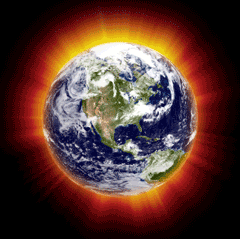
Fiery Earth

Why green shift is slow

When it comes to climate change, we're all a bunch of hypocrites. Sure, we talk big about doing our bit for the environment, but we're not willing to make personal sacrifices.

Or are we?

Maybe we're just grappling with the Chump Factor.

Certainly there's evidence to support the hypocrisy argument. Sales of carbon-spewing SUVs are going up at the same time we're telling pollsters that global warming is a big issue.

Last week, the Ottawa Citizen reported that pre-budget research done for the federal government advised that Canadians "are reluctant to sacrifice either financially or alter certain lifestyle habits for the sake of the environment."

And back in February, The Vancouver Sun reported that, based on its own polling, half of all British Columbians are unwilling to spend even the measly sum of $100 a year to save the planet.

It's not personal

But back up a minute. Do those numbers mean what they appear to mean?

Like all things having to do with measuring public opinion, the reality is not simple. Things can be interpreted more than one way.

Take that Vancouver Sun poll, for example.

Ipsos Reid asked 715 British Columbians if they were willing to pay a special $100 income tax that would go towards reducing greenhouse gas emissions.

Fewer than half said yes.

However, the man who did the poll, Ipsos Reid vice-president Kyle Braid, said in an interview last week that "I wasn't convinced that that meant a heck of a lot."

There could be a number of reasons why someone would tell a pollster they wouldn't pay a $100 climate-change income tax, Braid told The Tyee.

Many people believe that they are already doing quite a bit to fight global warming "and they see the responsibility here belonging to governments and corporations," Braid said.

As well, people tend not to believe that governments will spend their tax dollars wisely, he said.

The level of trust in the federal government to get good value from taxes is particularly low, Braid said.

People think "why give the money to the government to spend on this when I could do something in my own life with it," he said.

Slow to change

Braid said there's no question that Canadians care about climate change. What's less well-established is what we're prepared to do about it.

At this point, there is a fair bit of evidence about what Canadians say they'd be prepared to do to fight global warming. There's less hard data on what they are already doing.

And yes, Braid said, "there is a tendency for people to be overly optimistic about what they would be willing to do before the rubber hits the road."

Said Braid: "I don't think we've got to the point where we can say people have embraced taking action on climate change in their own lives beyond trying to correlate a bunch of things that they're already doing into the climate-change realm."

Recycling, for example, is something that many people have been doing for some time. A few years ago, Braid said, most people might say they recycled because they wanted to keep their city clean or they wanted to reduce waste.

Now they are apt to say they recycle to fight global warming.

"Nobody would have said that two years ago."

Intended sacrifice

When it comes to intentions, there is plenty of evidence that -- contrary to the federal government's research -- Canadians say they are willing to make sacrifices.

In the Ipsos poll discussed above, for example:

  • More than two out of three respondents said they believe that they personally can make a real difference on climate change. Women were much more likely to say this than men -- by a margin of 81 per cent to 56 per cent.
  • About three quarters said they are prepared to make significant changes to their lifestyles to stop climate change.

On a similar theme, almost two out of three respondents to a Strategic Counsel poll conducted in April for the Globe and Mail said they would devote between one hour and five hours a week "to greener living."

Almost two in five said they would spend up to 10 per cent more for an energy-efficient appliance; almost one in four said they would spend up to 20 per cent more.

A number of polls suggest, like this one, that people are understandably more willing to pay more for "sacrifices" that will save them money in the long run.

Hair-shirt vs. win-win

And it may be that the whole question of "sacrifice" is a bit of a red herring.

"I would say the very question, 'Are you willing to sacrifice?' that's bogus," said pollster Angus McAllister, of McAllister Opinion Research.

"If you asked, 'Are you willing to sacrifice your children's future?' you would probably get the answer No," McAllister said. "It's the hair-shirt religious approach to the environment as opposed to what most Canadians aspire to, which is a win-win approach."

McAllister does considerable polling on environmental questions and has learned that – as in all polling – the answers you get depend on the way you frame the question.

If you ask "Would you support a 10 per cent carbon tax on gasoline?" for example, about 30 to 40 per cent of respondents will say yes, he said.

If you ask about doubling the GST on gas guzzlers that aren't used for commercial or industrial purposes, about 70 per cent will agree.

If you ask about increased taxes and fines on polluters to pay for investment in alternative energy technology, you'll get 80 per cent agreement.

You might use these numbers to argue that people want someone else to pay for fighting climate change. But there's also an element of fairness here, McAllister argues.

'Chump factor'

Canadians are skeptical of taking what McAllister calls a "shotgun approach" to paying for the climate-change fight -- one where everyone pays the same, no matter how much they contribute to the problem. They believe it's more fair to have those who are most to blame pay the most.

Which brings us to what McAllister calls "the chump factor."

Most Canadians, he said, "think other Canadians don't give a damn about the environment." The feeling is less widespread than it once was, but it's still significant.

So if you're doing your best to reduce your carbon footprint, but everybody else is spewing greenhouse gases all over the place, you're going to feel like a chump when the government suggests you should pay higher taxes to fight global warming.

Obviously, everybody can't be right on this one. When it comes to protecting the environment, we can't all be above average, like we say we are. And we can't all be below average, like everyone else says we are.

McAllister said he's asked people if their friends and family are concerned about climate change. Why yes, they say, most people I know are concerned -- but most other people are not.

How do you know that?

Well, they say, I see it on TV.

Funny thing, that. McAllister said he's done surveys of journalists' attitudes towards the environment.

"And journalists are the most cynical of all in terms of Canadians and the environment."

Related Tyee stories:

 [Tyee]

22  Comments:

  • Skywalker

    05-06-2007

    It is all a bit much.

    It is very easy to be an environmentalist when you are filthy rich and it is also easy to be an environmentalist if you are content with very little. I have a good laugh listening to Arnold Schwarzenegger, Gordon 54% and trying to appear green because it has become politically useful. It cheapens the effort when the environmental groups think this is good because as they say they have managed to put the environment on the agenda. Surely they can't be that naive.

    All I have heard is that those struggling to get ahead must be ready to pay more while the profits of oil companies, already obscene, continue to climb higher. Oil companies selling fossil fuels we own gouge us. Why not regulate the price and their profits for selling our resource and use the difference to research alternatives and make those alternatives affordable to all.

    Who on an average income can afford a smart car? That is only one example. I see all this as another way of making sure that the rich can better afford to put more greenhouse gases into the atmosphere while the poor carry the burden of a planet in peril.

    Having to listen to the likes of Arnold, Gordon, and Stephen talking about the environment is like listening to some pimp talking about the moral decline of our society.

  • Romeogolf

    05-06-2007

    The Right Way

    Yeah, nice try IAMC.

    Until the last couple of months, it was the MSM that was working hard to keep the public confused with their fraudulent presentations of "balance," trotting out the increasingly desperate deniers like Ball, McKitrick, Michaels, and Singer as "the other side." Now the MSM has been playing catch-up with the rest of the population.

    It seems you're getting pretty desperate too, trying to give CPR to that old canard about Western economic ruination. The Europeans are way ahead of us in reducing their GHG output, yet their economies are not even close to tanking. You'll have to do a lot better than that.

  • Step easy

    05-06-2007

    chumpy

    I suppose i am chump-ish. Having sold my car two years ago (mainly to reduce expenses while going to school, though in reality it is not much cheaper than transit when i bus regularly), i thought i was doing my part for the environment. Truly this was a major motivation in deciding to trade in my wheels for ped-power. However, after discovering that methane from cows is one of the biggest contributors to green house gases i can't call myself an environmentally-friendly person anymore (i just love red meat too much!). But my question is, who can really say they are doing everything they possilby can in their own lives to drastically reduce their footprint?

    Although i do still believe that it will be individuals who actually make the hard changes necessary to turn things around, things will have to get much worse before that begins to happen. Politicians like the Governator are here simply to provide some entertainment along the way.

  • snert

    05-06-2007

    Why does anyone have to 'Pay'?

    Quote:
    Canadians are skeptical of taking what McAllister calls a "shotgun approach" to paying for the climate-change fight -- one where everyone pays the same, no matter how much they contribute to the problem. They believe it's more fair to have those who are most to blame pay the most.

    Just identify the problem areas and work on solutions.

    Quote:
    Almost two in five said they would spend up to 10 per cent more for an energy-efficient appliance; almost one in four said they would spend up to 20 per cent more.

    Why would anyone in their right mind volunteer to pay 10% more for anything when the improvement is likely to cost no more than a couple of bucks at the manufacturing level?

  • Frank

    05-06-2007

    Quote:Why would anyone in

    Quote:
    Why would anyone in their right mind volunteer to pay 10% more for anything when the improvement is likely to cost no more than a couple of bucks at the manufacturing level?

    I agree, people shouldn't line up to pay a global-warming tax on everything they buy. Fact is, greener products will not win in the marketplace if they cost more. So perhaps the answer is not asking people to pay more to save the planet, maybe the answer is to increase the tax on the "dirty" competition.

    In other words, don't charge people a green tax on their Smart car, instead charge them a big "dirty" tax on their Hummer.

  • Romeogolf

    05-06-2007

    Dirty / Carbon Tax

    Quote:
    In other words, don't charge people a green tax on their Smart car, instead charge them a big "dirty" tax on their Hummer.

    Exactly right!

    For too long polluters have been getting away with avoiding responsibility for reducing what's called "natural capital," that is, the reduced benefit people get from the environment -- clean air, clean water, productive lands, etc.

    Make these businesses responsible for all the costs associated with their operations and products (aka full-cost accounting), and their products won't be so cheap any longer.

    Under this scenario, the exploitation of the Oil Sands might not look so attractive. That's the albatross hanging around the necks of Canadians as far as GHG are concerned.

  • 4Cryinoutloud

    06-06-2007

    stop buying things you don't need

    "The most sustainable product is the one you never bought in the first place."
    Alex Steffan

  • danneau

    06-06-2007

    I'm a chump!

    It finally dawned on me back in 2000 that racing the back roads of the province for laughs while blowing fuel out the tailpipe was not the impact I wanted to have on the world I will leave to my stepson (and now two grandchildren). The motorcycle is gone, the boat, truck and trailer are gone, my wife's sports car is gone, I walked to work for the last three years of my career and we are now down to one vehicle. We try to avoid flying and "vacation" close to home. We grow a chemical-free garden for eating and pleasure, have replaced incandescent bulbs with flourescent and have recycled for decades. But I don't see many folks going along in this direction, and several of our friends look upon us as fringe freaks, and that's the saddest part. We don't crow about it, we mostly don't make mention unless asked, but there must be something wrong with people who voluntarily give up motorcycling, boating and international travel.

  • skeptikool

    06-06-2007

    Throw money at it. Problem solved.

    That is what some would have us believe, and what more than a few vested interests would dearly love us to believe, but it doesn't work that way.

    Much of the problem stems from deliberately withheld technology. This is not paranoid blathering. It is very much evident, for instance, in the production of electical power.

    Consider, alone, the automobile. In addition to the gridlock spots suffered by most cities, we have quite frequently, waits of one to three hours of idling vehicles at border crossings - all wasting fuel while adding to air pollution.

    A back yard mechanic modified his vehicle to have the engine stop when braking was accompanied by putting the vehicle into neutral. Without taxing the battery or starter motor, the engine was restarted with a burst of compressed air on the driver's command.

    Do we believe that this logical and simple idea has not occurred to the auto industry, with its army of researching intelligencia?

    It's another reason for pressing for the plug-in vehicle which could have, and should have, been on the road years ago.

  • freebear

    06-06-2007

    Wait for the Crisis

    Just like politicians, it seems most Canadians (humans)won't really respond until a crisis hits.

    Absolutely no political leadership. If there was:

    Gateway project would be scrapped and a re-think of where we are going, and how to get there (society, not cars! LOL!) would be discussed and planned.

    And I find it sad that a man with 14 some vehciles and some huge mansion, etc. etc. is trying to tell people how to combat climate change!

    Maybe $100/barrel oil will shock us into action?

    Won't be long now....

  • Skywalker

    06-06-2007

    $100 a barrel?

    "Maybe $100/barrel oil will shock us into action?"

    Do you really think $100 a barrel is going to stop folks like Arnold from driving their Hummers. It sure will increase the cost of everything right down to the groceries that the average person will buy. Then add a few extra taxes levied by your conveniently "green" governments because they are too spineless to go after the oil company profits and your quality of life will really improve. Sorry just can't see through that smog.

    But you are right about building more highways instead of better transit. It is commuters that work in Vancouver and live in places like Chilliwack that are a problem. Then there is our reliance on truck transport for everything because our rail system sucks because we rely on the private sector. Even when we have something with possibilities we sell it off to CN.

  • Skywalker

    06-06-2007

    No, Global Warming is real.

    I think all the climate change skeptics are wrong and the science supporting global warming is sound. I just have trouble with some of the new voices on the issue and I believe that most corporations are going to milk this not because of a sincere desire to correct a problem but as a new way to make buckets of cash by exploiting the masses. It is much like the pharmaceutical companies do with the help of the medical profession. Any environmentalist who falls for that is making it much harder to convince people that they need to be reduce emissions or pay more.

  • snert

    06-06-2007

    Taxation

    In a heavily taxed society taxation itself just becomes part of doing business, in other words, meaningless. Further, if the tax is lucrative enough there is not a politician around strong enough to resist the temptation to use the collected funds for every purpose other than that for which it was intended.

  • handel

    06-06-2007

    Using our senses

    I think the direction we are taking on global warming / climate change is often a bit absurd. Industry looks for technological solutions to continue doing what they are doing. Consumers and governments continue to consume within or beyond their means. When means diminish we strike, rebel, or demand governments produce more jobs for ever increasing populations (even if those populations are immigrants).

    We don’t really change our life style. Take for example recycling. It makes us feel less guilty about what we bring into our homes that probably shouldn’t be there in the first –cellophane, styrofoam, plastic, junk, paper. The things we bring into our homes should be things that are recyclable within the home. The new light bulbs may take less power (while adding more mercury to the environment), but people being people will simply expand the number of bulbs used or find other pieces of equipment (big new electricity eating computers, TVs…) to replace the ‘savings’ with. We demand more space for housing, for industry, for roads to drive ever greater numbers of vehicles.

    Carbon offsets are a hoax. We increase doing what we do (producing hot air by flying, tar sands oil production etc.) while pretending that doing what we should be doing (planting windmills, adding scrubbers to China’s coal fired power plants…) is offsetting a thing we shouldn’t do in the first place. Grain fueled vehicles are worse…

    Governments and industry, it seems to me, must fear the uprising or loss of power it thinks will come about if a truly different approach is taken. According to Jarad Diamond in Collapse a number of CEO’s believe that they just need to hang on until the second coming. It seems possible that a number of politicians also share this belief. But the reality is: we could face life as a challenge and learn to live in completely non earth threatening manner and be happy doing it. We would trade the TV for participation in the community, create festivals, learn to garden, exercise, read, use our senses…

  • Fii

    06-06-2007

    fringe freaks

    "But I don't see many folks going along in this direction, and several of our friends look upon us as fringe freaks", writes Danneau.

    Very sad, indeed. I'm a first class fringe freak, then. I don't even have any friends who have anything more than what you and your family have whittled it down to. Most of my friends don't have cars, cellphones, only do bulk shopping or have their own gardens and bike everywhere. I can go days forgetting that any other kind of lifestyle exists. Then I see someone sitting in their hummer while it idles, chatting on their cellphone and tossing a cigarette out their car window, and I'm reminded that I'm sharing this city with... well, people who have different lifestyles.

    You know what's even freakier? Most of us don't have kids and don't plan to- so who are we saving the planet for? You'd THINK we would be the ones who just don't care, wouldn't you??

  • snert

    07-06-2007

    Which crisis?

    Just which crisis can Canadians can solve by strangling themselves economically?

    The following from an article on ABC News about some comments made by NASA Administrator Michael Griffin

    "To assume that it is a problem is to assume that the state of Earth's climate today is the optimal climate, the best climate that we could have or ever have had and that we need to take steps to make sure that it doesn't change," Griffin said. "I guess I would ask which human beings  where and when  are to be accorded the privilege of deciding that this particular climate that we have right here today, right now is the best climate for all other human beings. I think that's a rather arrogant position for people to take."

  • The discussion for this story is closed. No more comments can be added.