News

Bold Goal: 250 First Nations PhDs in Five Years

A Maori dynamo wants to radically ramp up the number of Aboriginal academics in B.C. He's done it before, in New Zealand.

By Judith Ince, 12 Nov 2004, TheTyee.ca

grahamsmith

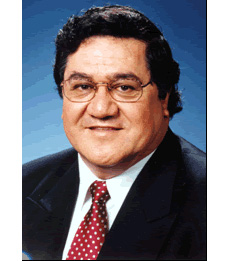
Graham Hingangaroa Smith has a bold vision:  to see 250 First Nations students graduate from B.C. universities with PhDs by 2010. Smith is no dreamer.  He's a hard-headed academic whose work in New Zealand revolutionized Maori education-and produced 500 Maori PhDs in five years. 

If the province adopts some of the strategies used in New Zealand, Smith thinks it will reach this goal. His prescription? Open more First Nations immersion schools, galvanize the Aboriginal community to embrace education as part of the fabric of everyday life, and use First Nations communal ties and other "cultural capital" to overcome social disadvantages.

"It would be a very large jump" to graduate 250 PhDs in five years, "a huge task," according to Linc Kessler, the director of the First Nations Study Program at UBC. Last year only one doctorate was awarded a First Nations student at the special ceremony held at the Long House. However, Kessler said perhaps there were Aboriginal students elsewhere in UBC who never came to the attention of the organizers of that graduation. 

In fact, one of the immediate problems facing Smith is establishing the exact number of Aboriginals who hold, or are working on their PhDs in the province. Juanita Berkhout, coordinator of Aboriginal programs for the Ministry of Advanced Education, says neither the province nor universities track the number of PhDs granted First Nations students every year. Nevertheless, Smith has identified 27 First Nations doctoral students at UBC this year.

First steps

Although he has only taken up his position as distinguished scholar of indigenous education at UBC this September, Smith has already persuaded the university to launch a new centre of excellence, The Indigenous Education Institute of Canada.  The institute's mandate is to create a critical mass of First Nations scholars, and to research ways of strengthening Aboriginal education at all levels.

Smith works out of a bright office cluttered with piles of papers and shelves of books.  Currently on leave from his job as Pro Vice-Chancellor (Maori) at the University of Auckland, Smith speaks in soft Kiwi cadences, and describes the revolution in Maori communities and culture over the past 20 years.   "The revolution that occurred, the essence of it, was actually a change of mindset.  It was a shift from Maori being reactive to what's happening to us-and always being on the defensive-to being proactive about what we wanted and being assertive about going after it and doing it." In the early 1980s the New Zealand government adopted some policies that worsened existing inequities between Maori and non-aboriginals, Smith says, but others opened the door to new opportunities, especially in education.  "What the government said was every New Zealander must have choice about the type of education that they want. The Maori-some Maori-put up their hands and said, "Excuse me, we want a Maori-language choice, and it's not here.'"

Language revival The new Maori schools focused on reclaiming their language, still spoken widely in rural areas but dying among Maori city dwellers. "These schools arose in the urban setting. They arose out of Maori parents who had lost the language themselves," he says.  Maori schools offer both "mainstream" and indigenous education. "The Maori struggle," says Smith, "has been for excellence in Maori language, knowledge and culture, which is still important to our communities and our society, as well as access and excellence in world knowledge."  Because these schools reject the proposition that students must either assimilate fully into mainstream culture or totally embrace indigenous culture, students are able to fit into both the Maori and the wider world, he says. Students follow a curriculum that is related to their cultural background, language, and knowledge, but the values of their heritage are embedded into every aspect of school life.  Maori, for instance, place a high premium on communitarian principles, so this is accorded a prominent role in everything from financial and personal relationships.   "When two parents over here are unemployed in this household, it doesn't matter that they can't afford to pay for their kid to go on the school trip," Smith says. "Those that didn't put in any money know that they must do something else in return for the community. They may well come down to the school and clean the windows in the school because they have time on their hands to do that. When there's a domestic upset in a home environment, these schools operate as extended family:  they will remove the kids and place them with other families. Or if a kid comes to school with no lunch, it doesn't matter because everyone puts their lunch on the table anyway.  Everyone eats."

Beyond government funding Although "there's oodles of evidence" linking poor marks at school with the kind of poverty common in First Nations communities, Smith says there's no point in waiting for the government to hand-over fistfuls of to change the situation.  "The cargo plane's not going to land and the state is not going to deliver on its own," he says.  Instead, First Nations need to use their own abundant cultural capital-a strong community ethic-to blunt the effects of privation on their children's academic performance.  The Secwepemc (Shuswap) Nation near Chase involves its members in an immersion school that it opened almost 20 years ago. Inspired by the Maori model, Kathy Michel helped found the Chief Ataham School, and continues to teach there.  "Learning the language enhances students' understand of the world:  it makes them see the world in two different ways," she says. 

Students are immersed in the Secwepemc language in day-care and pre-school even before they start school.  And as in New Zealand, elders work closely with the students, teaching them the traditional knowledge of their people.

"Elders come in and teach them about plants, animals and our culture.  They learn how to listen better, because they are learning in the target language."  More than half of the graduates of the Chief Ataham School have gone on to post-secondary education.  "The benefits are just amazing," Michel says.

Pride and politics For the Maori, immersion schools have helped nurture not only cultural pride but also social and political networks, which have in turn fostered political mobilization on many issues, Smith says.

Although the government has been generally supportive of Maori schools, recent education policy changes have curtailed immersion enrolment, causing long waiting lists. 

"I think the government realized that they'd opened the floodgates," Smith says. "That was a learning point for us because what we learned, was that the so-called free-market was always up to a point, but if the power relations or economic elements got out of kilter, then those who held the power could change the rules." But it's not just the elementary and secondary schools that need to change.  Instead, Smith prescribes a radical restructuring of university education and aboriginals' relationship to it.  In New Zealand, Smith instituted "learning communities," where universities "do all the traditional things that universities do -- promote the language and culture of the area -- but it also intervenes in a whole range of community contexts."  So, he says, elders are encouraged to come to the university to take courses, enabling them to informally transmit their language and culture to students just by virtue of their presence.

Key to civilization In B.C., Ed John, the Grand Chief of the First Nations Summit, also dreams of having a First Nations university to promote the development of his people. "Every civilization that has survived has had institutions of higher learning to support and develop the knowledge and learning of that culture."   Smith believes that First Nations' cultural health depends on developing a critical mass of well-credentialed indigenous intellectuals who are prepared to plough their social and intellectual capital back into their community.  "What we're trying to do," he says, "is to produce academics who have a consciousness about working for others." To increase the odds of Maori graduate students' success at university, Smith has developed a mentoring program for them.  A unique aspect of this program is its ten-day writing program, made available to students finishing their doctoral dissertations:  students are packed off to a five-star hotel, equipped with all the amenities of both a university office and a luxurious retreat.  There, they devote days to writing, and evenings to long dinners with each other--and prominent New Zealanders. 

Challenges to optimism In Canada, Smith says he has seen many praiseworthy examples of First Nations education, so he's optimistic that he'll achieve his goal of 250 First Nations PhDs within five years.  However, he doesn't mince words over what he sees as some of the shortcomings of Aboriginal education.  "Overall, I'm pretty disappointed with the Canadian situation," he says. "The first point here is that Canada is the wealthiest economy in the commonwealth per capita, income per capita.  But it's also one of the top ten economies in the world.  And yet, its per capita expenditure in the area of First Nations is pretty abysmal."    One of the biggest obstacles in the way of Smith's goal, however, is access to university, according to John.  "Our biggest problem is getting students into university in the first place, because there aren't enough spaces," he says.  "It's a political problem that has to be dealt with."  And students who manage to find a spot at university face challenges in staying there, he says. "At the University of Saskatchewan, 47 per cent of first year Aboriginal students drop out in their first year.  That's staggering." Jo-Ann Archibald, a UBC professor and interim director of the fledgling Indigenous Education Institute of Canada, says financial difficulties are a significant issue for First Nations students. "It's very, very hard," she says. "I think that financing, especially with rising tuition, is difficult."   However, Archibald remains optimistic that B.C. Aboriginals can overcome these hurdles. After listing Smith's achievements in New Zealand, she comments that sometimes it takes an outsider to introduce changes that have been made a difference somewhere else. "That's very inspiring," she says.

Judith Ince is on staff at The Tyee, with a special focus on education.  [Tyee]

16  Comments:

Login or register to post comments

  • Al Lehmann (not verified)

    7 years ago

    I'm very impressed with a laudable goal, and more to the point, a plan with which to try to carry it out. It is rather shameful to face the point relating Canada's wealth to Canada's treatment of aboriginals. Nonetheless, there is room for hope. Something else to be hoped for is some of the First Nations philosophy of "Everyone eats" rubbing off on the remainder of Canadian society. In a world in which higher education is sold largely as a means of increasing the future disposable income of the student, it would be agreeable to see higher education engaged in for reasons beyond this.

  • Tha Geek (not verified)

    7 years ago

    Bravo! Another goal I would like to see set and achieved would be an aboriginal Premier and hopefully a Prime Minister.

  • Fi (not verified)

    7 years ago

    I hope that means as many female PHD Aboriginals as male. I think having Elders come in and teach children about plants and animals should be done across the board- perhaps then there would be a lot more respect for nature and we wouldn't find ourselves in this "absymal" (nice word) state we're in at this point in history.

  • PB (not verified)

    7 years ago

    Thanks for another thoughtful,well-researched education piece, Ms.Ince. I tend to view "school choice" as something that benefits elites, so it was encouraging to read about choice being used to improve the educational opportunities of a disadvantaged group. BC needs the vision of this inspiring man. I hope he gets the support he needs to see his vision become a reality.

  • Ab hischool drpout ~(; (not verified)

    7 years ago

    The vision is to reaquire the necessary wherewithall, based on an endless living memory that infuses judicious and judical instruments, like, for example, the International Labour Convention on Indigenous and Tribal Peoples, 1989, and other such tools of principles and agreements, so as to engage and maintain the gears between ourselves and the revolving mesh of cultures, all the while conditioning or conditioning to benefit from custom appendages to the doors and pens of the script writers, eventually to quill our own... endings. A too common mistake: "the Grand Chief of the First Nations Summit" actually, he's Grand Chief of the Tl'azt'en Nation, near Fort St. James, not the Summit; he has an appointed role with the Summit.

  • Bailey (not verified)

    7 years ago

    I want to add my voice in support of this idea. The western worldview has been a tremendous success in that it has defeated every culture it has met and imposed it's own values everywhere, often submerging high culture and noble traditions in order to convert the world into money, and then steal the money.

    It's also been the most dismal failure in that, rich as Croesus though they may be, they are murdering the whole earth in their blindness to all other values. Just lately we've all been told to kiss the arctic goodbye and write off the polar bears, too bad, but it'll make oil exploration easier up there. An actual newscast I saw this week. Madness.

    If the true cultures and worldviews of people who managed to live in harmony with the natural world for millenia can be reintroduced into the consiousness of the dominent culture, then maybe there might be hope for the future.

    I wish you luck, Mr. Smith. I hope you succeed. We need these visions to survive.

  • SY (not verified)

    7 years ago

    I think increasing PhDs in the Aboriginal Community is a great idea. I have just completed my Master's Degree, yet for me to continue on is unrealistic. Financially it will cost approximately $32,000 in 3 years; I must work to help support my young family; the community I live in does not have the Doctorate program I require and I must travel to Vancouver. Overcoming obstacles to achieve one's goals is a reality, yet these are some I do not think I can overcome.

  • PF (not verified)

    7 years ago

    Good article. I believe that the answer to First Nations public ed success lies with the First Nations people, and until the fixer and planner groups are made up of First Nations people and the plans originate in those communities, the best-laid plans will stack up with all the past failures. Best of luck to Graham Hingangaroa Smith !

  • afs (not verified)

    7 years ago

    Someone correct me please or give me more facts. My understanding is that First Nations (before named as such)only first had access/permission to graduate from high school since 1947 in Canada. Is there a record of how many had actually graduated say 10 years after that? How many First Nations persons had any university degree in the 50s? in the 60s? now? The increase in numbers would certainly give rise to pride of accomplishment .... and make us believe the PhD goal numbers possible to achieve. Maybe we need to remember that it's not that there are not abilities out there among ALL races ... but the financial challenges are HUGE barriers for ALL. Let's strive anyway to help each other.

  • Warren Fortier (not verified)

    7 years ago

    I am one-hundred percent (100%!!!!) behind this idea....in fact, I would like to become a part of the success story. I recently graduated from the University College of the Cariboo (Now: Thompson Rivers University) and would like nothing more than to graduate with a PhD by 2010! I worked for 13 years (1978-1991)in a sawmill after graduating from High School (1977), achieved a Forestry Diploma in 1993, taught courses in a technical institute for five years, before graduating this year (2004) with a Natural Resource Sciences Degree. I have done some preliminary checking and it looks like a $20,000.00 bill to achieve a Masters Degree....how much to achieve a PhD?

  • anne cameron (not verified)

    7 years ago

    I'm non-native, my grandchildren are status. I am 66 and I clearly remember years during which Department of Indian Affairs and the federal gov't. blamed the victims for their plight. Any time anyone pointed out that native people had the least income in the country, the highest unemployment rate and the worst housing situation in the nation they trotted out the same old b.s. about how "they" would be so much better off if "they" would just get an education. It was "their " own fault if the dropout rate was so high. Why, if "they" would just finish high school there was TONS of money to pay for university...we heard a lot about all this money just waiting for "them" to stay in school and take advantage of ... yap yap yap. SO the kids stayed in school and headed off to university and guess what, they went into Constitutional Law, then went back to their home reserves and started helping their own families... (and make no mistake a reserve IS a huge extended family)..and all of a sudden ooooops, no money......only those with the very hghest marks would qualify..........and I don't know how it has escaped the notice of the nabobs in Ottawa but it is really hard for a kid to get those high marks when the family lives in shockingly sub-standard housing, has (still) the lowest annual income in the nation, and is struggling (still) with the legacy of the sick residential school system. It's hard to haul in those top marks if you're hungry. And life for the off-reserve native people is, in many instances and in many ways worse. No extended family, no way to learn the fishing skills which fed the family for twelve thousand years. Low income means wretched housing in the city, surrounded by drunks, druggies, hookers...hearing the uninformed and misinformed blethering on about how "soft" the natives have it. // My grandchildren benefit from having a cranky grandma who corrects pronounciation and grammar , insists on certain standards of table manners ... not because I think table manners are going to save the world but I don't want these kids to suddenly feel self-conscious and in some way lessend when confronted with all those damned forks and wine glasses, white linen and.....because they are going to grow into the kind of future which will make that kind of hoit and toit part of their reality. You bet they are. And if those chintzy bufoons in Ottawa continue to waste tax money and fill Gagliani (gag the maggot) and his friends' pockets rather than fund post secondary education for everyone, well, I guess grandma will have to pick up the tab. In the meantime Weyerhauser is making MILLIONS of dollars profit from trees which, by right, belong to my grandchildren. And Jimmy Pattisons fishing fleet is doing very well thank you on fish which belong to ALL of us, but particularly to my grandchildren.// ANYTHING which can help first nations kids win against the disgunstingly stacked deck is welcome. Good luck to you, cousin. Your grandmothers are undoubtedly very proud of you. And rightly so. "klecko".

  • Connie Larochelle (not verified)

    7 years ago

    Trade offs of education versus community commitments and contributions are often difficult and are often a barrier to the First Nation who is both qualified and "considering" going further with their education. I am currently the only member of my workplace with a "higher" level of education and the tasks that are put before me while not "part of my job description" are still vitally important. At the end of each day it is difficult to devote any energies to education and difficult to justify leaving a community that needs what little skills I have....

  • Tom Lalonde (not verified)

    7 years ago

    An interesting idea for an article. However I fear it can never acheive a true result in examing educational succeses of Canada's Aborginal polulation. For there are as defined by Section 35 of the Canadian Constitution 3 distint aborginal peoples. Status Indians. ie first nations. Inuit and Metis. Status Indians do through band councils and a variety of programs do recieve funding to some degree for education. Metis on the other hand have never had the same kinds of resources provided and I am unsure of Inuit. So if we truly want to look at education and its impact on aborignal people then lets look at the whole picture. Its unfortunate that this author chose to limit the scale in this article

  • anonymous (not verified)

    7 years ago

    "Conference to Celebrate Aboriginal Language and Literature" at http://www.news.gc.ca/cfmx/CCP/view/en/index.cfm?articleid=111579&cat egoryid=1&category=News%20Releases

  • Doreen Angus (not verified)

    7 years ago

    I am a mother, grandmother and active community member who is very concerned about education for First Nations people, I would wish that ANYONE could sit through the classes I did and just benefit from listening and participating in the discussions. This is what causes minds to change...I would love to achieve a PhD, add my name to the list of people interested in this project. Thank you and best wishes.

  • Aboriginal teacher (not verified)

    7 years ago

    My qualifications include a diploma in Graphic Design and a bachelor of Fine Arts and Education degree from the University of Calgary. I also ataught for seven years and I have Alberta certification. Last year I decided to take graphic design as I really wanted the technical side of things. Which meant moving far away just to get the course. I can't get work back in my home community.. ( no internships and no market and no teaching jobs) I've maxed out my savings already. I checked out the funding available I had from home and even for a masters I'd have about 400 a month to live on.. which means finding work... Now work is a whole other matter entirely--- I'm in BC so trying to find work that would support what I want to do is next to impossible. You wouldn't believe how long it will take to get my certification for BC.. very long... meanwhile I just got some call centre work part time. I can apply for teaching positions in Alberta but finding a job related to my skills is almost impossible unless I taught math or french... So being that it may.. I can try to find work in reserve in Alberta or try and find something in BC ( tutoring)... If i wanted to do a masters ( which I'd like to do) I have to make sure that I can find some sort of work with it afterwards. Confusing-- you bet--- I'd love to work on aboriginal related graphics for education...or somewhere educationally related in that stream. Personally I think there are alot of educated aboriginal people out there.. but it's trying to find the work and the competition is something fierce.

    • No best comments selected by an editor for this story yet. To see all comments, click the All Comments tab, above.
    • The discussion for this story is closed. No more comments can be added.