

 SHARE:
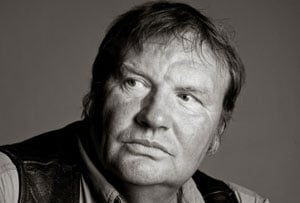
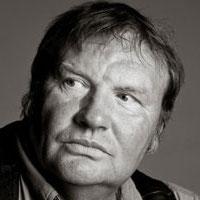
As a former chair of the Writers' Union of Canada (I've been a member more than 30 years), I have been asked to sign a letter to educational institutions supporting Access Copyright's efforts to obtain collective licensing agreements with those institutions. I will not sign. I believe the time has come for action, not words. This letter sets out my reasons and breaks the "cone of silence" that has obscured for too long some of the ugly practices of Access Copyright.
With the recent passing of new copyright legislation that purports to allow educational institutions greater leeway in copying written material without permission or payment to its creators, the highly public refusal of many universities to sign collective licenses to copy material with Canada's national collective licensing agency, Access Copyright, and the explosion of easy-to-share digital media, the issue of copyright protection has become urgent in the discussions among creators' organizations, lawyers, universities and the creators themselves: people like me, without whom there would be no copyright to discuss in the first place.
We are the creators of Canadian culture and we are being shafted on all fronts. Copyright matters, and the right to be paid fairly also matters. Yet more and more, the work of creators is seen as fair game for anyone to take without payment to its owners. It's a sad age indeed when our universities think nothing of paying for expensive software and yet insist that Canada's great -- internationally renowned -- poets, novelists, and essayists should not be paid for their work.
In recent decades we have seen the gradual loss of copyright power of authors, especially new authors, to vast media empires. While this loss is now near total among newspaper chains which are demanding rights "throughout the universe" and for eternity, it is also standard procedure, naturally for publishers to bargain for as much copyright as possible, especially when dealing with young, new authors who tend to sign over too much in order to have their first works published. However, many of these are new electronic rights, which don't revert to the author as standard rights do when a book runs out of print. This means that young authors could be stuck for life with bad contracts for their early, popular books. Coupled with the squeeze on copyright income, and the inability to quote works, today's writers face a sorry fate. Access Copyright doesn't even address these issues.
For the first time in history it has become too complex and expensive to quote the music of our era for many young writers. Writers are being charged exorbitantly for quoting other writers in their poems, fictions, and essays; yet are losing their own rights and income. Meanwhile, the Canadian Government has made legislation favouring educational institutions and media empires (at the expense of creators) in the name of supporting our nation's culture.
As we earnestly discuss these issues, but do nothing to protect ourselves, we are seeing the rights of creators to fair compensation eroded to the point of where many are at risk of receiving nothing for their work.
Access Copyright: eight concerns
Access Copyright, created specifically to collect fair compensation for creators, is central to this discussion. While I believe that educational institutions must pay writers, and will eventually pay them, it's also necessary to call out the ugly regime of Access Copyright, which is collecting our copyright income. Below are some of Access Copyright's activities that have increasingly concerned creators over the last few years.
1. After its expenses (which are high -- spending approximately $10 million to collect $23.5 million in distributable income), there is $23.5 million in money for copyright distribution. Over $6 million dollars go to foreign copyright organizations. Very little, if anything, is paid back for usage of Canadian copyright material by these organizations.
2. Access Copyright only acquires this $23.5 million by claiming to represent creators and publishers, and that paying them means supporting creators. Access Copyright then pays more than $13 million to publishers. It only pays $4.2 million to actual creators. Their remaining income, is supposed to be distributed by the publishers to their authors, according to how the publishers read their contracts. There is no evidence of this payment occurring since Access Copyright refuses to allow an independent auditing of this income. Effectively, this money has been "disappeared."
3. Access Copyright refuses to distribute, through its "Payback" program, to creators, income from works older than 20 years, yet it continues to collect that income in their name.
4. Access Copyright continues to pay publishers the income for works whose rights have reverted totally to the authors.
5. According to current legislation Access Copyright is now allowed to give an indemnity to educational institutions that are sued by writers not affiliated with Access Copyright, covering their legal expenses if an independent writer should sue them. However, the writer will not be able to charge what they believe their work is worth. They will be restricted to the paltry amount that Access Copyright is currently paying to writers. This means that AC arbitrarily decides for independent authors the value of their work.
6. Access Copyright rewards textbook companies who demand that authors relinquish their copyright to their work by paying them both the publisher and creator copyright payment. Academic authors often consider textbook authorship crucial to tenure. Thus academic authors are open to being pressured by publishers out of their copyright. In effect Access Copyright is encouraging textbook publishers to undermine copyright by demanding a creators' total copyright, and doubling the publisher's payment for this ugly practice.
7. Access Copyright, rather than paying out unassigned money to creators as a reward for affiliation, has created a grant foundation that makes awards to a very few writers with funds collected in everyone's name. Why are the earnings of all writers being converted into grants to a few without our permission?
8. While publishers clearly profit from the current situation, it is actually not their fault. The problem is structural within Access Copyright -- its constitution and the make-up of its board, and the anti-creator policies it has chosen to adopt over the years.
The fight ahead
Like many other writers, I have spent decades fighting for author's rights and I can only view the copyright situation today with dismay. We've lost the fight against the federal government's new Copyright Act. Multinational corporations like Google are running over copyright like out-of-control trains. Educational institutions refuse to pay for our work, and seem to prefer the route of eventual expensive lawsuits for expropriation without compensation
However, we can fight to make Access Copyright -- created by writers and publishers -- do what it was always meant to do -- protect our copyright and distribute to us the income we deserve from that copyright. As things stand, I can no longer advocate for Access Copyright. It is time instead for a class action lawsuit by writers against Access Copyright, which has been collecting our money in our names and yet failing to deliver that income equitably and transparently.
While I might not live to see fair copyright in my lifetime I can only strive to achieve that for the writers and artists who follow me. ![[Tyee]](/design-article.thetyee.ca/ui/img/yellowblob.png)








Tyee Commenting Guidelines
Comments that violate guidelines risk being deleted, and violations may result in a temporary or permanent user ban. Maintain the spirit of good conversation to stay in the discussion.
*Please note The Tyee is not a forum for spreading misinformation about COVID-19, denying its existence or minimizing its risk to public health.
Do:
Do not: