Mediacheck

As Advertising Dies, So Do Traditional Media

But author Bob Garfield predicts a golden age of online marketing is about to bloom.

By Marc Edge, 12 Nov 2010, J-Source

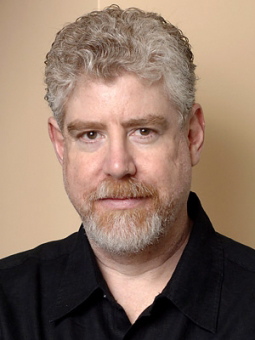
BobGarfield

Garfield: author of 'The Chaos Scenario'

Related

  • The Chaos Scenario
  • Bob Garfield
  • Stielstra Publishing (2009)

Pity Sir Martin Sorrel, head of the world's largest advertising agency. Bob Garfield excoriates him not once but twice in The Chaos Scenario for making the common-sense observation that new media will not always be new. New media will "earn a well-deserved place in the media repertoire . . . but will almost certainly displace none," wrote the WPP Group chairman in a 2007 Times of London column.

That sets off Garfield, an Advertising Age columnist who began floating his Chaos Scenario theory in 2005. "Newspapers, magazines and especially TV as we currently know them are fundamentally doomed," he insists in The Chaos Scenario.

The internet is not just another new medium, Garfield claims, but a "revolutionary advance, along the lines of fire" that is bringing about a "historic re-ordering of media, marketing, and commerce."

Recession hastened unraveling

Garfield's theory appears prescient with the startling collapse of advertising revenues in the recent recession. It is basically this: As audiences fragment in the 500-channel universe and especially on the internet, advertisers are defecting from legacy media so fast that newspapers and broadcasters will soon be left without visible means of support. Garfield, who also co-hosts NPR's show On the Media, hastens to add that he's not talking about the death of marketing and media but instead about their dramatic rebirth. On the Internet, of course. Businesses will henceforth spend more of their marketing resources dealing with consumers directly, online. The dollars required to undertake this institutionalized dialogue, which Garfield calls "Listenomics" will come from advertising budgets, which will drop sharply.

Advertising agencies, which are ill-equipped anyway for this type of relationship building, are also likely doomed. In short, we are entering a post-advertising age.

Newspapers, of course, are the most endangered of all, with audiences abandoning them even faster than advertisers are. Radio is next, according to Garfield, because people just don't listen to it anymore in the age of the iPod. TV is in a "spiraling vortex of ruin" due not just to audience erosion, but also to ad avoidance enabled by DVRs. If their penetration reaches 40 per cent by 2012, as predicted, advertisers "will flee" and broadcast TV's revenue structure will collapse. Already the networks are preparing for this eventuality, Garfield claims, by posting their programs online. After its contracts with affiliates and sports leagues expire, he predicts that NBC could be the first network to exit broadcasting entirely for a cable-only future.

Era of video streams and downloads

The internet is inherently unsuitable for delivering the content of old media, according to Garfield, so absent direct payment they will be left without a sustainable business model. But consumers will pay, he predicts, as video streams and downloads overtake advertiser-supported video. With spam blockers, click-through rates below three per cent, and advertising prices dropping through the floor, however, the internet is also maddeningly ill-suited for advertising other than classifieds.

Instead, marketing in the future will be done with "unimaginable effectiveness" though things like widgets, social media, opt-in emails and promotional giveaways on websites like Craigslist. A new Golden Age of Marketing could result, according to Garfield, requiring vast IT resources that legacy advertising agencies simply do not have.

The introduction and first two chapters of The Chaos Scenario comprise the bulk of Garfield's argument, with subsequent chapters being devoted to chronicling harbingers of the revolution he foresees. His feud with Comcast, which arose from his experience with a cable guy from hell, takes up an entire chapter. Garfield devotes another to counseling Mark Zuckerberg on how to monetize Facebook. The curious economics of YouTube, which Garfield dubs "the world's most successful failure" for its inability to attract enough revenue to pay more than a fraction of its bandwidth bill, is the subject of another. Word of mouth, demographics, target marketing, online privacy and citizen journalism are also covered.

Garfield's writing is lively but his language is salty, including the occasional f-word. He takes the reader to such exotic locations as Montenegro, Denmark and Brazil to provide examples that bolster his theory. Whether he is correct or not, of course, will soon be shown by how much -- or how little -- advertising returns to legacy media once the recession eases.

Did it himself

As a new media fundamentalist, Garfield practiced much of what he preaches in bringing The Chaos Scenario to print. It was published by his friend Greg Stielstra, a social networking expert. Its cover was "crowdsourced," designed at a cost of $500 online through a website that allows designers to compete for the work. The book was edited by his daughter, who Garfield boasts caught more than 200 errors. Unfortunately many remain, mostly minor typos and missing or mistaken words. Perhaps his citizen editor was unaware of the rule that states only about 85 per cent of errors are caught in each read-through, requiring at least two thorough edits to reduce the number to an acceptable level.

Garfield also leaves readers dangling at book's end, forcing them to go online for his concluding chapter. The upside of this experiment in online publishing is that PDF copies of the introduction and first two chapters are also posted online. As they set out Garfield's theory, these make a handy summary of his argument.  [Tyee]

24  Comments:

Login or register to post comments

  • Chris Keam

    1 year ago

    The exodus has begun

    Ford Drops Super Bowl Ads For Online Spends

    http://blog.searchenginewatch.com/101110-202517

  • Frank

    1 year ago

    Blogs

    Mainstream media personalities read the blogs. In spite of their declarations that people writing on the internet are know-nothings and don't have the political savvy that former sports and rock writers have, they seemingly can't stay away from the blogs.

    And I doubt I'm the only one that finds reading the various political blogs more interesting and informative than what the MSM imparts between ads and irrelevant banter.

  • Bailey

    1 year ago

    Prepasted repost, at the request of sharingisgood

    Democracy as a world political movement has chosen various forms of Capitalism as it's financial underpinning, This choice has been taken in different directions in different circumstances, but the problem has always been control. Money is power, and those who control money can exercise it in whatever way best suits their natures

    Even Karl Marx was really only arguing that the predominant form had gone corrupt and should be replaced by one with stronger social safeguards. His argument was sound, but only resulted in a change of controllers, the new no less corrupt than the old.

    That probably says something about human nature I suppose, how easily power corrupts us. The only real effective safeguards we have had have been independent oversight provided by protected watchdogs. Courts and police are supposed to be independent, The auditors, the ombudsmen, and most particularly the free press.

    That one has been key, because it had no relationship with the powerful. For many decades the principle of independence was protected by regulations limiting ownership and allowing all points of view scope to express itself publically, and provide investigators with an interest in exposing the truth about any misbehaviour by any side.

    Those regulations, and the principle that drove it are gone, destroyed by successive majority governments. The Mainstream Media are effectively in the hands of the ruling party, all types, and we will not save Democracy without getting it back into many different hands again.

    Of course, we do have the advent of new technologies that are harder to nobble, and those are beginning to have an effect on public awareness (thank you very much, Mr. Beers), but there are big efforts underway to nobble the internet already, and in places where the corruption is stronger, it is already nearly done. So how long the internet will be able to perform the function of free press in Democracy all by itself is not at all clear.

    My point is that if the undermining of Democracy in a Democratic state is a crime, and one could easily argue that it is several, then those who contribute to this prevention of the public's need to be informed are in fact key conspirators in a truly massive treason plot.

    And so, no matter who gets elected in the future, unless they force the redistribution of public media into diverse hands and mandate the strong prohibition of any single interest controlling any more than one outlet in each media type in any market, they will never be anything but more of the same.

    I think this is so crucial that we could take it as a sign. Actual evidence of the true nature of whatever new bunch gets in. If they do it, they are real. If not, not.

    I'm sorry this rant came so late, it missed Guy Faulkes day by a week. Still, maybe worth a penny.

  • Jeffrey J.

    1 year ago

    Welcome Back Marc Edge

    Prof. Edge is always a treat to read. Whether it is his first excellent book, Pacific Press (history of the Vancouver Sun to 1999) or Asper Nation, his 2nd great work, the reader is exposed to top notch scholarly work, coupled with concern and outrage, normally missing from your average academic.

    Prof. Chomsky exhorts academics to be courageous and outspoken. Marc Edge doesn't disappoint. He is one of the few on the short list of great Canadian journalists who have helped to keep democracy alive in BC (e.g. Andrew Nikiforuk's Tar Sands, UBC's Dr. Chris Shaw's compelling 2010 Olympics: Five Ring Circus; Donald Gutstein's Not A Conspiracy Theory; to name a few).

    Great article.

  • zalm

    1 year ago

    Of course...

    [HIGHLY OFFENSIVE COMMENT REMOVED. -MODERATOR.]

    That ought to about cure us of any notion that there's any kind of pressing "need" to make up lies about a product in order to capture "market share". I'm quite sure the world will do just fine without their presence.

    This is the only kind of revolution I'm interested in.

  • VivianLea Doubt

    1 year ago

    agreed? hmmm...

    "...the internet is also maddeningly ill-suited for advertising other than classifieds."
    The internet is maddeningly illsuited for advertising, period - it is, in fact, about the conversation. In other words, the concept of so-called 'word-of-mouth' advertising, in which real people talk about real products that enhance their lives, not their 'images'...

    I think there is a kind of revolution here, or maybe the potential for one and I am kind of fascinated by it. What I have seen so far on the web is far from promising...but then, as the article mentions, 'click-through' rates are dismally low. Still, this cannot beanything but heartening - if not revolutionary.

  • warbler

    1 year ago

    Ownership will define this "revolution"

    If Garfield's prediction of an "historic re-ordering of media, marketing, and commerce" turns out to be as revolutionary as suggested, ownership, regulation and control of Internet mediums will define the landscape. Garfield's characterization of legacy media owners, i.e., Madison Avenue, is a bit over the top. Of course they know what's taking place, but being the great creative advertising visionaries that many of them are, they are surely holding their cards close to chest.

    Edge rightly suggests "Advertising agencies, which are ill-equipped anyway for this type of relationship building, are also likely doomed." Which is why public relations and communications professionals are all in a euphoric tizzy with respect to social media and the Internet. I'm not convinced the relationship building is going to be as two-way as some think it will be. It will likely come in deceptive forms and almost certainly at the expense of our personal privacy and freedoms.

    When it's all said and done, the Internet isn't so much the issue for me as much as who owns/controls it. I predict a new kind of Marxian 'false consciousness' will prevail. I see it now. Internet citizens with a misunderstanding of their true relationship to the modes of production (i.e., the information, communication Internet modes). People without ownership are being hoodwinked into believing they have ownership via such suspect concepts as citizen journalism and crowdsourcing. In this sense, the changes Garfield sees coming are not very revolutionary at all in terms of economy and class.

  • KWD

    1 year ago

    zalm

    You're right,"the world will do just fine without their presence."

    If we take a macro, holistic view of this micro-analysis of advertising, and look past the problem of dying advertising and it’s relationship to traditional media, does this article really inform the public?

    If you’re goal is to find better ways of promoting business as usual (economic growth) and keeping consumerism alive, then it has met it’s objective.

    But, do we really need to find a more democratic way of promoting unsustainability and accelerating the race to the bottom?

  • John Greg

    1 year ago

    zalm said:

    Quote:
    We could always take all the advertising flunkies....

    Absolutely. Captured my feelings exactly.

    Advertising = disortion, deceit, mendacity, misinformation, and all that oogly bullcrap that plays such a major role in making contemporary society so enervating.

    Advertisers (and their agencies) and marketers (and their agencies) are the foot soldiers of the militant capitalists that are so destructive to global social well-being. May they all drown in their own dishonest bombast.

  • Bailey

    1 year ago

    How stupid would we have to be?

    Dear VivianLeaDoubt, Maybe the reason click-through rates are so low gives some support to your conversation/word of mouth scenario.

    Mr. Garfield reports good data in terms of the abandonment of media as a way of inducing false belief in populations. He notices that this drop-off in effectiveness is across the board. What if the reason is just simple?

    What if the reason nobody believes ads anymore is the same as the reason they no longer believe the news? Every single human who still accesses the news has caught them in big lies.

    I mean, hands up everybody who has never been lied to by an ad.

    I would have said hands up everybody who has caught them lying, but I'm afraid of causing hurricanes in China. They lie. They all lie, all the time. The technique of citing false authority is very powerful. The strength of suggestion into prepared minds is still more powerful. Just stay up late and watch infomercials with the fact that they are designed to be watched by sleeping people in mind.

    Imbedded in all communication is a set of unspoken assumptions. These are cultural, mostly learned at your mother's breast, so to speak, but nonetheless, they are manipulable by the unscrupulous. Especially with a big enough budget.

    Especially big in our assumptions lately is the idea that we really really need to fill our lives with cheap Chinese manufactured stuff. Obviously the Chinese need jobs, not so long since we came to understand that the third world must be brought into the age of money, or else. But the point is that in order to accomplish this, advertising leads us to believe things that are demonstrably untrue.

    Buy one thing that promises some kind of satisfaction it can't ever provide, one is disappointed. Buy a hundred such, and light bulbs start going off.

    Same for the general media. For decades now the Asper brothers have been feeding BC a real crock regarding the nature of Mr. Campbell's government, to use a local example, but by now most people have caught on to at least a dozen bald faced lies, if not a hundred, and they aren't buying it any more.

    If a friend recommends something to you, and it turns out to be false, you would soon begin to doubt her too. That's why your friends so rarely lie to you. I guess people no longer view media as a friendly presence in their lives.

  • VivianLea Doubt

    1 year ago

    yes, and who cares?

    Hello Bailey - yes I do believe you are right. Speaking for myself, I have not watched TV or listened to commercial radio for many years, because I refuse to have to watch or listen to the ads...but imagine my surprise when I found out I was not alone! That the majority of people (yes, the majority!)no longer watch TV, on TV but streaming over the net or on podcasts (etc.) and mostly so they can skip the ads. That the scholarly marketing tomes are full of the idea that advertising has lost it's effectiveness...and that traditional media is likely to die as a result, along with ad agencies and a few other institutions. I certainly don't care, and in fact welcome its demise as a hangover from the consumption age.

    But the point is, if we believe, and I do, that the internet and social media are fundamentally changing our world, then yes, the ownership and control of ISP's becomes a major political question - far more important than who owns the dying newspapers. The Tyee regularly has articles on net neutrality and other important issues, and they often draw little comment. The way I see things is that we have little time left to keep the net free, so to speak, free of control as the newspapers were controlled. As many commentors have pointed out before me, the only way to ensure a democracy is to ensure freedom of information. My comments, such as they are, are made with the hope that some might start investigating the possibilities of the net, and both learning and rejoicing over the failure of the advertising age.

  • Chris Keam

    1 year ago

    advertising and marketing

    "Advertisers (and their agencies) and marketers (and their agencies) are the foot soldiers of the militant capitalists that are so destructive to global social well-being."

    You are an advertiser when you hand someone your business card. You're a marketer when you tell them what you do. Both functions are crucial in helping people find the best products for their needs. No doubt we have problems with the system as it stands, but online tools are slowly addressing those issues with the rise of 'permission-based' tools and techniques, esp. with the wealth of user reviews available to help people sort the facts from sales pitch. Getting rid of advertising and marketing completely would just make it harder and more time-consuming for all of us to get good value when we buy things.

  • morechatter

    1 year ago

    Word of Mouth

    Advertising dosen't give us good value when we buy things. Instead advertising hikes up the price with the hope its commercials will do the trick. There is even advertising for consumers who have already purchased the product to reassure the consumer they have done the right thing.
    What about all the money government spends on advertising how do voters benefit?

  • zalm

    1 year ago

    Chris Keam

    Disagree politely with your thoughts - if you are marketing, then you are not working to produce or improve your product. Word of mouth is still the best advertising - works in industry with multimillion-dollar purchases of plant and materiel, as well as buying bubble gum or cellphones.

    Marketing is all about manufacturing need where none exists. My job has a hundred salesmen a year coming around trying to sell me solutions to a problem I don't have. I don't mind them coming around - sometimes something they say triggers a chain reaction in me that leads to an unintended gain - a purchase of one of their products for a use for which it was not intended.... but that's rare. Nevertheless politeness costs me nothing but a few minutes, and occasionally pays off.

    99% of my purchases of nearly half a million dollars a year are with existing suppliers that I've learned to trust over the years in the performance of their contracts with me. You're chasing the 1% with your business card. Good luck.

    And speaking as a consumer? Well, better not. My words would be unprintable, especially as regards "viral marketing". It appears that a few advertising agencies are attempting to trade on what I just said about word of mouth to manufacture need.

    Take them out back and shoot 'em.

  • Chris Keam

    1 year ago

    @zalm

    "99% of my purchases of nearly half a million dollars a year are with existing suppliers that I've learned to trust over the years in the performance of their contracts with me. You're chasing the 1% with your business card. Good luck."

    If handing you my business card started the ball rolling on the potential for $5000 in business, I'd be pretty happy with that.

    I rarely disagree with your comments, but this time I think the absolutism of your statements is too extreme. Like many people, advertising and marketing helps pay my bills. I bristle at the idea that I should be shot for helping my clients.

  • VivianLea Doubt

    1 year ago

    well, zalm...

    I must disagree politely with some of your views on marketing as well. There are entire academic courses - often under the name 'services marketing' or some such - that are about improving what you deliver to the consumer. It is very much the focus of the new ideas of marketing that it is not enough to say you have a great product/service, but to actually deliver it. Those 'salesmen' who are coming around to see you are salesmen, not marketers...marketers figure out how to deliver what people want. Could be said that anyone who has ever made up a resume is a marketer...

    But I post here again for a couple of reason: it is clear that words/phrases such as 'marketing' and 'profit margins' have a built-in negative connotation for many people. We are all marketers (except when we are sales people) and we all like to have a little left over to put aside for a rainy day... The absolute shake-up in marketing circles doesn't refer to moving goddamn ads online. It refers to the idea that the way to market - yourself, products, services - is to sincerely and honestly present yourself/your company/your organization. It is revolutionary in some respects, for it is changing the face of the world in how we inform ourselves, how we govern ourselves, how we shall live in the future...

    Someone who markets - as opposed to sells - listens to people, and figures out how to make products that work more effectively, services that provide amazing experiences...in short, changes the world for the better. Instead of 99% of your dollars going for mediocre products, perhaps one day you will spend far less on superb products. Worth thinking about...and one can see how it might apply to how we elect people, how we educate people, how we care for people's health....

  • John Greg

    1 year ago

    Chris Keam ...

    Yes, perhaps some types of advertising, e.g. strictly informational advertising, and some types of marketing (ditto to previous) are not based solely upon lies, distortions, emotional manipulations, and the presentation of utterly false lifestyles and mendacious results of purchase. But only to a very small and limited degree.

    Most advertising, and most marketing is based upon all of the above. And I think a lot of us in the general public are just too damned tired of being lied to, shouted at, manipulated, harrassed, harangued, and hit in the face with intense pressure to buy something we really have no need for whatsoever.

  • John Greg

    1 year ago

    VivianLea Doubt ...

    With all due respect I just do not buy your argument. I've taken some courses in marketing, advertising, and in public relations, and they all made me sick with shame because the underlying principle of all of those pratices was winners to the best liar in the pack -- and that includes the deeply chthonic aspect of the whole shebang which is that it is critical that marketers, advertisers, and PR pundits must have a great facility at lying to themselves as well as they do to their target audience.

    As for the rest of your argument, could you provide us with some examples of marketers who actually perform an honest service as you claim?

  • G West

    1 year ago

    VivianLea

    I think some 'marketing' would fall into your kinda 'positive' category...especially if the marketing is being done for some positive social purpose.

    But, in, as zalm says, about 99% of the other cases marketing is about applying the principles of the social sciences and psychology to creating needs for products. AA
    created need is not a real need.

    Whatever the professional gloss the 'industry' puts on the process, it cannot counteract the essential truths Vance Packard talked about when he published THE HIDDEN PERSUADERS in 1957.

  • VivianLea Doubt

    1 year ago

    my point...

    G West, and part of the point of the article here, is that marketers attempting to be persuaders are failing dismally...so much so that aspects of our society are being remade. I have no doubt that many marketers, John Greg, are continuing to be as sleazy and slimy as they have a reputation for being. I do not come to offer 'proofs', simply to say that my rather recent undergraduate degree, and my continuing graduate courses, have brought to my attention some really rather radical ideas about marketing, which I have alluded to in part already. I think these ideas are worth exploring by thoughtful and engaged people - not simply to be dismissed as snake oil.

    If the entire edifice of marketing and advertising has been brought to its' knees by a new world view, maybe there is something to be learned.

  • John Greg

    1 year ago

    If ...

    Quote:
    If the entire edifice of marketing and advertising has been brought to its' knees by a new world view, maybe there is something to be learned.

    If this is true, about "brought to its knees", then this is a very good thing indeed, and yes there is much to be learned.

    However, and without making comment on your your academic experience because I know nothing of it, I fail to see any real world evidence or proof that this is so. As far as I can tell, real world marketers, advertisers, and public relations "specialists" are all just as sleazy, dishonest, and self-serving as ever.

    However, I shall keep my eagle eye peeled in the hope of being pleasantly surprised.

  • Bailey

    1 year ago

    The majority report

    Funny word, marketing.

    Clearly it expresses a whole world view. Not a mere strategy. If you take it as a technique for altering the conscious and unconscious perception and weighting process that is going on in the minds of the beholders, it's a sort of mind control, just by definition.

    It's not the only one either. Marketing is a spectrum, as somebody pointed out above, handing somebody your card is designed to make them think something about your status and function. So is politics, and religion. All of it could be described as faith-based belief systems. Banking, news and drama. Communications and publishing, electronics, science. Education. The military.

    All seek to have us believe the basic assumptions we must believe in order to preserve and stabilize power. To make us agree to it.

    I'm not saying that all these fields are promoting identical viewpoints. On the contrary, they vary significantly, within limits. Those limits define the spectrum of acceptable belief. That spectrum is not the only conceivable one, but as Noam Chomsky pointed out, to take a position outside the spectrum altogether is dangerous.

    I'll bet you a buck that using this broad but arguable definition of marketing/mind control, most of the money in the world is spent on it.

    It would include all those categories above, plus any others I haven't thought of, which promote a concept, a fictional or a cultural belief, Almost everything we do, excepting actual manufacturing of goods and breeding of children, seems to fall into this category one way or another.

    Dependent on people's continued belief in something intangible to exist and maintain it's position.

  • Bailey

    1 year ago

    Hey Kid.

    If I wanted to really mess around with this stuff, to really change the majority paradigm, I would be an artist. Artists are the only ones who are allowed to put their hands on the Unspoken Assumptions and maybe get away with it. If they're talented enough, anyway.

    In the renaissance, all the best artists worked for the church. I think if he were working today, Rafael would be working for a corporation. I could see Michelangelo as director of marketing for the Sperry-Rand Corporation or for Intel.

  • zalm

    1 year ago

    Chris & Vivian

    Sorry - I hear what you say - hell I've even said it myself - until I realized that marketers were now "repackaging" the principles and process of marketing to sell us a whole new unproductive business. and by unproductive, I mean, "produces no discernible good or service".

    Yes, people can educate you - they may be marketers, or they may be night school educators, or friends or magazine writers or other people you pay services to or get for free.

    But marketers educate you for one purpose - to sell you something they have, and their mission is to make the outcome of their education fit as closely as possible the deliverables of the product or service they're selling.

    That's not true of anyone else in the supply chain. Chris, my chemicals supplier comes and helps me solve problems with water loops even though it reduces my overall chemical bill. This guy isn't a marketer. But he's also not fired by his boss because his sales are going down. He's doing his job. And I do my part by telling other facilities about his good work.

    Am I the marketer? Not.

    No, the marketers would be repackaging your every thought every minute of every day if you let them. So I sincerely advise you not to let them. And if you're a problem-solver like I think you are, don't sell yourself short by imagining you're doing "marketing".

    Marketing is a tax-deductible waste of time, effort, money and resources.

    Your thoughts still welcome.

    • The discussion for this story is closed. No more comments can be added.