
- Ms Kaye is a Tyee Builder. You can be, too.
- Mary Carlisle is a Tyee Builder. You can be, too.
- Prem Gill is a Tyee Builder. You can be, too.
- Nancy Flight is a Tyee Builder. You can be, too.
- Justin Everett is a Tyee Builder. You can be, too.
- John Westover is a Tyee Builder. You can be, too.
- Nora Etches is a Tyee Builder. You can be, too.
- Edward Henderson is a Tyee Builder. You can be, too.
- Bharadwaj Chandramouli is a Tyee Builder. You can be, too.
- Dean Chatterson is a Tyee Builder. You can be, too.
- Marius Scurtescu is a Tyee Builder. You can be, too.
- Robert Parkes is a Tyee Builder. You can be, too.
- James Murton is a Tyee Builder. You can be, too.
- Susan Doyle is a Tyee Builder. You can be, too.
- Vincent Strgar is a Tyee Builder. You can be, too.
- Helen Spiegelman is a Tyee Builder. You can be, too.
- Subir Guin is a Tyee Builder. You can be, too.
- Kimball Finigan is a Tyee Builder. You can be, too.
- Joanne Manley is a Tyee Builder. You can be, too.
- David Leach is a Tyee Builder. You can be, too.
Mr. Clement, Loosen Those Digital Locks!
Canada's long-awaited copyright reform plan is flawed but fixable.
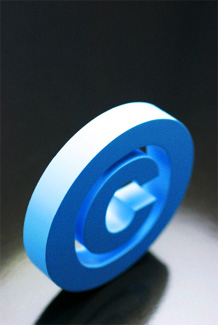
C stands for Compromise?
Copyright has long been viewed as one of the government's most difficult and least rewarding policy issues. It attracts passionate views from a wide range of stakeholders, including creators, consumers, businesses, and educators and it is the source of significant political pressure from the United States. Opinions are so polarized that legislative reform is seemingly always the last resort that only comes after months of delays.
The latest chapter in the Canadian copyright saga unfolded last week as Industry Minister Tony Clement and Canadian Heritage Minister James Moore tabled copyright reform legislation billed as providing both balance and a much-needed modernization of the law.
The bill will require careful study (suggestions that a quick set of summer hearings will provide an effective review should be summarily rejected) but the initial analysis is that there were some serious efforts to find compromise positions on many thorny copyright issues.
Unfortunately, the legal protection for digital locks -- unquestionably the biggest and most controversial digital copyright issue -- is the one area where there is no compromise. Despite a national copyright consultation that soundly rejected inflexible protections for digital locks on CDs, DVDs, e-books, and other devices, the government has caved to U.S. pressure and brought back rules that mirror those found in the United States. These rules limit more than just copying as they can also block Canadian consumers from even using products they have purchased.
Various compromises
Bill C-32, which ironically carries the same number as the last time Canada underwent major copyright reforms in 1997, features three types of provisions: sector-specific reforms, compromise provisions, and the no-compromise digital lock rules.
The sector-specific reforms are designed to address a single constituency or stakeholder concern. These reforms include something for almost everyone: new rights for performers and photographers, a new exception for Canadian broadcasters, new liability for BitTorrent search services, as well as the legalization of common consumer activities such as recording television shows and transferring songs from a CD to an iPod. In fact, there is even a "YouTube" user-generated content remix exception that grants Canadians the right to create remixed work for non-commercial purposes under certain circumstances.
There are a number of areas where the government has worked toward a genuine compromise. This includes reform to Canada's fair dealing provision, which establishes when copyrighted works may be used without permission.
The government rejected both pleas for no changes as well as arguments for a flexible fair dealing that would have opened the door to courts adding exceptions to the current fair dealing categories of research, private study, news reporting, criticism, and review. Instead, it identified some specific new exceptions that assist creators (parody and satire), educators (education exception, education Internet exception), and consumers (time shifting, format shifting, backup copies).
The Internet provider liability similarly represent a compromise, as the government is sticking with a "notice-and-notice" system that requires providers to forward allegations of infringement to subscribers. The system is costly for the providers, but has proven successful in discouraging infringement.
It also compromised on the statutory damages rules that create the risk of multi-million dollar liability for cases of non-commercial infringement. The new rules reduce non-commercial liability to a range of $100 to $5,000, which is not insignificant but well below the $20,000 per infringement cap currently found in the law.
Locked in place
All these attempts at balance should be welcomed, yet they are undermined by the no-compromise position on digital locks.
The foundational principle of the new bill is that anytime a digital lock is used, it trumps virtually all other rights. This means that both the existing fair dealing rights and Bill C-32's new rights all cease to function effectively so long as the rights holder places a digital lock on their content or device.
Moreover, the digital lock approach is not limited to fair dealing -- library provisions include a requirement for digital copies to self-destruct within five days and distance learning teaching provisions require the destruction of course materials 30 days after the course concludes.
The government could have introduced a compromise provision that would have allowed for compliance with international treaties, protection for digital locks and the preservation of the copyright balance. In failing to strike that balance, the government has introduced a flawed, but potentially fixable bill. ![]()


19
Login or register to post comments
Booker
1 year ago
Not enough
We need something more than "enforcement" to keep digital work from being copied in bulk and distributed, whether for profit or not. There is no way to effectively police the violation of the rights of authors/artists, and so I really do think that some form of technological fix will be required. We can write all kinds of laws saying its wrong to steal artist's work, but if it remains as easy as it currently is, nothing will change. If we don't protect the labour of artists and authors they will simply create less art. I think we are seeing that already in music. We see it in literature, especially in non-fiction, due to the low cost of books. The "information wants to be free" -- the "something for nothing" crowd, is winning. I want to ask people who take the work of others for free (without permission), when are you going to start working for free?
nolanrh
1 year ago
The argument is that we
The argument is not that we should do away digital locks. It's that it is ridiculous to make it a crime to pick digital locks in all circumstances. Why stop at digital locks? Everyone knows we need locks in life. Why not make it a crime to pick any lock ever? Because, when you lock your keys in your car or get locked out of your house you need to pick the damn lock.
That's all we're asking for. The ability to pick a digital lock when we are entitled to use the content under fair use provisions already.
dorothy
1 year ago
It's the attitude.
"I want to ask people who take the work of others for free (without permission), when are you going to start working for free?"
I kind of think I already do. At least I don't recall giving anybody leave to pickpocket me for tax money and put it into a degree of frivolity that you literally have to go back to Louis the XVI's court to find the equal to. None of my money were earmarked for fake lakes. Get it?
And I think it is actually this sense that people have of being pick-pocketed for every whim of those who roll around in the skies, it is that which warps our sense of yours, mine, and anyone else's. We look for a place to get something for free for once, and it lands in the lap of the hapless producers of fine and not-so-fine arts. It is said that copying is the sincerest form of flattery, and so those who see themselves subjected to electronic pilfering should probably feel mighty flattered. The only problem with that is, you can't eat flattery. So some way must be found to bring things back to a semblance of balance, where, if we can't figure the honorable way and pay for what we take, somehow it is possible to compel us to do so. I suggest that the stuff comes in two versions: One with electronic lock, which is dirt-cheap, since its use is severely limited, and one for those who might want or need to use the stuff creatively, and which has no electronic lock, and this could then have a whopping price tag attached, which would not only make it worth the while for the artist, but also make the buyer dis-inclined to give it away to friends and family for free. That way, there would be choice, and greater fairness.
Booker
1 year ago
nolanrh
Yes, the argument in this article is whether to do away with digital lock, while blithely ignoring the issue of massive abuse of "fair use". You can't separate the two issues, and Geist has no effective answer to the problem of theft and loss of income. His focus is on the "property rights" of consumers. I just don't think this trend will result in a vigorous artistic community, and I think we are seeing that already (unless you think that people posting mashups of other peoples work on their Facebook page a big artistic advance.)
Amy Fox
1 year ago
Oversights
Remember HBO's Rome? One DVD in the box set was digitally locked so as to prevent you from watching it on computer DVD-media-players. This lock didn't prevent piracy, it just made it so that you could not watch a DVD that you paid for unless you had a separate DVD player hooked up to a TV. (Many people under 35 hook their laptops to their televisions, or forgo TVs altogether) This limitation was in no way indicated on the packaging. Seeing that this was an error in the copy protection, people discovered how to circumvent this and watch the DVDs for which they paid. Under this law, this would be illegal.
I used to work in a video game store where we modified playstations to play games region-locked to Japan, which were unavailable in North America. This resulted in people buying *more* Japanese games, not less. Other people modify DVD players to allow them to play foreign movies. Some people back up their macrovision-protected VHS cassettes onto DVD now that functional VCRs are becoming harder to find. Would all this be illegal?
I am a sculptor and filmmaker, and while videos can be shared on the internet and sculptures can be scanned and replicated with 3-D printers, I do not see how digital lock protection will in any way benefit my trade.
This protection is probably the idea of studios that want to track and harass teenagers who can't afford to pay $14 for a movie ticket. They will find out too late that preventing people from picking digital locks does not mean that they will buy your product.
Fire Thief Studios, for whom I work, lives in the twenty-first century. Our business model finds customers who want to pay for a quality product, rather than scaring and harassing people who probably wouldn't have shopped with us anyway.
nolanrh
1 year ago
Clarification
The first sentence in my comment was an unfortunate typo. The argument is NOT that we should do away with digital locks, but rather that it should only be a crime to circumvent digital locks where it would otherwise be a crime to do the thing being prevented by the digital lock.
Digital lock have their place as does legally preventing their circumvention. however, the existence of a lock should not trump any existing rights.
CLARIFICATION NOTED AND WE AMENDED YOUR COMMENT ABOVE TO REFLECT IT. -- MODERATOR
mikev
1 year ago
one who takes the work of others for free (without permission)
Hi Booker.
I don't think you should create art for free. And if someone else makes a copy of someone else's copy of your art, sure you should be entitled to any proceeds. But if there are no proceeds involved, then I don't know where you are coming from. I don't think anyone should get rich by exploiting your art without you as the artist getting your share. But I don't think you should feel entitled to reach into the pockets of people who are just being a part of human culture. We sing songs and tell stories, always have and always will, it's *not* made possible by copyright which was only invented a few short centuries ago. The songs and stories we know are in our heads, you can't stop them from getting there when they are broadcast all over the place, and you simply can't take them away as punishment for license infringement.
Printing presses probably bothered the manuscript illuminators as much as modern computer networks bother CD presses today. And the owners of the CD presses, who make way more money from each object than you the artist do, have managed to convince you that you it's your fundamental human right to keep on making them richer. You fight on the side of your oppressors. They don't care about you, they will buy and sell and trade you, and skim every last possible penny off the top. You are one data point among many in a sea of market fluctuations. The reality is you don't need them anymore. (I'm speaking about the stereotypical here, I'm well aware that there are beacons of sanity out there)
Try and make money from the act of creating art. Don't try and make money after the fact by collecting from everyone who becomes aware of your art in any way.
And so on and so forth.
Anyway, since copyright infringement is currently illegal, we should just leave it at that and not try to add trumped up charges like picking a digital lock. Especially when you own that lock and it is protecting property that you own. Let the lock makers try to enforce things on their own by producing effective locks. Don't shift their burden of being competent at what they do into a burden on our publicly funded court systems, effectively a subsidy. IMHO.
pedxing
1 year ago
Pig Latin Test
Does the new legislation pass the Pig Latin Test? If I write in an online forum like this one:
Onay igitalday ocklay ircumventioncay reventionpay egistlationlay orfay airfay ealingday
can I sue anyone who breaks the pig latin encryption and figures out what that sentence says without my permission (which would require buying my $29 pig latin decoder ring)?
I have made my living for the past 27 years by producing copyrighted works. I also am a consumer of copyrighted works. Therefore I look for balance in copyright. Absent the digital lock provision I agree that the new bill is a workable compromise, at least the best we are likely to see.
With the digital lock provision, though, all the fair dealing rights, those we already have and those introduced by the bill, become null and void.
For example, the right of blind people to use a screen reader for material is taken away. This is not theoretical, Adobe sued a screen reader developer in the U.S. for exactly this reason. They offered no alternative product.
Your right to filter content seen by your children based on the maturity of the content is likewise removed. You won't be able to find a third-party program to do this if the developer has to break a digital lock to write it.
Digital locks should be allowed. They should be protected if the purpose of breaking them is for copyright violation. But if they trump fair dealing rights then you might as well drop fair dealing from the Copyright Act, since it will be moot. Fair dealing will be trivially easy to circumvent.
dorothy
1 year ago
the legal stuff
"legally preventing their circumvention"
There is no legal way of preventing anything. You can hope stiff penalties will work as a deterrent, but it depends on the odds of detection, and also other things. If a law is not perceived as fair, just and equitable, it will not necessarily be followed by people in general. Laws that have to do with transgressing against the basic human rights of others are generally seen as appropriate and most people will follow them, seeing this is a prerequisite for having a society that is not dominated by brutality and distruat. Laws that have to do with protecting 'interests', no matter how legitimate they may be, are much more dicey, for it is so often seen that the underdog is being shafted in his rights by some corporate colossus, or even by a strong-armed local interest group, simply because of the unequal ability to commandeer legal resources. So, people see their sense of justice and fairness undermined in that quarter, and consequently, legal measures may not prevent them from anything, generally speaking.
mmphosis
1 year ago
Rare Comment - Do Not Steal
This comment contains content from mmphosis. It is no longer available in your country.
NOTICE: This comment contains textual information that has not been authorized by all copyright holders. The text has been disabled.
Anytime mmphosis becomes aware that a comment or any part of a comment infringes the copyrights of a third party, we will take it down as required by law. If you believe that a comment infringes your copyright, please send us a copyright notice and we'll take it down. If you believe we've removed a comment that you typed in error and that you are the copyright owner or have permission, you can file a counter notice and let us know. Accounts determined to be repeat infringers may be subject to termination. Users with suspended or terminated accounts are prohibited from creating new accounts or accessing account features.
DISCLAIMER: WE ARE NOT YOUR ATTORNEYS, AND THE INFORMATION WE PRESENT HERE IS NOT LEGAL ADVICE. WE PRESENT THIS INFORMATION FOR INFORMATIONAL PURPOSES ONLY.
Copyright (c) 2010 mmphosis. All Rights Reserved.
make_up_another...
1 year ago
When you buy a CD / DVD,
When you buy a CD / DVD, what do you own? I used to make CD copies of original CDs to keep in the car, so if they got damaged, lost or stolen, a new copy could be made. Or I'd make 'mix CDs' for use in the car. Was I a pirate? I'm not selling the stuff, just using it.
The bigger picture I see emerging is one where you are purchasing content in electronic form, completely locked down. On the other end, I see the emergence of the Web based application delivery, were your 'PC' is an abstraction, a collection of data hosted on proprietary servers. The big selling point would be to access your 'PC' from many devices. What control does this leave the user with? The ability to select themes?
Will we end up with a system of computing where you don't really own any content, but simply 'lease' it, and your 'PC' is an online account that you could be locked out of for not paying the rent? Or worse, for violating some obscure clause in your user agreement? Your own personal files held hostage?
It is an ill wind.
Booker
1 year ago
mikeev
Thanks for your comment, but it's rather presumptuous of you to think that I am oppressed and slaving away for the man. Firstly, writers of books, as an example, use the services of a publisher to edit, shape, market, distribute, and sell the book. That is not a master/slave relationship. In fact, the publisher looks upon the author as his/her customer. They can always go to a different publisher if they aren't happy.
Secondly, if you make 100 copies of an writer's work and distribute it to your acquaintances, and then each of them distributes as many copies to their acquaintances, then there is no reason for anyone to purchase the work. So, my simple question for the "something for nothing" crowd is, how are writer's (or other creators) to make a living? Do you think they shouldn't make a living? And who gave you the right to decide that they shouldn't make a living by selling their work?
Lastly, I've often heard various cretins suggest that authors should just do readings for pay and give away the work, or musicians should give their work away and make money on concerts and selling swag. Why? So they, the "consumer" can get stuff for free. After all the BS and grandiose philosophy is said, it all comes down to wanting other people's stuff for free. So noble. It's going to further impoverish and marginalize the artistic community.
elbillug
1 year ago
see the consumer side
Its easy to say that everyone picking a lock is a thief - that's just misunderstanding the technology. People should not be stuck to one format. If you buy a movie, you should be allowed to watch it. If dvds are no longer being used, you should still be allowed to watch the movies you paid for. With technology changing every few years, I am certainly not willing to rebuild my library of movies/music all over again just because of the manufacturers paranoia.
Its absurd to say that if I buy a new music player I will have to repurchase all of my songs because the previous one locked me in. I will just no longer buy music/videos, plain and simple.
mikev
1 year ago
Booker
It's not that you are chained to a desk with an evil publisher whipping you saying "type faster!!". It's that you may have been paid an advance on your first book, may have signed a contract that the publisher has the rights to your first 5 books, may have given up your rights to do anything with the books with anyone else say for example sell an audio book or an electronic version for the Kindle/iPad whatnot, may have given up control over if the book can be reprinted or not, may have given up control over which stores are able to get copies of your book to sell, etc etc etc. Not all publisher are the same, there is a spectrum. Not all publishing agreements are obviously exploitative and/or over controlling. But there is an element of it everywhere, the story today is that you must give up some of your rights in exchange for the privilege of a publisher making your work available to the wider world. Which isn't really much of a privilege anymore in today's world.
A book is still valuable, it costs money to produce and it has resale value on the 2nd hand market. Collectors will still want physical books, people will still want to display who they are on their living room book shelf, lots of people prefer to flip actual paper pages instead of staring at a screen. There are lots of reason why people would still want to buy books, just maybe not quite so many anymore.
Readings, concerts, those are the obvious suggestions. You will probably have to do better than that if you really want to make it. If you have written a story, then you have probably a well of sequels and back stories and side stories and what not to dip into. It might be worth something to someone to be the official releaser of a continuing flow of the art that you create. In a world where you can get it anywhere, it will still be worth something to be the place where you know you can get it first. And yes readings are worth something, maybe a radio show, I'm sure you can come up with other ways you're the creative one.
It's rather presumptuous of you to think that I have decided artists shouldn't make a living by selling their work, or that I intend to impoverish and marginalize the artistic community. I actually do support a wide range of artists, in a wide range of ways, if you think that makes my opinions any more valid.
It's also rather ignoble of you to deny the "consumer" anything for free. This is OUR shared culture that you are contributing too. If you want to tell poor people sorry but you just don't have enough money so no culture for you, well then we'll just see how well you do in this new world. You fill the world with advertising, teasers, so that everybody knows of your story, but only the people with spare cash lying around actually get the opportunity to know the story, actually get to take part in "western culture". And now borrowing the story from a friend is supposed to be more of a crime than a hungry person stealing a loaf of bread or something??
Booker
1 year ago
paying artists
Mikev, regarding your first paragraph, it's not a problem that you don't know how publishing works -- that's no sin. So there is no point in responding to your first paragraph.
No one is denying everyone artistic works for free. There are libraries -- they have most books, many CD's and DVDs. There are free concerts, and writers do give away their work for free WHEN THEY WANT TO. I argue that you have indeed decided that artists must work for free, at least for you, by taking their intellectual labour without reimbursement, without their consent. They are working for you for free. You are an exploiter of workers. Sorry to be harsh, but that's the reality. The inability to pay a worker for his or her labour is not an excuse. If my employer made that argument I would indeed say I was being exploited.
dorothy
1 year ago
Ill be damned and double-damned...
"it's not a problem that you don't know how publishing works -- that's no sin. So there is no point in responding to your first paragraph."
There certainly is a point: What are you doing in the public square, merely rubbing in people's face how ignorant they are, but being too lazy to try to put them straight! What arrogance. I wonder that you have to bitch to make people pay for what you produce. Attitude indeed.
I go to work every day and do piece work. I am only as good my last project. Tomorrow, I must do good again in order to stay employed. I am a 'worker'. Half a year down the road, I cannot still collect nickels and dimes based on what I produced yesterday, as in royalties, even if my particular job sometimes require creativity and originality quite on a par with artistic activity. In the old day, poets and skalds worked under the same conditions. Hospitality was their pay, and sometimes a gift of gold or silver, which might represent considerable wealth, if they produced something worthy of memory. And there was no middleman. They were workers then. Today, they are something else. I would say that ironically, they are now in the business of exploiting themselves. One of the ramifications of exploitation is that others may muscle in on your turf. Ask any Red Scorpion. And, as explained in painstaking detail by Tony Robbins, one of the circumstances of owning capital is that you must pay for defending it against all comers. There is really nothing Earth-shaking in any of this. Think about it.
mikev
1 year ago
I know how publishing works
It doesn't. Newspapers and magazines and dime store paperbacks are letting loose with the feeble whimpering dying murmurs. So I gave an ignorant example of how the relationship between a publisher and an author works. It's not my responsibility to research the details, thank you for acknowledging that.
The only way you can stop people from becoming aware of your artistic work without digging into their pockets for you is to not release it to the world in the first place. That remains your prerogative. If you want to keep it in a vault and charge admission then fill your boots, just don't ask me to subsidize your efforts with publicly funded enforcement to stop people from communicating with each other about it.
I look at how culture worked for millenia, and then I look at how culture has worked for the last few centuries. I think it will be healthy to "get back to nature". Some business models are no longer viable, and that's a shame for some people, but for you to try and say that the creation of art is not possible without copyright, or that the only good art was able to be created since we came up with copyright, is just plain wrong. People will still create culture even if you punish them for it, no incentive is needed, it is a natural instinct. The temporary aberration of copyright made possible (sure maybe even desirable) by the scarcity of tools for cultural transmission is coming to an end. It's up to you to figure out how to adapt. I'm happy to offer suggestions, whatever they are worth, as long as I'm not being called presumptuous and exploitative and lacking in nobility.
I own quite a bit of legally acquired culture, books and magazines and VHS tapes and cassettes and CDs and DVDs and CD-ROMs and DVD-ROMs and legal mp3s. I support the artists I respect. But I don't cry any tears when I make a mix tape for a friend, or check out a friend's musical suggestions on YouTube, or download a TV show I may have missed, or go to P2P networks for recordings of live shows that aren't available by any other means. I am a big consumer of culture, I am your target market, and your attitude does not make me happy to get out my wallet. I have and will continue to pay when I think it is worthwhile, not because you demand I have to make sure you get fed. If you aren't doing anything that people think is worthwhile paying for, then maybe you should try doing something else.
pedxing
1 year ago
Copyright, production, and business models
I don't get people who claim nothing gets created without copyright. It is so obviously, demonstrably false. Here are a couple of examples.
1. The fashion industry has no copyright yet still manages to create new designs and have a billion dollar market. Lack of copyright actually helps them because they can introduce retro styles whenever they want. http://www.ted.com/talks/johanna_blakley_lessons_from_fashion_s_free_culture.html
2) Open source software companies have been leveragimg the free production of code from open source software developers such as myself to build successful businesses. They do it by introducing new business models based on packaging, consulting, and support. Red Hat's tag line for a while was "Everyone knows the recipe for Ketchup, but how many people make it themselves?" IBM has reinvented itself completely into an open-source driven company. Even for copyrighted works that it owns, it typically open sources them.
These are new business models and they are successful. They don't need copyright reform to do it. Other industries could easily be just as successful. Take the music industry. During the days of CDs, people would have on average about 200 CDs, or 2K songs (assuming 10 songs per CD on average). Now they have MP3 players that hold 50K songs. That is an order of magnitude.
But what does a song cost now? Somewhere between 89 and 99 cents per song, or about the same it charged when they printed a CD and a case, shipped across across the continent, and paid for retail space to hold the CD. Right there you know something is wrong but the situation gets worse.
The cost of your musical budget used to be $2000 on average when you had CDs. Now, you'd need to spend $50,000 to fill your ipod. You can just see the record company executives rubbing their hands with glee, can't you? But no one is suddenly going to spend that much money on their record collection. That is why the music industry is undergoing a consumer revolt.
They could virtually wipe out piracy overnight by charging 9 cents a song. How many people would ensure they had paid for every song they had if it cost only 9 cents? I sure would. And net profits would be higher.
The same micropayments would work for newspapers. People used to read multiple articles from the same written publication because it was convenient. The Internet doesn't work that way. People jump around from site to site. If the newspaper industry charged 4 cents per article for a person to read, they'd get a whole lot more people taking them up on the offer than demanding $2 to buy an entire issue. Since may only be interested in one article, do you want to risk $2? Probably not.
Fair copyright is important to stop blatant ripoffs of another's work. But creative works are produced even without it. And while it can increase the total work created, it can also have a detrimental effect if it is not done in a fair and sensible manner.
mikev
1 year ago
many examples
People creatively dealing with the progression of history:
LuLu for publishing your own books:
http://www.lulu.com/
The Independant Media Center for citizen journalism:
http://www.indymedia.org/
Jamendo for public domain music:
http://www.jamendo.com/
Emusic for legal mp3s with no "digital locks":
http://www.emusic.com/
Project Gutenberg to make public domain books widely available:
http://www.gutenberg.org/
Open Text Book - there are many projects around the world trying to rationalize the education situation where books cost almost as much as tuition (such as OpenCourseWare from MIT http://ocw.mit.edu/):
http://www.opentextbook.org/
Sugar Labs makes fantastic software for children's education:
http://www.sugarlabs.org/
You have the Free Software Foundation (http://www.fsf.org/), the Open Source Initiative (http://www.opensource.org/), the Creative Commons (http://creativecommons.org/), the Wikimedia Foundation (http://wikimedia.org/), and on and on and on.
People "working for nothing", people not trying to dominate consumers. It seems like the future to me.
The more that the "legitimate" culture industry attacks their consumers, the more people will gravitate towards alternatives. The people who think they are protecting their way of life by suing their customers and making their products annoying to use with digital restrictions management are really shooting themselves in the foot. Society will route around these shenanigans.