
Mediacheck

Why Voting by Internet Is a Bad Idea

It seems like a boon to democracy, until you examine the dangers.

By Michael Geist, 9 Mar 2010, TheTyee.ca

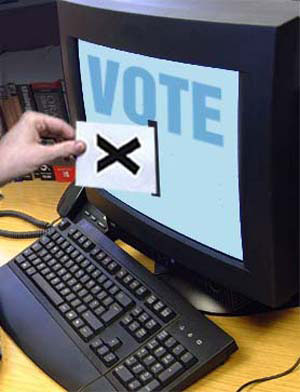
digital-voting.jpg

Convenient, but be careful!

Related

With the increasing shift from analog to digital, some elections officials are unsurprisingly chomping at the bit to move toward Internet-based voting. Last year, Elections Canada officials mused about the possibility of online voting trials, noting the potential benefits of increasing voter participation, particularly among younger demographics.

More recently, the province of Alberta opened the door to incorporating new technologies into their voting processes as part of an electoral reform package. New trials would require the approval of a legislative committee, but the province's chief electoral officer acknowledged that online voting may be coming, noting "online voting is something that's on the forefront of people's minds... people say, 'I can do my banking online, but I can't do my voting online.'"

The enthusiasm for Internet voting is understandable. At first blush, there is a certain allure associated with the convenience of Internet voting, given the prospect of increased turnout, reduced costs, and quicker reporting of results. Moreover, since other security-sensitive activities such as banking and health care have gravitated online, supporters argue that elections can't be far behind.

Yet before rushing into Internet voting trials, the dangers should not be overlooked.

Hackers and viruses

Democracy depends upon a fair, accurate, and transparent electoral process with outcomes that can be independently verified. Conventional voting accomplishes many of these goals -- private polling stations enable citizens to cast their votes anonymously, election day scrutineers offer independent oversight, and paper-based ballots provide a verifiable outcome that can be re-counted if necessary.

While technology may someday allow us to replicate these essential features online, many of them are currently absent from Internet voting, which is subject to any number of possible disruptions. These include denial of service attacks that shut down the election process, counterfeit websites, phishing attacks, hacks into the election system, or the insertion of computer viruses that tamper with election results.

These concerns are based on real-world experience. The Internet Corporation for Assigned Names and Numbers (ICANN), the organization that administers the domain name system, ran an online board of director election in 2000. The experience was fraught with technical difficulties, leading a reviewer to conclude "the technical weakness in the registration system made it virtually impossible to assess the integrity of the voters' list, the security of the PINs, and secrecy of vote."

More recently, the Netherlands used Internet voting as part of its 2006 parliamentary elections. The online option was an alternative for Dutch citizens working or living abroad. Nearly 20,000 valid Internet votes were received at a cost of approximately 90 euros per Internet voter. Two years later, the country implemented a ban on Internet voting.

Caution here in Canada

The Canadian experience is limited primarily to municipal elections. Several Ontario municipalities have offered Internet-based voting, enabling local residents to vote without leaving their homes. Residents were required to pre-register for Internet voting and were provided with detailed instructions on the technical requirements to "vote anywhere."

Caution on Internet voting appears prudent, since experts have identified a long and costly list of necessary precautions, including random spot checks and post-vote verification programs to preserve anonymity. Given the security risks, opening the door to provincial or federal Internet voting seems premature. In the zeal to increase voter turnout, the reliance on Internet voting could inadvertently place the validity of the election process at risk.  [Tyee]

58  Comments:

Login or register to post comments

  • Takuan

    1 year ago

    after the voting machine fraud that gave

    the world a decade of Bush? Paper ballots all the way!

  • tedward

    1 year ago

    A small matter of fraud

    How about the more relevant threat posed by internet voting: fraudulent ballots. By that I mean the fact that it is impossible to tell who actually completed the ballot. I see no reason in our age that every voter cannot present themselves at an appointed voting place (including advance polls and special polls in hospitals, nursing homes etc) and complete a ballot in the presence of elections officials. And yes, I think mail-in ballots are just as subject to abuse and should also be eliminated.

  • tsieling

    1 year ago

    Terrible Idea

    Internet voting is a flat out terrible idea.

    People often think that voting needs to be more convenient, that convenience would lead to higher voter participation. That's wrong for two reasons: the first is that there are laws that create time for people to vote, but they don't take advantage of them. The second is that the convenience and participation numbers argument displace the quality of a considered vote in favour of a greater quantity of votes, which alone doesn't make a better electoral result.

    Forget the prospect of a woman having to click her vote with her husband telling her what to do, forget the various internet based threats the article points out. At the end of the day, it's the lack of a physical footprint that makes voting by internet so dangerous. Any medium that can be changed in an instant and without evidence by a specialist puts the mechanism of democracy into the hands of very few, and that's bad for the world, period.

  • Van Isle

    1 year ago

    When I was a member of a

    When I was a member of a union a number of years ago they tried the idea of telephone ballots. It seemed like a good idea at the time and the company who conducted the vote said it was To the point; it was a disaster. Paper ballots, to me, is the only way to go. Modern technology is too easy to manipulate.

  • bilgladstone

    1 year ago

    internet voting

    With only 24% of people voting now, how much worse could the result possibly be with 110% voting by Internet? ;-)

    Should we maybe make voting mandatory under penalty of law like Australia?

  • kootenay

    1 year ago

    Mandatory Voting

    Mandatory voting, like in Australia, isn't the answer to voter apathy. So what if you get 100% of the people to vote; why is that going to change anything if 75% of them are apathetic? They still don't give a damn how the government acts and they still aren't going to hold the government accountable for their actions.

    The only way we can change the way politicians behave is when people start to care about the impact politicians are having on society. This Government has committed numerous atrosities, yet the people can barely find their inner fortitude to utter a word of protest.

    We don't have a voting problem, we have a people problem, and that's never easy to fix. As for internet voting, very bad idea, ripe for corruption.

  • Takuan

    1 year ago

  • Takuan

    1 year ago

  • barney

    1 year ago

    Fraud waiting to happen

    A low voter turnout in a tightly monitored paper ballot system is far more fair than a large voter turnout that carries a high risk of fraud.

    Internet fraud and ID theft continue to be the fastest growing, most lucrative crimes of our era. Enough said.

    I like the Aussie approach. Fines for neglecting your democratic duty. Or a more positive version might see a modest tax benefit for those who do exercise their duty.

  • barney

    1 year ago

    Kootenay

    I agree with your general concern that mandatory voting is not an answer in itself. But it may be the step we need to see the inherent injustices in our FPTP voting system that leads to unacceptable low turnouts. The real root answer lies in radical electoral reform, which would get Canada in step with the rest of the democratic world in adopting some version of PR. But don't try telling this to the likes of Tieleman and Schreck, who aggressively campaign against STV in BC. For traditional party hacks who have enjoyed eating at the trough as a result of FPTP, it's gonna take some convincing to get change.

  • ReeferMadness

    1 year ago

    No and NO

    No to internet voting, at least until technology can deliver the same level of security, auditability, privacy, and reliability as the paper system.

    And a big NO to mandatory voting. I don't want people who can't be bothered to meander down to the polls casting votes. Democracy means government by the people. Making voting mandatory implies that you can force people to govern themselves. How can that make sense in any world??

    BTW, barney - Tieleman, the fearless defender of FPTP, is also a proponent of mandatory voting. Enough said.

  • doohhead

    1 year ago

    The medium is NOT the message, here.

    I'm a little shocked to have seen that this article was written by such a "tech savvy" person as Michael Geist. Were you this concerned about ATM's and bank cards when they came out? Were you this concerned about paying bills via the internet? Were you this concerned about purchasing goods via the internet?

    If the mailman told you that he was going to start delivering your mail by helicopter would you be concerned? You shouldn't, as long as at the end of the day you get your mail. Its the same with voting via the internet, as long as at the end of the day you have cast your ballot in a secure way and have confidence that it was done so in the manner chosen. There are laws against opening someone else's mail, there are also laws against impersonating someone else. If a person votes someone else's ballot, then they have done so against the law. Should we not progress, in how we vote simply because of what "might" illegally happen? Do you not have a bank account simply because the bank provides a simple and easy way for you to get your money out via an ATM and someone can steel your bank card? No of course not, its foolish, so why is that being brought up as an issue against voting via the internet?

    What most of us don't see, with any form of voting is what goes on behind the scenes as far as auditing the election. An Internet voting election should adhere to the same guidelines that are used in paper ballot elections and if they can verify that, what then is the problem?

    I voted in the Halifax municipal election, via the Internet. I was given a unique pin, via mail that I then used, along with my date of birth to log in to the system. It was clear and easy to follow and at the end of it I was satisfied that my vote was counted as I chose and that no one else voted my ballot. In addition to that it was convenient for me to do so as I was out of the country at the time.
    I agree that voting via the Internet is not the end-all in voting, but it should not be discounted simply because of ignorance either, and thats all I'm seeing here. Ignorance.

  • John Greg

    1 year ago

    doodhead ...

    your naivety is nothing short of spellbinding.

    Your assumptions are that of an innocent, to wit, you assume:

    1. Because voter fraud is illegal, no one will do it.

    2. If someone does perpetrate voter fraud, they will get caught.

    3. Your vote in the Halifax municipal election -- now there's an earth shaking power conclave that is sure to entice the various identity theft gangs from around the world if ever there was one -- was for a certainty counted -- how in hell do you know that it was?

    4. No one can or will steal your pin number, nor access your email, nor "steal" your birthday to perpetrate fraud.

    5. If someone does steal your identity they will be caught.

    And the list just goes on and on.

    Do you not know that pin number theft, email theft, and myriad other forms of identity and computer-based theft are currently rampant world-wide?

    What rock did you say you live under?

  • ChrisB

    1 year ago

    Luddites Rule Not!

    Well I never cease to be amazed by the resistance so many people have to progress.

    I stopped voting after 2001 when I helped make Gordon Campbell Premier of BC. I'd go to jail, and I'd stay there, before I'd obey a law that says I must vote. You'll never see such a law in this country, simply because it wouldn't survive the Charter challenge.

    If there have been a few experiments in online voting and they have been deemed failures, then I'd suggest that was because of who administered them.

    For God's sake kiddies, any of you ever fly in an airplane? Then you were puting your lives in the hands of advanced technology - including of course computers.

    I'm sorry. The message of this article is stupid. And so are some of the comments.

    The real issue is that from its inception the Internet obviously had the potential to revolutionize everything we do - and that includes our feeble attempts to date at democracy. Forget online voting. What we should now be striving to do is enabling every citizen to become an active participant in all our democratic processes.

    Do up your seat belts Luddites. It's coming.

  • mikev

    1 year ago

    look at the incentive

    Your bank account is pretty safe because your little stash of cash is not worth the possibility of getting caught trying to steal it. You are safe flying in an airplane because nobody would get anything out of causing it to crash.

    When you are talking about selecting the people who will control the government, that's an attractive target where the potential benefit looks pretty good against the risk of getting caught.

    When you stick your piece of paper in the ballot box, you see it go in, there are scrutineers from all sides who keep an eye on it from that point on. When you punch a button on your computer, there is no possibility for scrutineers to watch the electrons go screaming down the wire and end up in the right bit of computer memory. Even if your vote does make it to the tabulating server safely, a scrutineer watching the actual piece of hardware has no way of guaranteeing that it's not being tampered with even while they are watching it.

    The prize for successful fraud is too great. There is only a small minority of the general population able to competently design the system, competently monitor the system, competently audit the results. With the paper ballot system you could take anyone off the street and give them the skills to help monitor an election within hours. Using computers to cast/count ballots you have to trust the high priests that everything is straight.

    I'm a computer programmer. I'm not saying don't trust computers with anything. Do some risk analysis. If you pay a bill online, you see your balance go down. If you cast your vote online, do you see the total votes for your party go up by one? Nope, you just have to trust, and there is no way to verify. If someone fraudulently gains access to your bank account through the internet (don't kid yourself it happens), it's a pain but there are ways to put things back together, you do have some consumer protection. If someone gains access to the country's election results, then what? A whole new election? Meanwhile?

    Not good. Thanks Mr. Geist.

  • RickW

    1 year ago

    bilgladstone

    Quote:
    Should we maybe make voting mandatory under penalty of law like Australia?

    In municipal election where I come from, the average turnout is 19% - and most voters tend to vote for the encumbents, because few of them know who the candidates are.

  • RickW

    1 year ago

    As for voting by internet.....

    ....banks don't seem to have a problem with internet banking. Sure there will be fraud. But as one poster here noted, WE DON'T KNOW what goes on when ballots are hand-counted.

    If those who don't want internet voting could figure out how to energize an apathetic public, then I will support the paper ballot.......

  • mjtrac

    1 year ago

    Thank you for the warning

    Thanks for this warning about internet voting.

    This is one situation where a little knowledge is a dangerous thing. In the states, the ATM argument has long been used to sell the idea of electronic voting. Those who have opposed electronic voting have been called Luddites, when the reality has been that informed computer scientists and programmers have been leading the opposition to computerized voting.

    Elections have a unique set of requirements that make the ATM/banking analogies poor ones. The one absolute requirement is the ability to do a recount, and without physical ballots, it's essentially impossible to do a recount that can be trusted by the population. Without the ability to do a trusted recount, you no longer have democracy.

  • vigilantz

    1 year ago

    This is exactly how the last remnant of democracy will be stolen

    Good 'starter' piece but it doesn't nearly go far enough in covering this issue! I have tried repeatedly to get the Tyee interested in doing an investigation and a series of articles on electronic voting, all to no avail so far! I don't really understand where their reticence comes from.
    There is currently a very poorly publicized opportunity for public input on how we conduct our local government elections. Unfortunately, the method of voting is not one of the areas that they are currently interested in. If you want to have a chance to provide your input on several other areas including election cycles, enforcement processes and outcomes and campaign finance (before April 15th), go to http://www.LocalElectionsTaskForce.gov.bc.ca. I will be making a submission on electronic voting to both the Task Force (whether they want it or not) and the Ministry of Community and Rural Development which is respsonsible for local elections in B. C.
    On-line banking and internet voting couldn't be more different - if your bank statement doesn't match your transaction, you complain and get it fixed; if your vote is 'stolen', you won't even know it! I have created a fledgling blog on this issue at http://electedbyamachine.blogspot.com and I would appreciate it if some of you would stop by and have a look and maybe even leave a comment.

  • khed67

    1 year ago

    Scary resistance to technology

    Takuan says voting machine fraud gave Bush the election, so stick with paper ballots. Excuse me? Hanging chads and manipulation of voter lists are the culprits I remember. Many countries use voting machines without fuss.

    Mikev thinks our bank accounts are safe because the "little stash of cash" we each have is not worth the risk to fraudsters, but Internet voting with similar security precautions would be a tastier target because the prize is greater? Huh? I'd rather someone steal my single vote than my life savings. Shouldn't we compare individual bank accounts to single, individual votes?

    There are potential problems with any system, but Internet voting can be just as safe as Internet banking. Give it a chance.

    And besides, look who we've been electing with paper ballots around here the past few elections. How could it be any worse?

  • khed67

    1 year ago

    Electronic voting reliability

    Electronic voting has been the norm in Brazil since 1996. According to Wiki and my Brazilian friends (I used to live there), nobody has reported fraud. In fact, Brazilians I know claim there is less fraud than before.

    In Canada, we rely on human beings to oversee the paper ballot process. Thousands of human beings across the country every election. Every one of them is capable of making mistakes or being corrupt.

    With electronic or Internet voting, ballot counting is much more reliable and exact. Irregularities and disputes can be investigated by teams of bi-partisan geeks.

    We trust (or fear?) forensic investigators to get to the bottom of criminal cases involving computers. Fraud is possible in any kind of voting, but electronic communications leave trails just like paper.

  • ReeferMadness

    1 year ago

    Debating tactics

    I've noticed that many of you are resorting to name calling and condescension in criticizing people who are cautious about internet voting. That doesn't make a very effective argument.

    Any technology implementation decision comes down to costs, benefits and risks. The costs are going to be significant and the risks are definitely worth examining. One of the real risks that I haven't seen mentioned is that you have no way of knowing that the voter is in a situation free from influence (e.g. one spouse haranging another to vote a certain way) or even that the person voting is actually the right person. What's to stop a university student from asking his non-voting friends for their votes? Or what's to a re-emergence of the old practise of buying votes?

    And where are the benefits? Will elections be cheaper by enough to justify the cost of the software? From what I've read, the jury is out on that count. Will more people vote because they can do it from home? Frankly, I don't think the people who can't be bothered to go to a poll should be voting.

    This has nothing to do with being a luddite. I just don't see the point. I see a lot of value in internet banking - it saves a lot of time. If I had to vote every week, it would be different.

  • RickW

    1 year ago

    If I had to vote every week, it would be different

    Now THAT is a good idea! Plebicites and referenda would become practical.

  • ReeferMadness

    1 year ago

    Voting every week

    Given that half the population can't even be bothered to vote every 4 years, plebicites and referenda seem like a recipe for chaos. I believe in direct democracy but we have to crawl before we can run.

  • nutsnbolts

    1 year ago

    CAMPBELL doesn't give good choices...

    When Campbell did his little citizens' forum thing on which way to vote FPTP (First past the post) or STV (single transferrable vote) he only gave them 2 choices, BOTH BAD, like everything the mob ruler does. We need a system where every vote counts but that won't be happening. Enough, HELLO LABOUR, TIME FOR A GENERAL STRIKE NOW.......GET IT DONE.
    Jean

  • doohhead

    1 year ago

    You're proving my point...

    @John Greg...
    "Do you not know that pin number theft, email theft, and myriad other forms of identity and computer-based theft are currently rampant world-wide?"

    So, does any of this prevent you from doing ANYTHING online? No it doesn't, or rather shouldn't and if it does, then perhaps you need to flop that rock that you're hiding under back on and go back to sleep. I'm sure eventually you will evolve into something.

    "What rock did you say you live under?"
    LOL I may come across as naive to you but rest assured I have more intimate knowledge of the issue than most here (including Michael Geist apparently, which still shocks me). How many times have you voted via the internet? How many times have you voted electronically? Do you know the differences and the issues associated with each? A little bit of knowledge can go to great lengths to squash the rampant ignorance on this topic.
    If you looked at the REAL issues (not the ones mentioned so far here) and research the companies providing the "electronic" solutions, you will find most, if not ALL issues are dealt with. The only thing holding it all back is the loud-mouthed, ignorant few who speak out against it. Their only valid point in their arguments is that they are loud. Get intimate with your voting process and research the solutions that are out there, then come back here and tell me how naive I am!

  • Takuan

    1 year ago

    so,

    which voting machine company do YOU own stock in?

  • Takuan

    1 year ago

    if I want to corrupt a

    a paper election, I have to corrupt humans (notorious for not staying bought). Electronic election means corrupting one or a few machines. Probably only once.

    Nothing wrong with using internet voting to flog whoever gets elected, after they are in.

  • khed67

    1 year ago

    I agree with doohhead ...

    ...and I have no disclosure-worthy interests in this issue whatsoever. It seems that all of the resistance to electronic voting machines and on-line voting are based on people's distrust of new technology.

    We obviously need more and better information (with less invective and emotion) for people to understand the real costs and benefits in switching.

    I'm not an expert on the subject, but I support a switch to electronic voting machines. I've seen them work abroad (Brazil) with no apparent problems. In fact, Brazilians enjoy the irony of the "1st World" US election gong shows in 2000 and 2004 compared to the "jungle" elections that run smoothly in that country. Remember all the confused Floridians who mistakenly voted for Pat Buchanan instead of Al Gore due to confusing paper-ballot design? With electronic voting machines you get to see a picture of the candidate you just voted for as part of the vote-confirmation (you also get a small paper receipt).

    Internet voting, in my opinion, seems to have more issues to resolve than does electronic voting. But at the same time I feel that these issues are no greater than what we currently deal with using paper ballots.

  • mikev

    1 year ago

    paper receipt is a step in the right direction

    A paper receipt eliminates a lot of the problems with electronic voting, but even that simple step is not available in a lot of the trials to date. But we are not talking about going to a polling station and casting your vote on a machine (which could be done reasonably well even if it hasn't been so far), we are talking about casting your vote from home through the internet. So what if you get a paper receipt at home? Then what happens to it? Paper receipts don't help at all with remote voting.

    Call me a luddite if you want, I'm pretty sure I know as much if not more about it than you do.

    Brazil is a special case. They are one of the growing number of countries who mandate open formats for government electronic records. This is good. But the source code for their voting system is not available for review. This is bad. Using open source software for an internet voting system eliminates some of the problems. So if you are shilling for some electronic voting company, be careful because you are building support for what will have to end up being a non commercial enterprise.

  • Intention Pure

    1 year ago

    Electoral Voter Fraud

    Electronic electoral voter fraud is a sure thing if Harpy and Gordo get this disguised "efficiency and ease" wrapped falsification tool off the ground. BTW, in support of the poster who mentioned electronic electoral voter fraud in the Bush elections in the States, this is extremely well documented in Micheal Ruppert"s book "Crossing the Rubicon". A must read for any activist who wants to fully understand the assault on democracy and the environment that the powers that be utilize to institute the current state of affairs (NWO).

    Another important point I would like to point out is that this mandatory voting issue is a sideline to the REAL ISSUE, which is, WHY DO NOT THEY COUNT SPOILED VOTES. Uhmm, cause this would show how many of the greater than 60% of the people who "don't vote" are actually voting by spoiling their ballots due to utter lack of an actual democratic governance system. And what are the cut off numbers that indicate that the election is a flop; I mean shouldn't we have a baseline number of minimum votes cast that below which the election is invalid.

    Sovereignty here we come!

  • Takuan

    1 year ago

    I trust the compters

    I don't trust the people running them.

  • Takuan

    1 year ago

  • Takuan

    1 year ago

    the "winner"

    http://www.bijan.ca/

  • ReeferMadness

    1 year ago

    Spoiled ballots

    Miss aware-beware, they do count spoiled ballots. Go to the Elections BC website and you can see them shown separately.

    I highly recommend people who care about your city/province/country but are too disgusted to vote to spoil your ballot instead. It shows that your absent vote isn't just a sign of apathy. If enough people spoil their ballots, it will be noticed.

  • ReeferMadness

    1 year ago

    Suspected Fraud for UBC Alma Mater Society

    From Takuan's link

    Quote:
    In a preliminary report issued by AMS elections administrator Isabel Ferreras, at least 731 out of 6,900 votes cast in the election were identified as fraudulent.

    According to Ferreras, the 731 votes were all cast from the same IP address. The ballots came in on the last day of the election at a rate of one vote every 16 seconds.

  • ReeferMadness

    1 year ago

    Sorry, the last paragraph should have been part of the quote

    Why don't they let you edit comments?

  • khed67

    1 year ago

    Today's Courier Article

    Thanks for the article link, Takuan. These real-world examples are helpful for anyone who wants to better understand the issue.

    However, I urge everyone to save their conclusions until AFTER they have read all they can about electronic and Internet voting.

    For example, if I wanted to confirm my bias against Internet voting I could cite this point from the article:
    "at least 731 out of 6,900 votes cast in the election were identified as fraudulent."

    But if I wanted to go the other way, I could cite the same article:
    "It sounded like it was very preventable."

    Perhaps the quote that best illustrates my feeling about Internet voting is this one:
    "an audit trail was probably necessary to increase voter confidence."

    And let's keep trying to educate each other without the silly personal attacks.

  • Takuan

    1 year ago

    oh, I think internet voting could work.

    Just not in a province as corrupt as BC.

  • Takuan

    1 year ago

  • Takuan

    1 year ago

  • Takuan

    1 year ago

  • Takuan

    1 year ago

  • Takuan

    1 year ago

    come to think of it

    I'll bet that one day China WILL allow the people of Tibet to vote on keeping their country.

  • khed67

    1 year ago

    Hackers Fail To Crack Brazilian Voting Machines

    http://yro.slashdot.org/article.pl?sid=09/11/14/1936200

    Text:
    "From Nov 10th to Nov 13th the Brazilian Government hosted a public hacking contest to test the robustness of its voting machines. 38 participants from private and public IT companies (including the Brazilian Federal Police) were divided into 9 teams, which tried several different approaches to try to tamper with the software installed on the machines, and even to physically interfere in other stages of the process. All attempts (aside from a minor one which would not compromise the overall results) failed, and observations from the participants and neutral observers will be taken into account to improve the process even further....A summary of the results is available in the Brazilian press (original). Brazilian voting machines use Linux."

  • khed67

    1 year ago

    and from MIT electronic voting trials...

    http://web.mit.edu/newsoffice/2009/rivest-voting.html

    My personal favourite excerpt from this article:
    “anytime a jurisdiction takes a look at new technology like that —the cryptographic end-to end system in this case — that’s a great conversation for voters and election officials to be having. And in that sense, it’s very positive for democracy.”

  • khed67

    1 year ago

    and fromTakuan's Phillipines article above...

    The old system, in which votes were counted by hand, often took weeks to produce definitive results - and opened the door to fraud claims.

    “The antiquated manual system has been a breeding ground of election cheating because prolonged delays in announcing official results has offered opportunities for altering results,” says Mr. Doronila.

  • Takuan

    1 year ago

    interesting MIT item

    the comments have much information too. I like the idea of people being able to check after the fact that their vote was indeed cast and correctly registered.

    Though: Web voting will mean a concerted effort by the current junta here to remove internet access from the most vulnerable and poor (their natural democratic enemies) Perhaps in part by a "three-strikes" rule disguised as copyright protection?

  • Takuan

    1 year ago

    any system devised by humans

    will one day be cracked by humans. It's always a race and we have to make sure the slight lead evil hackers have remains slight. Moving slowly helps.

  • mikev

    1 year ago

    what are we talking about here?

    There are 2 very different things going on. Internet voting, like me in my house coat clicking a button on my home computer to cast my vote? Or electronic voting, like me going down to the polling station to cast my vote on their computer?

    Electronic voting, at the polling station on official machines, is probably doable - but better if we get the current crop of commercial entities out of the kitchen. Internet voting seems to me like a step to far for our current situation. Actually preferably a step too far for our future situation as well - I don't want the internet to become locked down to the point where I would feel comfortable using it to cast my vote, never even mind the important issues of voter manipulation mentioned above.

    A polling station can at least be monitored, what are we supposed to do, send a team of scrutineers house to house to ensure nobody is being coerced?

  • mikev

    1 year ago

    hehe Takuan

    Schneier's Law: "any person can invent a security system so clever that she or he can't think of how to break it."

  • freebear

    1 year ago

    Why, voting is a bad idea!

    I am not voting next federal or provincial election-hoping for the lowest turnout in history!

    10%

    Go, Canada go; down the terlet!

  • Takuan

    1 year ago

    thereby

    giving the greediest, worst, most selfish and most unethical 10% free rein to do anything they wish...
    I see a flaw in your plan.

  • vigilantz

    1 year ago

    Many people would need to be corrupt but only one program

    Too bad no one has taken the time to have a look at the some of the articles linked to in my Blog. To those who have used electronic voting machines 'with no problems', you need to understand that you have no way of knowing that your vote was properly registered - just because the machine appeared to accept your instructions means NOTHING! Also, a quick result does not necessarily mean that it is the correct result! Do you know for instance that recounts in local elections in B. C. are done by running the optical scan ballots (paper trail) back through the same machines, rather than having representatives from each candidate (scrutineers) examine the paper ballots and produce a total. Someone mentioned Florida and the 'chads' from the paper ballots but did you know that that's where about 20,000 votes for Al Gore 'disappeared' into voting machines. Please DO NOT be so quick to support so-called 'technological advancements' when the experts are caling for extreme caution. If you don't believe that being able to 'fix' an election would be worth millions, then you really haven't been paying attention!

  • freebear

    1 year ago

    Takuan

    "giving the greediest, worst, most selfish and most unethical 10% free rein to do anything they wish...
    I see a flaw in your plan."

    I know its dangerous but then maybe the sheeple will realize how undemocratic politicians are willing to be and physically toss the lying bums out!

  • Takuan

    1 year ago

    in the initial assault

    civilian casualties will be in the hundreds of thousands. I would rather avoid that.

  • Steppeup

    1 year ago

    For it!!! But

    If, and it's a big if, the technology is there to make this a safe thing, then i would agree with internet voting. But is the technology there now? Personally, i don't think so. But i could be wrong.

    But even if the technology is there to procede with this, i think you would have to ( or should ) put some conditions on who could vote via the internet.

    As voting is one of our most cherished rights and privlages, everybody should make a point of getting out and voting. as such you should earn the right to vote online when online voting becomes a reality. Maybe you have to physically get off your lazy ass to go out and vote in two elections to be eligable to vote through the internet.
    Help keep the respect of the vote intact by not allowing those to vote this way who couldn't be bothered to vote otherwise. Maybe that would be the way to procede with this in the future.

    Personally, i don't want anyone voting on line who could care less about the process and gives no thought to what they are doing, and totally interfere with the people who actually care about our democratic rights and make the effort to do their civic responsability and get out and vote.

    And for those that say there is nothing worth voting for with our current politicians, what a LAME excuse for not doing your civic duty and voting. Thats what our society has come to now. It's too easy to make excuses for not doing what you should, when all it really is is not caring enough to bother. When i see other "lesser" countries, or less democratic countries, where people risk getting shot so they can vote, i realise how pathetic we have really become as a people.

  • pneves

    1 year ago

    Internet voting is a very bad Idea.

    Michael Geist is right about the dangers of electronic or internet voting. I am a software engineer and I have done technical support for many years. I have spoken to people who's identities have been stolen, ex wives who's privacy were violated and people who have lost their credit card information online. If you think you are 100% secure on the Internet you couldn't be more wrong.

    I've got news for people about those security companies that make you pay for antivirus software every year. The truth is that none of those antivirus packages are 100% secure. None! The virus writers have the upper hand and they always will. The hackers also have the upper hand and they always will. They always will because the security on a computer is only as good as the person using the computer.

    So no I don't agree with electronic voting at all.

    • The discussion for this story is closed. No more comments can be added.