
The Value of Online Anonymity
The courts unmasked a nasty blogger and people cheered. But is secrecy the problem, or incivility?



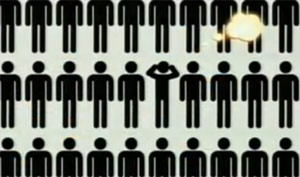
License for freedom, or hatred?
License for freedom, or hatred?
Want to see a 747 landing into a wicked crosswind? Interested in behavioural biology? Can't figure out how to do your eye makeup? For all these things, you need not leave your desk, because YouTube is human society in miniature. Just about every facet of modern culture is there, if you look hard enough. So we should not be surprised to hear that the anthropologists have arrived.
Kansas State University's Digital Ethnography project is the brainchild of Michael Wesch, who won a U.S. Professor of the Year Award in 2008. Each year, with a team of students, he sets out to study digital culture, including YouTube. Wesch and his students use participant observation, which means that, like researchers in Papua New Guinea living with hunter-gatherers, they post their own videos and integrate into the YouTube community.
If you are into anthropology, or interested in some of the early memes and drama on YouTube, you might want to watch one of Wesch's full-length lectures. But I am more taken with one of his students' videos, about anonymity online.
Last month, the New York State Supreme Court ordered Google to reveal the identity of an anonymous blogger who had been making nasty posts Canadian model Liskula Cohen. The Calgary Herald called the case a "victory for civility" online, and Susan Krashinsky at The Globe heralded "the virtual end of online anonymity". Wesch himself has an equation for the way that anonymity promotes incivility online: "anonymity + physical distance + rare and ephemeral dialogue = hatred as public performance."
But Wesch has an alternate right-hand side of that equation: "freedom to experience humanity without fear or anxiety." This is what his student is getting at in her project. Online, we are all expected to be our own publicists, she points out, building our brand for potential employers or potential mates. By participating anonymously, we can express ourselves freely -- sharing opinions, feelings, memories, and secrets. In this way, anonymity can allow for more authentic interactions. Maybe these anthropologists are on to something. We should be thinking about how to encourage civility in anonymous settings, rather than stamping them out of existence.
What have we missed? What do you think? We want to know. Comment below. Keep in mind:
Do:
Do not: