Life

Celebrity Drug Dealers

Selling menopause 'cures' that proved dangerous hasn't change the game.

By Alan Cassels and Ray Moynihan , 20 Jul 2005, TheTyee.ca

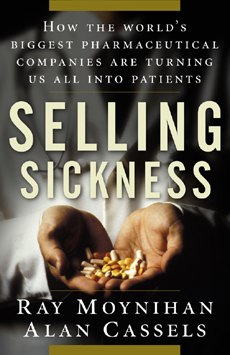
Selling Sickness

[Editor's note: Drug companies have naturally limited markets. In order to increase sales they only really have two choices: create more sickness or find more sick people.

In Selling Sickness, medical journalist Ray Moynihan and drug policy researcher Alan Cassels detail how pharmaceutical giants aggressively broadened their market by expanding old conditions and creating new ones, in the process "creating millions of new patients and billions in new profits."

The following excerpt tracks the redefinition of menopause from a natural change to a medical condition. Along the way, the authors demonstrate how celebrity hawked hormone replacement therapy "would ultimately be shown to cause some of the very health problems it was supposed to prevent."]

The summer of 2002 brought good and bad news for Lesa Henry, the busy public relations chief at the drug company Wyeth, and the woman helping to market one of the best-selling drug regimes of all time -- hormone replacement therapy. The good news was that she'd just picked up an advertising industry award for her work using celebrities to promote drugs, and she'd been named one of the top 25 marketers of the year. The bad news was that scientists had just discovered long-term use of hormone replacement therapy was doing women more harm than good.

In the world of drug marketing, Wyeth's Lesa Henry is seen as well ahead of the game. She was one of the first to recognise the value of celebrities for "educating consumers" about health conditions and the drugs that go with them. One of Wyeth's major coups had been hiring supermodel Lauren Hutton to help raise public awareness about a "health condition" otherwise known as the menopause -- the time in a woman's life when her periods, and her fertility, come to an end. Hutton's famous face has fronted a massive marketing campaign promoting both the "dangers" of the menopause, and the "promise" of Wyeth's hormone pills. As director of communications within the company's Women's Healthcare division, Henry was leading the way for the industry, according to the judges who gave her the award, "in appropriately using celebrity spokespersons in an innovative, resulrs-oriented communications effort."

Celebrities have become central figures in drug company campaigns to change the way we think about the common ailments of life. Baseball stars help transform fears about sexual performance into pills for sexual dysfunction, and football heroes now help sell shyness as a symptom of a mental illness. For their trouble the stars are paid anything from $20,000 to $2 million, yet the exact size of these pay cheques are well kept secrets. What's more, many of the talk shows and the tabloids will portray these celebrities as being engaged in worthwhile "awareness-raising" activities, while making no mention of the fat fees flowing to the stars behind the scenes. One of the most cynical campaigns of all has been Wyeth's attempt to inflame fears about the menopause at the same time as scientists have been documenting the dangers of the company's menopause drugs. The supreme irony is that hormone replacement therapy, after finally being properly studied, would ultimately be shown to cause some of the very health problems it was supposed to prevent.

A milestone in the campaign to "educate" consumers about menopause was a cover story in 2000 in Parade, the weekly magazine inserted into newspapers across the United States. Seen by an estimated 70 million Americans every Sunday, it is arguably one of the most widely read magazines on the planet, and a cover story here is a marketer's dream.' Photographed with two other beaming celebrities, the sexy Hutton adorned the Parade cover along with the headline, "Live Longer, Better, Wiser: This year's indispensable guide for every one of us." Blurring the lines between news and advertising, Hutton not only appeared on the magazine cover and in its main article, she also featured as the centrepiece of a Wyeth advertisement in the same issue talking about the consequences of "estrogen loss" at menopause.

The Wyeth advertisement detailed a horrifying list of what apparently lies ahead for women after the menopause: Alzheimer's disease, heart attacks, colon cancer, cataracts, teeth loss, night sweats, vaginal dryness, bone fractures and more. "Talk to your doctor," urged Hutton's reassuring image, "because the more you know about menopause and its associated estrogen loss, the more you'll want to take an active interest in your health."

Just a few pages away from the advertisement was an article called "Celebrities Reveal Their Secrets," where the 55-year-old supermodel and health advocate shared her tips for feeling good and looking fabulous. First she praised the virtues of apples, fish, pasta and yoga. Then came the most important part of Hutton's message. "My No.1 secret is estrogen," she said. "It's good for your moods, it's good for your skin. If I had to choose between all my creams and makeup for feeling and looking good, I'd take the estrogen." US FDA regulations forbid Wyeth executives from making such one-sided claims about the company's hormone drugs in their advertising, with no mention of side effects, yet their paid celebrity is apparently not under the same FDA constraints.

Selling menopause as a fearful time of hormone loss lays the groundwork for selling the promise of hormone replacement. As the industry magazine DTC Perspectives rightly recognised when it anointed Lesa Henry one of the top marketers of the year: using celebrities brings results. And Lauren Hutton is not the only star in the Wyeth stable. Soul diva Patti LaBelle and actress Cheryl Ladd have also been on the payroll. Not surprisingly, Lesa Henry won that same industry award a second time round, the following year.

Wyeth strongly defends the use of celebrities, arguing that the women are prompted to participate in educational programs because of their own experiences, and their desire to share those experiences with other women. In relation to the awards, a Wyeth spokesperson said the company was pleased when employees are recognised for their professional achievements. "These campaigns are extremely effective in reaching consumers," says celebrity-broker Amy Doner Schachtel. Working from her office in New Jersey, the attractive former drug company public relations expert has moved to the leading edge of medical marketing. Sometimes juggling two phones at once, she connects high-profile celebrities with big-name drug companies keen to educate the public about common conditions. "Just one segment on a national talk show, or one print article in a major newspaper can tremendously impact patients' decisions to seek treatment," she says. The goal of these company-funded celebrity campaigns, as she stresses repeatedly, is to drive patients into doctors' offices to seek treatment. Schachtel has helped find celebrities to raise awareness about irritable bowel syndrome, depression and social anxiety disorder. She's worked with West Wing heart-throb Rob Lowe, country singer-songwriter Naomi Judd and television mega-star Cybill Shepherd. "People look up to celebrities," she says, "because they trust them." Hutton's role, like that of other celebrities, was not to create a condition, but rather to help sell a certain perception of one.

In this case the Wyeth advertisement featuring her was helping to persuade women that the menopause was not simply a natural part of life, but rather a condition of "estrogen loss" which brought an increased risk of deadly and frightening diseases, and required a visit to a medical doctor. This picture of the menopause is by no means a new one, but in recent years Wyeth's reasons for promoting it have intensified, as the world has learnt more and more about the dangers of the company's hormone pills. By the time of the famous Parade front Cover in the year 2000 the preliminary findings were starting to flow from a massive government-funded study of long-term use of the drugs. As we would all later learn, the combined form of long-term hormone replacement therapy-one of the most prescribed drug therapies ever-was doing more harm than good to the millions of women around the world who were taking it: slightly increasing their risks of heart attacks, strokes, blood clots and breast cancer.

From the book Selling Sickness: How the World's Biggest Pharmaceutical Companies are Turning us all into Patients, © 2005, by Ray Moynihan and Alan Cassels, published by Greystone Books. Reprinted by arrangement with the publisher. All rights reserved.

Selling Sickness is available in bookstores, and at amazon.ca.  [Tyee]

22  Comments:

Login or register to post comments

  • Ron Erwin

    6 years ago

    Comments on "Celebrity Drug Dealers"

    Apparently teachers also promote drug use but only for boy's. They take masculinity and call it ADD and encourage parents to drug their male offspring with Ritalin.
    I suugest separating the students based on gender ( although that may be quite complicated these days ). Oh, what a screwed up world Liberal thinking has got us.

  • Bobb999

    6 years ago

    Ron:
    I'm not sure liberalism should be blamed for Ritalin! As the article points out drug co. info/ad campaigns (aided by helpful physicians)
    must accept much responsibility for creating conditions and markets for them. This is bare faced capitalism, not liberalism.
    Another aspect though is Ritalin for calming disruptive children is an updated near-equivalent of "soothing syrups", of the 19th and early 20th centuries. It became common for mothers to dose infants with these opium tinctures to put them quietly "on the nod" for mother's convenience.I wouldn't call this liberalism. Overdoses and deaths were common, which was one of the factors that lead to opium becoming demonized and a target of lawmakers.
    One more point: There are often natural efficacious alternatives (with fewer side effects) to prescription pharmaceuticals:
    -change of diet can be as effective as prescription statins for increasing HDL and lowering LDL cholesterol.
    -St. John's Wort, SAMe, 5HTP (all natural source) are excellent anti-depressants as they balance neurotransmitter levels. The prescription alternatives are expensive and have side effects.
    I say ignore Big Pharma's drug pushing and look for natural medicine/treatments first.

  • redrivergirl

    6 years ago

    Ron, it would be more the ridgid, insanity of a society with it's eye only on profit and business, rather than balance, wholeness and the preservation of the planet, which could be blamed. A system where even children must fit into this system with little regard to their real needs and what their developmental needs are. No, they must fit in, so both parents can be cogs in the neo-Capitalist society and they must be marketed to and branded. Polution is becoming so bad, I can hardly take a full breath. My allergies last six months instead of the former six weeks. Kids are reacting to evironmental stress as well. But, will our society address it? No, it might mean some regulation on business.

    We are living in a crazy society, with crazy values. Values which ignore nature and ignore the fundamental rights of it's citizens. Of course we are experiencing massive symptoms. If it weren't for denial, who wouldn't be depressed, despairing and what body wouldn't be rebelling? sigh.

    Well, at least we can agree, our kids don't need to be medicated. They need fresh air, healthy organic, non-GMO food, lots of play, and a secure society, composed of responsible, caring adults, within which to evolve.

  • jamez

    6 years ago

    Yeah Ron things were much better when bossy Conservative busy bodies were telling everyone how to live

  • Birch

    6 years ago

    Apparently Ron Irwin confuses behaviour which exhibits lack of consideration for others, poor impulse control, inability/unwillingness to concentrate on intellectual (as opposed to physical) tasks, and often simple rudeness for masculinity.

    Debate as to whether drugs such as Ritalin are the answer to helping control such behavior or alleviate its consequences is another issue, one certainly beyond the immediate scope of "liberal" or "conservative" labels.

    It is fairly certain that drug companies are doing their best to market chemical remedies for many features of life that, while somewhat unpleasant, people simply adjusted to in the past. It's hard to avoid those Martha Stewart-like commercials that include the phrase, "Ask your doctor about . . ." However, a careful scan of drug side effects (often rattled past extremely quickly on television ads) such as headaches, gastro-intestinal distress, shortness of breath, itching, and sudden death should make most of us dubious as to the advisability of using these compounds indiscriminately. Even the simplest and most familiar of drugs is usually toxic in some form. Insofar as we can avoid their use, we should.

    On the flip side, millions of people benefit immeasurably from some drug therapies which, on balance, are necessary for these patients to live a semblance of a normal life. In the knowledge that during previous centuries they would probably be dead or seriously disabled, such people (I am one) are grateful to live in the modern world. Sometimes "better living through chemistry" is true.

  • mbraun

    6 years ago

    Also, apparetly Erwin believes that little boys should be masculin. What's wrong with them just being children ron?

  • Ron Erwin

    6 years ago

    mbraun;
    I know you would want them using the same washroom as well.
    Maybe the school uniform could be a dress as well.

  • gardensnake

    6 years ago

    I think St. John's Wort would be an excellent alternative medicine. Yuck!

    Ron & Jamez: Busy-bodies everywhere but not a libertarian in office. What's a poor canuck to do? Aha. Ahaha.

  • skeptikool

    6 years ago

    I wonder how many of those children with behavioural problems in the early grades are having sugar-loaded drinks candy and other junk food thrust on them so that under-funded programs may be financed.

    I could not be so casual about having an addictive drug - YES, ADDICTIVE - thrust upon a child of mine.

    The venality of the pharmaceutical industry has been demonstrated again and again. It could not have developed without the complicity or ignorance of the doctors - of whom many of us are trusting fools.

    I recall a recent story of a writer who took herself off a medication that she had been on for years and, she claimed, that had turned her into a zombie unable to pursue her writing. The story stated that she is now in good health and back to writing again.

    Of course, it will be claimed, that there may have been changes in diet, herbal treatments, more exercise and other changes in lifestyle, but those options were always there.

  • Fii

    6 years ago

    Ron- I hated dresses and dolls. Let's not even get into a "gender stereotype" debate on this thread. I am currently teaching Mexican and Korean children at a summer camp and I can tell you, the girls can be every bit as roughhouse or "masculine" as the boys. If not more so....

    To get back to the issue, though. I think the food children eat, the soft drink industry (nightmare!!) and lack of exercise and time to be free and simply be children is what ADD and Ritalin are all about (as others have already touched on above). I make sure my class gets outside for at least two hours a day (bit of an argument with admin there every time) and I was aghast today when the kids were buying large soft drinks every time I turned around. I was simply NOT allowed to drink that crap when I was a child and if I had a tall coke now I'd be ricocheting off the walls, I can tell you.

  • Bobb999

    6 years ago

    It's funny, no one has even mentioned the "M" word in comments on this article so far! The article's main illustration of its position was menopause and celeb women helping push risky hormone therapy. Doesn't anyone have comments more specific to that topic? As a male,I have not much to say except that I have heard of ordinary, non-celeb women who felt hormone replacement had given them a new lease on life, that it had done wonders for their outlook and enjoyment of life.
    Yet I don't have an argument against the negatives brought up in the article, and I'm suspicious of Big Pharma's motivations. An uninformed position might be that it's way overprescribed, but for a certain percentage of women, it's conceivably more plus than minus.

    What's behind that "yuck" comment on St. John's Wort? Don't like the taste? Effect? Religious connotation??

  • runningdog

    6 years ago

    I've no love for the pharmaceutical industry - the most profitable manufacturing industry - most "new" (expensive) drugs are minor variations on existing (patent expired) drugs - most of the effective drugs were developed with public funds - they spend little or no effort on drugs for people who cannot afford to pay etc etc.

    However, we must also remember that the so-called natural remedies are marketed and sold by businesses who are also trying to make a buck (at our expense?); the major difference between the herbal remedies and big pharma drugs is that the herbal remedies are not regulated at all (big pharma has regulation but enforcement is questionable) - no guarantees on the dosage of the effector chemical. While big pharma either only publishes favorable research results (and suppresses unfavorable research results) credible scientific evaluation of herbal remedies is scant.

    One obvious issue is that herbal remedies are often touted as being more effective since they are not a single isolated medicine, rather a synergistic bundle of chemicals - which could just as easily be a problem - the synergistic effect of some chemical combinations is as likely to be toxic as it is to be beneficial.

    We should remember that cyanide and arsenic are "natural" as well.

  • redrivergirl

    6 years ago

    Bobb, if you google it you will find that the largest health study on hormone replacement therapy had to be discontinued because of the increased incidence of breast cancer. It also showed no increased heart protection. The accepted recommendation is that women avoid hormone replacement. Of course, that is a personal decison and a woman must weigh her own levels of discomfort (or inability to cope) with the risks. In other words she must weigh her quality of life with possible risks. Menopause IS a natura life process and not a disease, yeat it also is a time of great challenge and intense, REAL symptoms.

    Herbal remedies are not the bee all and end all, however, they can be an effective solution for some women, who understand that centuries of use may, or may not indicate safety.

    For instance, Motherwort and Vitex and Cramp Bark, Red Clover, Rasberry Leaf. Nettles and Yarrow, Shepard's Purse etc are herbs that in tincture, or infusion/tea form can be very helpful for a woman. In my experience, these herbs are really strong and therefore, I have a lot of respect for them. I do not assume they are 'safe' and only use them as necessary. I exchanged Crampbark recently for a novaproxin formula, which I would pick up in the US and was the only formula which worked for pain relief for me and my goodness, one dropper full of Crampbark was far more effective! And, I only had to use one, as opposed to several novaproxin pills over days.

    It is true that aspirin comes from the herbal remedy, Willow Bark. If the drug companies discovered aspirin now and held it's patent, aspirin would cost a fortune. It truely is a wonder drug, when one thinks about it's properties. Luckily for us, they didn't!

    I would never take herbs in the pill form, where lack of regulation is not a good thing. Also, Wise Women Ways, or the practice of personal herbalism is easily accessible and thank goodness, because it appears as though holistic remedies are going to be legislated out of business through 'free-trade'. (and the drug companies are behind this - free-markets! HA!)

    While I buy my tinctures, I could make my own if I had to do som from my garden, and I would.

    http://www.herbalremediesinfo.com/codex.html

    This link talks about the trade agreement just past which apparently Canada also agreed to. It will be interesting to see how it plays out, when ordinary people go to the store for their Vitamin C and find it is behind the counter, costs a fortune and is only available in minute dosages.

    It seems incredible to me. I've been taking vitamin C since I was a small child. As many of us have.

  • Bobb999

    6 years ago

    Thanks redrivergirl for the information and the link. That study you cite sounds like a strong warning against hormone replacement. Even if some people might feel better, high cancer risk doesn't make for an acceptable trade off. It's good you've found some herbal remedies you've learned how to produce and use that help you.
    For years there used to be an excellent herb shop, "Folklore Herbs" on W. 4th Ave., Vanc. which carried a large variety of dried herbs at very reasonable prices.
    Sadly, it's gone. I was shocked when I compared
    their prices to those of a store like Finlandia Finlandia's prices were triple or more!(A "surcharge" to help pay for their sumptuous decor and staff's bright white medical looking jackets, perhaps)? Natural herbs (like natural foods) should be easily accessible to all (without necessarily having to grow your own), not just to the financially well off!
    I've heard of that Codex legislation or agreement. I am hoping the fears are overblown.
    If it helps to ensure that what a label claims is in a bottle is in fact what's inside, that sounds reasonable enough(I've had unhappy experiences with 2 different supplement brands claiming identical dosage levels, yet one is in fact 3 times as potent as the other!) But if it makes remedies much more expensive or inaccessible it would be an outrage, and I expect would create a worldwide revolt! I'm not yet convinced that the EU is in the pockets of Big Pharma. I like to think Europe isn't corrupt to the degree the US is, with regard to corporate interests. I sure hope Codex will end up not disrupting access to herbs and supplements.

    runningdog: herbs and many supplements may not have a long popular history in North America, but they certainly have in Asia, Europe, and elsewhere, and among traditional cultures every where! I know in Europe at least there have also been extensive clinical studies of the effects of many herbs, more so than in N. America, where scientific studies may be more scant.

  • redrivergirl

    6 years ago

    I'm thinking the codex agreement must be overblown too. It's unthinkable really. It would cause a lot of shock that's for sure. Gaia Gardens on Broadway sells bulk herbs, but they so far at least, don't seem to be completely organic. They have online farms, but I don't know a good one in Canada. Customs might be a problem for the US ones.

    You're right, all cultures use herbs. The Canadian pioneers did, First Nations did. Every culture did. The ancient Greeks used Yarrow for clotting a wound, hense it's nickname Staunch Weed. It is entrenched in the German culture in a scientific way.

    Nellie McClung talks about her mom using I think, Plantain salve, and other salves, in her auto-biography which chronicals early pioneer life.
    My Granny used Rose Water and glycerin for her complextion and used many herbs as a matter of course, as women in her day, did.

    I just love how they are weeds and they grow everywhere and thus are available for all. Even chickweeds are wonderful for you! Who needs a lawn when there are so many wonderful weeds. :)

    I buy Herb Farm brand tinctures from Capers and use dried herbs. I could make my own tinctures if I had to though, and I'm not that domestically oriented. It's very easy. Susan Weed has written a lot of wonderful books on herbs. She has a web site too, with lots of great articles.

    I remember Wild Rose on Forth, but not Folk Lore Herbs. Kits has changed so much.

  • redrivergirl

    6 years ago

    Goodness, I make so many copy errors and vowed quite a while ago no to add a post to correct them as it would get tedious for others to read. But, between typos, spelling and lazy grammer and punctuation, really, I have to hang my head in shame. But, will renew my vow and not post apologies. Yikes. I'd like to see an online farm. A virtual farm with virtual herbs. Well, if the symptoms were virtual too, I guess, it would be okay.

  • Bobb999

    6 years ago

    r.r.g.,you are right about herbs being commonly used by our not too distant ancestors. I take back what I said about herbs not having a long popular history in N. America. An interrupted history might be more accurate.
    In fact one of my fave collectibles I have is a handwritten physicians personal noteback of an Aurora, Ontario doctor dating from the 1870s.
    It is full of his Rx recipes for many remedies.
    Typically, remedies then had numerous ingredients. Many were herbal: sassafras, cassiae, rosemary,capiscum,fennugreek,glycerin, anise,gentian,camphor,linseed, myrrh, are some. There are also quite a few chemical ingredients such as ether, chloroform, hydrocyanic acid, carbolic acid. For some reason the chemical approach must have increasingly gained the upper hand to the detriment of the herbal approach (some misguided idea of "progress", maybe?).
    A recipe for Chlorodyne, to treat cholera, diarrhoea, and stomach pain, has a dozen ingredients including "Tr Cannabis Ind" (tincture of Cannabis Indica) and "Tr Opii" (tincture of Opium - very common in medicines of the time). Nowadays we see a resurgence in use of herbal remedies, and even medical cannabis is making a comeback.The medicine of Canada of 2005 resembles the medicine of 1878 more and more!
    I'd like learn more about herbs and make more use of them than I do. There are just a few things I take regularly, in supplement capsule form. I should check out that Susan Weed site. I have a few non life threatening but chronic health conditions I've never attempted to treat that herbs conceivably might be able to help.
    Maybe the supplement companies are trying to create fear and opposition to Codex by overstating the threat to consumers. New costs associated with new public oversight/regulation
    may end up being fairly small, not affecting prices significantly (I hope).

  • Fii

    6 years ago

    Menopause- bring it on. I'll be too busy celebrating to worry about hormone replacement nonsense...

  • skeptikool

    6 years ago

    redrivergirl,

    And you didn't even mention comfrey.(knitbone)

  • redrivergirl

    6 years ago

    lol Fii. In the meantime, thank Goodness for Crampbark. It has an unpleasant smell though. I am keeping it in a freezer bag in my cupboard!

    You're right Skeptikool. And, how could I forget about Lemon Balm. A wonderful sleeping aid and relaxation herb when one needs a little sedation.

    Bobb, your hand written physician's journal is quite a find. Good for you. I suspect you are correct about codex. The other is unthinkable.

    Remember, in The Glass Menagerie, the mother was a laudium/morphine addict as were quite a few in those days. I think in real life Tennesse Williams mother was addicted to it. And, Coke used to be made with cocaine. Freud apparently used cocaine for a while. Personally, I don't even drink anymore. I'm not interested in psychotrophic herbs. I recognize they have a place in cultural and spiritual 'journying', for some and pain relief in chronic pain conditions.

    Have a great day everyone!

  • Bobb999

    6 years ago

    That's an interesting detail, r.r.g., about The Glass Menagerie, I'd forgotten.
    Tennesee Williams was a legendary drug abuser himself. Unfortunately, he used some of the worst drugs to a point of overshadowing his writing talent.I heard Gore Vidal once say T.W. would begin his day with a "breakfast" of barbiturates washed down with a large glass of vodka, and that was just the start. I don't think any of his later plays received much praise. No wonder.
    I've come to a belief that alcohol is one of the "stupider" drugs. I too have given it up, for the most part, except for a social, occasional small drink.I'm down to just one drug of choice now which I view as much more medicinal than recreational, of a natural source.All others have lost their appeal! I agree with Dr. Andrew Weil, who believes natural plant drugs are much less harmful than the stronger, synthesized derivatives chemists developed. He says it would be much preferable to take opium rather than heroin, or to chew coca leaves rather than use cocaine.Peruvian natives have used coca for centuries with little apparent ill effect.
    I'd heard that about Freud's attraction to cocaine. He wrote a book on the topic (I've not read), and about the early Coke recipe for cola.I've heard that in some South American countries today there is a Coke-like soft drink legally available containing small amounts of coca.
    Sometimes I wish I'd been a Vancouverite long enough ago to have been able to experience Vancouver's Chinatown opium dens!
    I've read that as late as the late 1960s, there were certain Vanc. Chinese restaurants with private backrooms that elderly Chinese men would emerge from with bemused looks, along with traces of pungent aromas unrelated to cooking. Nowadays it's all these awful white powders, best avoided.
    I've had some what I'd call magical experiences I'll always cherish, with mushrooms in the B.C. wilderness, years ago.
    But nowadays, I opt for quieter, gentler approaches to spirituality.

  • redrivergirl

    6 years ago

    I opt for gentle ways myself, Bobb.

    Have a good day.

    • No best comments selected by an editor for this story yet. To see all comments, click the All Comments tab, above.
    • The discussion for this story is closed. No more comments can be added.