

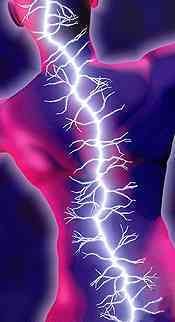
I remember the exact moment I knew something was wrong. One day at ballet practice I noticed a sudden weakness in both my arms and couldn’t raise them over my head. And my back ached from top to bottom.
Still, it was a complete surprise when, two years later, I was diagnosed with fibromyalgia. Like most people, I had no idea what that even was.
Sure, I had noticed I was oddly tired all the time. And after the ballet incident, I realized I was gradually getting weaker. My family doctor recommended me to a rheumatologist. When I was diagnosed with FM, I felt, along with the surprise, relief. At least I knew there was something physically wrong with me, all that tiredness and pain wasn’t psychosomatic.
I later learned that fibromyalgia is the second most common form of rheumatology, after osteoarthritis -- something I’ve always associated with people like the grandfatherly-man in the TV ad who was able to kneel down, play frisbee with his dog and socialize with his retired friends after taking his arthritis medication
Well, I definitely don’t fit this stereotype. I’m young and athletic, I recently graduated from university and I have a part-time job. At times I feel displaced because I’m not like people my age who are healthy, yet at the same time, I’m not like people twice my age with fibromyalgia.
‘Move to Arizona’
The hardest thing about having fibromyalgia is the chronic pain from the tight muscles. It’s worst upon waking when my muscles are really stiff. It’s also aggravated by lack of sleep, stress and the cold and wet weather of Vancouver where I live. People tell me I should move to Arizona.
What’s the pain like? It can be sharp and intense. There are days when I can’t sleep because I’m in too much pain. And there have been days when I’ve cried because it hurt so much.
Sometimes it hurts so much that I think if a car hit me, I wouldn’t even notice or even care. But other days I feel more or less healthy, only experiencing a dull ache. Having fibromyalgia is like having a yo-yo for a body.
It can be stressful. Other than the financial stress, a major stress of having a disability is the restriction on my social life. I need a lot of sleep. And it’s hard to plan anything when I never know whether I am going to have a good day or an off day. I miss the freedom of being carefree: catching a late night movie and going to work the next morning simply tired -- instead of tired and verging on agony.
A secret aching
I live a double life. Having an invisibility disability I have not disclosed to my employers or fellow co-workers my disability, for fear of discrimination. I don’t want to define myself as a person with a disability, but it is a big part of my life. I bet that some people get the wrong impression of me, thinking that I’m less efficient than my co-workers. I do things differently and perhaps slower at work because of my disability. But because I cannot divulge my disability they may think I’m lazy or slow, which hurts.
Fibromyalgia is a puzzling illness for physicians, as there is no known cause. This makes some people question the validity of the illness. The most hated, insensitive comment for a fibromyalgia sufferer is the dreaded “Maybe it’s all in your head?” I’ve heard this even from some in the medical community, who wonder if people like me are just looking for a way to avoid the demands of life.
Well, in an ironic way maybe having FM has improved my quality of life. My attitude now: carpe diem! I’ve traveled through parts of Europe, Asia, and Canada after graduating university. I want to do my active traveling now while I still can muster the energy.
Savouring each moment
It has slowed me down in some ways, making me prioritize my time. It did take me six years to finish university, but I have a double major in Psychology and English, and certificates in Liberal Arts and Health and Fitness. Also, in the last two years at SFU, the disability centre helped me by giving me a note taker and helping me get extensions on assignments and exams – all of which made me savour each moment.
And I made the most of my university time. I took contemporary dance as an elective; it was different from ballet and easier on my muscles. I played with the SFU field hockey team occasionally, and I was the coxswain for the SFU novice crew.
Luckily, I have an excellent support system in friends and family. Many of my friends are practicing physicians who have taken an interest in my case, and ask for my opinions when treating patients with fibromyalgia.
I also take advantage of all resources available. For example, I participated in an eight-week, outpatient program at Holy Family Hospital that included education and exercise for people with fibromyalgia. All the women, with ages ranging beyond 70, were older than me. So I had little in common with the other people in the group who complained about menopause/hot flashes, relationship problems with husbands unsympathetic since the diagnosis. I worried about having the energy to raise children in the far future. Yet I did learn a lot about pain and stress management. I can also still look back and laugh at exercising with the other people in the class. Being athletic and younger, the exercises were a breeze for me.
Don’t pity me
A lot of times people feel sorry for me. They say, “You’re so young to be experiencing chronic pain. How do you do it?”
In response I often think to myself, “How can I not?” I’m not going to give up on life because I have so many things I want to do. Some of them are writing, traveling, photography, lifelong learning and meeting that significant other.
There is no cure for fibromyalgia. I’ve had to adapt to the disease by taking medication and by learning what the arthritis society calls “lifestyle management”.
I try to be disciplined by taking my medication, exercising regularly, eating a healthy diet and by getting enough sleep. I’m also trying to balance my life between work and spending time with friends. Having a positive and resilient attitude also helps.
Researchers continue to look for answers to the disease that snuck up on me in ballet class when I was 15.
In the meantime, fibromyalgia is not going to control my life or be my life.
Tips I’ve Used to Cope with Chronic Pain
- Learn how to breathe effectively; inhaling deeply with your diaphragm, and exhaling through your nose. Concentrate on your breathing for 10 minutes, three times a day or whenever in pain -- and close your eyes.
- Accept that you will have bad days. Stay in bed with a hot water bottle, listen to relaxing music, read, rent a video, etc.
- Get some fresh air; go for a walk, even if it’s raining.
- Pace yourself, try to focus on one task at a time.
- Do yoga, it helps removes toxins, improves circulation, and helps you focus on your breathing.
- Make your bedroom your escape; get an electric blanket/nice sheets/comfortable pillows-no work in your bedroom.
- Develop good sleep hygiene: have a routine before going to bed.
- Keep busy when you have insomnia, play with your cat, do house chores or garden.
- Have a hobby.
- Don’t make your illness your life.
- Educate yourself on your illness so there are no misconceptions.
- Try Chinese medicine, which works on the cause and does not mask the symptoms.
- Work creatively through self-employment to suit your own needs.
- Use the resources available to you. All universities have a disability center and free counseling.
- Focus on the present, not the past or the future.
- Don’t be a perfectionist.
What is Fibromyalgia?
- According to the Arthritis Society fibromyalgia (FM) is a common rheumatic disease with an estimated prevalence of 2.1-5.7 per cent of the population.
- The main symptom is chronic widespread musculoskeletal pain.
- The incidence of FM increases with age and it is most common in women 50 years or older.
- Symptoms include fatigue, muscle stiffness particularly in the morning when one wakes up, numbness, disturbed sleep, join or soft tissue swelling, dry eyes, an intolerance to cold, poor memory and concentration, a sensitivity to certain foods or medications, as well as a feeling of weakness.
- More information can be found here.
Amy Chow is a writer in Burnaby. ![[Tyee]](/design-article.thetyee.ca/ui/img/yellowblob.png)






Tyee Commenting Guidelines
Comments that violate guidelines risk being deleted, and violations may result in a temporary or permanent user ban. Maintain the spirit of good conversation to stay in the discussion.
*Please note The Tyee is not a forum for spreading misinformation about COVID-19, denying its existence or minimizing its risk to public health.
Do:
Do not: