- Mary Carlisle is a Tyee Builder. You can be, too.
- Prem Gill is a Tyee Builder. You can be, too.
- Nancy Flight is a Tyee Builder. You can be, too.
- Justin Everett is a Tyee Builder. You can be, too.
- John Westover is a Tyee Builder. You can be, too.
- Nora Etches is a Tyee Builder. You can be, too.
- Edward Henderson is a Tyee Builder. You can be, too.
- Bharadwaj Chandramouli is a Tyee Builder. You can be, too.
- Dean Chatterson is a Tyee Builder. You can be, too.
- Marius Scurtescu is a Tyee Builder. You can be, too.
- Robert Parkes is a Tyee Builder. You can be, too.
- James Murton is a Tyee Builder. You can be, too.
- Susan Doyle is a Tyee Builder. You can be, too.
- Vincent Strgar is a Tyee Builder. You can be, too.
- Helen Spiegelman is a Tyee Builder. You can be, too.
- Subir Guin is a Tyee Builder. You can be, too.
- Kimball Finigan is a Tyee Builder. You can be, too.
- Joanne Manley is a Tyee Builder. You can be, too.
- David Leach is a Tyee Builder. You can be, too.
- Joel Berger is a Tyee Builder. You can be, too.
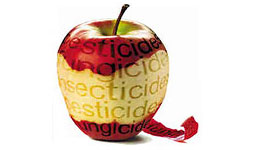
Beware the Pesticide Scare
If you work with pesticides, you face peril. But a big report overblows proven risk to the average kid.
Canadian parents can be forgiven for feeling panic today, convinced that they, or their children, are at grave risk of contracting any one of a number of horrible diseases. The reason? They had applied Weed N Feed to combat the dandelions in the lawn, or put a flea collar on the family dog, or even allowed their children to eat non-organic apples that had somehow, somewhere, come into contact with a pesticide.
The panic, while largely unjustified, stems from a report made public last week by the Ontario College of Family Physicians, which concluded that pesticides are so toxic that there may well be no safe level of exposure.
Spokespersons for the College spoke of a litany of health problems they believed occurred from pesticide exposure, ranging from various cancers to learning disabilities and depression. They said they would begin to encourage Ontario doctors to advise patients to avoid all pesticide exposures, not even eating food that had been exposed to pesticides if it was at all possible to avoid it.
Their comments were based on a 179-page report prepared by a committee of the College whose members had spent the past year reviewing as many previous studies as they could find on the effects of pesticide exposure on human health. Although a number of media reports described the work as "the largest study" ever done in Canada on pesticide exposure, the team did not conduct any clinical or epidemiological investigations itself. Its work was limited to reviewing studies others had done.
And therein lies the problem. The team was stuck with those other studies, with any methodological flaws they contained, and most especially with whatever groups it was that those other researchers had chosen to study.
Few ordinary families studied
When their work is studied in detail, it becomes apparent that almost none of the studies used involve ordinary families who put a flea collar on the dog or eat non-organic produce or even use pesticides once or twice a year to get rid of the tent caterpillars on the trees or the weeds in the lawn. Rather, a high proportion of the studies cited involve people who are exposed to pesticides at very high dosages, very frequently, and, far too often, without proper precautions being taken. They are people who work in factories where pesticides are made, or farmworkers who labour day after day among pesticide-laden plants, or golf course workers who are applying herbicides to fairways and greens on a regular basis.
Even worse, many of the workers studied were employed in countries where worker safety regulations are virtually unknown. They were banana workers in Ecuador, pest-control workers in India, potato farmers in Colombia, to name just a few examples. In some cases, the studies also looked at the children of the farmworkers and pesticide applicators.
Unquestionably, the studies showed that, over-all, those who were subjected to those high levels of exposure were at greater risk of developing some cancers, some reproductive problems, some chromosomal aberrations. Those who conducted the studies were the first to admit that it was extremely difficult, even in those cases, to determine just how great the increase in risk was. That's because it's very hard to winnow out the effects of the pesticide exposure from that of other contaminants to which such workers are exposed, ranging from other chemicals used on farms to animal viruses. All the same, the cumulative results of the studies are certainly strong enough to state that strict regulations should be put in place to protect farmworkers and others who must be exposed to high levels of pesticides in their jobs.
More difficult, however, is to take those findings and try to decide what they could mean for that average homeowner or gardener. The Ontario doctors choose to interpret the data as meaning that any level of exposure must, therefore, be dangerous, especially to pregnant women or children.
Accidents, not fruits and vegetables, the big risk
But that conclusion is not inherent in the studies themselves. Only a very few of the studies suggest any link at all between low-level exposure and health problems.
And not a single one suggests that eating fruits or vegetables that have been treated with pesticides poses a measurable health risk.
Most of the other cases of serious harm cited involve accidental poisonings by pesticides - people, especially small children, who ate or drank relatively large amounts of pesticide because they were unaware of what it was or of the dangers of taking in large amounts of it. The results of those studies stress the importance of storing pesticides where children can't get at them and ensuring they remain clearly labeled in their original containers. (A number of poisoning cases have occurred because people have transferred the pesticides to empty pop bottles for ease of application, but haven't relabeled the bottle to make it clear that it no longer contains Coke or 7-Up.)
However, in order to reach their conclusion that all pesticides should be avoided in all circumstances, the Ontario doctors are relying on what is known as "the precautionary principle." The report describes this principle: "When an activity raises threats of harm to human health or the environment, precautionary measures should be taken, even if some cause and effect relationships are not fully understood."
When precautions do more harm than good
In many cases, the precautionary principle can be applied with few unintended negative consequences. But the pesticide study is a good example of where its application could actually cause more health problems than it could ever prevent.
Pesticides can greatly benefit human health where they are used to kill, for instance, insects or rodents that serve as vectors of potentially fatal diseases. Millions of lives are saved in tropical countries by using insecticides to kill mosquitoes that would otherwise spread malaria. Even here in North America, the use of larvicides against mosquitoes may prevent the spread of West Nile virus which has killed hundreds of people across the continent in the past three years.
More indirectly, the use of pesticides to produce cheaper, more accessible fruits and vegetables over-all produces a significant health benefit. Eating fruits and vegetables protects against some types of cancers. Those who eat lots of fruit and vegetables rather than processed high-fat, high-sugar foods are much less likely to be obese, to contract heart disease and to suffer from adult-onset diabetes. But if someone decides that it is safe to eat only organic produce, their over-all consumption of produce may well decline unless they can afford the significantly higher prices of organic items.
The Ontario family doctors have doubtless done the country a favour by raising awareness of potential problems. No one suggests any more that chemical pesticides should be a first line of defense against any insect or weed infestation.
But a detailed read of the studies also shows that no one needs to panic because the dog is wearing a flea collar and the children are eating lots of produce, even if it isn't all organic.
Barbara McLintock is a contributing editor to The Tyee. ![]()


19
Login or register to post comments
Doc Martin (not verified)
8 years ago
Well, inconclusive research doesn't mean a lick to me -- because I am well aware of a certain neighbourhood in a certain small town in southern Ontario where a substantial number of people, including children, came down with cancer because of proximity to some farming fields where pesticide use was heavy. If you live in downtown Vancouver and eat pesticide-cultivated apples, you really don't need to worry. But if you live in Langley, next to a farm where the chemical spraying goes on weekly, and you are breathing this garbage in, WATCH OUT! There is a definite link between pesticides and cancer, and doing a quick google search will confirm my scary assertions. You've been warned!
Nick (not verified)
8 years ago
Or if you live close to a golf course. Bottom line is we don't need pesticides for a lot of the things we think we need them for. No amount of perfectly manicured lawns are worth kids getting cancer. It is better to try to take responsibility for the food you eat, and the impact it has on you, and on other people. Organic food is a good way to take that responsibility. Admittedly, it is more expensive, though the prices are getting more reasonable with the ever-expanding number of people opting to buy organic produce and meats. With more people purchasing it, more producers will be motivated to adopt organic growing methods. Or we could pretend that pumping ever-more millions of tons of pesticides into the water supply and atmosphere doesn't have entirely predictable results. Maybe not for the Vancouver apple eater, but for humans as a whole, and the planet that sustains us.
Rick (not verified)
8 years ago
Serching Google does not give an accurate picture of risk. There are no cancer clusters in the medical literature arising from domestic, outdoor exposure. I worry that this more about this being about the promoting of "organic" and the financial benefit accruing to that sector of the food industry - to the detriment of Canadians who cannot afford it, thereby reducing their consumption of fruits and vegatables. This is the WRONG prescription for health and cancer prevention. (Except for the members of the OMA).
Alex Waterhouse-Hayward (not verified)
8 years ago
http://query.nytimes.com/gst/abstract.html?res=F0071FFB3C5C0C728DDDAD0894DC404482 The pesticide issue is not black or white. A sobering article on the proposed use of DDT and malaria appeared in the NY Times Sunday Magazine a couple of weeks ago. The coordinates above will take you there. Most will probably not know what DDT is but then I am old enough to remember Flit.
james (not verified)
8 years ago
who is this barbara mclintock? all her articles including this one sound like she is just another apologist for the radical right and corporate policies!
Gardener (not verified)
8 years ago
I've enjoyed all of Barbara's pieces up until now thoroughly. Though this one raises some valid points about whether 'ordinary' people - those not employed directly with pesticide application - should panic about pesticides in their food, but I need to comment on some of the statements made. My main problem with McLintock's piece is the following statement: "More indirectly, the use of pesticides to produce cheaper, more accessible fruits and vegetables over-all produces a significant health benefit." It's incredibly simplistic to say that using pesticides gives us cheaper produce. I expect better research and in-depth reasoning from Barbara McLintock. Yes, people overall should eat more veggies and fruit, whether organic or conventional. No debate there. And fresh produce shouldn't only be accessible to those with money. But saying that the use of pesticides makes for cheaper produce is one of industrial agriculture's favourite arguments for the continued mode of pesticide laden, monoculture farming. The price of conventional produce is also very heavily affected by tax-payer supported subsidies, and by the competitive nature of global trade, which keeps farm-workers wages & profits low. I'm no expert, but I know that much. I myself buy a mix of 'conventional' and organic, mostly to keep costs down. If I had the budget, I would probably switch to buying as much organic as possible, not because of paranoia about ingesting pesticides, but because I think we need to support the growth of organic agriculture. Why use pesticides if we don't need to?
Nick (not verified)
8 years ago
What gardener said. I too buy a mix, and would buy more organic if I could afford it. Even if food I eat won't give me cancer, there is a chance it will give someone else cancer. That is also partly my responsibility.
Pym (not verified)
8 years ago
With all due respect to those who moan about the high price of organic produce, I offer you a simple test. Buy your produce organically one week and with pesticides the next. See how much you save on the exact same items, same weight etc. Depending on the size of your family, you might save from $5-15 per week by eating chemical laden produce. Now buy all the other stuff like the meat and cheese and milk and cereal and chips and crackers etc. This is where your money goes!! And what about the pop, the latte's, the burgers, the convenience eating? It's pound wise and penny foolish not to eat organic fruits and vegetables. And like the gardener said, we need to support those people who don't pollute our environment with all these chemicals. Yea, that also means your water supply. What is the long term price for not supporting chemical free farming?
charlotte (not verified)
8 years ago
One pesticide laden apple does seem harmless. But what about the year after year cumulative effect of every mouthful of pesticide laden fruit, vegetable. milk, chicken, turkey, beef, pork on young children's health. Non-organic fowl and meat eat pesticide laden food also. On one hand we yell about government's need to increase public money for health care, and on the other we say farmers should raise pesticide/growth-hormone/anti-biotic-laden food because it is cheaper to eat. Our individual ability to compartmentalize our lives - put food in one compartment; put health in a separate compartment unrelated to food; put our tax dollars in another compartment unrelated to food subsidies, health problems, education problems etc etc - is illogical beyond belief. Gotta laugh.
Steve (not verified)
8 years ago
The human body takes things in and has mechanisms to get rid of them. It is not a one way street, otherwise we all would have a very short lifespan. The sad thing is the disappointment demonstated when the "smoking gun" on the pesticide issue is shown to be shooting blanks.
joe (not verified)
8 years ago
What a B.S. article! I can't believe you published this article on the tyee... I am disappointed.
Dave Stevens (not verified)
8 years ago
Recent research shows significant ill effects from real life, ordinary person exposures. This article:http://ehis.niehs.nih.gov/docs/2004/6774/abstract.html in the EPA's monthly journal Environmental Health Perspectives gives a good antidote to the idea that the pesticide scare is overblown.
GJW (not verified)
8 years ago
Here's an idea. Wash your produce before you eat it. And I'm from the Fraser Valley, "pesticide central." I have never heard of, seen or encountered anyone who developed health problems because of chemical pesticides. There haven't been any "cancer clusters." No little children have become sick and died here because of pesticides. And when it comes to choosing my produce from the store, I'll take the stuff that's been kept healthy with chemicals rather than the wilting, sickly-looking stuff that passed for organic.
GWJ (not verified)
8 years ago
Want to know how much people know about pesticides? Four years ago West vancouverites did not allow BT to be sprayed "in my back Yard" to control the spread of the gypsy moth infestation. Later on that same summer, an insecticide was liberally applied on the whole Fraser valley without even a whimper of protest. The insecticide was used to control a misquito outbreak and is approx a zillion times more toxic, persistent, and non specific as compared to BT. And to GJW..your children and produce may look good but have checked your chickens lately.
Shirin (not verified)
8 years ago
This study is not trying to promote an "organic" way of life (as a researcher in the life sciences - I find the now common use of the word "organic" highly amusing - I dare someone to find an inorganic apple out there). Like radiation, poisons (such as pesticides) have a cumulative affect - with susceptibility to cancer being conferred to how many "blows" to your DNA (or genetic makeup) you can take. There is absolutely no need to overuse such harsh pesticides (by definition - they are made to kill organisms - the pestiness of life is a relative term - and more to do with the size of the organism for the lethal dose for effectiveness - which is why the kids are in greater peril). Pesticides don't disappear after use - they leach into the ground, get into the water system, and significantly pollute the drinking water of communities. It is absolute ignorance to criticise the study for being retrospective in nature. It would be unethical to produce a controlled human study - especially after the clear relationship between exposure and illness - why take the risk? Not everyone who smokes 6 packs a day develops cancer within the year - but you certainly increase your chances of getting the painfully lethal disease by 75% sooner than would be appreciated if you take up the self-abuse. It is time to set our priorities straight or else stop complaining so much about the burden of our health care costs.
rw (not verified)
7 years ago
McLintock's article uses juvenile arguments and is extremely poorly researched. It is common practice for scientists to conduct such "meta-studies" and thereby re-assess all previous studies in a specific area of research -- and often such meta-studies are even better than the initial studies because the investigators can re-visit research with an unbiassed eye and look at broader trends over larger groups of people. In addition, a 2003 auditor general's investigation into Health Canada's procedures for approving and regulating pesticides found widespread use of "ad hoc" methods and poor research that left the safety of any and all pesticides in Canada in doubt. (It's online at the AG's website.) So from where does Mclintock derive her vacuous confidence in their safety? Furthermore, countless studies have shown that "organic" farming can usually equal or even better most conventional farming for productivity, and that pesticides and fertilizers have become merely the last line of defense for soil-depleted conventional farms.
Leslie (not verified)
7 years ago
“As crude a weapon as the cave man’s club, the chemical barrage has been hurled against the fabric of life.†–Rachel Carson, Silent Spring; ... Unfortunatly, this was only the second article I read at Tyee, and it's left me wondering whether I should bother to read anything else you have felt fit to include. Fortunatly, I read something by Matt Hern first and I was impressed but, after reading this article I won't be recommending your site to anyone yet.
anonymous (not verified)
7 years ago
http://www.foodnews.org/
RW (not verified)
7 years ago
Hey Doc Martin, you say that people in your small town get cancer because of your proximity to the farmers feilds and their pesticide use. How do you know thats what causes the cancer, it is people like you, who make speculation, that sends this scare to people, that is absolutely not proven. I have worked at a company the last two summers who does pesticide applications. The company is over 25 years old, and no employees who apply these pesticides daily have ever got cancer, or whatever illnesses you claim occur. I think if someone was going to get sick, it would be the front line workers. Maybe people should have some justification for the ridiculous comments you make.