

People with serious mental illnesses live with a double whammy. First, they contend with brain glitches that get treated by medications loaded with side effects.
Second, they live in a culture that’s steeped in confusion, ignorance, and stigma about their disorders. The demeaning and distorted images (wacko, lunatic, nutcase) and language (crazy, coo-coo) that are common in everyday usage would never be tolerated if they referred to any other marginalized group.
Films are among the worst offenders. Researchers are now examining the ways that films further the stigmas that make it difficult for people with mental illnesses to enjoy respect in our society. However, at times psychiatry’s earlier domination by nonmedical models of neurobiological disorders can undermine these efforts.
One major recent examination of mental health and illness in film is the Frames of Mind film series, developed by psychiatrist Harry Karlinsky, Director of the UBC Department of Psychiatry Continuing Education Program. He developed the series in partnership with The Pacific Cinematheque, where screenings are held on the 3rd Thursday of each month. The series is intended to offer education to both mental health professionals and the general public.
And from May 12 to 15 runs The Second Annual Frames of Mind Film Festival, also held at Pacific Cinematheque, which offers many films, relevant workshops, and speakers.
Learning through film
The Canadian Psychiatric Association has given an award to Karlinsky for creating this innovative educational program. Following each film, after an expert has commented on the issues it raised, a discussion is open to the audience. These discussions are often surprising, revealing, and poignant. They are also occasionally troubling, especially when dealing with serious mental illnesses.
Karlinsky has included a broad spectrum of important topics, including eating disorders, drug addiction, brain injuries and Alzheimer disorder. Showing feature films and documentaries, the series has incorporated presentations by people personally affected by the experiences being explored.
The series had a stunning beginning three years ago, with psychiatrist/filmmaker Kenneth Rosenberg’s documentary Back from Madness: The Struggle for Sanity. The documentary profiles the struggles of four people suffering from the most devastating mental illnesses: schizophrenia, bipolar disorder, and severe obsessive-compulsive disorder. The film follows them for over a year, and allows audiences to understand what it’s like to live with these disorders, as well as to undergo treatment at a prominent psychiatric clinic. Following the film, local actress Victoria Maxwell presented an excerpt from her extremely successful one woman show, “Crazy for Life,” a funny, wise and informative account of her journey in learning how to live with a bipolar disorder.
Stories that further stigma
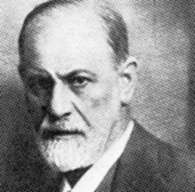
In films and in the wider culture, the most damaging and continually reinvented stereotype of the mentally ill is that of the homicidal maniac. The Canadian Mental Health Association and the BC Schizophrenia Society report that only a small fraction of people with mental illnesses are dangerous to others. Nevertheless, these few cases have been transformed by Hollywood to the point that the crazed killer is one of the most common types of villains in feature films. People with newly diagnosed disorders often only have these disturbing images for reference when trying to come to grips with the implications of their illnesses. We are trained early in life to have hostile reactions to people with mental illnesses. A 2003 research study reported in the Journal of Community Psychology analyzed the depiction of mental illnesses in 49 popular children’s films. The authors found many negative references to the mentally ill. These kinds of references were even more skewed in University of Calgary psychologists Lawson and Fouts’ detailed study of the presentation of mental illness in Disney animated films. Of the 34 films they examined, 85 percent had verbal references to the mentally ill which were primarily used to denigrate and create distance from them. Films’ presentations of mental illness tend to key off the prevalent psychological paradigms of the time. E. Fuller Torrey, a psychiatrist widely regarded as one of the most important experts on schizophrenia and bipolar disorder, has written about Hollywood’s fascination with the theories of Sigmund Freud. In Freudian Fraud: The Malignant Effect of Freud’s Theory on American Thought and Culture, he writes that widespread adoption of Freudian perspectives in films after WWII was related to the trend for Hollywood screenwriters, directors and producers to be in psychoanalysis themselves.
Example: the very popular 1949 film The Snake Pit stars the lovely Olivia De Havilland as a deranged woman who suffers in a horrible mental institution -- until her psychiatrist uses Freudian methods to uncover the early conflicted feelings towards her father which were at the root of her problem.
From Snake Pit to Coo-coo’s Nest
The Snake Pit’s presentations of the effectiveness of Freudian methods in treating serious mental illness is astonishing from a contemporary perspective. As University of Toronto medical historian Edward Shorter documents in A History of Psychiatry, Freudians finally gave up trying to prove that their methods offered any help to the seriously mentally ill. Hollywood, however, provided them with the success stories their own experiments failed to supply. Even though it might be hard to notice given the stance of contemporary films such as The Aviator, the heyday of Freudian thought is long past. The ongoing fights in academic psychiatry between the now dominant modern biologically-oriented psychiatrists and the older, but tenured, psychoanalysts are rife with great drama and are well explored in McGill psychiatrist Joel Paris’ recently published The Fall of an Icon: Psychoanalysis and Academic Psychiatry.
Despite the pervasive influence of Freudian thought, psychiatrists have not always been depicted positively. Certainly the anti-psychiatry movement that originated in the 1960s focuses on the incompetence and abuses of power that some psychiatrists brought to their work. This vision of psychiatric and institutional malfeasance was vividly presented in the extraordinarily influential film One Flew Over The Cuckoo’s Nest, which was, nevertheless, very inaccurate in its portrayal of serious mental illnesses.
Who are the mentally ill?
These developments in film history still leave people with serious mental illness generally misrepresented by current cinema. Renea Mohammed was in graduate school when she began developing paranoid delusions about the RCMP observing her. It took several years and repeated hospitalizations and experiments with medications before Renea began to understand the paranoid schizophrenia which was reeling through her brain.
Mohammed has learned to control her symptoms and, with the collaboration of her psychiatrist, micromanage the medications that keep her in touch with reality. She is now a powerful force in improving the lives of other people who live with mental illnesses through her work for the BC Schizophrenia Society. She lives a full and very productive life while coping with a potentially devastating disorder. Renea, a very intelligent, petite, nonthreatening, and quietly spoken woman, is troubled by seeing her disorder constantly misrepresented in films. She recently wrote to me about a particularly distressing film she’d seen:
“An exceptionally awful movie that I have seen is available in video stores and is called The Cell. It’s a fictional movie that includes a story line about a serial killer who drowns women in a glass cell and is said to have schizophrenic symptoms, even though there are absolutely no real symptoms of schizophrenia portrayed in the movie. A psychologist in the movie claims that the killer’s practice of hanging his body from the ceiling with chains via hooks embedded in his back helps with his so-called schizophrenic symptoms because ‘schizophrenics’ are comforted by the feeling of weightlessness. The movie claims that schizophrenia starts with a virus and is triggered by trauma that is usually water related. The serial killer had a seizure while being baptized in water and was beaten as a result by an extremely abusive father.”
Alternatively, Renea and many other people living with schizophrenia feel that A Beautiful Mind presented a respectful view of the experience of schizophrenia. This story of math genius John Nash, whose life was derailed by the onset of schizophrenia, is also presented in the documentary A Brilliant Madness, which Karlinsky included in his Frames of Mind series. Certainly, the most accurate presentations of serious mental illnesses at Frames of Mind and in film in general are in documentaries. The audience was full at last year’s screening of People Say I’m Crazy, also attended by the filmmakers. John Cadigan’s agonizing battle with refractory (difficult to treat) psychosis is magnificently explored in footage taken by himself and his sister, filmmaker Katie Cadigan, in this rare view into the life of someone attempting to cope with chronic schizophrenia.
Shaky terrain
Of course, in looking at serious mental illnesses, the pool of feature films that can be used for either educational or clinical purposes is frightfully small if contemporary standards of accuracy are applied. The kind of heroic and intrinsically dramatic struggles that Renea Mohammed and hundreds of thousands of Canadians like her have waged against some of humanity’s most terrifying disorders are not easily found in any feature film.
This lack of accuracy in representing the experience of mental illness has sometimes been difficult for the Frames of Mind program to address. One example is the recent showing of the documentary Asylum, an homage to the work of 1960’s guru R.D. Laing, who believed that insanity is a sane response to an insane world. The invited expert celebrated Laing’s belief that psychosis is an important personal growth process which shouldn’t be interfered with by medications. After this event, BC Schizophrenia Society policy advisor Jane Duval said, “It’s unfortunate that the UBC Department of Psychiatry, by providing continuing education credit for attending this event, is seen to be endorsing a nonmedical model of mental illness.”
Flawed filmmaking and faulty psychiatry have been major contributors to the double whammy of stigma experienced by people living with mental disorders. Imperfect as the Frames of Mind series might be, it still offers an opportunity to look at and discuss the problems. The schedule for The Second Annual Frames of Mind Film Festival, which will be held at Pacific Cinematheque from May 12-15, can be found at www.cinematheque.bc.ca.
Susan Inman is a former arts journalist who has worked for many years as a secondary school teacher. She is the mother of a daughter who bravely battles mental illness. ![[Tyee]](/design-article.thetyee.ca/ui/img/yellowblob.png)











Tyee Commenting Guidelines
Comments that violate guidelines risk being deleted, and violations may result in a temporary or permanent user ban. Maintain the spirit of good conversation to stay in the discussion.
*Please note The Tyee is not a forum for spreading misinformation about COVID-19, denying its existence or minimizing its risk to public health.
Do:
Do not: