- Mary Carlisle is a Tyee Builder. You can be, too.
- Prem Gill is a Tyee Builder. You can be, too.
- Nancy Flight is a Tyee Builder. You can be, too.
- Justin Everett is a Tyee Builder. You can be, too.
- John Westover is a Tyee Builder. You can be, too.
- Nora Etches is a Tyee Builder. You can be, too.
- Edward Henderson is a Tyee Builder. You can be, too.
- Bharadwaj Chandramouli is a Tyee Builder. You can be, too.
- Dean Chatterson is a Tyee Builder. You can be, too.
- Marius Scurtescu is a Tyee Builder. You can be, too.
- Robert Parkes is a Tyee Builder. You can be, too.
- James Murton is a Tyee Builder. You can be, too.
- Susan Doyle is a Tyee Builder. You can be, too.
- Vincent Strgar is a Tyee Builder. You can be, too.
- Helen Spiegelman is a Tyee Builder. You can be, too.
- Subir Guin is a Tyee Builder. You can be, too.
- Kimball Finigan is a Tyee Builder. You can be, too.
- Joanne Manley is a Tyee Builder. You can be, too.
- David Leach is a Tyee Builder. You can be, too.
- Joel Berger is a Tyee Builder. You can be, too.
Why B.C. Recycles Better than U.S.
Surprise! Our approach is more market driven than the Americans'.
One important but little-discussed difference between the Canadian and American parts of Cascadia is their different philosophies about trash. This difference has emerged in the last decade. And, sad to say, the Canadians have left the Americans in the dustbin, so to speak.
By embracing a concept called “product stewardship” or “extended producer responsibility,” British Columbia has adopted a far less regulatory, government-centered approach, even while they’ve made dramatic gains in waste reduction and recycling.
The idea of product stewardship springs from posing an unfamiliar question: Who’s responsible for products you buy when you’re done with them? In other words, who takes out the trash?
The customary answer to that question is, “You do.” But in practice, the answer has become, “local government.”
Trash hauling has been a local-government responsibility since a century ago, when public hygiene depended on getting rubbish (and the rats and insects it fostered) out of town. But the composition of solid waste has changed radically in the past century, while responsibility for garbage has not. A century ago, urban wastes consisted mostly of ashes and biodegradable scraps such as food waste. Now, the solid wastes that Cascadian communities handle are overwhelmingly discarded consumer products and their packaging.
Power of ‘product stewardship’
Product stewardship shifts responsibility for waste from government to those who design the products and packaging—the manufacturers. Manufacturers have the largest opportunities to reduce lifecycle environmental and health impacts, because the design phase of the product chain is the most critical to reducing waste.
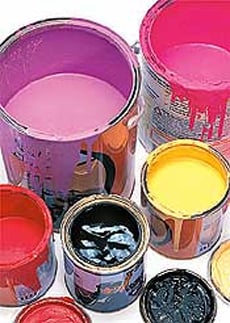
In practice, product stewardship means that industries keep reuse and recycling in mind when planning products and they band together to create reuse and recycling systems. Retailers and industry-sponsored depots give rebates to consumers returning used goods covered by product stewardship, such as paint. Industry organizations collect and reuse or recycle the goods, often recouping the costs of collection by gaining a relatively “pure” stream of recyclables. The paint stream is all paint, for example, not the profusion of different substances currently brought to household waste sites in American Cascadia.
The history of product stewardship is fascinating, counterintuitive, and sometimes heartbreaking. The recycling boom of the late 1980s hit all of Cascadia about the same time: municipalities set up curbside recycling programs at the expense of taxpayers or utility ratepayers. By the early 1990s, British Columbia, like Washington and Oregon, had imposed small fees on certain hard-to-dispose consumer goods such as car tires and car batteries, which helped to pay for recycling or proper disposal.
But in 1993, British Columbia parted ways with the Northwest states. Rather than taking on responsibility for recycling an ever-longer list of consumer and business wastes, it embraced product stewardship. It began convening entire industries and assigning them the task of working out comprehensive systems for managing products throughout their lifecycles. Government participated in the negotiations and continues to play a monitoring role but it doesn’t collect the money or pay for the services. That’s between the manufacturers of the goods and their consumers.
B.C. outpaces all states
After a decade on this path, British Columbia has the most comprehensive list of products subject to such stewardship systems of any state or province in North America. It includes soft-drink containers, used oil, oil containers and filters, paints, solvents and flammable liquids, gasoline, domestic pesticides, pharmaceuticals, beer containers, and rechargeable batteries. “E-wastes”—outdated electronic equipment—is scheduled to join this list soon.
South of the 49th parallel, meanwhile, reuse and recycling efforts have progressed more slowly. Some municipalities have made progress with their curbside programs, but taxpayers and ratepayers have been left to cover the cost of handling used-up products and their packages. Producers have not taken on responsibilities commensurate to their role in generating waste, and advocates have been stymied in their attempts to hold producers responsible. The main obstacle: American industry has bigger political muscles than Canadian industry.
Look at the results: waste reduction and recycling in the states are done by the public sector. Waste reduction and recycling in the province are done by the private sector, or a growing share of it is.
Ultimately, this means that British Columbia is getting the prices of goods to more accurately reflect their true, lifecycle costs—such as the price of waste disposal and pollution clean-up. The users of specific products pay for more of the products’ costs, rather than shifting the burden to all taxpayers or ratepayers.
Private sector efficiency
The shift to product stewardship—and movements to advance it in the Northwest states and elsewhere in the United States—is the topic of an excellent paper by the new Product Policy Project. The paper is written by the project’s director Bill Sheehan and its board president Helen Spiegelman. Helen lives in Vancouver, B.C., and was long associated with the Recycling Council of British Columbia, which has stood out as a continental leader on product stewardship.
Washington Citizens for Resource Conservation has more recently taken up the torch of product stewardship, promoting producer responsibility in the key e-waste sector and others. And the Northwest Product Stewardship Council, which represents government bodies, has also entered the field.
Politically, product stewardship is a fertile synthesis of approaches from the left and right. As Spiegelman and Sheehan write, “From a fiscal conservative perspective, EPR [extended producer responsibility] makes sense because it gets waste management off the tax base and it is based on the notion that the private sector is more efficient and effective than government-managed programs. Those of a more liberal bent support EPR because they believe that producers should have responsibility for pollution prevention.”
Alan Thein Durning is executive director of Northwest Environment Watch, which publishes the Cascadia Scorecard, a regional index of progress in health, the economy, population, energy, sprawl, forests and pollution. This piece was originally published on the Cascadia Scorecard Weblog. ![]()


19
Login or register to post comments
anonymous (not verified)
7 years ago
The “World Environmental Organization†at http://www.world.org/ has a “Recycling Database†with useful information on recycling various items.
anonymous (not verified)
7 years ago
“GrassRoots Recycling Network Home†at http://www.grrn.org/ has “Producer Take-Back†information.
allan (not verified)
7 years ago
While I'm a strong advocate of consumer responsibilities, I do prefer to see arrangements for the disposal of many things planned and ready to go before the product hits the market. Perhaps if we had more of this, everyhwere, it would begin to be reflected in the price we pay for consumer goods and manufacturers might think twice about the economics before selling junk into the marketplace. Especially if it meant having to deal with most of the product again soon after, or discovering that consumers too have learned if it's junk it's not worth buying.
Matt (not verified)
7 years ago
Way to go BC - except for caving to the milk lobby in a senseless excemption for milk containers that we still have to throw out because the industry didn't want to be good citizens.
philster (not verified)
7 years ago
Matt, recyclable plastic milk containers have been tried but the problems created were considerable. In one place in Canada where it was tried people would store other products, (gasoline was a common problem) then rinse out and return the container for a credit. The chemicals permeated the plstic and then leached out into the milk when they were refilled. It was impossible to identify the containers before they were refilled. You can imagine anyones' reaction to a mouthfull of gasoline laced milk. It was deemed better to go with lighter plastic containers that can be returned and shredded. This eliminated a potential health hazard. Avalon dairy bottles milk in glass and their products are available in the lower mainland.
Anonymous
7 years ago
Perhaps, one of the consequences of "private sector efficiency" and less government control or regulation, is that some automobile repair garages often attempt to collect an "eco-fee" from customers, even when hazardous products are not used on that ocassion.
Michael Barkusky (not verified)
7 years ago
It is nice to now we are doing better than others, but we still have a long way to go. I have a few observations - one that regulation (which requires resources for enforcement, market incentives provided by government tax policy and producer responsibility initiatives need not be considered exclusive policy choices - we should use all three judiciously and in mutually re-inforcing ways. Complex regulations without enforcement and market incentives that are to small to induce behaviour shifts or that ignore negative "spillover" effects like illegal dumping, are both equally useless, or worse. Similarly industry-run programs are a great idea, provided that there are ambitious waste-reduction targets that ultimately MUST be met. All programs should be introduced as Alan Durning has argued before in, a long-term, committing and inexorable way with steadily rising disincentive fees, so industry and consumers can adapt over time, but not be any doubt that "ecological scarcity" is ever going to go away, and "free" pollution rights will ever be restored to them. A good portion of the revenue collected from eco-taxes has to be dedicated to education and proper enforcement, as well as invested in the development of more benign, "biomimicking" packaging technologies, but actual investment should be left to producers (subject to an incentive regime that strongly discourages sitting on their hands). I think local authorities should be quite a bit more agressive in demanding the "tools" from the Province that are necessary to do their job (as garbage disposer of last resort) as efficiently as possible, and brave enough to face the inevitable resistance to change from businesses and consumers. Finally, the benefits of complex policy reforms in this area need to be assessed over a suitably long-term horizon.
Matt (not verified)
7 years ago
Philster - why not use the regular juice-like containers for milk? I've heard that the dairy industry lobbied not to do this not because of any difficulty with the containers, but rather arguing that it would add cost to an "essential" item?
Re-CYCLEn' Rita (not verified)
7 years ago
I like the way we have put the onus on producers to get deal with particularly nasty hazardous materials. In terms of curbside recycling we still have a long way to go. In Ottawa, one can place the full range of plastics in the blue box (including bags) as well as styrofoam and the other usual suspects (paper, glass, tins). Additionally, they have also started to experiment with roadside pick-up of organic matter (all food stuffs including meat) and I understand they do this in some areas of Toronto too. Edmonton also has a great model of waste diversion and conversion.
Philster (not verified)
7 years ago
Matt, in the lower mainland milk is currently available in recyclable plastic jugs that go into your blue bin after use. Maybe this type of packaging is just not available in your area, or the stores you frequent? Nowadays you can get milk in glass, plastic, waxed paper cartons, tetra paks (UHT milk), and cans (evaporated milk). Maybe I'm missing something, let me know if I don't understand.
Matt (not verified)
7 years ago
It's the waxed paper cartons that our local recylcer does not take if milk has been in it (whether dairy or soy) - identical cartons it seems to me that juice could have been in. And, explanation given to me is that milk producers got an exemption based on political rather than logistical issues.
philster (not verified)
7 years ago
Okay, now I get it (I think). You want to see packagers of dairy products forced to use only returnable containers in the same way that this has been legislated for soft drink producers, liquor bottlers etc. here in BC, correct? I agree this sounds like something that should be considered. Meanwhile, I guess we can make our own choices depending on what is available to us when we shop.
Tony (not verified)
7 years ago
BCUOMA has the responsibility to make every drop count as they say. Well why do they not count every drop. 10-20- Million liters of oil are being used for energy recovery in BC. Not a single liter is counted and BCUOMA will not even talk about it.Rather they spend thousands of dollars trying to tell BC residents that they are not being responsible and are dumping oil in lakes and streams maybe BCUOMA should count the oil and the problem goes away
Tony (not verified)
7 years ago
BCUOMA has the responsibility to make every drop count as they say. Well why do they not count every drop. 10-20- Million liters of oil are being used for energy recovery in BC. Not a single liter is counted and BCUOMA will not even talk about it.Rather they spend thousands of dollars trying to tell BC residents that they are not being responsible and are dumping oil in lakes and streams maybe BCUOMA should count the oil and the problem goes away
Tony (not verified)
7 years ago
BCUOMA has the responsibility to make every drop count as they say. Well why do they not count every drop. 10-20- Million liters of oil are being used for energy recovery in BC. Not a single liter is counted and BCUOMA will not even talk about it.Rather they spend thousands of dollars trying to tell BC residents that they are not being responsible and are dumping oil in lakes and streams maybe BCUOMA should count the oil and the problem goes away www.uoma.com has the answer
angel (not verified)
7 years ago
this isn't a comment but i'm a teacher in the toronto district and a question that im normally asked and wonder about is why do we need to make an effort of change? i really can give my students a highly answer to that.
Magic Wanda (not verified)
7 years ago
To quote from the ever-running tv commercial about recycling: " ... it keeps less garbage out of the landfill ..." So ... if it takes less garbage out, it must be putting more garbage IN. What's the story?
hollyhock (not verified)
7 years ago
sign up in your city at FreeCycle.org to post unwanted free items, or post an item you want to give away, great recycling idea
John Calvert (not verified)
7 years ago
I have to say that I disagree with much of what is stated in the article. Unlike the author, who seems to believe that democratically accountable governments cannot deal effectively with waste management issues, while private multinational corporations can, I do not have the Panglossian faith in the ability of big business to self-regulate, nor do I believe that we are doing such a great environmental job here in BC.
The most important aspect of environmental responsibility is to reduce the production and sale of products that create waste. I do not see much evidence of this happening here in BC. When I go to the supermarket I see packages of all varieties on sale, very few of which can be recycled, and almost none of which can be reused. They do not seem to be fewer in number (or volume) than a decade ago.
Instead of reuseable containers, almost all of the beverage containers sold now are 'recyclable'. In addition, they now attract a compulsory recycling charge or levy. My understanding is that this tax on consumers is given back to industry (through organizations they sponsor and control) and used to operate their recycling depots. In other words consumers, not the packaging industry are paying the costs. It is not clear to me why the industry should get credit for funding which comes from consumers. Nor is it clear to me why this is such a great environmental accomplishment.
In light of this situation, where consumers are footing the bill (and which is based on recycling rather than more effective reduction or reuse strategies), I see little incentive for the industry to reduce its production and use of wasteful packaging, and even less evidence that this is, in fact, happening. Rather, what has been happening is that big business has been using its influence to shape international trade agreements to protect its 'right' to packaging its goods in a manner that best facilitates marketing and sales (as opposed to what makes good environmental sense). Efforts by governments to require reuseable containers have been challenged as 'barriers to free trade' and struck down by trade tribunals.
I might also point out that the track record of the private waste industry (which is distinct from the packaging industry) is iself very questionable, as anyone familiar with Harold Crook's book Dirty Business or Charlie Cray's excellent Greenpeace analysis of the industry will confirm. It is the private waste industry that has been insisting on its NAFTA based 'rights' to engage in the cross-border movement of waste, so that it can dispose of it in jurisdictions with the lowest environmental standards. It is the private waste idustry that has been promoting incineration so that it can sell its technology to gullible governments. I do not see much evidence of the private waste industry using its oligopolistic profits to support sound environmental programs.
In contrast, I think that some of the best waste reduction programs have been run by municipal governments such as those in Toronto during the period when Metro benefitted from commercial and industrial landfill tipping fees in the early 1990s. These programs focused on waste reduction, composting, reuse and comprehensive recycling, with the emphasis on the first of these alternatives. (Under the Harris government, with its focus on fiscal downloading, much of this got dismantled.)
In conclusion, I find that the analysis in the article reflects a neo-liberal view of the role of governments and private corporations. Governments are inherently bad and cannot regulate effectively in the public interest. Big business is inherently good and will protect our environment if we only give it a chance to do so. From this perspective, public policy should be based on getting government off the backs of the corporations, and letting them get on with managing our environment. Dr. Pangloss is alive and well. The problem is that some of us living in BC have failed to recognize that we live in the best of all possible worlds.
By the way, the last time I checked, I was still living in Canada, not Cascadia.