
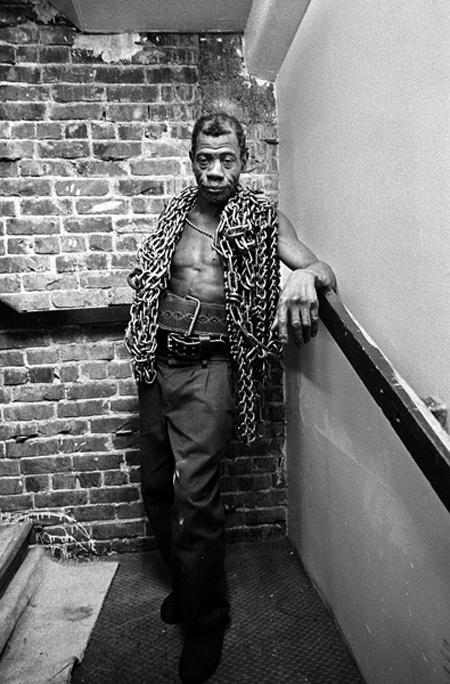
1/12 "This is Chain Man," says Gasztonyi. Like many of the people in the Downtown Eastside, Chain Man assigns himself work every day. Chain Man "calls himself a 'respectable working man'" -- he considers himself "employed," and makes it his job to carry these chains around. "'This is my job,' he says, 'to carry this weight around, these chains, to carry these down the street.' He goes around for four or five hours, doing his work, and then he goes home and has a beer." Photo: Gabor Gasztonyi.
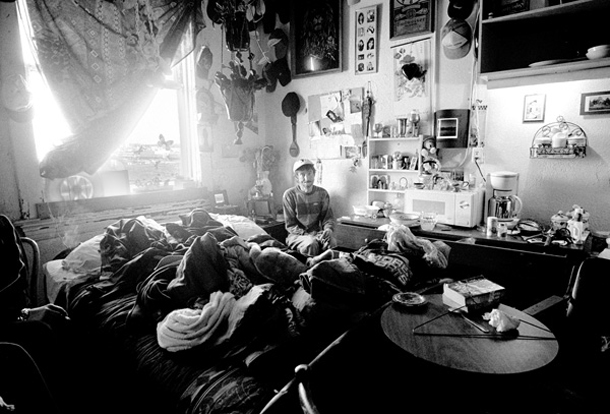
2/12 "This is one of my favourite photographs in the book. You can see that although this is an untidy room, there's tremendous order in it as well." Gasztonyi took this photo on only his second day at The Cobalt. "When I took this shot I thought, 'Ah! I gotta keep going!' I felt such euphoria when I took that picture. As soon as I hit that button, I felt as if I was taking a drug or something, I felt so good. So I just kept going back. I went once a week, sometimes more, for six years." Photo: Gabor Gasztonyi.
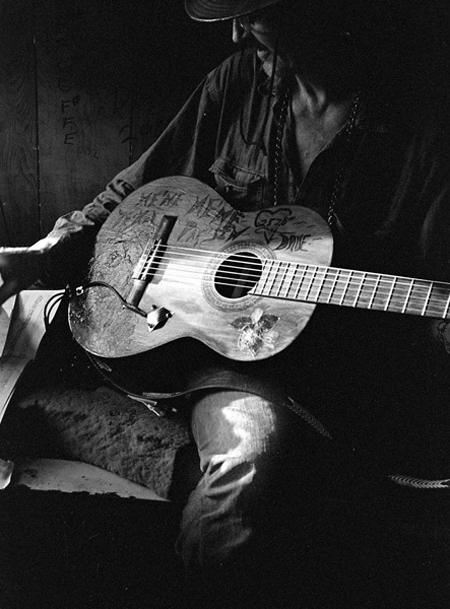
3/12 "The lighting is a bit odd, but that's kinda him. He's a very interesting guy. There are many shots of Dave in the book. You can see he writes notes, like musical notes, on the wall. He wanted me to eat with him, though, he was boiling all these pigs feet on the stove. This room is so dirty that it would just turn your stomach. I had to say, 'Oh, well thanks Dave, but I'm not hungry.'" Photo: Gabor Gasztonyi.
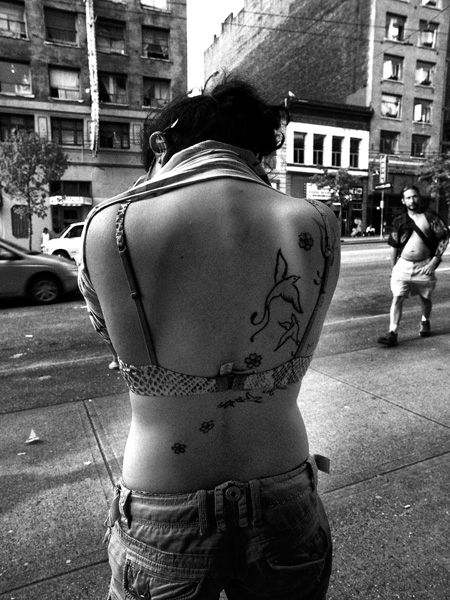
4/12 "This is an Iranian girl who came down here from university doing a research project, believe it or not. Right now, she's dealing drugs on Hastings Street, all within one year. She was researching the area and got hooked on heroin. I asked if I could take her picture, and she pulled her top up to show me these birds that she just had done. I think it's a lovely shot. She's actually a very young kid, though she doesn't look really young and innocent here." Photo: Gabor Gasztonyi.
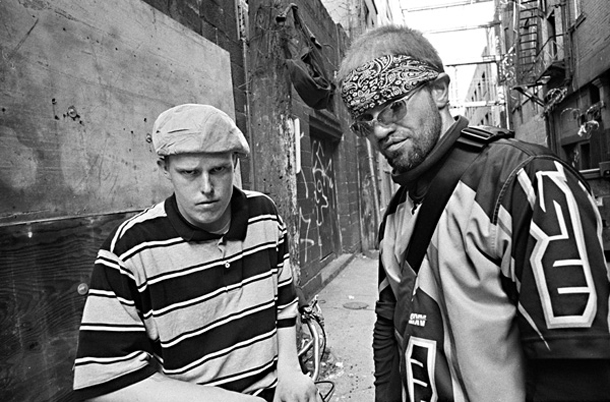
5/12 "It's a real gulag -- it's like being in a prison camp, in an Auschwitz. You have prison guards -- the police, the owners of the hotels, the dealers -- these are all persecutors, persecuting people who are ill. One of the reasons people can't leave here is they can't find place to live, places that are as cheap, and the other reason is there are services offered here for the people." Photo: Gabor Gasztonyi.
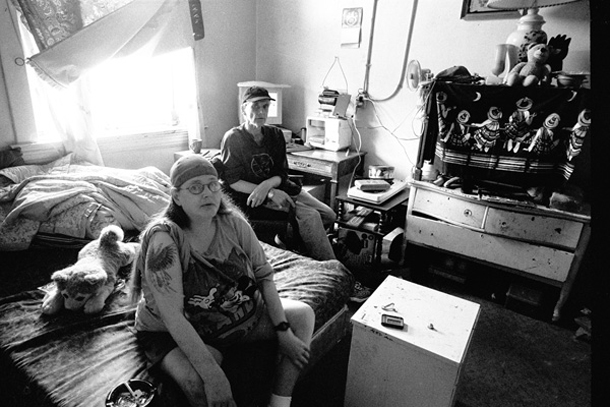
6/12 "This is Chuck and Erica in their room. Chuck's dead. He died of hepatitis. Erica's still alive, she lives in The Cobalt... they were together for years before he died, in that room." Photo: Gabor Gasztonyi.
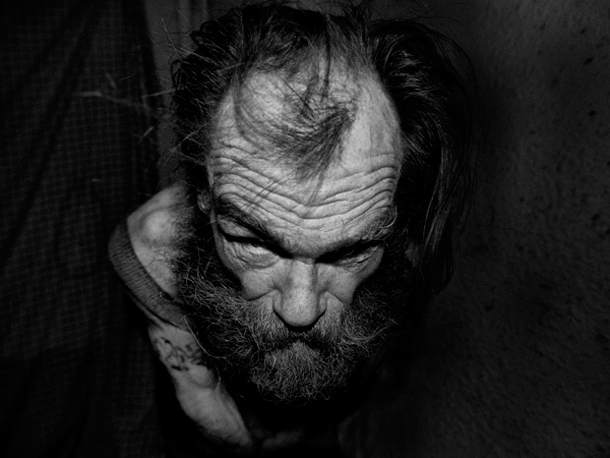
7/12 "There are many people in the photographs that were born in Point Grey and Dunbar. There are folks here whose children are teachers, professionals, doctors, lawyers. There are many people in here with post-graduate education." Photo: Gabor Gasztonyi.
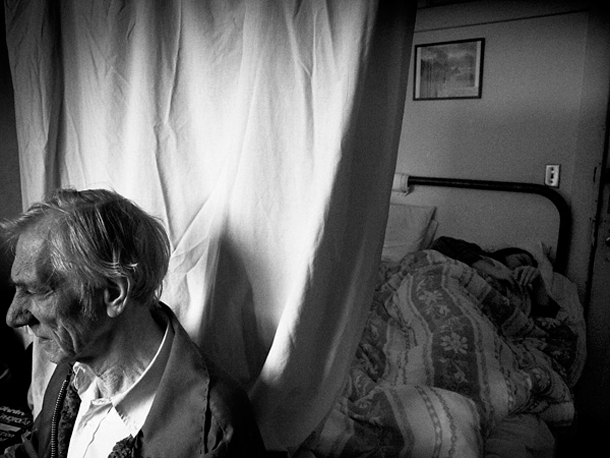
8/12 "This is Don. He's 80 years old. He's been living in The Cobalt since 1972. This gal in bed is called Rose, and she's a heroin addict." Gasztonyi explains, "They've been together for about 12 years," originally meeting because they lived down the hall from each other, and eventually "she moved in with him to save money." Don's "not an addict. He looks after her in his room. He's in love with her, and he takes care of her. Rose gives him meaning in his life." Photo: Gabor Gasztonyi.
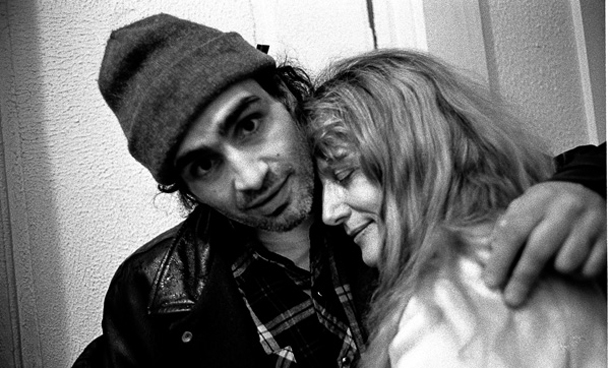
9/12 "There's a cultural, community essence in these few blocks here. It's home. There's tremendous communication, socialization that goes on here on a daily basis. Whereas, if you go to other areas of town, you don't see as much every day communication: people here are all suffering." Photo: Gabor Gasztonyi.
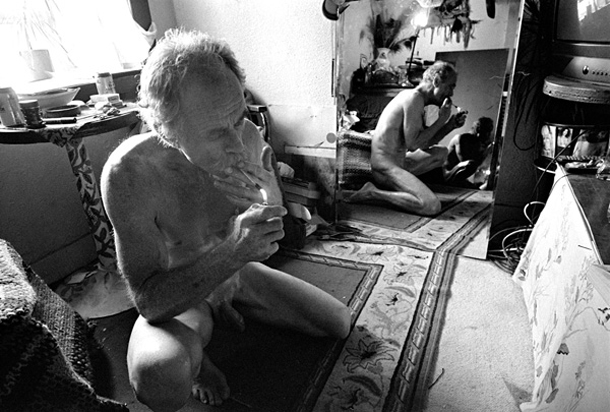
10/12 "A gentleman in The Cobalt. He's actually a carpenter and earns a living. He comes home from work every day and has a beer and has some crack. He's a really nice guy, he's not a criminal, he doesn't steal, but he thinks he's stronger than the drug. In reality, I've never met anyone that has been able to sustain the habit that he does and work an everyday job." Photo: Gabor Gasztonyi.
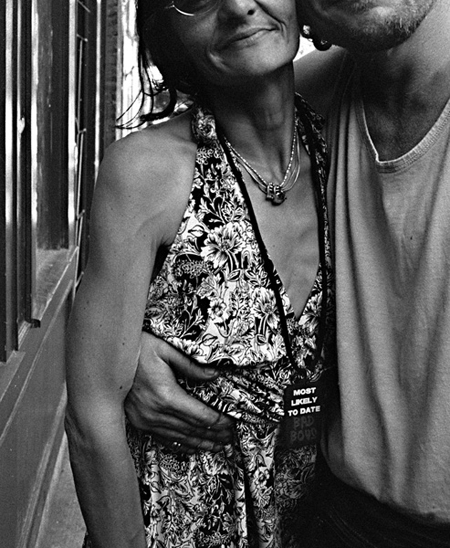
11/12 "Everything is here [at Main and Hastings]. Drugs, food, housing, companionship, friendship and relationships." Photo: Gabor Gasztonyi.
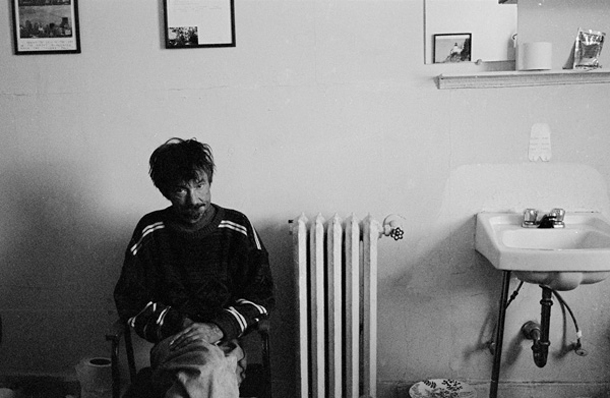
12/12 "I think the Downtown Eastside has been photographed, but incorrectly, and not in enough detail. It hasn't been photographed from the inside. I literally have been in almost every room of The Cobalt. But there are some people who don't want to be photographed, some rooms you can't get into. That's to be expected, I guess." Photo: Gabor Gasztonyi.
Once a week for the past six years, Gabor Gasztonyi has packed cameras, lenses, rolls of film, and driven to Vancouver's Downtown Eastside. "It can be quite a dangerous area," he says. "On the street, you have to appear tough. If you don't, someone's going to steal from you or beat you up."
Gasztonyi lives in New Westminster where, according to Statistics Canada, the median rent is $737 dollars a month. He has a photography studio where he shoots tidy portraits of high school students and Douglas College grads. It's a long way from the former city centre, the untidy, unloved area that radiates out from Main and Hastings.
Gasztonyi is not alone in his analysis of the Downtown Eastside as an area that inspires fear. According to a report released by the City of Vancouver last year, "aspects of the DTES have been a public concern since WWI. Community health was an issue prior to WWII," while mental illness among residents, the loss of inexpensive housing and the development of an open drug market became more problematic in the 1980s. The report states that the DTES is home to about 18,000 residents, a "high number" of which are "mentally ill, or addicted to alcohol or drugs"; most are "socially or economically marginalized" in some way.
'I gotta earn a living, you know'
School portraits pay the bills, but photographing in the dark recesses and bedbug-infested rooms of the DTES is Gasztonyi's passion: "The still image is such a powerful medium. That's what I love about it. Searching for those images, that's what I really enjoy doing."
"You have all these different layers of people," he says of the Downtown Eastside. In 2004 Gasztonyi began visiting the area once a week to capture images of the people who lived there "in their own environments" -- the SRO hotels that many of the area's residents call home. Starting out at the Cobalt Hotel, his project grew to include several of the single-room dwellings in the DTES, eventually coming together in one volume: A Room in the City.
'Stories that would make your skin crawl'
Gasztonyi's book documents -- in images as well as words -- the lives of the people who occupy Canada's poorest postal code. Here, StatsCan reports that rent, heat and electricity cost an average of $515 a month, and the median income is only $13,600 a year. His work attempts to find beauty in hardship and godliness in "hell," as the area was described by a resident. "You have to get close," he says, which makes "some of the shots disturbing."
Sitting with Gasztonyi at the Ovaltine on East Hastings, while cups and saucers clatter, we both sip diner coffee while the photographer enjoys what I'm told is an incredible plate of bacon and eggs. The young men at the next table shout impatiently at the waitress, "Can we get some service here?" and Gasztonyi begins to tell me the stories behind A Room in the City; as he does, the black and white images are painted in brilliant techni-colour.
With his wide smile and welcoming face, Gasztonyi manoeuvred into the darkest corners of the Downtown Eastside -- places foreign to most who will read his book -- and emerged with images of both spectacle and normalcy. "Everyone's afraid of these people," says Gasztonyi. A Room in the City is his effort to show that "they're just like you and I."
As we talked, Gasztonyi spoke about specific images you'll find in the photo essay accompanying this article. His comments can be read in captions to each photo.
More of Gabor Gasztonyi's work is available at his website. Gasztonyi's book is available through Anvil Press.