- Ms Kaye is a Tyee Builder. You can be, too.
- Mary Carlisle is a Tyee Builder. You can be, too.
- Prem Gill is a Tyee Builder. You can be, too.
- Nancy Flight is a Tyee Builder. You can be, too.
- Justin Everett is a Tyee Builder. You can be, too.
- John Westover is a Tyee Builder. You can be, too.
- Nora Etches is a Tyee Builder. You can be, too.
- Edward Henderson is a Tyee Builder. You can be, too.
- Bharadwaj Chandramouli is a Tyee Builder. You can be, too.
- Dean Chatterson is a Tyee Builder. You can be, too.
- Marius Scurtescu is a Tyee Builder. You can be, too.
- Robert Parkes is a Tyee Builder. You can be, too.
- James Murton is a Tyee Builder. You can be, too.
- Susan Doyle is a Tyee Builder. You can be, too.
- Vincent Strgar is a Tyee Builder. You can be, too.
- Helen Spiegelman is a Tyee Builder. You can be, too.
- Subir Guin is a Tyee Builder. You can be, too.
- Kimball Finigan is a Tyee Builder. You can be, too.
- Joanne Manley is a Tyee Builder. You can be, too.
- David Leach is a Tyee Builder. You can be, too.
'After Her Brain Broke'
Susan Inman's memoir is a must read for any family faced with schizophrenia, and for our health system, too.
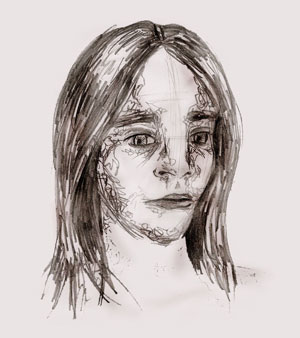
A brave daughter journeys into mental illness. Image by Nora Kelly
- After Her Brain Broke: Helping My Daughter Recover Her Sanity
- Bridgeross Communications/Ingram Books (2010)
I suffer from depression and have been treated for it for more than 20 years. My problem is anxiety -- not anxiousness, but overwhelming unchangeable anxiety, mind-numbing anxiety that has its physical side which I'll tell you about in a moment.
About 15 years ago I had a very good lesson, one which I'll never forget. I had been doing very well on a single medication but I insisted I change. It happened this way.
I was interviewing a famous American psychiatrist (not so famous that I remember his name) who, during a station break, asked me what medicine I was on. I told him Elavil Plus which he snorted at derisively, saying, "That's the old tin lizzy of medicines, you should be taking Serzone." So off to my doctor, Melvin Bruchet whom I credit with saving my life by diagnosing me correctly and early, demanding a prescription for Serzone.
"You dumb bugger," he replied (he's nothing if not candid), "if it ain't broke, don't fix it!" Indeed I had been doing well with one very minor side effect, but I was not to be dissuaded. He gave me the prescription, then said, "You must stay off Elavil Plus for three weeks before you start Serzone; I hope you're prepared for what might happen."
"Not to worry, Mel," I said, "Wendy and I are off for two weeks in London and Paris so there's no pressure." Mel did not seem convinced.
The first day in London, in late October, was unseasonably hot, but I'd not gone two blocks before I started to shiver and I went into a Tie Rack and bought a scarf. We got near our destination and I was so cold I went into an Irish wool shop and bought a heavy wool sweater. By the time we got back to our hotel I was shaking all over, yet my body was drenched in perspiration. Then I started to cry. And Wendy had two weeks nursing ahead of her. It was not a pretty sight and when I got home, needless to say, I immediately and sheepishly got hold of Mel, and went back to my Elavil Plus.
I had learned a couple of lessons. Mental illness is not to be toyed with. And perhaps more importantly, its hallmark is irrationality. Another time, when I had a bad bout of anxiety, deep down I knew that I wasn't dying of liver cancer but that rational voice was completely and effectively shut down by the voice of gloom, the voice that eradicates rationality. And once again a doctor had to calmly make me see that I did not have cancer, and was not dying.
'A ridiculous hell'
I'm fortunate that I am able, thanks to medicine, to function effectively. Most mentally ill people can get help and thus be able to function. Susan Inman's daughter Molly has not been so lucky. She is schizophrenic and Susan tells of the family journey that took place through Molly's teens and early twenties in a highly readable though disturbing book called After Her Brain Broke: Helping My Daughter Recover Her Sanity.
A lovely line sums up the journey: "Life is a ridiculous hell and I'll just navigate narrow pathways of duty before chaos claims us all."
Schizophrenia is not well understood even by doctors, be they family physicians or psychiatrists. Molly bounces around between lay health workers and numerous doctors; good advice and bad advice and lots in between. She develops Obsessive Compulsive Disorder (OCD). The sufferer experiences repeated obsessions that interfere with her ability to function. This meant the entire family had to deal with a volcanic nightmare always just around the corner.
I have a grandson who suffers from Prader-Willi disease, which is caused by an abnormality of genes, thus incurable, and he has OCD big time. He focuses so severely on, for instance, the place we’re going to eat, that if the place is closed an all but unstoppable tantrum results. I constantly am overcome with admiration how my daughter and son-in-law deal with this ever-ticking time bomb. They have also had to deal with the boy's younger sister who had to, somehow, understand that she couldn't behave as her older brother did. She is, God bless her, now 14 and an integral part of the family support system.
BC healthcare's troubling symptoms
After Her Brain Broke, I must tell you, is a Vancouver chronicle, and the inadequacies of the healthcare system are eloquently bared in a book that is free from whingeing complaints but which will leave you wondering how we can know so little about dealing with what, sadly, is not that rare an illness.
We see health professionals contradicting themselves, which is hardly helpful with any disorder but calamitous in Molly's case.
We see the impact on a family that deals with Molly hating them, suspicious of everything, and almost totally unable to function. Then Dad is hit by a rare cancer in the eye. And through this Susan soldiers on.
The ending is, comparatively at any rate, a happy one; Molly picks up much of her lost education and falls in love with a highly understanding and loving young man.
This tale is by no means critical of all help in the field. Indeed there is much good. What it does point out is the inconsistencies and the enormous difficulties they entail. And what it particularly underscores is the complaint I often make. If physically ill people were treated by the system as the mentally ill are they would be storming the legislature with bricks and pikes.
Second class patients
This is Rafe, not Susan speaking. The physically ill are subsidized by the mentally ill.
How?
The majority of mentally ill people are afraid to seek help because of the horrible stigma still attached to it. This means any system that wants to help the mentally ill must seek out them out rather than rely on them to come to the system. Governments won't seek out the mentally ill -- especially this one -- because that would raise health costs and that'll never do. Those who suffer in silence, then, subsidize those who don’t.
Let me close with this not about After Her Brain Broke. Sad and often tragic though the story is, one always gets a feeling of optimism; not irrational optimism that all will be great, but a feeling that it will be better. It's a story of great courage by each member of the family, very much including Molly.
It's a book I urge you to read. ![]()


6
Login or register to post comments
miguel
2 years ago
After Her Brain Broke
I'm interested to see this article, as I have recently taken the step to get help for my depression.
It has been a life long condition for me, not always debilitating, but for the last handful of years, worsening to the point of me becoming suicidal.
I don't accept the social stigma aspect of mental health issues, but I do have qualms about the help available to me and others. I only need to look at the problems in the Downtown East Side to see how little effort is being made to help people with mental health complaints.I myself am now skirting the edge of financial destitution and homelessness.
I am about to be given a prescription for an anti-depressant, and I intend to research whatever drug I'm issued to determine it's effects and contra-indications, as I have a horror of pharmaceuticals.
Medication and counseling will help to deal with the depression, but there are other mental issues and situational concerns that will take some unsnarling, and I can't tell at this point whether this will ever be resolved.
There is a press of people requiring help now because of economic factors and the pressures of our supercharged society. I hope anyone reading this article, who are in a bad mental state will take the step to get the help they need.
Skywalker
2 years ago
Thanks Rafe.
I know a few families that have dealt with this issue and some with tragic consequences. Any light shed on the subject is worthwhile.
barney
2 years ago
Mental vs. Physical health
I agree with your general premise that the neglect of mental health within our health care system is one of the great injustices of our time, and I am certain we will one day look back in shame, asking how we could leave so many sufferers twisting in the proverbial wind.
The issue, however, is complicated by the fact mental health ailments, unlike physical ailments or diseases are not easily diagnosable. Treating a broken leg or diabetes is cut and dry because the diagnosis is cut and dry. Not a single objective test (blood test, MRI scan, etc.) is available to diagnose a mental illness. Even a condition as seemingly obvious as schizophrenia remains largely "mysterious".
Psychiatry's dubious history serves as warning that the discipline is more pseudo-science than medical science. Your own experience getting the wrong drug from a top shrink -- mental health care is rife with this kind of malpractice, so I can understand why governments might be a bit hesitant to open this door. This does not excuse their neglect, but makes it more comprehensible.
Furthermore, consider that the Diagnostic and Statistical Manual of Mental Disorders has gone from thin pamphlet to epic tome in the span of just a few decades. It seems not a week goes by that we don't hear about a new disorder, dysfunction of the mind paraded across the stages of Dr. Phil, Oprah or via drug company TV commercials. Clearly, the mulit-billion dollar pharmaceutical industrial complex is very much a growth industry, and the psychiatric establishment is more than happy to play along as it strives to overcome its scientific inferiority complex. We all know how incestuously tied research grants are to drug companies. It was not that long ago that the American neurologist and psychiatrist Walter Freeman, who modernized and legitimized the procedure of lobotomy, won a Nobel Prize for his efforts. I often wonder if psychiatry has advanced as much as we think it has since the days of brain-snipping and forced confinement for such ailments as "female hysteria."
None of what I say is intended to disparage the very real struggles faced by those who suffer. Yes, we do need to grab this bull by the horns and fund it to whatever it takes. I would like to see a distinct Ministry of Mental Health established. In the absence of a comprehensive public mental health system, we are left at the mercy of psychiatrists performing $150/hour drug cocktail witchcraft, and a constant barrage of pharmaceutical industry propaganda - "... to learn more about RXdrug-of-the-week, talk to your doctor."
Good psychiatric care requires time. Time required to diagnose properly. Time required to treat, and lots of resources throughout those processes. As it now stands, anyone who has the courage to talk to their doctor about depression or other mental ailments is often not diagnosed, but given pills and sent away with useless pamphlets on "understanding your illness."
mopled
2 years ago
Orthomolecular medicine is the way to go
A family member took that route over 20 years ago and never needed hospitalization. Subsequent relapses when he was under stress were easily handled by Niacin and Vit.C.
"about 40 percent of schizophrenics hospitalized for the first time are treated successfully by conventional methods in that they are released and not hospitalized a second time. The conventional treatment fails for about 60 percent in that the patient is not released or is hospitalized again. Conventional treatment includes a decision about vitamin intake. Usually it is decided that the vitamins in the food will suffice or that a multivitamin tablet will also be given. The amounts of ascorbic acid, niacin pyridoxine, and vitamin E may be approximately the daily allowances recommended by the Food and Nutrition Board of the U.S. National Academy of Sciences-National Research Council: 60 mg. of ascorbic acid, 20 mg of niacin 2 mg. of pyridoxine, and 15 I.U. of vitamin E. Is this amount of vitamins correct? Would many schizophrenic patients respond to their treatment better if the decision were made that they should receive 10 or 100 or 500 times as much of some vitamins? What is the optimum intake for these patients? I believe there is much evidence that the optimum intake for schizophrenic patients is much larger than the recommended daily allowances. By the use of orthomolecular methods in addition to the conventional treatment of schizophrenia, the fraction of patients hospitalized for the first time in whom the disease is controlled may be increased from about 40 percent to about 80 percent. (19)"
http://www.orthomed.org/home/pauling.html
carfreecity
2 years ago
science
there is NOT enough science to make the division between physical and mental illness.
We donot understand chemistry well enough.
Each year Scientific American makes new observations.
It's ALL interrelated and it includes the environment.
John Greg
2 years ago
mopled ...
You are promoting quackery, woo-woo, and deceit.
If you want to actually look into it, which I doubt you do, start with this link -- http://www.sciencebasedmedicine.org/?s=Orthomolecular , which will take you to what is actually a legitimate science-based website, rather than an altmed promtional website (such as your link points to) operated by charlatans, quacks, and other liars.
You might also keep in mind that by promting such nonsense you put yourself in the position of promoting and endorsing generally useless therapies that may lead to a worsening of ill-health and even death.
Are you sure you want to be a part of such charlatanism?